


“SpaceX is built for mass; we are built for speed.” — Bachar Elzein, CEO and Founder, Reaction Dynamics
Nearly 20% of Canada’s economy depends on space systems. Yet, Canada cannot launch satellites into orbit from domestic soil. It is the only G7 country without sovereign launch capabilities. This leaves our economy and security in the hands of foreign partners, primarily the United States and SpaceX.
Reaction Dynamics is one of three companies chosen by the Department of National Defence’s Launch the North program to develop Canadian sovereign launch capabilities. Its competitive advantage is speed, ease of transport and storability, targeting a responsive-launch capability in just a few hours.
“Future projections suggest that the global space economy may grow to as much as $2 trillion by 2040.”
“I don’t need a heavy launch spaceport to launch from. I can launch from a forest.”
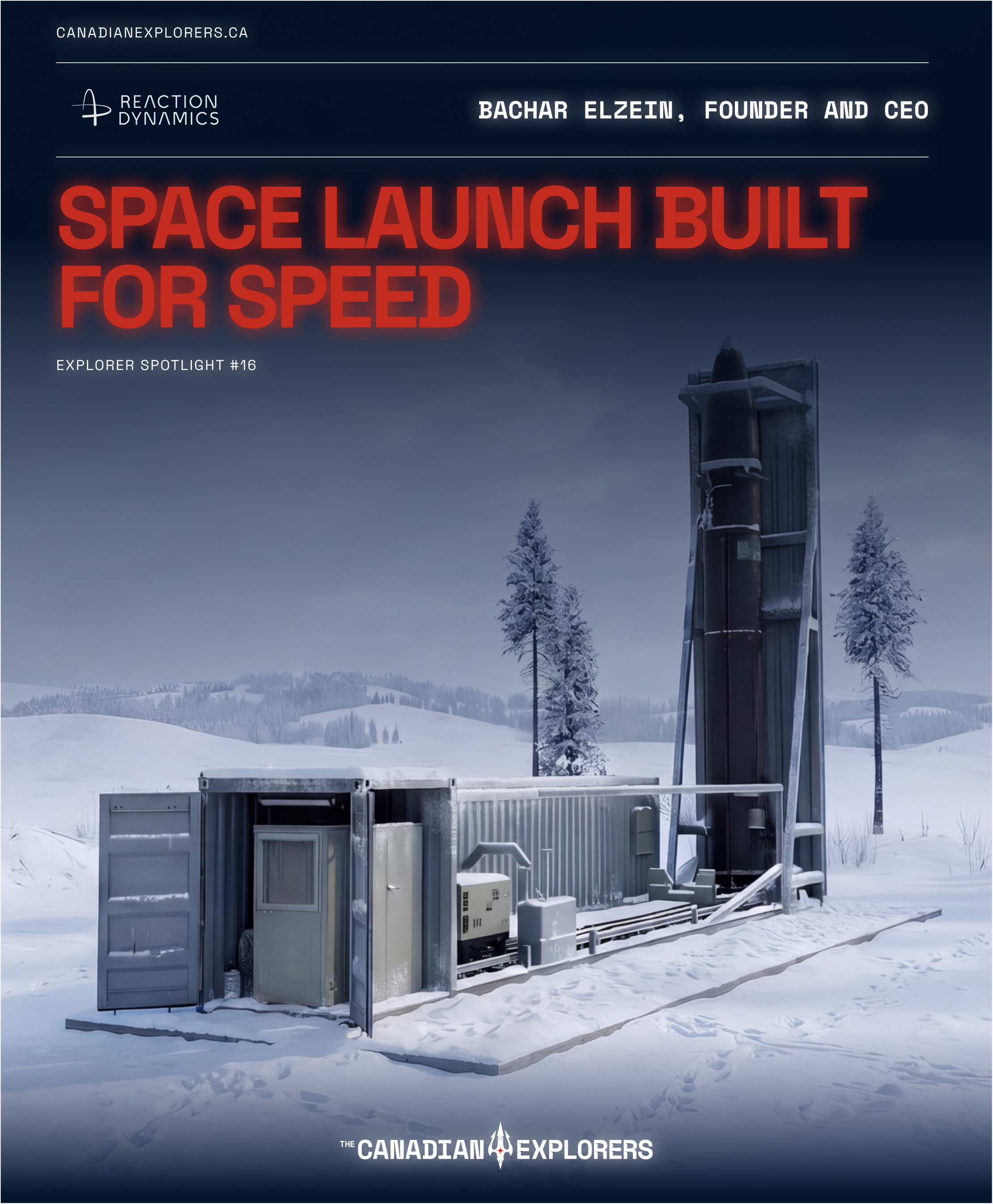
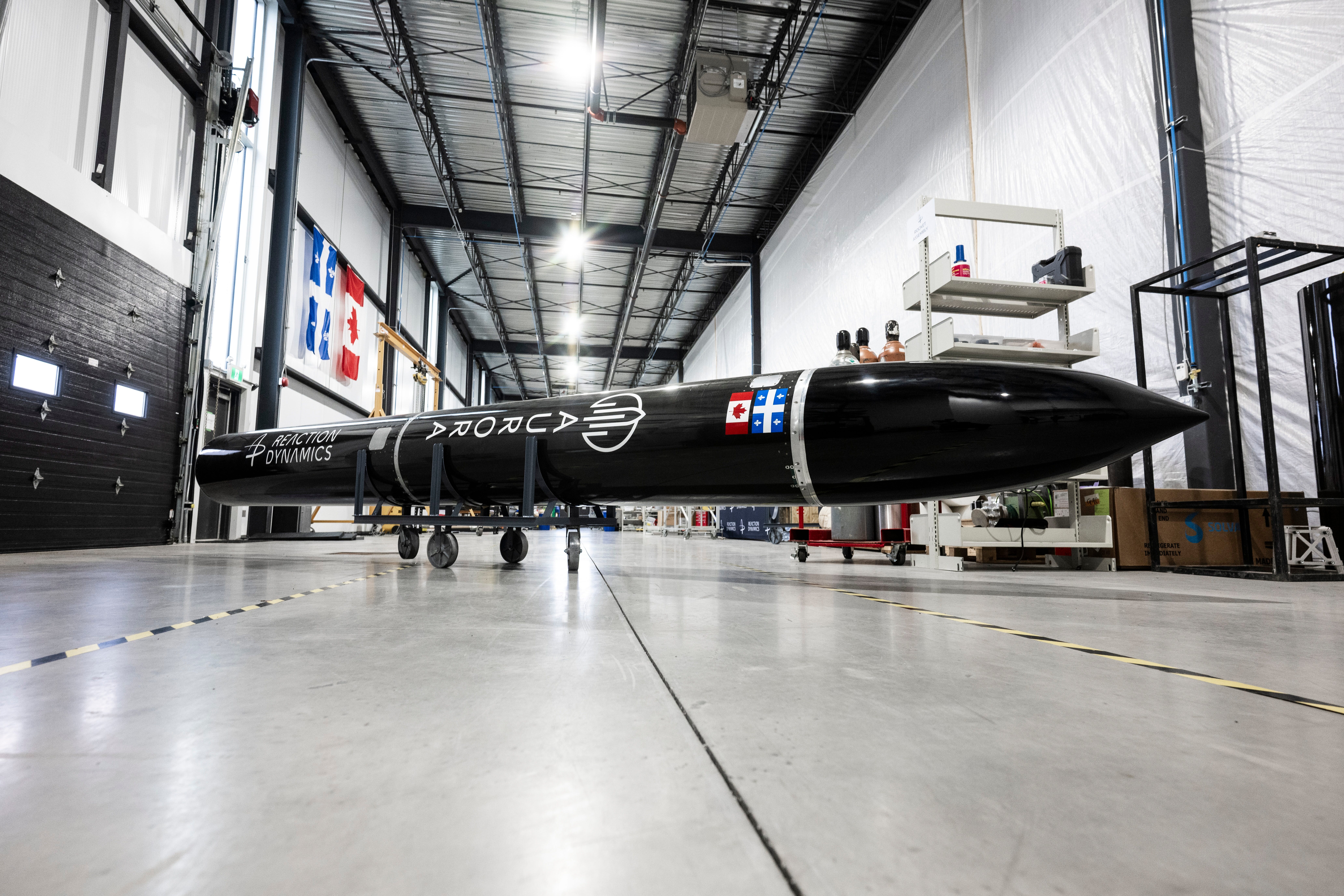
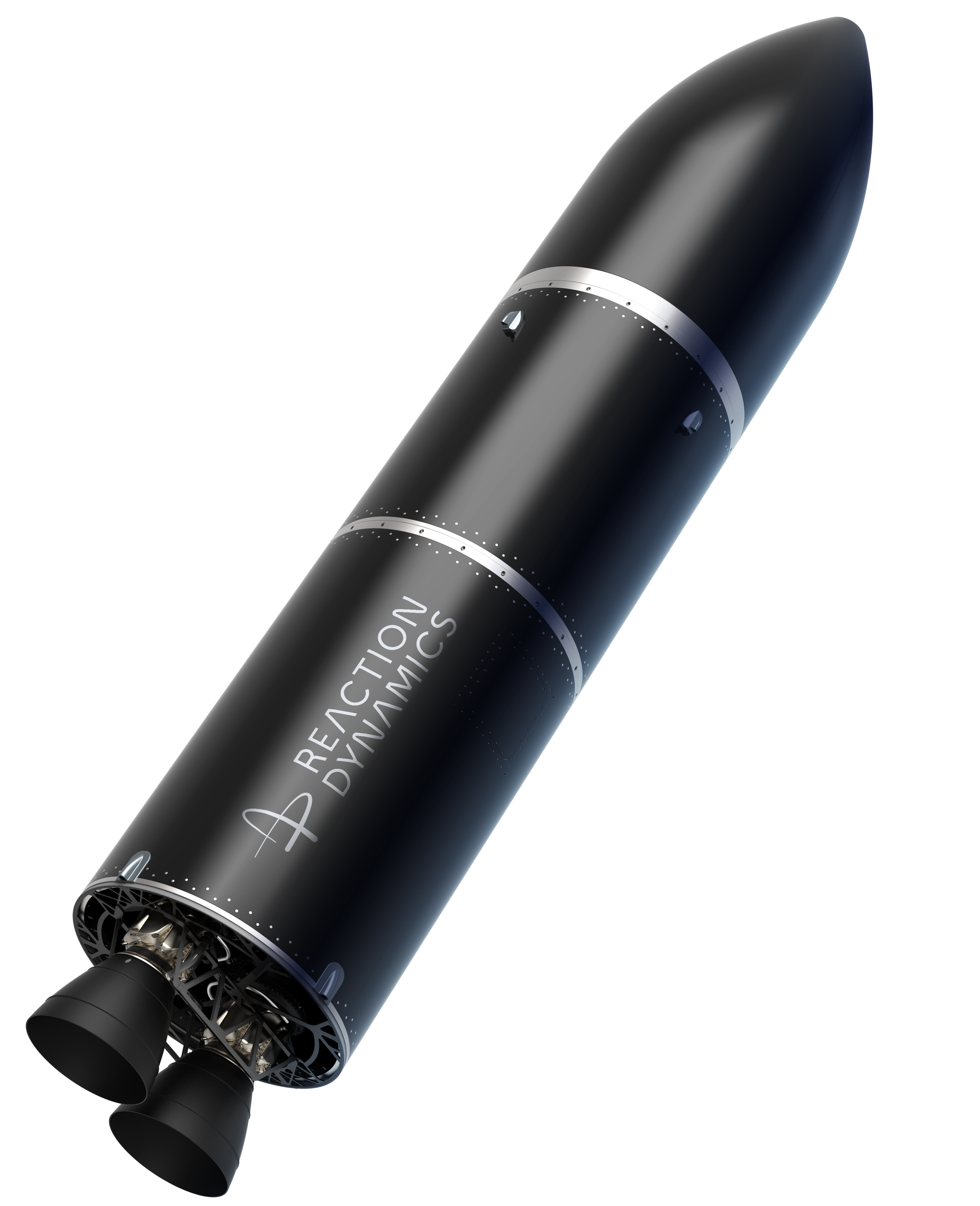
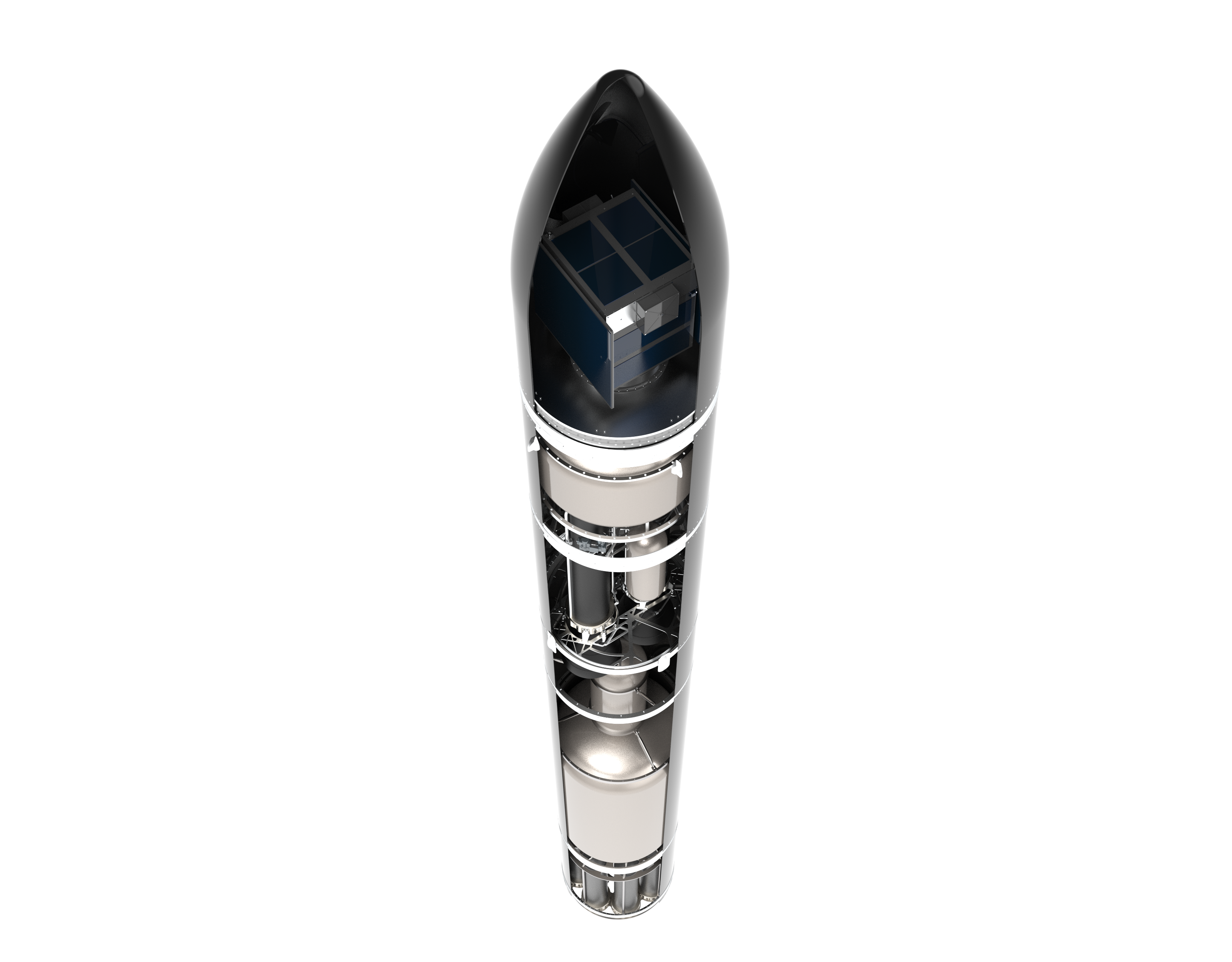
Aurora is the company’s pathfinder and first orbital launch vehicle, a two-stage rocket designed to deliver 250 kg to sun-synchronous orbit (SSO) or 200 kg to low Earth orbit (LEO). Unlike rockets that use cryogenic propellants, Aurora uses storable propellants, reducing the need for launch infrastructure.
Aurora is designed to be transported fully fueled in shipping containers by truck, rail, air, or sea, and stored for up to five years ready to launch. The rocket can then be deployed without the permanent launch sites that traditional rockets require. The target launch price is approximately $10,000 to $15,000 per kilogram.
The plan is to leverage this pathfinder as a qualification platform for its medium-lift vehicle to carry larger loads to orbit; more information is expected in the coming months.
“Once you can reach orbit, the world is your oyster.”
The startup aims to help Canada and its allies replenish and reconstitute constellations, restore communications, and deploy new capabilities without waiting for foreign launches. The team believes that space infrastructure and its disruption can determine a conflict before a bullet is ever fired.
Responsive launch can also support space manufacturing and time-sensitive biological or pharmaceutical payloads.
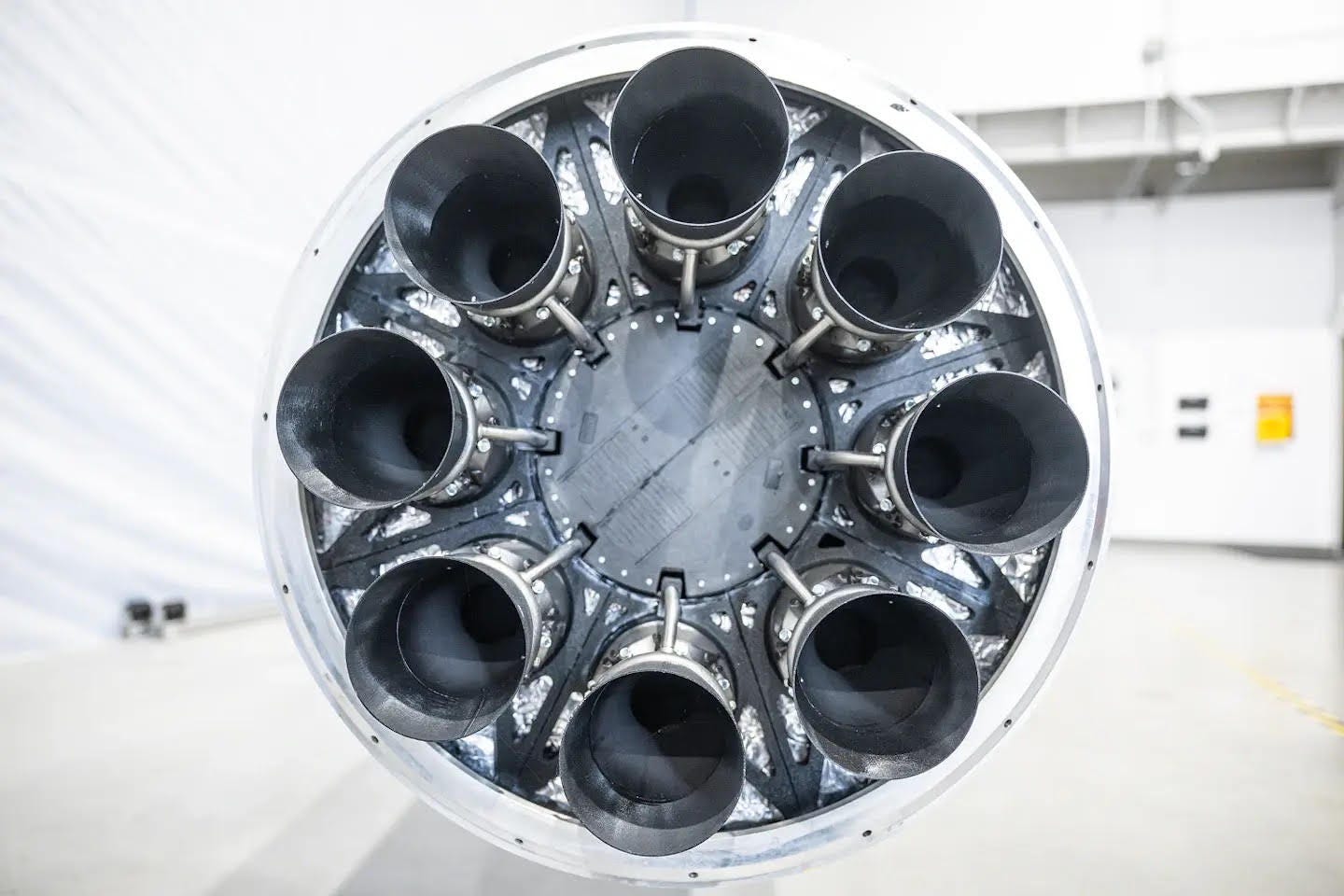
Alongside launch capabilities, Reaction Dynamics is building Hermes, a satellite propulsion system that manoeuvres satellites quickly in orbit. This platform gives operators greater flexibility to reposition satellites and safely deorbit them at the end of their missions.
“No modern army can fight without its space assets.”
Reaction Dynamics has received an initial C$8.3-million award through Launch the North, has completed Phases 1 and 2 of NATO DIANA, and has secured its first contracted revenue with a Direct-to-Phase-2 SBIR contract under the U.S. Space Force’s Tactically Responsive Space program. The startup has now raised nearly C$50 million in capital, and says that the value of its letters of intent is now in the billions. Interest is coming from large allied-country space companies, including operators that are producing hundreds of spacecraft and serving the U.S. Space Force.
Orbital launch for the Aurora is targeted for Q4 2028.
“You are not necessarily missing anything by building in Canada. Canada is a great place to start a company. It is difficult, but starting a company is never easy.”
“Talk to your customers early and do not give a fuck about what your VC tells you.”
I spoke with Bachar Elzein, the CEO and Founder of Reaction Dynamics, about rapid launch, satellite warfare, Canadian capital, and why this country must build a company that can compete with SpaceX.
He wants Canada to become the launch partner of choice for its allies.
“Canada was starved of defence support for a long time. We survived the past decade through tremendous sacrifice and effort. Other deep-tech and defence companies could have existed but do not because the support was not there.”
Jesse Mikelberg, Reaction Dynamics’ Director of Business Development & Strategy, also contributed to the conversation.
What is Reaction Dynamics building, and why does it matter for Canada?
“We are building storable, containerized rocket systems with orbital-launch capabilities. Think of it as: SpaceX is built for mass; we are built for speed. This technology can apply to light-lift all the way up to medium lift.
Nearly 20% of the Canadian economy depends on space infrastructure or space-based assets, yet we do not have a way to reach orbit on our own. All Canadian satellites or Canadian assets are launched on foreign or allied rockets. That highlights how vulnerable we are as a country.”
Advertisement — Marconi Technologies
The Canadian Explorers is proud to be supported by its Founding Lead Partner, Marconi Technologies.

Could you walk me through the product lineup for someone without a rocketry background?
“We are working on Aurora, which is our first orbital rocket. It is poised to fly in Q4 2028. That rocket will serve multiple purposes. First and foremost, it will validate our ability to reach orbit. It will also demonstrate our concept of operations, specifically responsiveness, short lead times and the fact that we are using storable propellants. Nothing beats an orbital launch to demonstrate that.
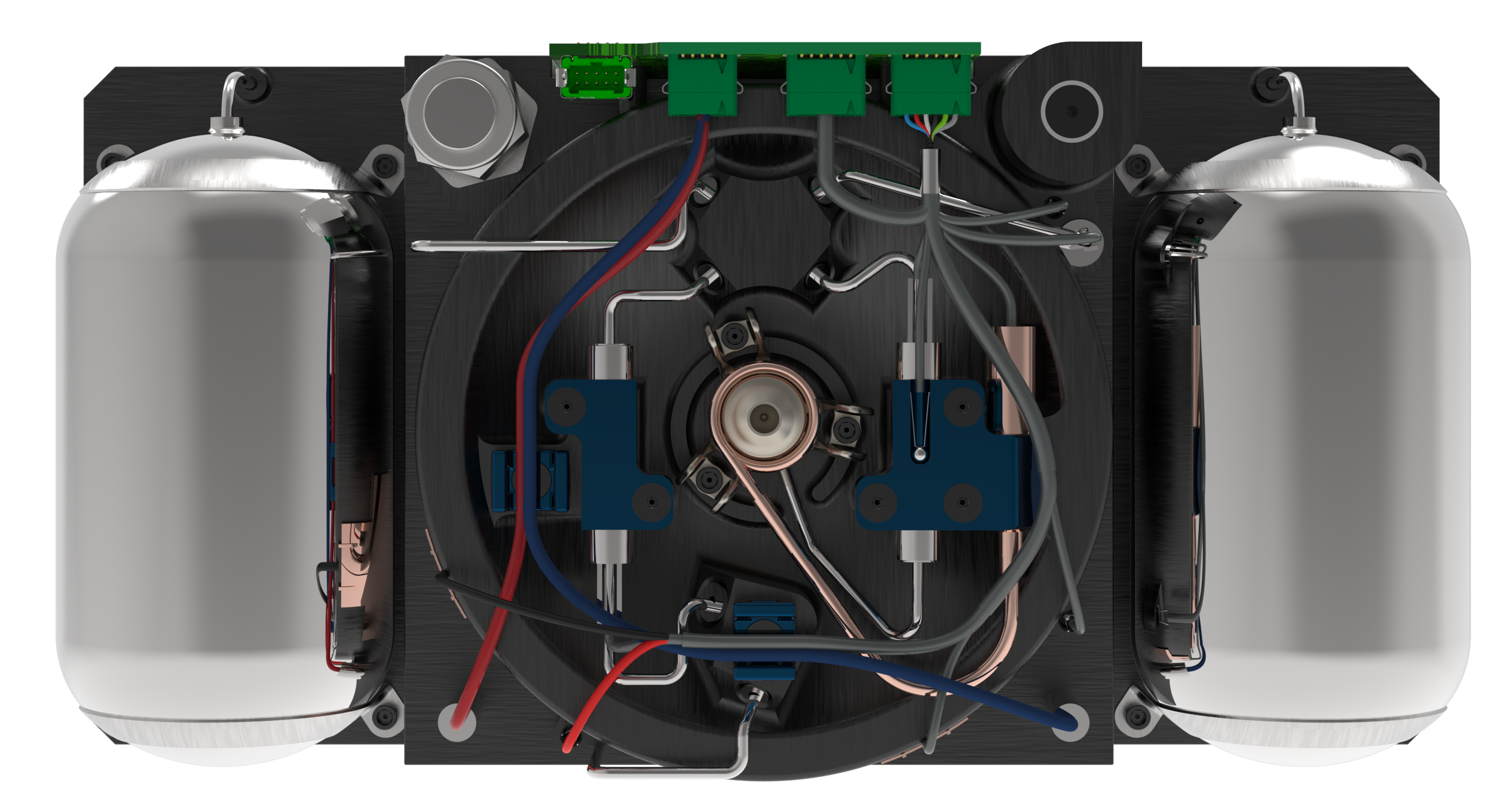
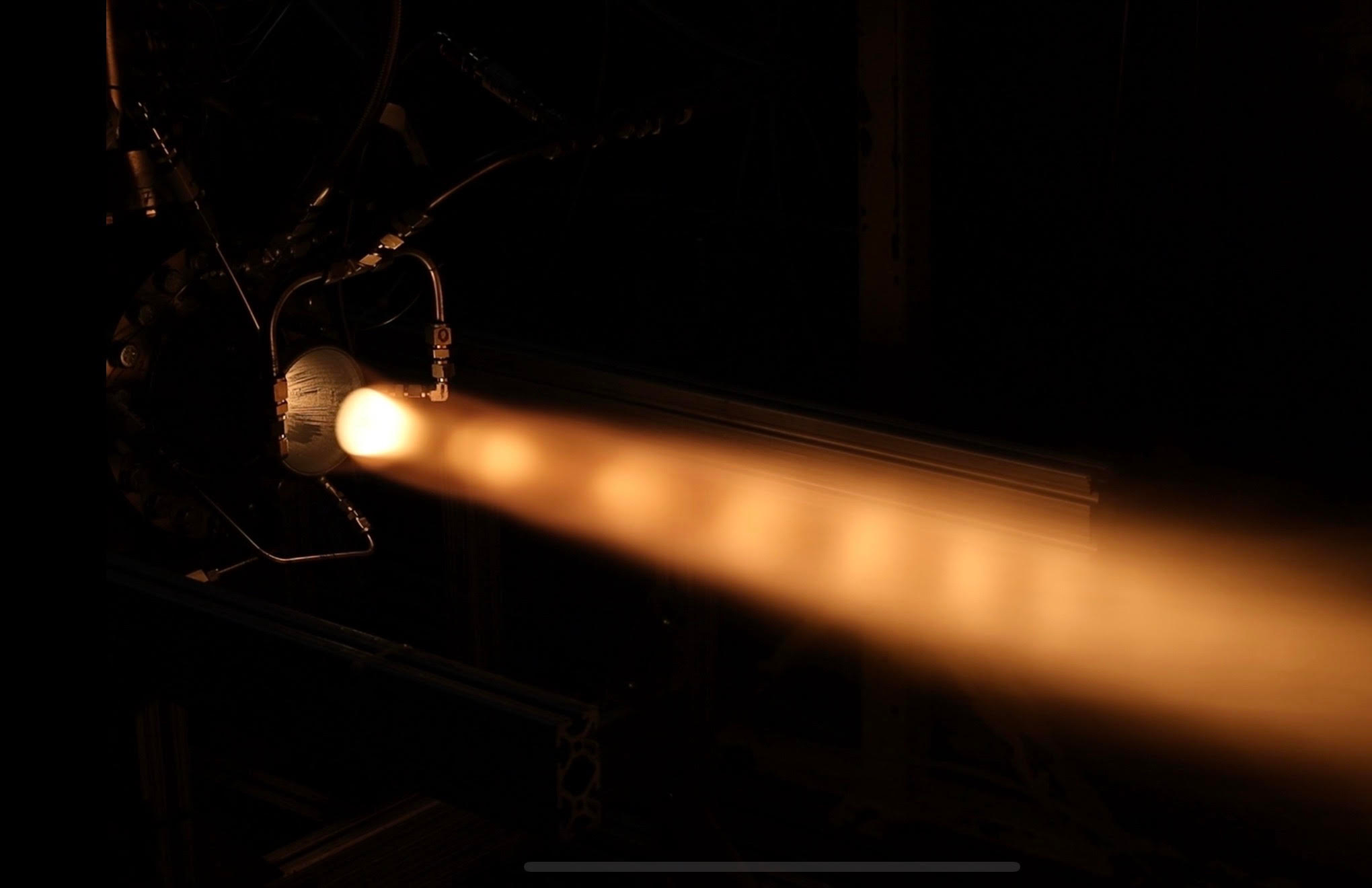
Second, we have Hermes, an in-space propulsion system for satellites derived from our hydrogen-peroxide-based propellant. Those satellites can be propelled by high-test peroxide (HTP), a concentrated form of hydrogen peroxide, which decomposes through a catalyst into superheated steam and oxygen to create thrust.
Last but not least, we have a medium-lift vehicle that we will talk about more in the next few months.”
What does Hermes do that alternatives cannot?
“Hermes is chemical propulsion, so it can impart a change in velocity on a satellite much faster than the electrical propulsion that is typically used.
Electrical propulsion is characterized by a very high specific impulse, which means you can get more overall velocity change for the same mass of propellant. However, that change in velocity happens over a long time. If you want to manoeuvre your satellite quickly or change its altitude quickly, chemical propulsion is key.
Most existing monopropellant propulsion has been based on hydrazine, which is very toxic. Our alternative has a very similar density impulse, but it is not toxic. We benefit from the advantages that we like with hydrazine without having to deal with the toxicity.”
Could you contrast Reaction Dynamics with the other Launch the North companies? Can all three survive in the Canadian market?
“My wish is that everybody finds a way to serve a segment of the market. Launch is capital-intensive, highly competitive and heavily regulated. The margins are not great. It is a very tough business.
The companies that survive will be the ones that can be polarizing. In an ideal world, every customer would have a very cheap launch with very short lead times that is extremely precise, can deliver all their satellites and gives them control over their destination and schedule. But it is never like that. You are always making compromises. There will be a market for the cheapest launch. If you are building a rocket that can be the cheapest, you have a market. If you are building an extremely precise rocket that can reach a very specific orbit or can offer a dedicated launch, there is a market for you. If you are none of those things, it will be difficult.
I genuinely hope all three companies survive. I talk to Hugh (Canada Rocket Company) and Rahul (NordSpace) almost every week. We are competitors, but we also help one another where we can because we all want the same thing: to provide launch to this country. Reaction Dynamics has advocated for launch sovereignty for almost 10 years. It is exciting that we now have friends carrying the same message and adding weight to the importance of launch.
Every rocket is defined first and foremost by the propellants it uses. If you use LOX methane, you will build a very different rocket than if you use LOX kerosene. Those technical choices define the vehicle, whether you like it or not. Each has advantages and disadvantages.
That is the key distinguishing feature. Every company has strong engineers and believes it has an edge, which is appropriate. This is a tough business. But the selection of propellants defines the technical toolbox you have. How you leverage the advantages of that toolbox is what will make the difference.”


What capabilities are unlocked by storable propellants, particularly for shipping and storage?
“You have to emphasize storability and storable propellants. Cryogenic propellants have advantages, notably when it comes to specific impulse, but they also add constraints to the concept of operations. A rocket using cryogenic propellants will never be able to launch from a remote area or a forward-deployed base without heavy launch infrastructure. If you do not have that infrastructure, the rocket cannot operate.
Those are problems we do not have with storable propellants. I do not need a week to fuel my rocket. I can launch fuel-ready. I do not need to chill down my engine. When you deal with liquid oxygen, liquid methane or anything cryogenic, the propellants are boiling off continuously. We do not have to deal with that. We do not have to vent, and we do not have valves freezing.
We lose a little specific impulse, which we knew and understood. However, we are dealing with very dense propellants, so density impulse compensates for much of that. With the right design decisions and architecture, we can still carry a significant payload. At the end of the day, customers do not care whether you are burning liquid oxygen with kerosene, hydrogen or methane. They care about the result: the vehicle’s features, characteristics and price.
If a rocket is expensive, you cannot compete on price. If it takes too long to manufacture, you cannot compete on lead time. If you do not have fine-tuned precision in thrust-vector control, you cannot compete on precision. If you can reduce complexity without compromising reliability, customers can benefit from a convenient, dedicated launch at a reasonable price. That is exactly what we are doing.”
What does responsive launch mean? How fast can a rocket go from storage to launch, and where can Aurora launch from?
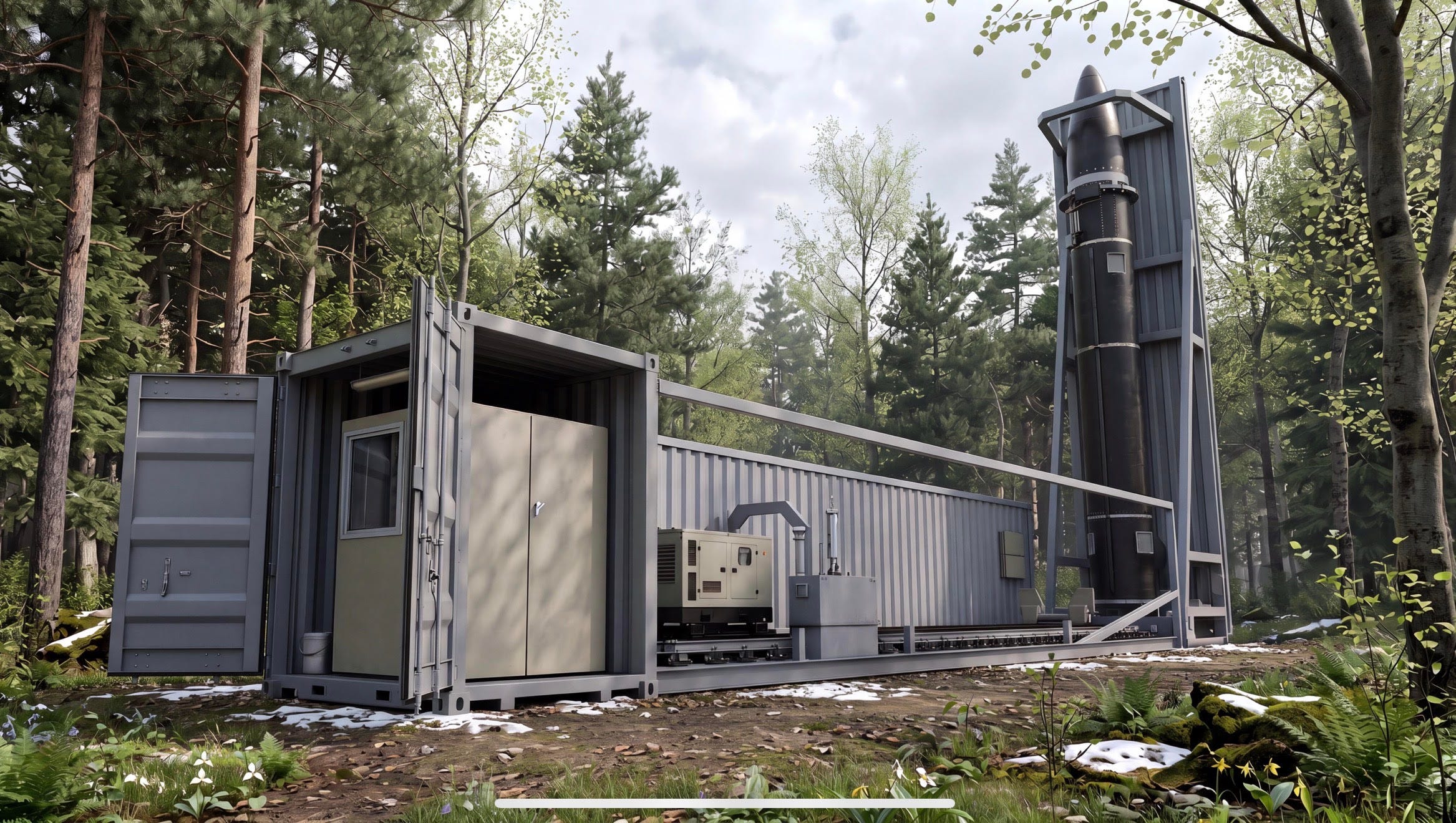
“We are targeting 72 hours for Launch the North. Will that be the standard service? I would not say that, but it could become a specialized service for some defence customers. We could likely bring that timeline down significantly. It is feasible.
I also do not need a heavy launch spaceport to launch from. I can launch from a forest. The rocket and its propellants can be carried. The rocket, at the light-lift scale, is containerized. We only need a safe place to launch and a way to track the rocket, which can be delivered through multiple means.
For replenishment and reconstitution, these are important advantages. Applying the same approach to rockets carrying four to six tonnes or more could enable us to launch larger payloads from remote locations that are well positioned to reach particular orbits. With less dependence on cryogenic infrastructure, launch location becomes a strategic advantage, giving commercial and government customers more options to reach the orbits they need, when they need them.
Jesse led an interesting customer study a couple of years ago to understand what customers could unlock with responsive launch. It opened our eyes. Some companies work with biological assets for medical or pharmaceutical research. They need to launch quickly because they are dealing with live material and need a short lead time.
Other companies need a certain number of satellites operating in orbit. We are speaking with companies that have a high attrition rate and need to replenish frequently. You do not always know which satellite you will lose, which orbit it will be in or which inclination it will use. Some companies launch spare satellites, while others cannot afford to do that or face technical constraints that make it impossible. Responsive launch is not merely an incremental improvement for them. It is a paradigm change. We learned what customers want while developing smaller rockets, and we are now applying those lessons to medium lift.
No customer has complained about a shorter, faster and more convenient service when it does not compromise reliability or price. Nobody has told us they want to pay more or wait two years to launch. Satellite companies will find new ways to use a service once it is available. If a company can integrate a satellite with a rocket in days instead of months, it will operate differently. We are excited to see how customers use capabilities that current launch solutions cannot offer because they do not combine responsiveness, short lead times and pricing.”
How do you view the future of war in space?
“No modern army can fight without its space assets. All modern armies rely on space assets and infrastructure. If you can disrupt those assets, the war can be won before a single bullet is fired. As a country, Canada missed the age of the aircraft carrier, but it is not too late for us to have assets in orbit that protect us. There is nothing you will launch to orbit that will be more expensive than the cost of war on Earth. Anything you launch into orbit will be cheaper than fighting a war on Earth. If space assets allow you to pre-empt, avoid or deter an adversary from waging war on your country, that is exactly what you seek. But if we cannot reach orbit on our own, what can we do? Access to orbit is a key defence priority. In an ideal world, we would never have wars, but that is not the world we are in.”
Reaction Dynamics has publicly reported C$340 million in letters of intent. What is the business model and how much will launch cost?
Jesse Mikelberg: “We now far exceed the number that is posted online. We’ve collected several billion dollars worth of LOIs and MOUs. The customers showing the most interest are not necessarily domiciled in Canada. They include some of the largest and most successful international space companies in allied countries. They can identify ways our service will, in turn, change the services they provide to their customers for the better.
I cannot name those customers at this time. They include operators producing hundreds of spacecraft, serving the U.S. Space Force, running major operations and having raised hundreds of millions of dollars. These are credible operators that want a service that is relatively cost-effective but, more importantly, delivers assets where they need to be, when they need to be, with as few pain points as possible. They want rapid integration, rapid deployment and a fast solution to maintain or enhance constellation assets. It is easy to think of our assets as products, but in reality we provide a service: consistent and safe access to orbit on very fast timelines.”
Bachar Elzein: “The target price per kilogram, as we speak, is roughly $10,000 to $15,000.”
How can Canada back more moonshots like Reaction Dynamics?
“We need time. The right decisions have been made to foster companies like ours and our competitors. But you cannot invest capital into the ecosystem and expect to reach orbit, build fighter jets and build everything in-house overnight. It takes time. We are not asking for 20 years; it takes a couple of years. I think the government has done what could be expected from a government looking to support its defence ecosystem, at both the federal and provincial levels. We are fortunate to be in Quebec. The province has done a lot for us.
Private investors now have to follow. We are seeing more traction than in the past, but it is easy for me to say that investors must take more risks. What we need is to show that taking risks pays. We need to show that companies in Canada can succeed. We talk about Shopify a lot. Shopify was 10 years ago. We should have a company in Canada that can compete with SpaceX. We should have a company in Canada that can compete with Anduril or Palantir.
When investors see that the people who committed to those companies were rewarded, it will become more compelling for others to follow. Canada was starved of defence support for a long time. We survived the past decade through tremendous sacrifice and effort. Other deep-tech and defence companies could have existed but do not because the support was not there, and they may not have shown the same staying power.
Canadian success stories will make it easier for investors to commit in the future. I hope and believe that Reaction Dynamics’ success will make it easier for the companies coming after us. In a couple of years, we can show that we can reach orbit here, ITAR-free, with Canadian solutions, Canadian engineering, Canadian ingenuity and engineers trained at Canadian universities.
Defence is not an end case; it is leverage. The phone I am using relies on technology that was initially developed for defence. We do not see the warfighter and the farmer as different. Both are key stakeholders. When you think of defence as leverage, defence is the economy. The industrial base is the economy.
From our perspective, the government has provided what we need. There are still issues such as pathways to procurement, but those are known and are being addressed. The larger step is with private investors. Successful Canadian companies will build a more compelling case for defence investment.”
Jesse Mikelberg: “For the first time in my professional history, we are seeing government funding move at the pace of, or faster than, private capital.”

What have you learned from building Reaction Dynamics, and what advice would you give to a young Canadian deep-tech founder?
“You do not build a company to be understood necessarily. Your most important frame of reference should be your customers. They will guide you through their problems and pain points. If customers like what you are building, that is what matters. Money will come. Investors will come. You also have to build a great team. Building an exceptional team is one of the most important things you can do.
It is not easy. If building a company were easy, everybody would be an entrepreneur. It has to be difficult because you are creating something that does not exist. You have to fight many forces to put something into a market where you compete against infinite capital and infinite talent. Those forces are designed to ward off fragile ideas, business cases and business models that are not robust. It takes a fight, and that is okay. Talk to your customers early and do not give a fuck about what your VC tells you. That is really it.”
What do the next 12 months look like, and if everything works, what does Reaction Dynamics become over the next 20 years?
“In 20 years, I hope Canada becomes the launch partner of choice for our allies because of our geographic position and our reliability as a partner. I hope Reaction Dynamics spearheads that by bringing a new paradigm to launch: on-demand, responsive, affordable, strategic and reusable. Access to orbit will be key if Canada wants to benefit from the two-trillion-dollar economy everybody talks about. Once you can reach orbit, the world is your oyster. If you want to integrate vertically, you can.
What we have always been about is guided propulsion: giving customers the ability to move something from one orbit to another, from one place to another or from one area to another. Will that expand into a more vertically integrated business? Maybe, maybe not. We will see.
For now, we are absolutely focused on reaching orbit by Q4 2028. We have many ideas about what happens after that, but we are not committing to them because much can change.
I want Reaction Dynamics to change the launch paradigm and, just as importantly, become a success story that Canadians can look to and say: we can do this here. We can build quantum computers here. We can build world-leading AI companies here. We can launch from here. You are not necessarily missing anything by building in Canada. Canada is a great place to start a company. It is difficult, but starting a company is never easy.”
Jesse Mikelberg: “I like the 20-year vision of becoming the launch provider of choice for our allies because it goes beyond Reaction Dynamics. It is not only because we have built a great rocket or provide a great service. It is because Canada becomes the incredible environment we all need it to be, with the regulator, the Department of National Defence, the government, Transport Canada and the Canadian Space Agency, all working together and investing in the ecosystem the right way. Our architecture must work in unison with a much larger ecosystem that is coming together. Everybody feels there is a moment in time for Canada, and many of us are stepping up.”
If you’re building something in Canada, I want to hear about it. contact@ethanmarcoux.com


