


“This is not a game for tourists.” — Josh Ogden, Co-Founder and CEO of AVSS
Drones are quickly changing the way humans live. According to some estimates, over 90 percent of frontline Russian casualties in the Russo-Ukrainian war are from drone attacks. Meanwhile, companies are expanding drone-delivery services across the United States. Walmart and Amazon already deliver consumer goods in select markets, while Uber Eats has announced plans to launch drone-based food delivery.
In Canada, startups such as FireSwarm Solutions use heavy-lift drones to fight wildfires; ENVGO, Pelagos, and Open Ocean Robotics are developing autonomous marine vehicles, while Sentinel R&D is manufacturing drones at scale for the modern battlefield. As robotics and automation continue to advance, demand is rising for the scalability and cost advantages that unmanned systems can provide. Humanity’s reach is being extended.

“AVSS is building sovereign robotic solutions from the ground up.”
Aerial Vehicle Safety Solutions (AVSS) is a Canadian drone company founded in New Brunswick in 2017 by Josh Ogden (CEO) and Josh Boudreau (CTO). They believe that Canadian sovereignty requires owning the full stack of production and intellectual property, rather than licensing or reselling foreign systems.
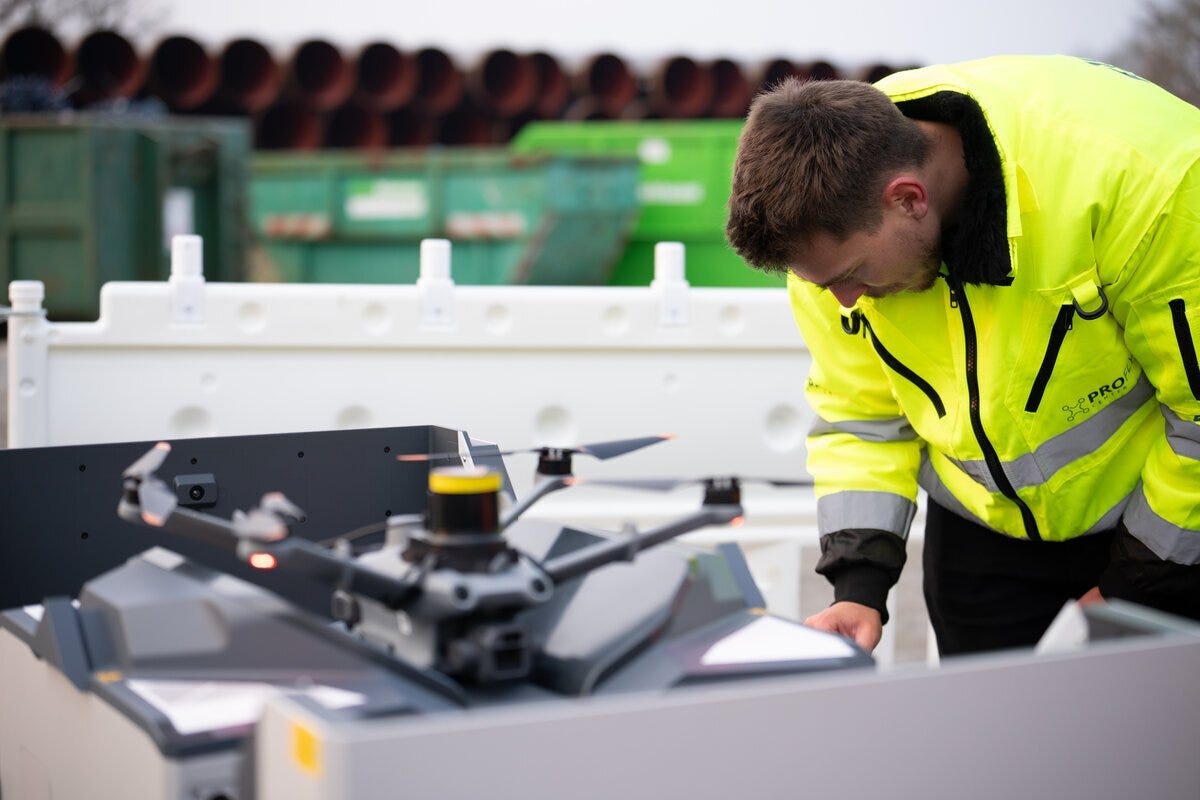
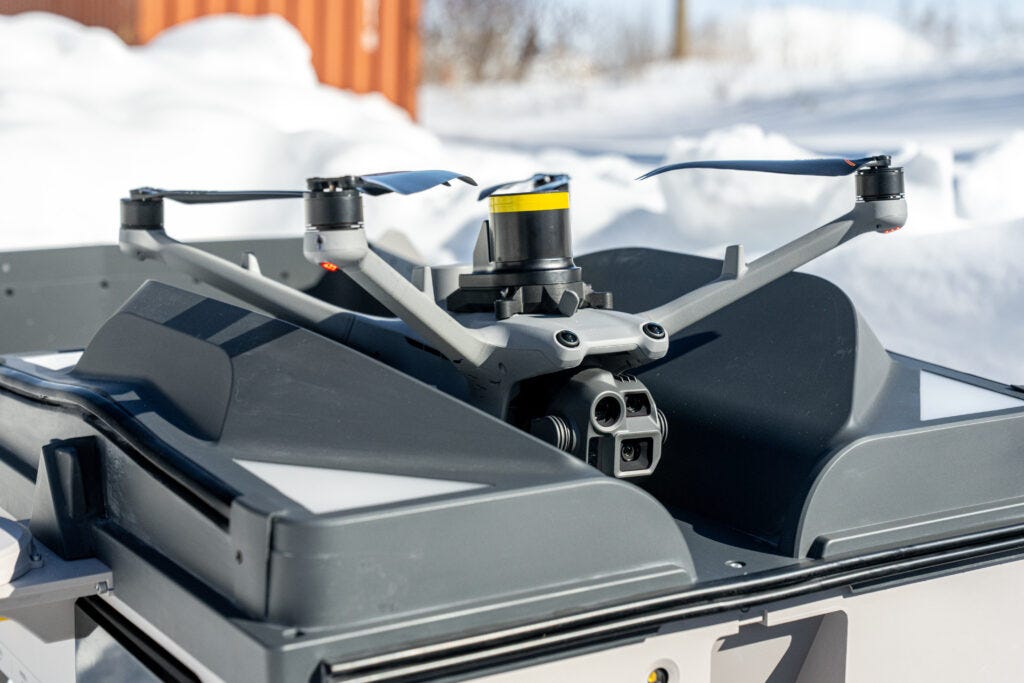
The company found success building drone safety components, such as parachute recovery and flight termination systems, to help commercial drones operate safely over people. The team is now expanding into new product lines, including the Precision Avalanche Management System, which uses SnowDart hardware for avalanche control; guided delivery systems; and the Flying Beehive, an air-launched system that can release multiple drones in flight. AVSS develops its own components and retains its IP and manufacturing knowledge in-house, reducing its exposure to global supply-chain disruptions. The company says that it can now compete with and beat Chinese and American competitors on price, regulatory compliance and capability.

“As a Canadian, and especially as a Maritimer, sometimes you lack the confidence to make that big leap, and you’re told to play only in your small sandbox.”
AVSS’s philosophy is that hardware takes time, and money is not a substitute. The company has watched competitors raise more money than it did and then fail. There is no way to skip the harsh reality of the slow and gruelling physical engineering required to build great products.
Since 2017, AVSS has raised only $2.2 million, with its last financing round completed in 2022. Over the past year, the company has grown from 15 to 55 employees, funded by revenue. It has manufactured more than 2,000 systems across its commercial and dual-use product lines year to date, with approximately 75% of its commercial revenue coming from international markets.
“If you only started when the Defence Industrial Strategy (DIS) was announced, you’re already three years behind.”
I spoke with Josh Ogden, Co-Founder and CEO of AVSS, about building Canada’s drone stack, procurement and what Canadian self-reliance requires.
“A Canadian company can compete and can win in the robotic space, but you have to build from the ground up, and you’ve got to put your time in.”
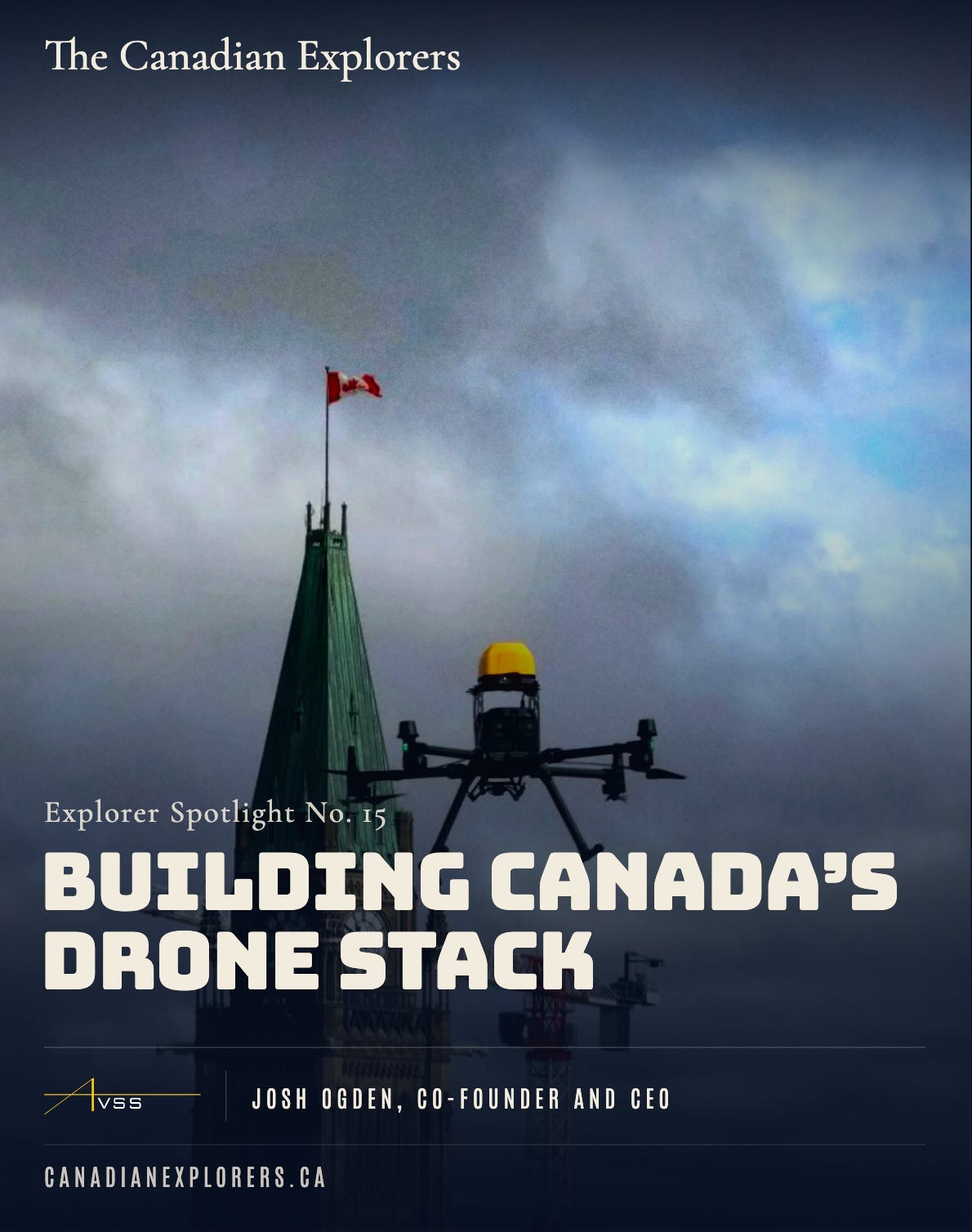
What is AVSS building, and why does it matter for Canada?
“AVSS is building sovereign robotic solutions from the ground up, making sure we source copper, steel and other materials and that they are made by Canadians, with no licensing and no reselling foreign goods.
It matters for Canada because of the economic impact and the fundamentals of manufacturing versus reselling versus licensing. When profits stay in Canada, more tax dollars are generated, more jobs are created, and Canada becomes more prosperous.
When you resell somebody else’s goods, you make less gross margin, maybe 10%, 15% or 20%. When you license, you pay a fee to a foreign entity. That eats into your operating costs, whether it is 10% of every unit sold or a large down payment for access to the technology. When you manufacture from the ground up, you spend the money on R&D and build a knowledge set. That can allow you to generate gross margins of 40% to 70%, maybe 80% if you are very good at building hardware and components. It keeps dollars here, and it keeps knowledge here.
Some people want to make quick money by licensing and reselling other people’s goods because they do not want the risk or the effort of three years of R&D. But when their supply chain is disrupted by a pandemic, conflict or China banning products in the drone sector, the person using the tool no longer knows how to fix it. They do not know what chip is inside or how it was designed for modification. Designing and building here provides economic benefits and a protective mechanism in a future conflict.”
Advertisement — Marconi Technologies
The Canadian Explorers is proud to be supported by its Founding Lead Partner, Marconi Technologies.

When did AVSS decide to expand into defence?
“AVSS did not start with the intention of entering defence. AVSS entered robotics through drone safety systems. It evolved into guided systems because it was our own problem.
Four or five years ago, we looked around and realized we were working with the top drone manufacturers in the world. We supply their safety devices. We do not only sell hardware; we work through regulatory approvals with the FAA, CASA in Australia and authorities in other countries. We have a unique perspective because we see products before they are fully baked. We work with manufacturers’ engineering teams, give feedback and tell them when a structure is not strong enough. We realized we were competent and capable. Today, we are shipping nearly 100 units a week around the world to export markets because we built that competency.
As a Canadian, and especially as a Maritimer, sometimes you lack the confidence to make that big leap. You are told to play only in your small sandbox. Based on experience and a proven record, we felt we could do more. A couple of years ago, AVSS decided we were going to be the default robotic-component supplier for the Canadian Armed Forces. We could build components and solutions that others could use, just like our parachutes, and take them to export markets. Manufacturers that do not need our safety devices may still need Canadian-made motors, electronic speed controllers and cameras.
In August, at the Area X.O./CJFC event in Killaloe, we were among a select group of Canadian manufacturers demonstrating our products, and we publicly displayed a number of these products for the first time. Normally, we are cautious about what we show while it is under development. ‘Fake it till you make it’ is a terrible strategy in this industry. We felt the time was right because we had spent years developing them and could supply them.
The timing aligns with the Defence Industrial Strategy, but we were implementing these plans before it was fashionable and before the strategy was announced. If you only started when the Defence Industrial Strategy (DIS) was announced, you are already three years behind. ‘One child takes about nine months to develop, but nine women cannot have a baby in one month.’ That is the problem with engineering speed. People think that if they keep adding engineers, they will solve the problem faster. It does not work that way. I’ve tried it many times. It doesn’t work. I stopped because it’s stupid. A team of 50 engineers will not necessarily build one product faster than a team of eight. It takes the time it takes, the testing it takes, the repetitions it takes and the crashes it takes. AVSS is almost 10 years old. To play at this moment, you had to prepare in the past. From 2020 to 2025, we built 14 products. In 2026, we built 14 products. We’ve doubled our product suites because we’ve been building all these capabilities.”
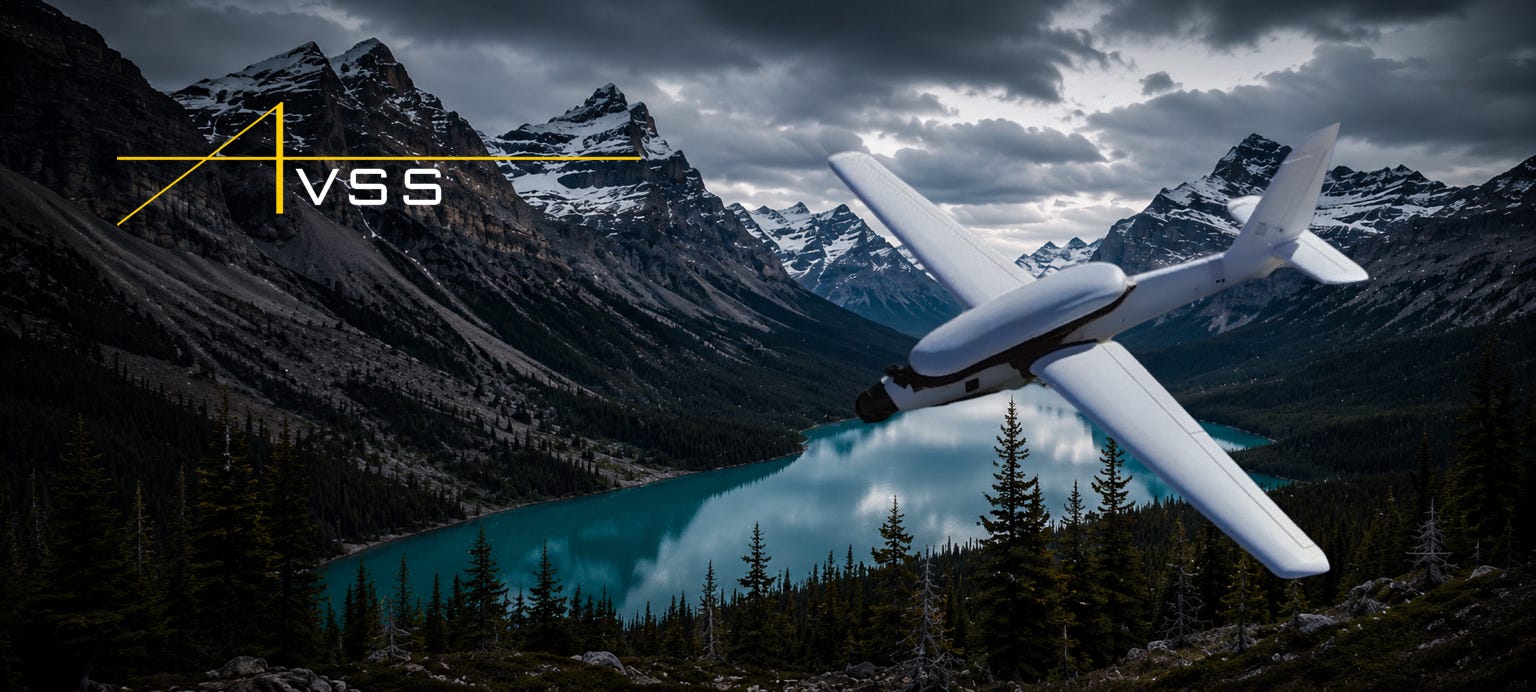
Could you walk me through the product lineup, and explain how everything fits together?
“We can break it down into components, integrated systems and full solutions.
Components are the ground-up pieces that many companies buy from other suppliers: motors, batteries and thermal cores, for example. We are taking on the work of building components from the ground up so the platforms we design for specific use cases can be cost-competitive. When companies only buy from other people, they add bloat instead of becoming efficient in manufacturing and design. Our component line will be available to allied countries that want Canadian-made components. Those are the enabling technologies. We are the only Canadian company working directly with the engineering teams of the world’s top drone manufacturers.
In the Canadian market, we are also building integrated and full solutions. Integrated systems include our parachute systems, drop systems and avalanche-mitigation system. Full solutions include Flying Beehive, the training drones within Beehive and the AROD system. The AROD system is a one-way rocket drone designed for avalanche management at Rogers Pass; it is not necessarily an interceptor drone. It is designed for one-way missions in a specific use case.”
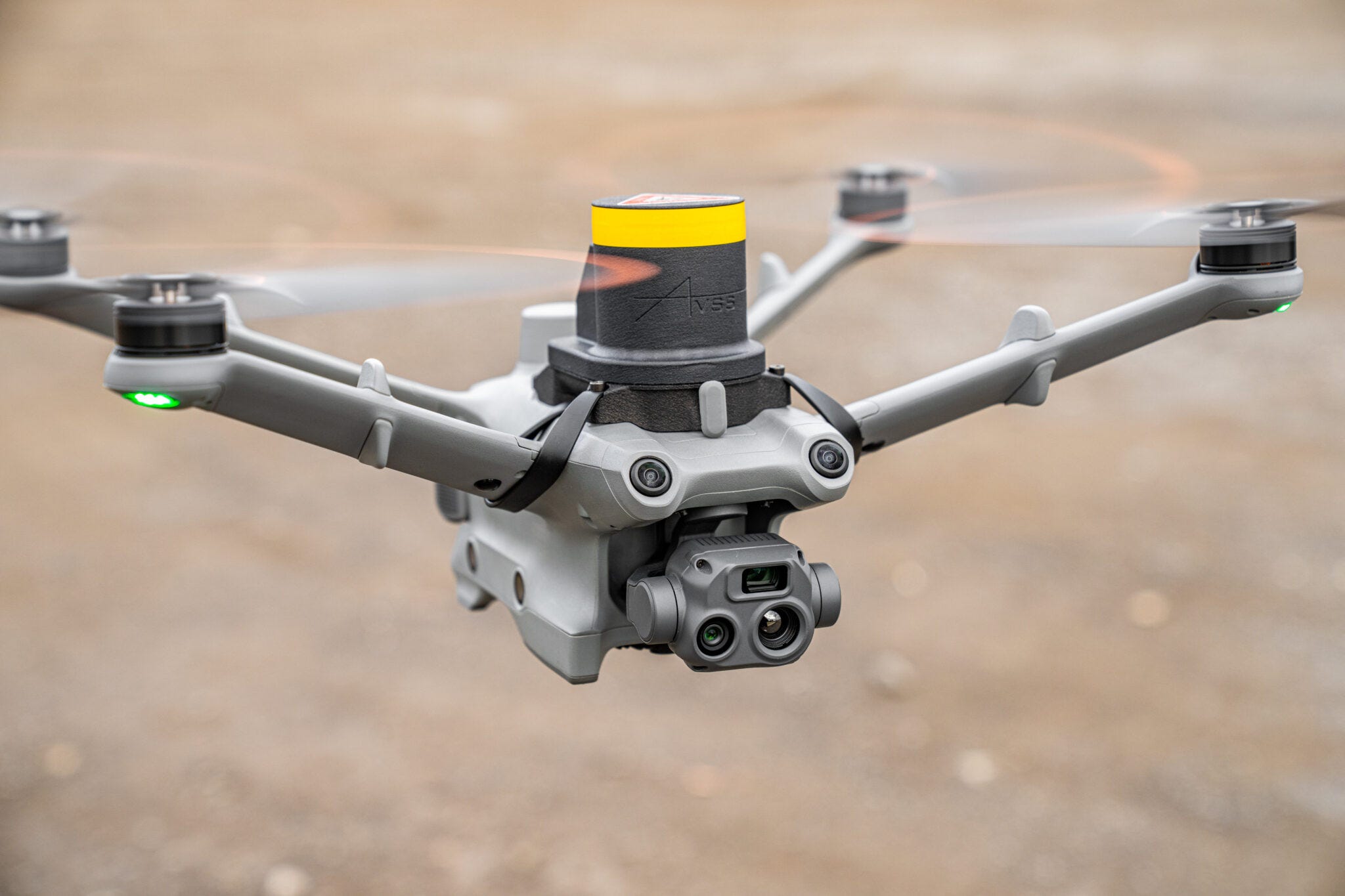
What operations become possible through AVSS’s drone safety and avalanche-management systems?
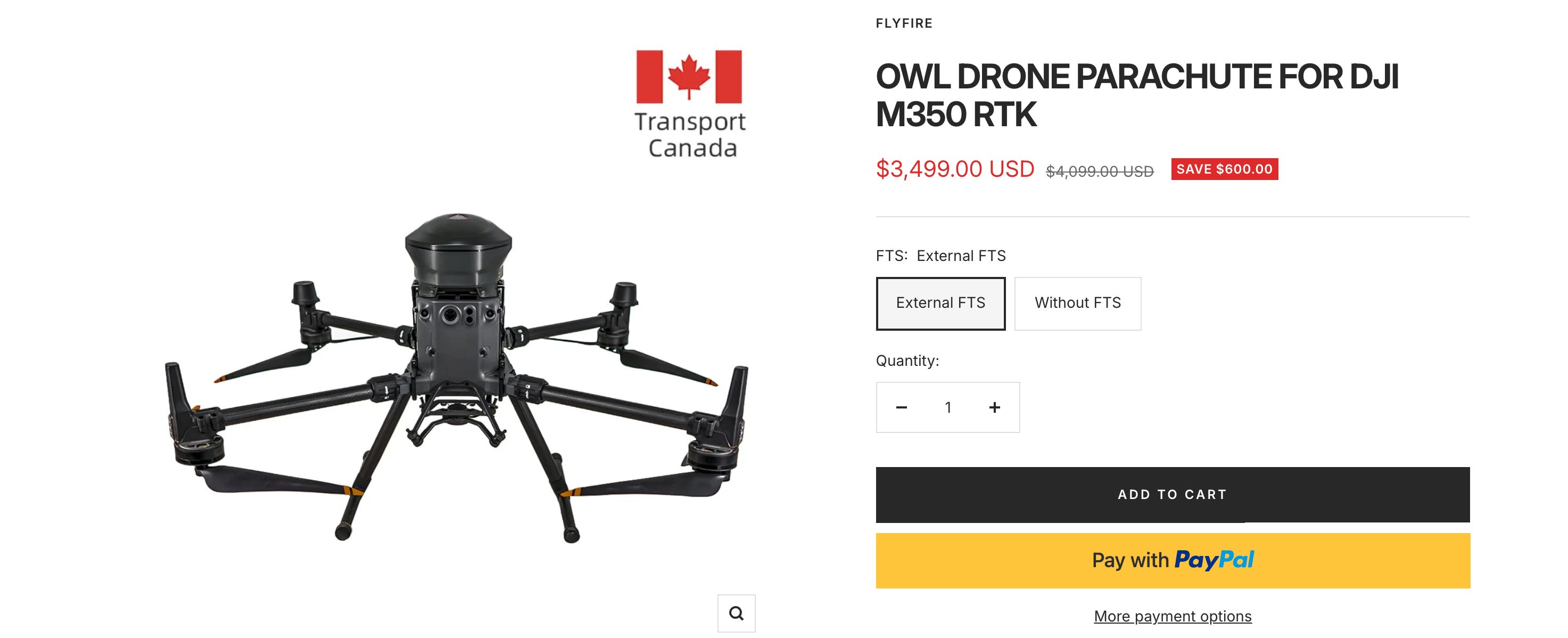
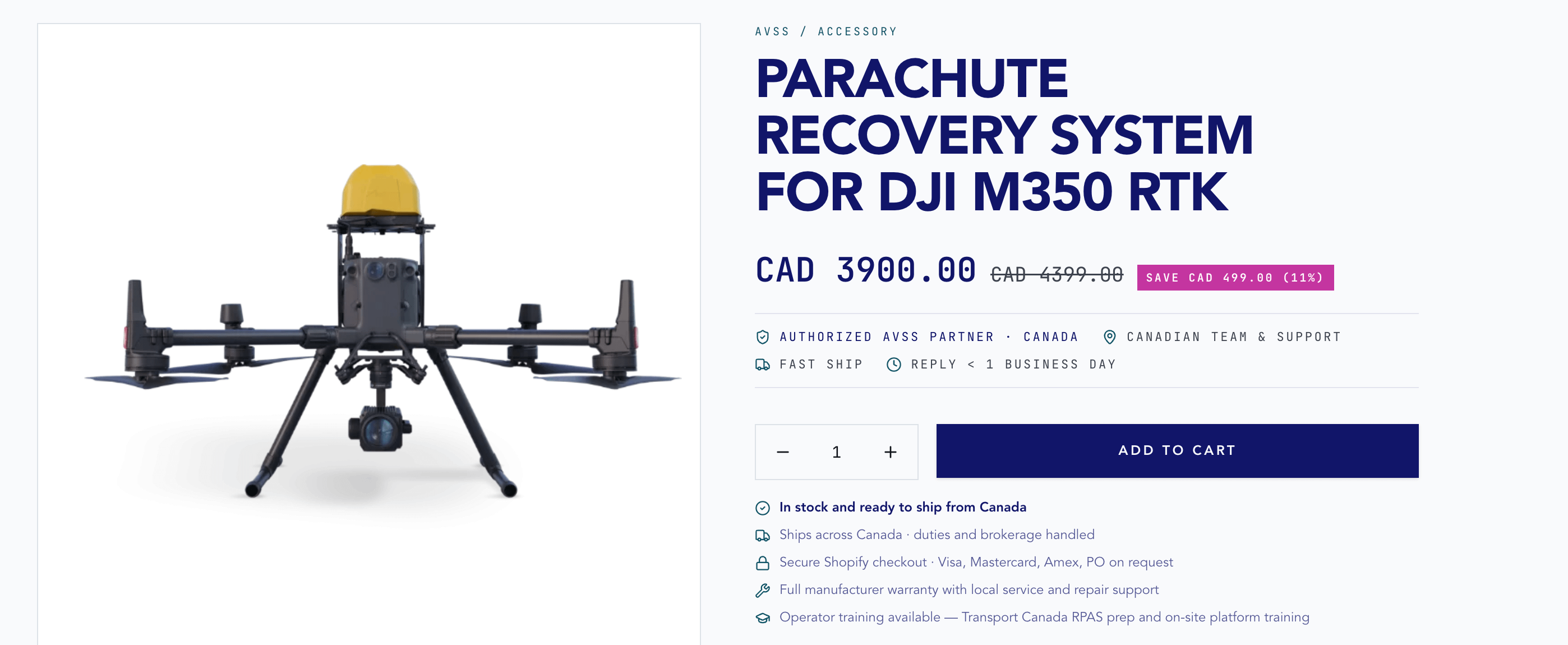
“The parachutes have already changed what is possible. Parachutes are now a smaller share of our business, but they are sold around the world and enable flight over people. We sell to police departments, engineering services and drone-delivery companies that fly missions over people. Imagine inspecting a bridge in downtown Vancouver. The government says a single point of failure cannot result in a certain type of injury, so you need a backup device. Our thesis began in 2017, and the product reached the market in 2020. We wake up to sales; it is a predictable business that continues to grow. Today, we are the number-one seller of commercial-drone parachutes to the largest manufacturers. The line is growing, but it is becoming a smaller percentage of the business as we expand into components and integrated systems.
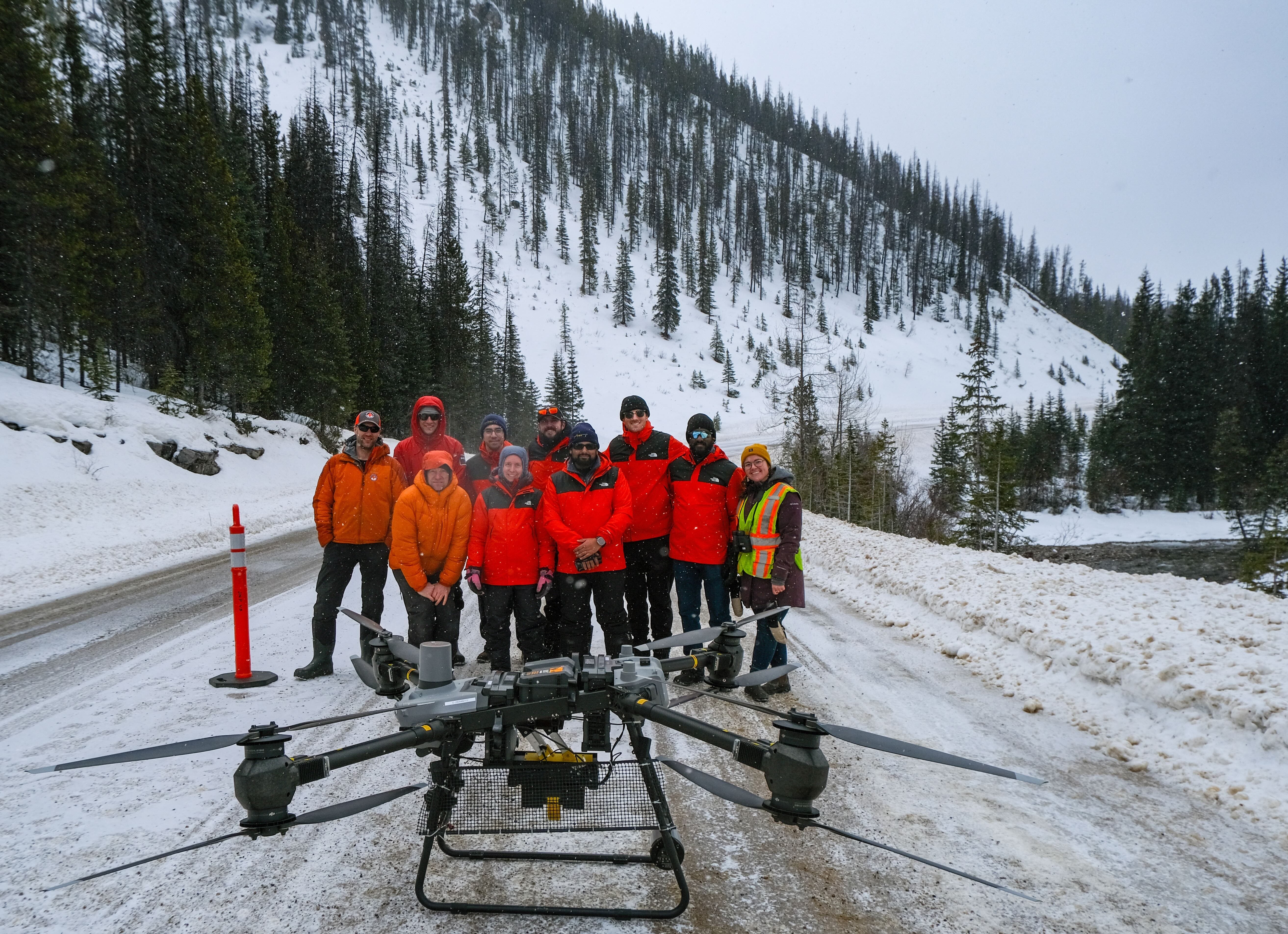
PAMS is the Precision Avalanche Management System. It is designed to drop different sizes of explosives from drones for avalanche mitigation. It is a purpose-built product with product-market fit, and it also gives us baseline technology for kinetic delivery and initiation systems. We were the first company in Canada to receive government approval to drop explosives from drones. We have also held import and export licences for three or four years because of the original parachute business. That paperwork took roughly three or four years. We worked with Parks Canada, Transport Canada, Natural Resources Canada and National Defence on the avalanche product. People are now presenting at conferences about how they use it. It will not replace every existing tool, but it can augment operations, and this is how we used it in Jasper.”
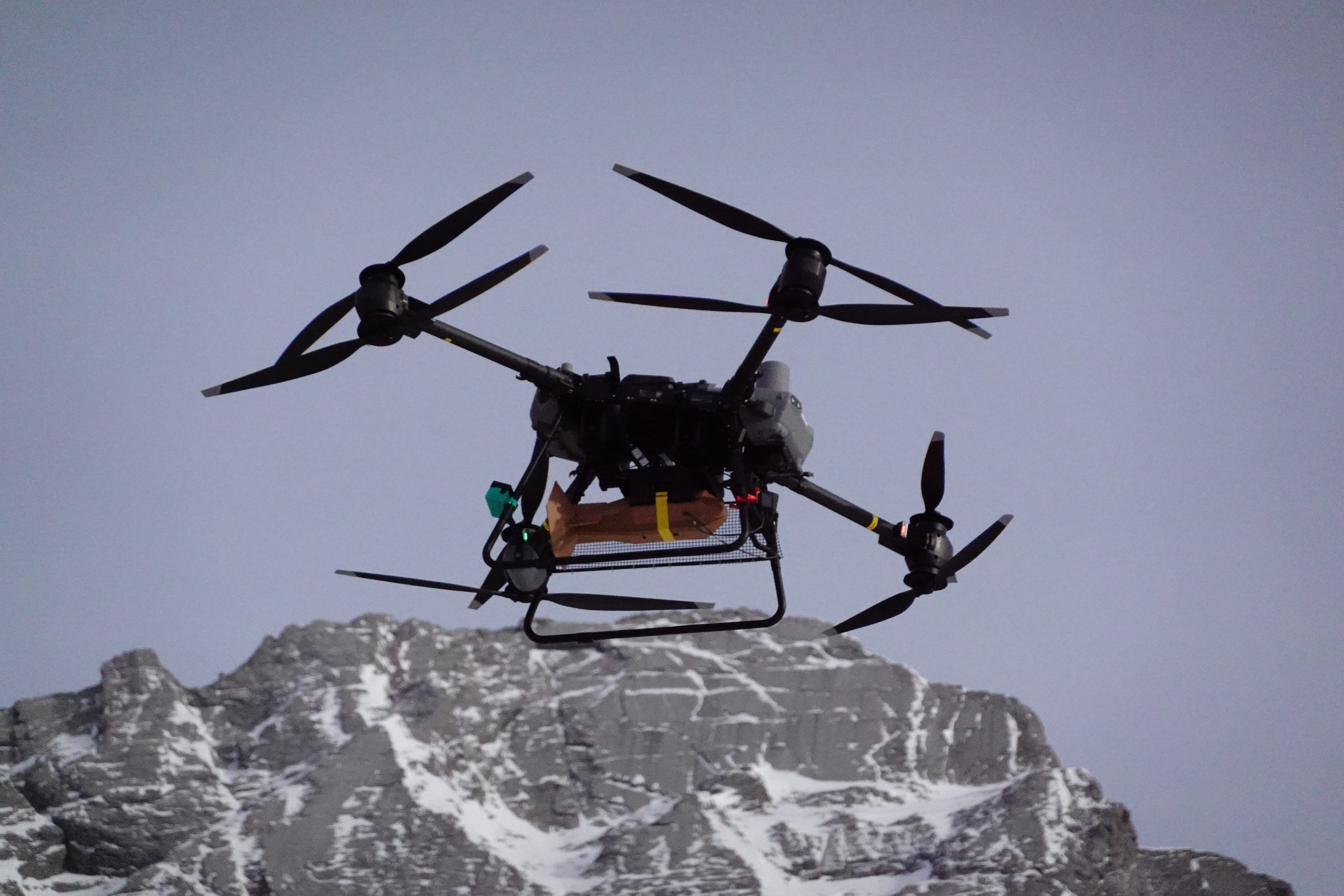
What is the Flying Beehive, and what makes launching multiple FPV drones from another aircraft valuable?
“Flying Beehive is an air-launched effect. It has been proven and is going through procurement for additional contracts so it can be implemented in new use cases.
The goal is to air-launch first-person-view (FPV) drones, address the 100-kilometre kill-zone problem and build solutions around different aircraft, whether a helicopter or another drone. We have shown that we can launch drones and gliders, release multiple drones in flight and use timed delays. The technical problem has been demonstrated; the next step is the Canadian Armed Forces incorporating it into missions.”
Is drone delivery possible in Canada?
“One thing you have to remember with any repetitive robotic-delivery use case is that you have to be mindful of our environmental conditions compared with California. Autonomous vehicles have accumulated many miles in places such as Las Vegas and California partly because the climate is more favourable.
Drone delivery will come to Canada. I expect Victoria or Vancouver to see it first because of the climate. Under current regulations, backyard drone delivery is probably another four or five years away, but rural delivery can come sooner. Canada introduced lower-risk beyond-visual-line-of-sight rules last November, and lower risk is defined partly by population density. We will see long-range rural deliveries before backyard delivery.”
What do “Product of Canada” and “Made in Canada” mean, and can Canadian companies compete on price?
“‘Product of Canada’ generally means 98% or more of direct production or manufacturing costs are Canadian and the last substantial transformation occurred here, like maple syrup or steel. ‘Made in Canada’ uses a 51% threshold; it is also about the final transformation and where the material is sourced. There are nuances, including textiles, but it is fundamentally a cost calculation. The problem is that entrepreneurs sometimes find what I would call unethical, creative ways to game the calculation. A company can import a foreign product from Alibaba, add a 50% margin or a small amount of labour and then try to present it as Canadian-made. Being a Canadian company also does not mean the product is Canadian. A Canadian company can buy maple syrup from Vermont and resell it; the syrup was still made in the United States.
To me, “Made in Canada” comes down to three questions: Where are your profits? Where is the product made? Where does your IP reside? It should be a trifecta: more than 51% Canadian materials and labour, profits and taxes staying in Canada, and intellectual property staying in Canada, so the knowledge is growing. The legal definition does not include all this.
On price, Canadian companies can compete if they build their products themselves. I do it right now. I am beating Chinese competitors on compliance and regulatory approvals, and on price point. You can compete with the Chinese; we beat the Americans out of the parachute market. We spent two years redesigning the electronics, certifying and testing them. That stack can now be reused across multiple products. A Canadian company can compete and win in robotics, but it must build from the ground up and put in the time. We have been doing this for a decade now; I tried the shortcuts. Thank God for our CTO, who said, ‘No, we are not going to use off-the-shelf flight controllers to control our parachutes because of the cost, supply-chain risk and form factor. Let us take two years to redesign the entire electronic stack ourselves, go through certification and testing, and then we will have something we can use across multiple products.’ That decision during COVID gave us the foundation to build 14 products in a year.”
How did AVSS fund its development?
“Pure luck. No, historically, we have only raised $2.2 million, so we have only eaten what we have caught. We grew the company from revenue, which creates discipline.
We grew from 15 to 55 employees in a year, but we stayed at 15 for about five years while building the technology suite. Our whole team was technical except three of us for five years. Twelve people were engineers and technicians. The supply-chain manager, my vice-president and I handled marketing, sales, HR, recruitment and everything else. We had to grow sustainably, so we developed a survival instinct rather than relying on other people’s money.
We are now open to raising money to scale because we are ready and have product-market fit across multiple products. We are an outlier in the robotics industry. A lot of companies that raised large amounts between 2015 and 2020 are now out of business because they did not grow sustainably and raised too much. We beat competitors that have raised $30 million and $10 million; both are no longer doing parachutes, and that’s just an example of having conviction, discipline and not rushing.
In software, a bug can be fixed with an overnight update. Hardware does not get that luxury. When we ship, we do not want customers calling because something failed. We have been around for 10 years; we only have a part-time customer support person, because that’s how few calls we get. We built a product that just works. We sell safety devices; they have to work. Imagine grabbing a fire extinguisher and wondering whether it will work today.”

What is working in Canada’s defence-drone procurement, and what still needs to be fixed?
“We are in a government-build stage. Existing programs such as Innovative Solutions Canada have supported 20 or 30 drone companies over the years that are scaling up. If you want to know who has been working in drones, look at companies that completed ISC innovation challenges and the smaller group eligible for additional prototype sales. Those programs need to be properly funded and executed. Public Services and Procurement Canada needs more resources and procurement officers to accelerate the work. The new initiatives require an “ask me in a year” answer. There are many: MINERVA, the drone marketplace and other procurements. Right now they are at the application stage. The proof comes when contracts are awarded, and companies get to deliver.”
What do the next 12 months look like for AVSS?
“Execution. That is the goal.
We are going from shipping more than 2,000 units to more than 7,000 units, and eventually to 20,000 units across different drone components and products. We are beyond the invention stage for the products we are scaling. We continue to invest heavily in R&D; it is a never-ending machine. The main focus is ramping up production. We have tripled the production team and put the infrastructure and equipment in place. Last year was our year of building. This year is our year of execution. Then we will build again for the next level of scale.”
What is one Canadian national-interest startup worth watching?
“AVSS, of course. But we’re not a startup. We’ve been around.
It is not about the startups. It’s about those who have been around. Pay attention to the 10 or 15 Canadian drone companies that have been here for more than 10 years and ground through the period when there was no money. They will be here while there is money, and they will still be here when the money dries up in five years.
Focus on the companies that have been building and delivering into National Defence, oil and gas, and policing. Some do not get the same attention because they are not in Ottawa or part of the startup hype cycle, but they are executing.”
What advice would you give to a founder starting in this space?
“Be patient and be decisive. If you want to play in this space, go for it, but do not rush it. Money helps you acquire resources, but money alone will not build products.
Anyone coming into this space needs to know that this is not a game for tourists. It is for people willing to spend more than 10 years. I hate the Silicon Valley mentality of building a company, selling it after three years, then doing another. Nothing gets built in hardware in three years.
Build a 10-year plan. If you want to play in dual-use technology, defence or robotics, make a 10-year commitment with your co-founders. Do it one contract at a time. Find product-market fit, then raise. We need more sustainable businesses with a long-term view.”
If you’re building something in Canada, I want to hear about it. contact@ethanmarcoux.com


