


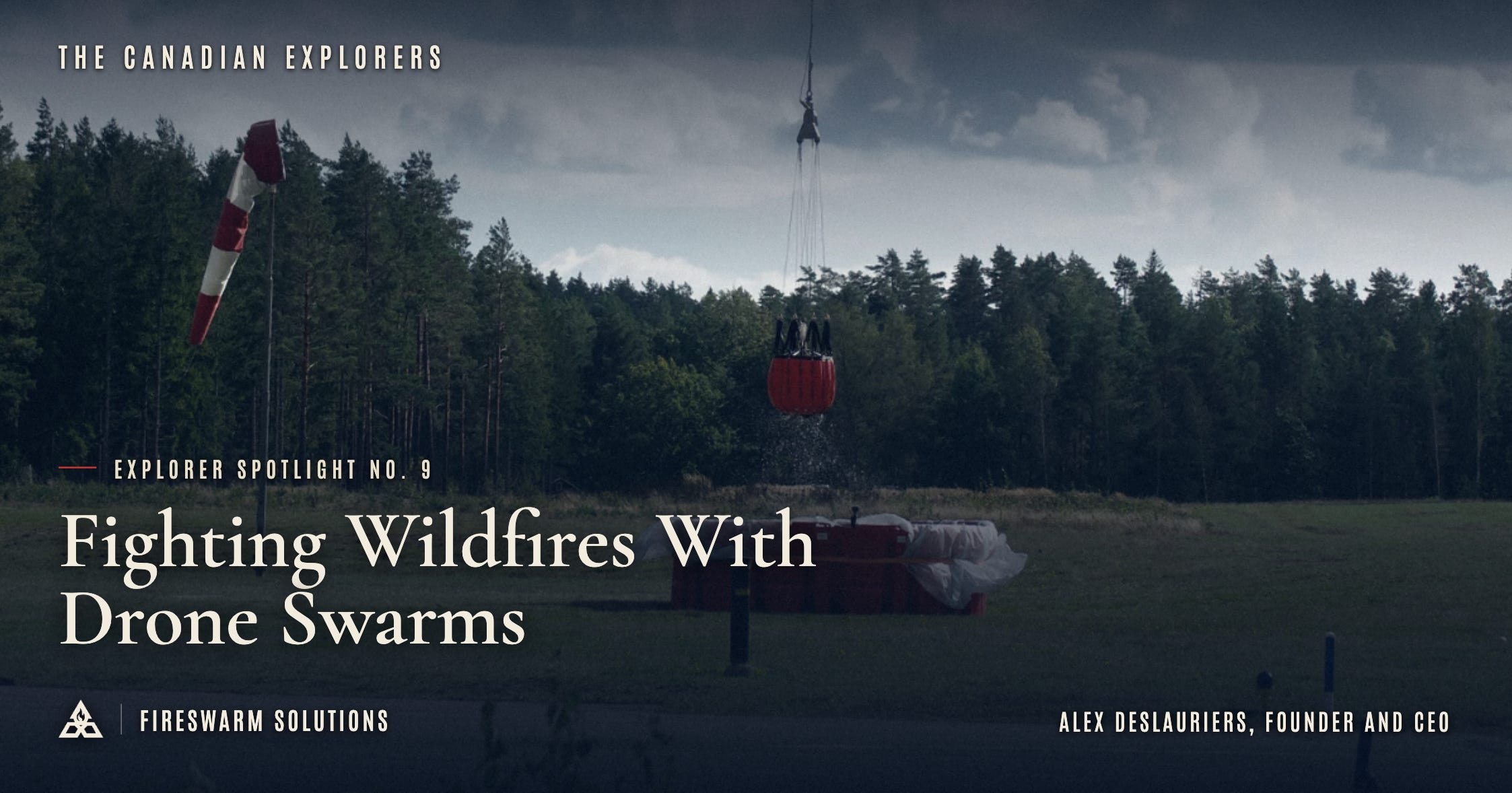
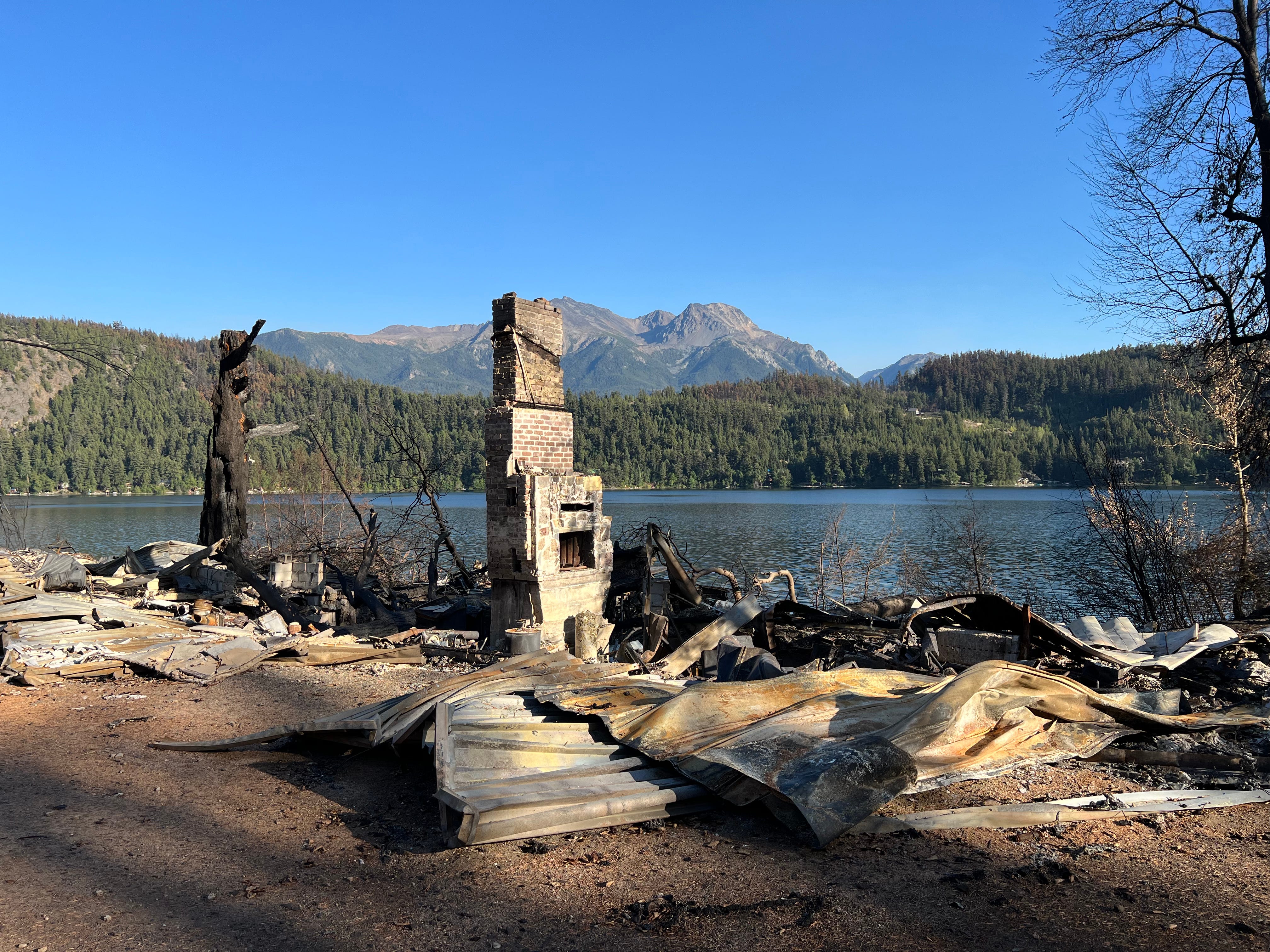
Co-founders Alex Deslauriers and Melanie Bitner are life partners. On August 18, 2023, their family properties were among 56 destroyed near Gun Lake, British Columbia.
For two weeks, they watched helplessly as air crews fought the wildfires during the day and left each evening. Night-time conditions made flying too dangerous.
“It became a life mission to bring about a change to wildland firefighting.”
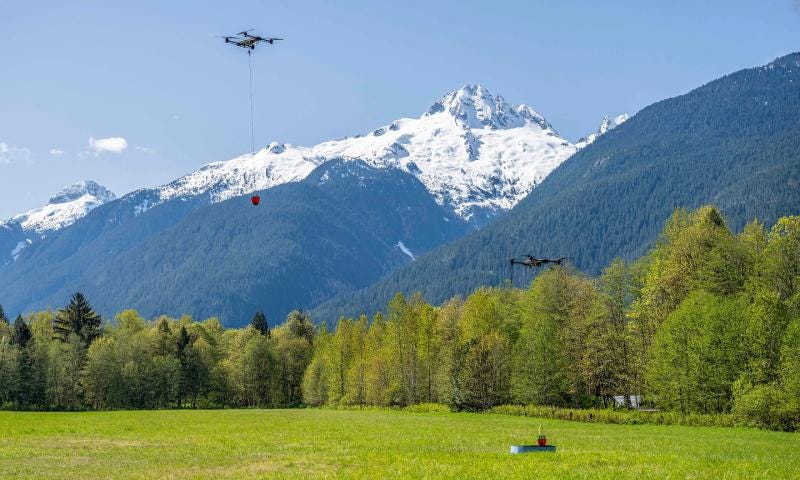
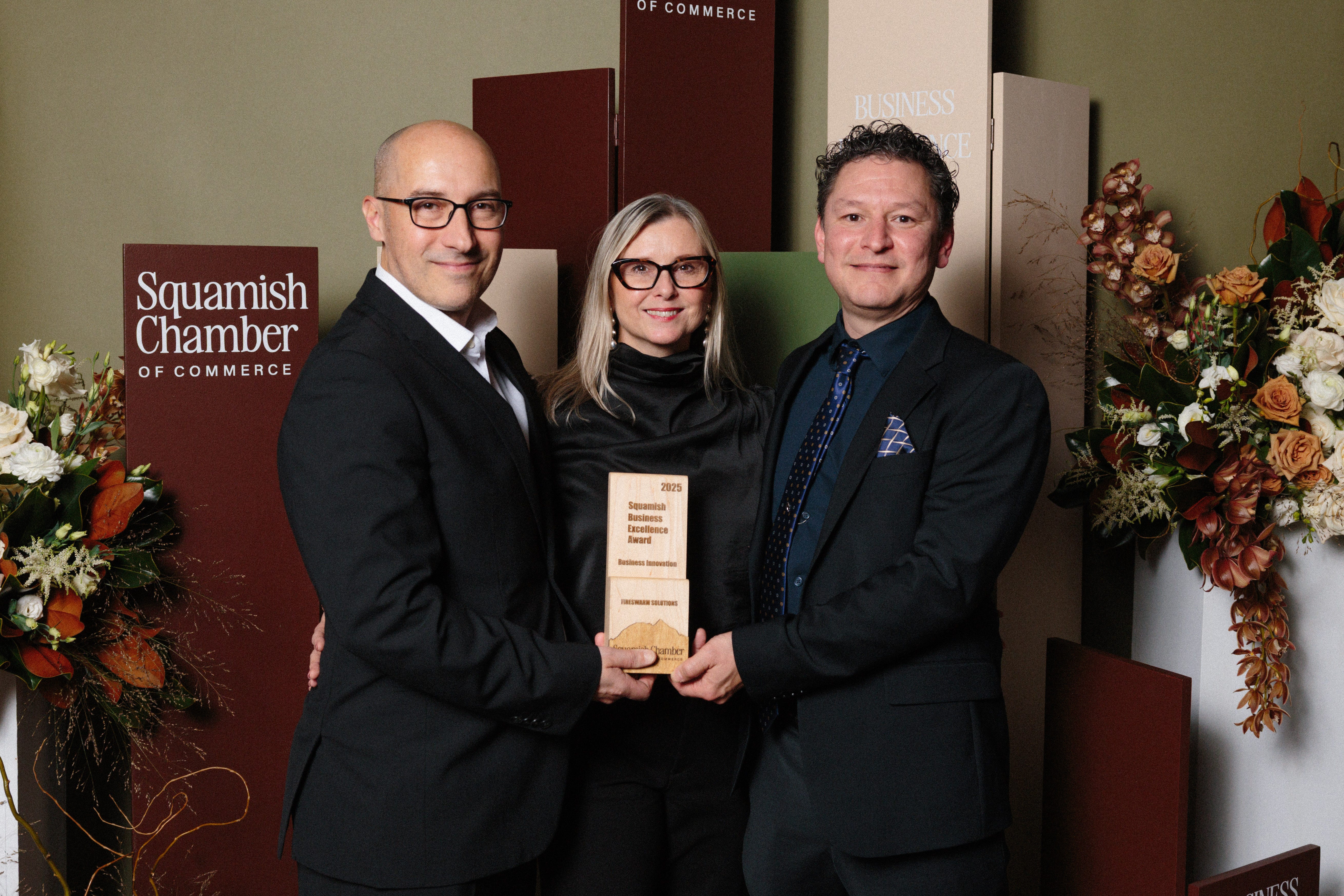
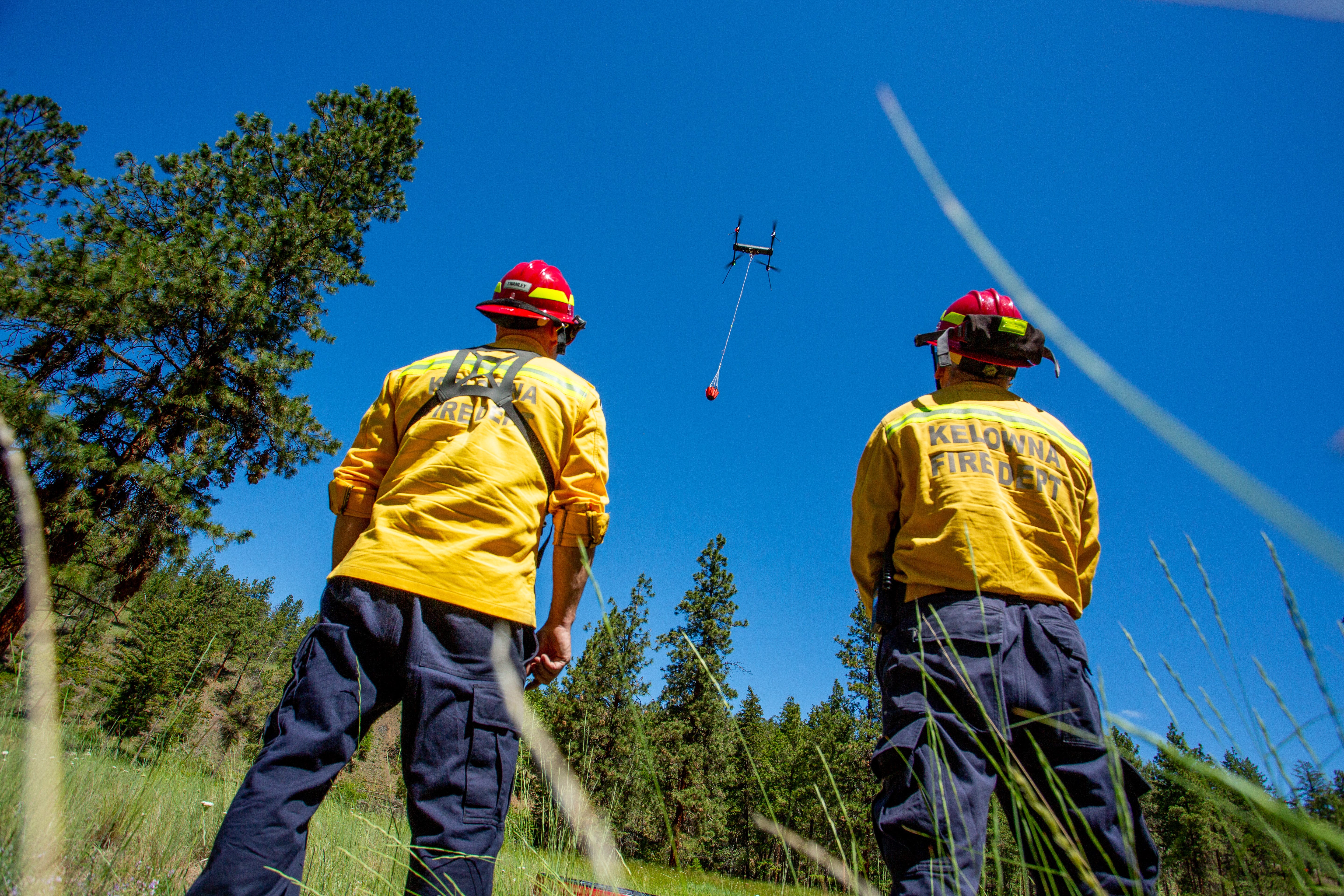
Later that year, Deslauriers and Bitner founded FireSwarm Solutions with David Thanh, an emergency-response and wildfire-logistics specialist. Instead of putting humans in harm’s way, FireSwarm decided to leverage ultra-heavy-lift drones to fight wildfires autonomously and fly when others can’t. They call it the ‘pickup truck of the sky.’ Its core technology combines a drone-agnostic swarming algorithm, command-and-control software, and onboard edge-processing hardware. The mission is to use drone swarms for repeated water delivery when conditions are too dangerous for people to operate in, including smoke, low visibility, and complex terrain.
“Drones do not have a home to go back to at night or a family to go back to the next day.”
FireSwarm is a dual-use company and is now part of NATO DIANA’s 2026 cohort. It is positioning itself beyond just wildfires, into defence and critical logistics. Intended applications include moving equipment through contested environments and, eventually, evacuating casualties. The product is currently ready for prototype operations and will be deployed in multiple exercises in the coming year.
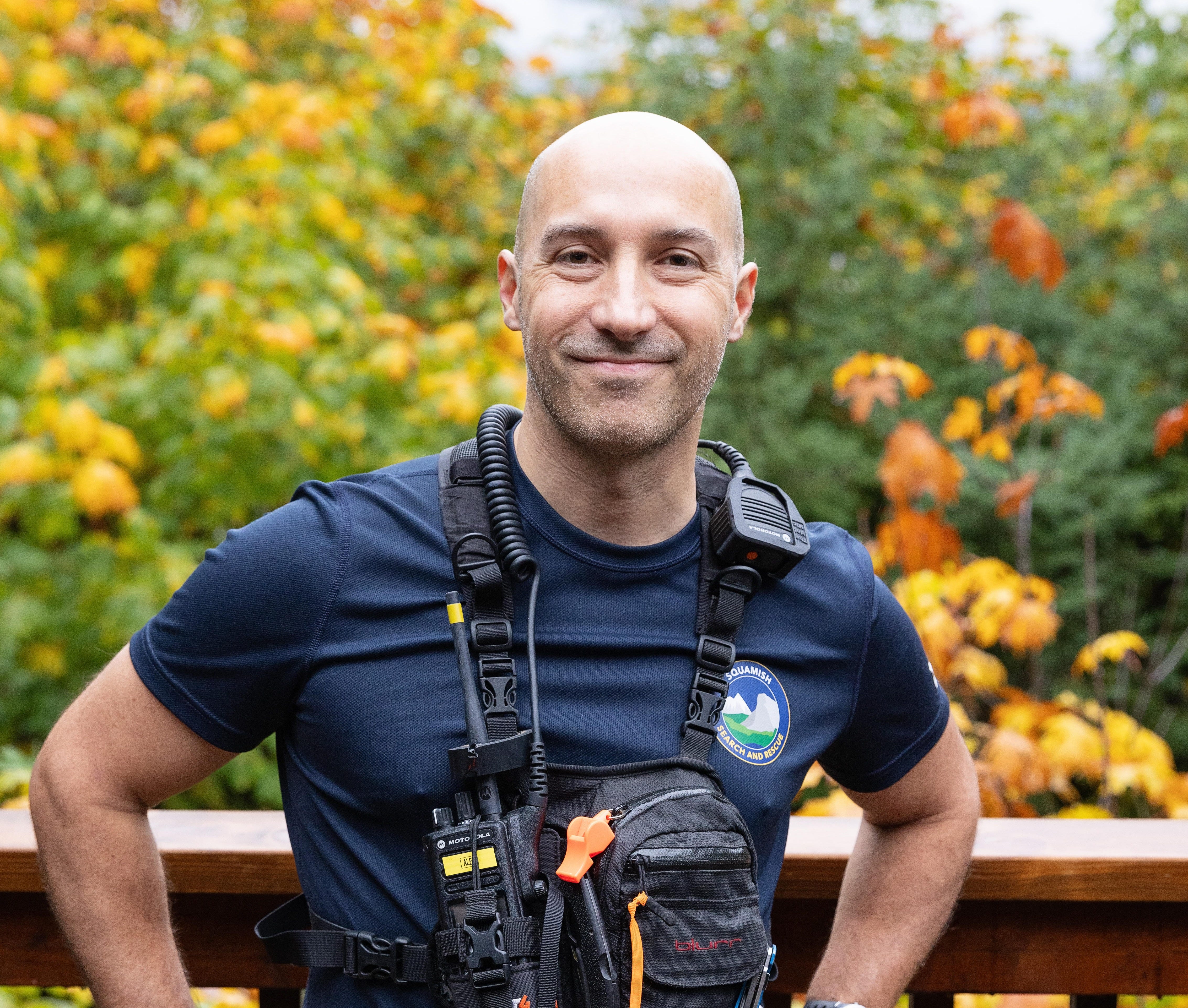
I spoke with Deslauriers, FireSwarm’s founder and CEO, about losing his family properties, what the company is building, his perspective on the Canadian landscape, and how drones can fit alongside traditional aircraft systems. He believes that autonomous systems should extend humanity’s ability to protect, respond, and sustain.
“I dream of a world where disaster is no longer deadly, where autonomy carries life-saving aid to every community on Earth and outpaces the growing size and frequency of disasters before they can become a catastrophe.”
What is FireSwarm building, and why does it matter for Canada?
“FireSwarm is building integrated mission capability, including hardware, software, autonomy, and operational systems. This will enable ultra-heavy-lift drones to automatically execute missions in contested environments related to equipment transfers in wartime environments, and also, in time, casualty evacuation from advanced positions to field hospitals.”
What was the moment you realized that you needed to create FireSwarm?
“FireSwarm came about as a company based in B.C. to bring a solution to wildfire using ultra-heavy-lift drone swarms in 2023. It was born in the days between watching wildfire grow closer and closer to our community and then watching everything burn at night when it was unsafe for crews to fight to save our homes. Since 2025, we have been involved as a NATO DIANA innovator to bring about a swarming algorithm for ultra-heavy-lift drones as it pertains to national defence priorities for Canada.
On August 18, 2023, my family lost two properties along with over 50 of our neighbours in the area of Gun Lake, B.C. At that point, as an aerospace engineer, search-and-rescue technician, and commercial pilot, it became a life mission to bring about a change to wildland firefighting and emergency response.”
How big is Canada’s wildfire problem, and how much worse is it getting?
“The planet is getting warmer. The amount of fuel available in our forests is increasing, and the likelihood of forest fires becoming larger than they have been in the past is just increasing exponentially. Meaning, we need technology available today to support crews in forest management and early suppression to alleviate conditions where a fire left unattended will have cataclysmic results.”
Video: The founders’ family properties during the 2023 wildfire.
Why are drones the best way to address this?
“Through the use of AI drone autonomy, we’re able to extend the reach of firefighters and emergency-response crews across the provinces and around the world. When crewed aviation is unsafe, especially during nighttime fire-suppression operations, leveraging drones that do not have a home to go back to at night or a family to go back to the next day is a logical next step. We can leverage this technology to save humans, property, and values at risk, especially knowing that drone autonomy will have a cost per hour much lower than that of a helicopter of the same water-carrying capacity.”
What does FireSwarm actually build?
“We are terming ourselves as a 60% R&D company and 40% services company. In terms of the R&D, we are building the swarming algorithm and the onboard edge-processing device that is actually fitted on ultra-heavy-lift drones. We’re, by definition, a drone-agnostic solution, meaning any ultra-heavy-lift drone can be adjusted to fit - or we can adjust our solution to fit a variety of drone platforms. That is how we are setting ourselves up for success here, knowing that the ultra-heavy-lift drone category and uncrewed vehicles are nascent and will grow over time.
We are perfectly positioned to enable that autonomy in other adverse conditions and emergency-management use cases as well. We do need, as a technology company building end-to-end mission capability, a services arm that enables pilots and operators to execute on prototype projects with NATO, allies, and also wildfire agencies.”
Will FireSwarm be able to coordinate across different autonomous systems?
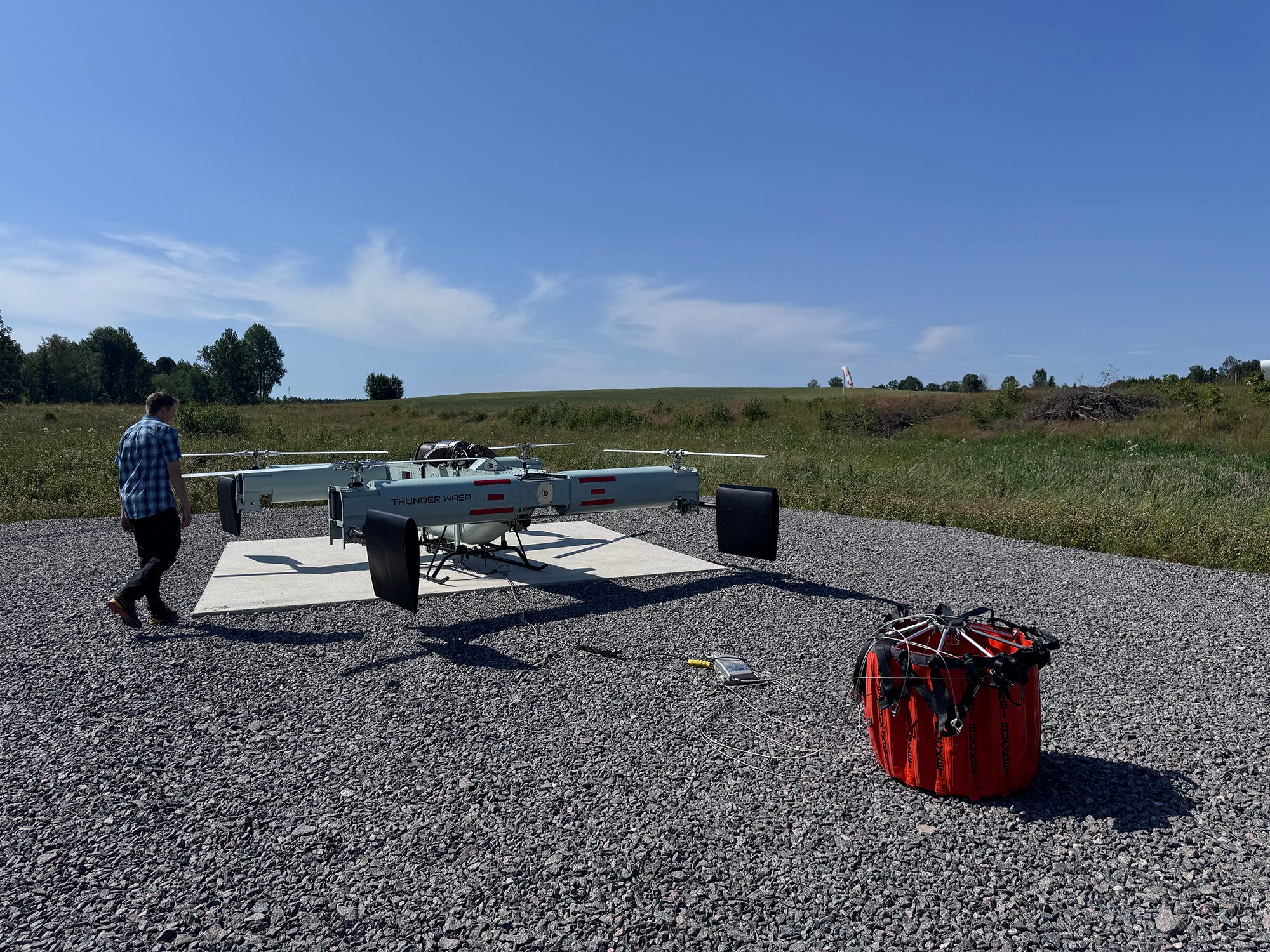
“We see a future where a common operating picture provides all of the data needed for our swarm algorithm to make decisions on the priority of missions and the safe travel of multiple types of drones in congested airspace. Our tech is then able to provide those solutions back to the common operating picture for a user (human on the loop) to oversee the situation of the drones being autonomously controlled.”
What stage is the product in, and what is preventing deployment and scale?
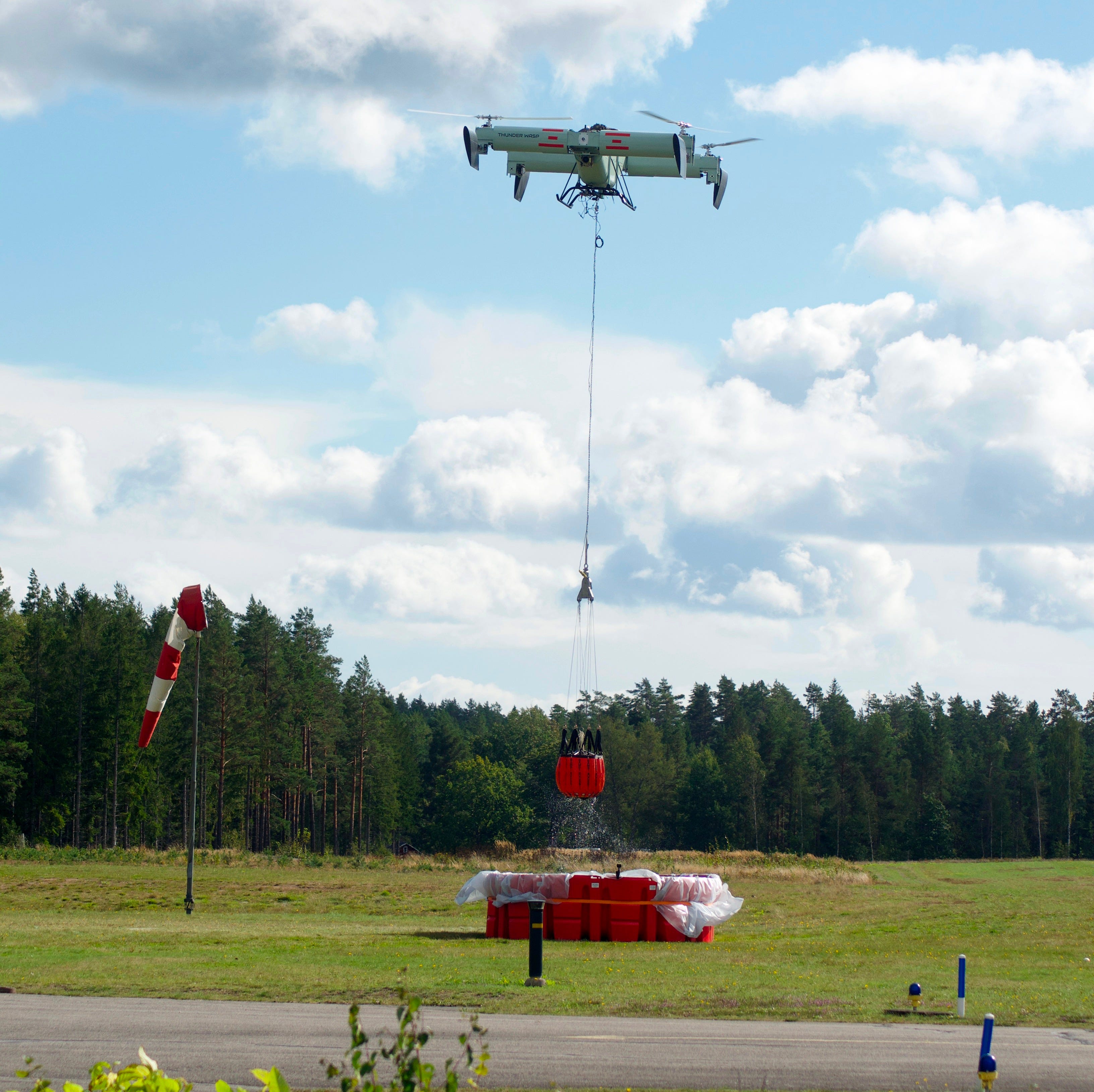
“The product itself is ready for prototype operations. We are deploying with a number of exercises this fall and into 2027. We are responsible for the full capability stack; however, we are not drone manufacturers. We are reliant on ultra-heavy-lift drones entering the market in order for our AI edge-computing device and our swarm algorithm to manage these machines. The first machine that is available is built by ACC Innovation in Sweden. The ThunderWasp is currently being sold commercially, and we are working with ACC to enable that machine to be flown autonomously in adverse conditions. We have two other drone manufacturers that we are currently in discussions with to bring about automation for those additional machines as well.”
Does FireSwarm replace existing wildfire aircraft or support them?
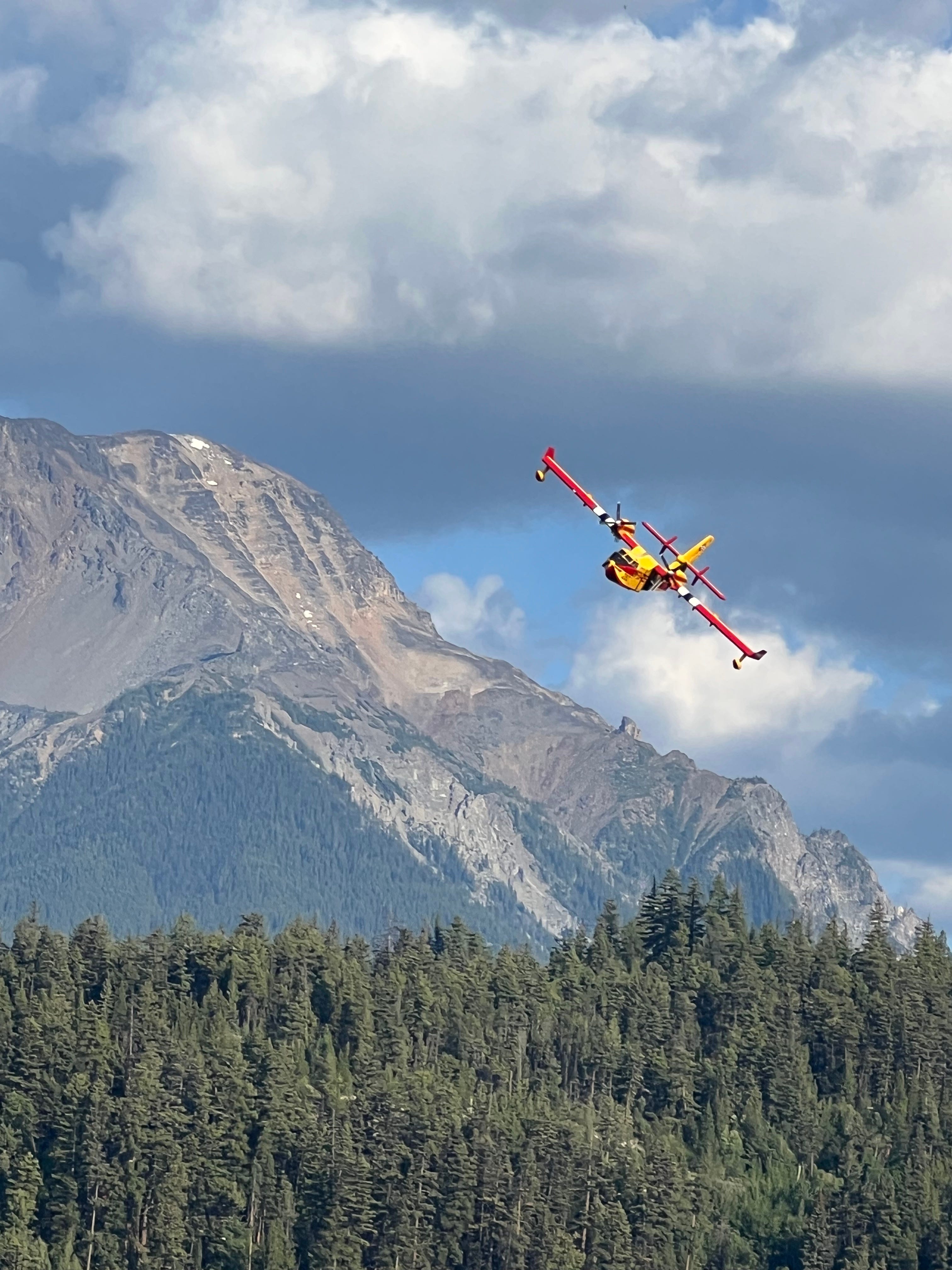
“Currently, wildfire suppression is executed by helicopters, airtankers, and water skimmers, all managed by a human flying in a bird-dog aircraft and humans on the ground managing the air operation. We see FireSwarm fitting in initially by supporting crews with rapid response logistics and also during nighttime suppression hours, when the ground or flight crews are getting some rest. These machines can take over fire-suppression efforts in nighttime hours while conditions are more favourable for suppression, yet they are too risky for humans to execute.
We see FireSwarm as a complement to existing wildfire aviation, not a replacement. Helicopters and aircraft will remain critical, but autonomous heavy-lift systems can add capacity, reduce risk, and help deliver certain missions more cost-effectively by operating around the clock. Our hypothesis is that a scalable swarm of three or more ultra-heavy-lift drones could provide the payload capacity of a medium helicopter while offering greater flexibility, persistence, and operational efficiency.”
What feedback are customers providing?
“The feedback we’re receiving from the wildfire industry is that this is a brand-new vertical that we are creating, and it is going to require time and effort to work through the regulations and also to work through pilot projects to ensure our solution is safe to be operated by wildfire agencies. In parallel, we are working with NATO to bring about our solution within the NATO concept of operations for slinging ultra-heavy-lift loads and, potentially in time, bringing casualties back from advanced positions.”
What do the next 12 months look like for FireSwarm?
“The next 12 months are focused on expanding prototype deployments, proving operational value with wildfire customers and our NATO Allies, and building the foundation for commercial adoption.”

What other Canadian national-interest startup is worth watching?
“A Canadian startup called SenseNet. A North Vancouver-based company has gone from innovation to commercial adoption and now is moving at a pace that will enable commercial success outside of Canada. They are to be watched because they have a great business model, great technology needed for early detection of not only wildfires, but also any situation that is worth keeping an eye on.”
Why build in Canada?
“Canada is perfectly positioned as the defence-innovation hub in the decades to come. We also have a massive wildfire problem that requires attention. The dilutive funding opportunities for Canadians are not as good as they are in the U.S., but we are working with Canadian companies and funds to bring about this sovereign capability for Canada specifically. We have been pulled in other directions, but we are staying true to bringing innovation that is Canadian-built for Canadians.”
If you’re building something in Canada, I want to hear about it. contact@ethanmarcoux.com
Autonomous Manufacturing for Ukraine | Kath Intson — Explorer Spotlight #8

On June 10, 2026, Moscow called Canada a “warmonger" after a Canadian company had signed a drone manufacturing deal with Ukraine. Russia then threatened to publish that company’s address.

