


On June 10, 2026, Moscow called Canada a “warmonger" after a Canadian company had signed a drone manufacturing deal with Ukraine. Russia then threatened to publish that company’s address.

This company is Sentinel R&D, a Hamilton, Ontario-based startup founded in 2024 that is building UAVs (drones) for the modern battlefield. Sentinel is automating composite manufacturing for unmanned systems cheaply and at scale for the next generation of warfare. The vision is that wars will be won not purely on what you can build, but on how much of it you can build.
“We’re building a manufacturing company masquerading as a drone company.”

In May, Canada’s Department of National Defence and Ukraine’s Ministry of Defence announced an arrangement establishing a joint venture between Sentinel and Ukraine-based Airlogix. With support from both governments, the partnership plans to manufacture Ukrainian drone systems in Canada for Ukraine’s Armed Forces and establish sovereign manufacturing capabilities for Canada.
“We need to fix the national mindset that, because we’ve had the privilege of living in peacetime, peacetime will continue forever.”
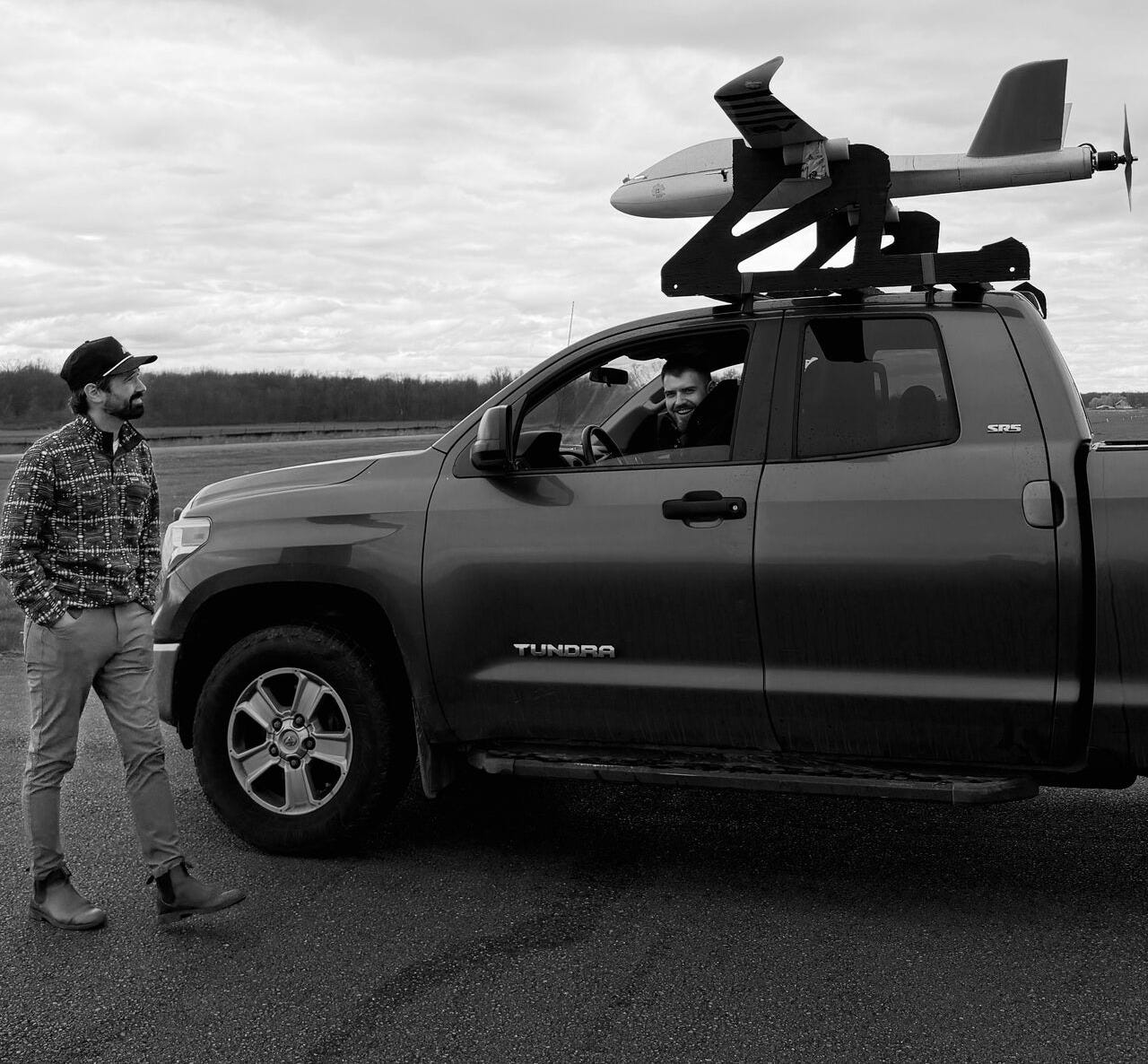
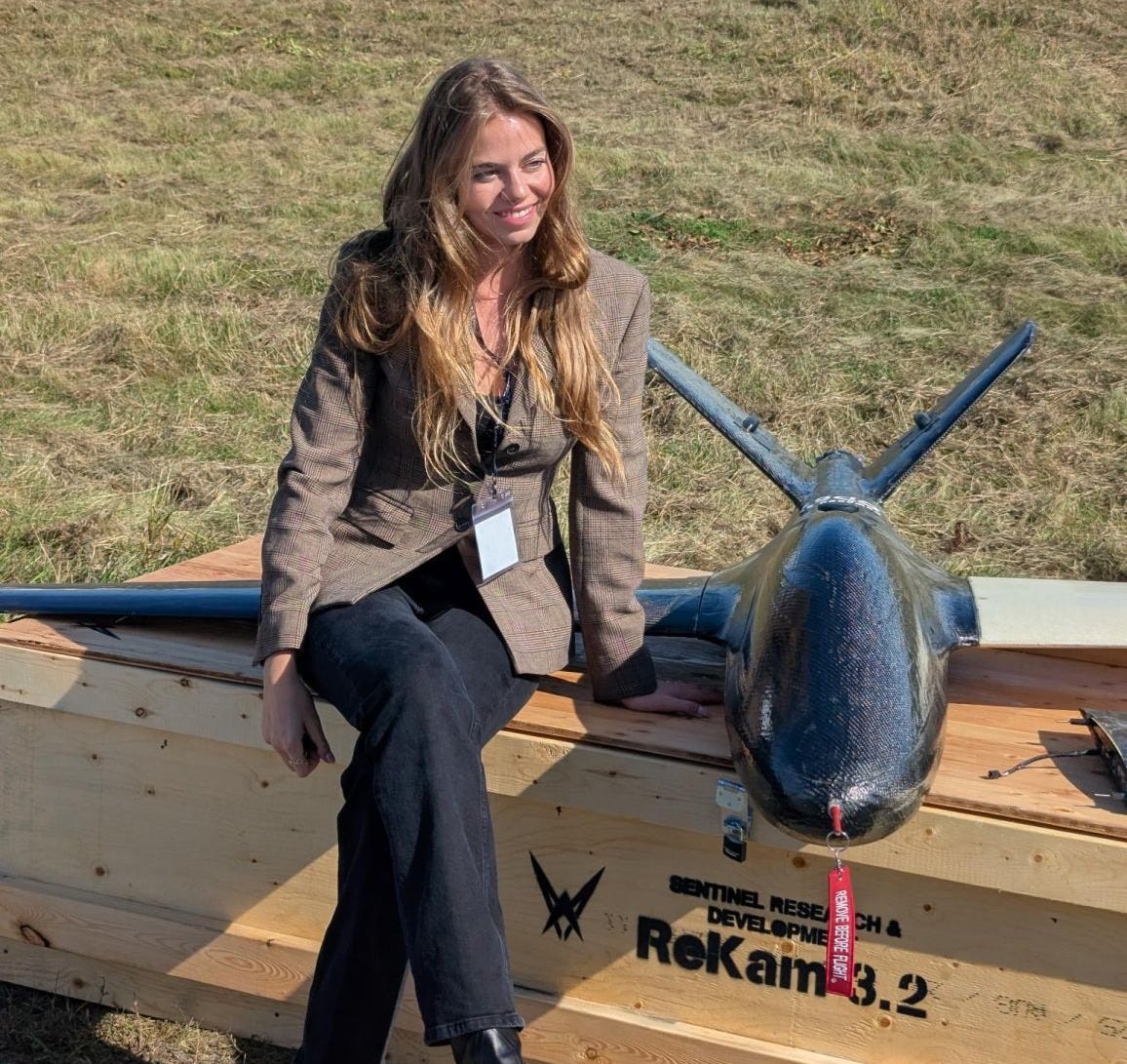
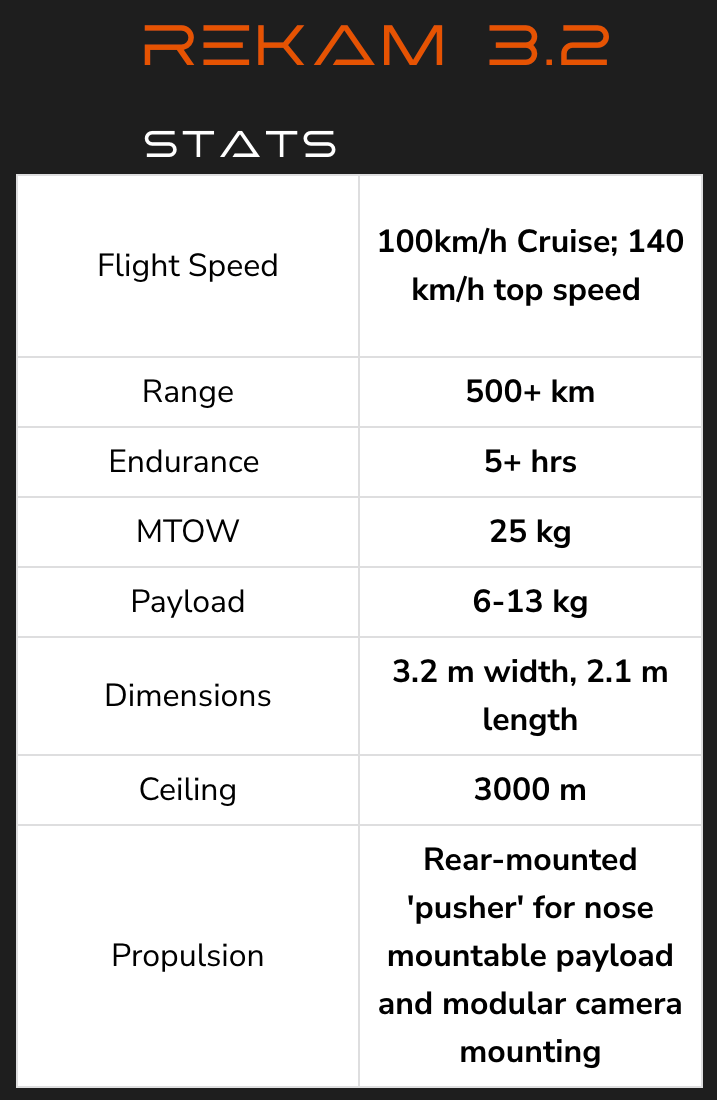
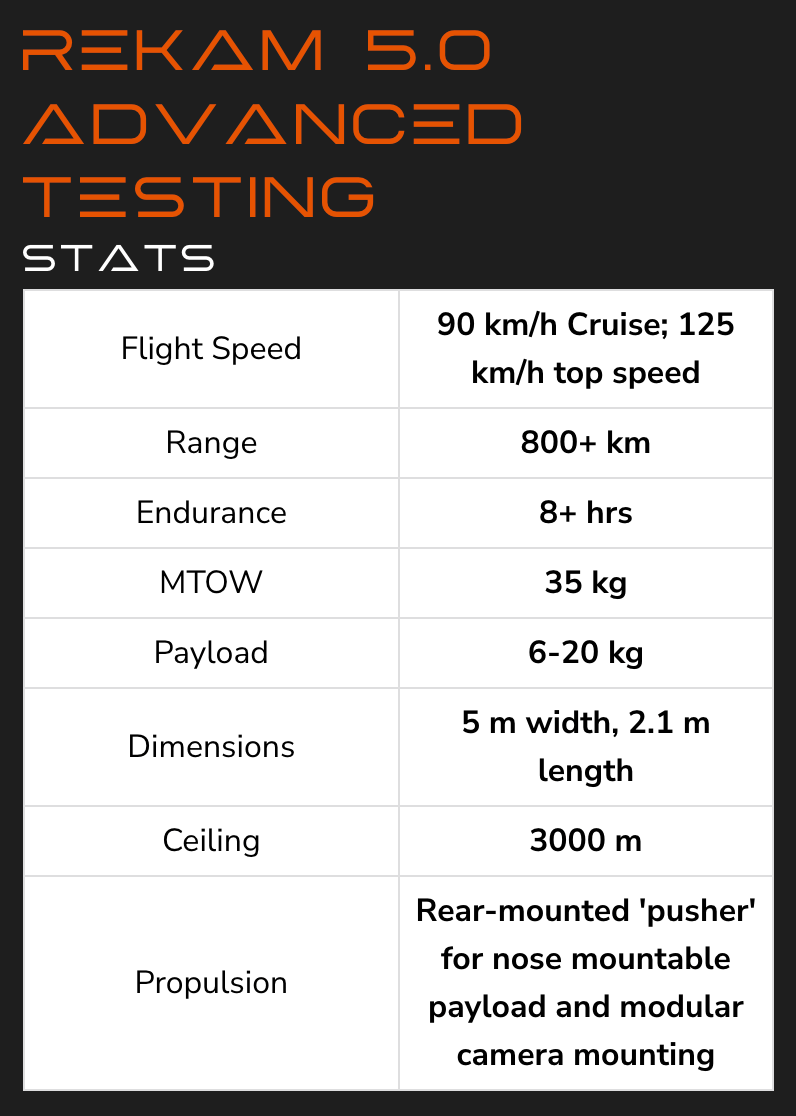
The company’s first drone is ReKam, the attritable reconnaissance and kamikaze platform. This is a modular, payload-agnostic fixed-wing drone that “flies like a bat out of hell,” designed to be reconfigured in the field in minutes between ISR, loitering strike, electronic warfare, and counter-UAS. The ReKam 3.2 has a range of over 500 km, with a top horizontal speed of 180 km/h+ and >300 km/h in a dive. The ReKam 5.0 is expected to have a range of over 800 km.
“I’m not going to let our ego about our systems get in the way of building great drones for anybody.”

Sentinel was co-founded by COO Chris Pye, CTO Anders Intson, and his sister and CEO Kath Intson. During Startupfest 2026 in Montreal, I met with Kath at World Trade Centre Montréal. We discussed what Sentinel is building, why Canada and its allies need it, and what it takes to overwhelm adversaries with scale.

What is Sentinel R&D building, and why does it matter for Canada?
“We’re building a manufacturing company masquerading as a drone company, so we're definitely focusing on the drone space. The reason this matters for Canada is that within Canada, and even within NATO, we don’t have mass-manufacturing capabilities in this space in an era of mass-saturation warfare.”
What was the moment that made Sentinel necessary?
“A lot of credit goes to my brother (Anders Intson) here. He’s our CTO, and he’s been a lifelong defence and miltech nerd. When he came to me with this, after a few years of research in Russian Telegram channels masquerading as a Russian aerospace executive, and said, “I think we need to build this,” a couple of decades of trust and his having previously proven out his theses to me in this space compelled me to join the team.”
What differentiates Sentinel’s manufacturing approach?
“There are a lot of drone manufacturers. I don’t even know what the numbers are. I’ve heard 4,000; I’ve heard 10,000 within NATO alone. The truth is that anybody can build a flying thing. You give a couple of high-school kids ChatGPT, and they can build a flying thing. The real rocket science is how you build a lot of flying things. Our differentiation is that, from the outset, we think about how you can build 10,000 a month of something. That goes into the design. It goes into our thoughts in terms of how we would actually scale an aircraft from prototyping. NATO has been focused on exquisite systems. Even within the drone space, we see a lot of drone designs that are over-engineered and really difficult to manufacture. When we see a new design come out from a company, we often think, “How are they going to make 10,000 of those things?” That is built in from day one when we take on a project.”
So the differentiator for Sentinel’s drones is that they can be manufactured cheaply and at scale?
“Correct. That’s a better way of putting it.”
Will Sentinel remain focused on aerial drones?
“Let’s define drones, because I think we’re talking about UAVs right now. There are emerging areas of UGVs and USVs that I think are where we will turn our attention next. I’m really interested in the UGV space because we’re at the very beginning of conducting the first military operations in that space. I’m definitely watching that closely. Drones are the focus in the near term, but not necessarily UAVs.”
Generally, unmanned systems?
“Unmanned systems and flying things. Flying things could also be interceptors. They could also be missiles. We’re starting our first preliminary pokes into that space. Long term, the focus will be on flying things and autonomous things.”
On the significance of UGVs in warfare
“In terms of logistics and rescue operations - deliveries, supply management, and safely sending a vehicle into territory to take people out - this has already been proven in Ukraine. The first rescue operations have been proven in rescuing civilians or soldiers from occupied areas. I’m really interested in that space.”
Is it a similar model to what you are doing now?
“They’re made out of the same materials. The flying drones are made out of the same materials as the ground drones, so I don’t see why not.”
On the joint venture with Airlogix
“The partnership came about almost by default. A few folks are going to be upset by me saying this, but it’s the truth: nobody is building flying things end-to-end in Canada besides Sentinel. We’re the only ones building fixed-wing drones in Canada end-to-end, from the airframe to full integration. We were the default choice for this partnership. We built some good contacts in Ukraine. We met Airlogix at CANSEC in 2025. It was not something that was on our minds at that time, but we’d known them from being in the space and thought very highly of them. It’s kind of a dream. We really admire the company. They’ve been doing amazing things, and the people there are great. There was also a great cultural fit between the companies. You have to be careful who you start a joint venture with because it’s a marriage.
NATO overall needs this mass-manufacturing capability. I don’t care whose systems I build. We build great proprietary drones, but I’m not going to let our ego about our systems get in the way of building great drones for anybody. Having the capability to manufacture lots of systems is of sovereign importance to any country and to NATO overall.”
Was Airlogix specifically looking to partner with a Canadian company?
“Yes.”

Is manufacturing in Canada a particular draw compared with other NATO countries?
“Many countries are looking to onshore manufacturing right now, so I don’t think we’re necessarily special in that regard. When I look at other companies building in the autonomous space, I’m not aware of anybody else, besides the 3D-printing companies, focused on scalable manufacturing with composite and fibreglass airframes, which is what most of the world’s attritable airframes are made from.
Russia has been successful in scaling that manufacturing, but they do it with a lot of manual labour. Figuring out how to do that without a lot of manual labour is important for NATO overall and for the sovereignty of any country. We would go to any allied country and help them stand up their manufacturing.”
30 Startups for a Sovereign Canada | Canadian30

Canada is recognizing the need for national sovereignty through hundreds of billions of dollars in generational investments, such as the Defence Industrial Strategy, the Canada Strong Fund, and its new National Artificial Intelligence Strategy. According to The Canadian Shield Institute, Canada's defence spending is projected to increase
Can you give an idea of the cost of Sentinel’s manufacturing compared with alternatives?
“It comes down to a few different things, and you have to do the analysis system by system. Overall, we’re faster. You have to think about how much space an airframe occupies in a factory, and for how long, before it is ready. That goes into the cost analysis. Then there are materials. We manufacture using less material. Because it’s automated, you will have fewer defective products, so your quality control will be better. That goes into the cost savings. Most importantly, there is labour: if you can remove a lot of the labour from what is traditionally a very labour-intensive and time-consuming process, that cuts costs.
Then you have to consider how many systems you’re making. If you’re only making five drones, why would you move to fully automated manufacturing? That’s why nobody has done it. If you look at a 777, there are only going to be so many 777s made. It doesn’t make sense to have a dark factory making 777s. But when you look at something producing 120 systems a month, automation begins to make sense. At 10,000 a month, it makes a lot of sense.”
How scalable is the process? How quickly could a new facility be opened in Canada?
“It depends. If I were being optimistic, four months. You can build a factory in four months. The question is how quickly you can get that factory to manufacture lots of things. That is really hard to do.”
How important is direct Ukrainian battlefield feedback?
“We’re in Ukraine all the time. It was a foundational piece of what we’re doing. Companies in defence love to build things and then try to go over and sell them. That was not our approach. We went over and said, “If we have this capability to manufacture a lot of things, what would be on your wish list? What would the features look like? What cost point would get end users and ministries of defence excited?” We designed our product based on the feedback we received, not the other way around. We didn’t design something we thought was awesome and then approach end users and try to sell it.
Being collaborative with militaries from day one is important. It’s also how you build trust. We’ve seen companies donate things just to get the “tested in Ukraine” check mark. That means nothing if the product is not consistently used there. The question is: why isn’t it being used? Is it the price point? Is it the efficacy? Building something efficacious at the right price is how you build trust with end users.
My advice to founders looking to get into Ukraine is: go.”
Where is the battlefield going?
“I’m not in charge of the R&D pipeline. Unfortunately, I’m not smart enough to forecast the future of warfare, but I’m good at finding the people who are and hiring them. I think it’s going in the direction of whoever can build the cheapest drones. This is a war of economics. Close-quarters combat is a war of economics to some degree because air-defence systems are more expensive than drones.
Some companies are starting to develop cheap missiles and cheap interceptors, but the cost of the drones themselves will be driven down again, and there will be another cycle of innovation. For the foreseeable future, I think we’re facing a mass-saturation drone-warfare battlefield.”
What does Canada need to fix?
“We need to fix the national mindset that, because we’ve had the privilege of living in peacetime, peacetime will continue forever. We exercise a lot of soft power as a nation by being a capable ally. The first thing any foreign military says to me is how much they love working with the Canadian Armed Forces and our special forces. They tell me how capable and collaborative they are. I wish we had talked about it more because the capabilities of our military have allowed us to exercise a lot of soft power as a middle-power nation. The rest of the nation needs to wake up to the fact that having a capable military is what protects us. We have to stay at the edge.
I was delighted by how popular this drone deal was in Ukraine. Like anybody else, we lurk on the Reddit posts made about our company. It was endearing to see that Russian bots saying, “They’re pissing off the wrong person,” were downvoted into oblivion. It wasn’t just Canadians saying, “No, we need to be building drones.” The rest of the world was defending the deal. I looked into it more. Canada is one of the most popular nations in the world socially. There are many countries like Canada. It ranks up there with Switzerland and a few other nations. I had forgotten how well-liked Canadians are. I was thrilled to see that the deal was supported globally.”
What do the next 12 months look like for Sentinel?
“Just executing. We’ve got to execute. This deal has not been without controversy. Some Canadian businesses have been vocal about being disappointed that we were the chosen company. Little, tiny Sentinel was the only company building drones end-to-end within Canada. We’ve got to make sure we build all the drones, build them on time, and that they work on the battlefield.”
What other Canadian national-interest startup is worth watching?
“Dominion, of course.”
Why build in Canada?
“Because we’ve woken up.”
If you’re building something in Canada, I want to hear about it. contact@ethanmarcoux.com
Medical Manufacturing Anywhere | Dr. Harvey Hawes — Explorer Spotlight #6

In war, disasters, and remote conditions, the demand for medical supplies rises when supply chains are most likely to fail. Since Russia’s full-scale invasion of Ukraine, Ukraine’s Ministry of Health estimated that 100,000 war-related amputations had been performed by mid-2024.

