


Welcome to the 461 Canadian Explorers who have joined! If you aren’t subscribed, follow the Canadian founders who are building in Canada’s most critical industries by subscribing here:
“AirMatrix is building the operating system for sovereign airspace.” — Bashir Khan, CEO and Co-founder of AirMatrix
The Canadian government aims to build the industrial capacity to produce millions of drones over the next two years. In March 2026, Amazon reported that drones struck two AWS facilities in the UAE, and another was damaged in a nearby strike in Bahrain. Meanwhile, reported drone incidents near UK defence sites more than doubled between 2024 and 2025.
As global drone production continues to rise, so does the threat to civilian populations, defence sites and critical infrastructure. Operators need to understand, track, and respond to the threats in their airspace.
“We just need to be the best in the world.”
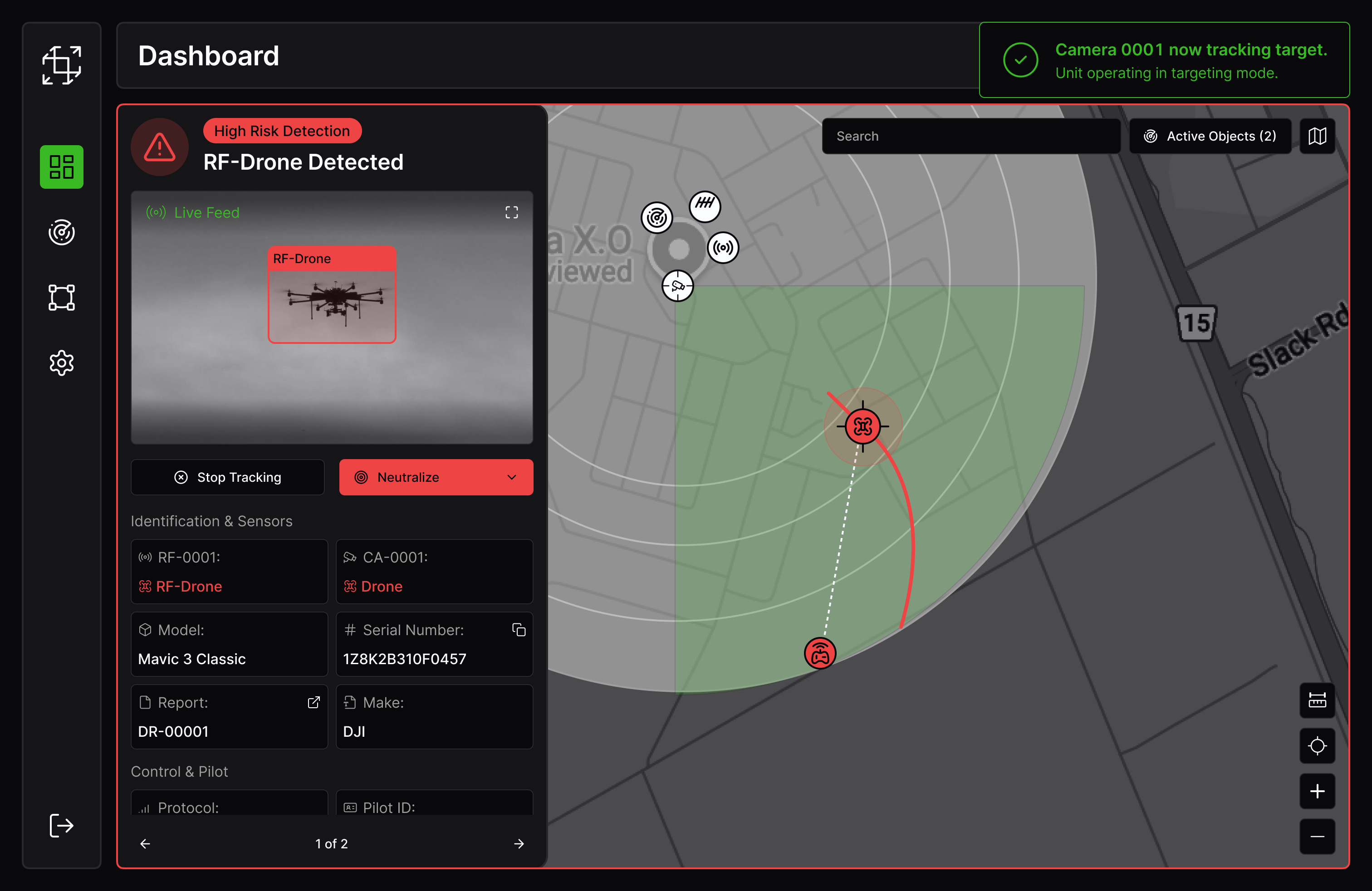
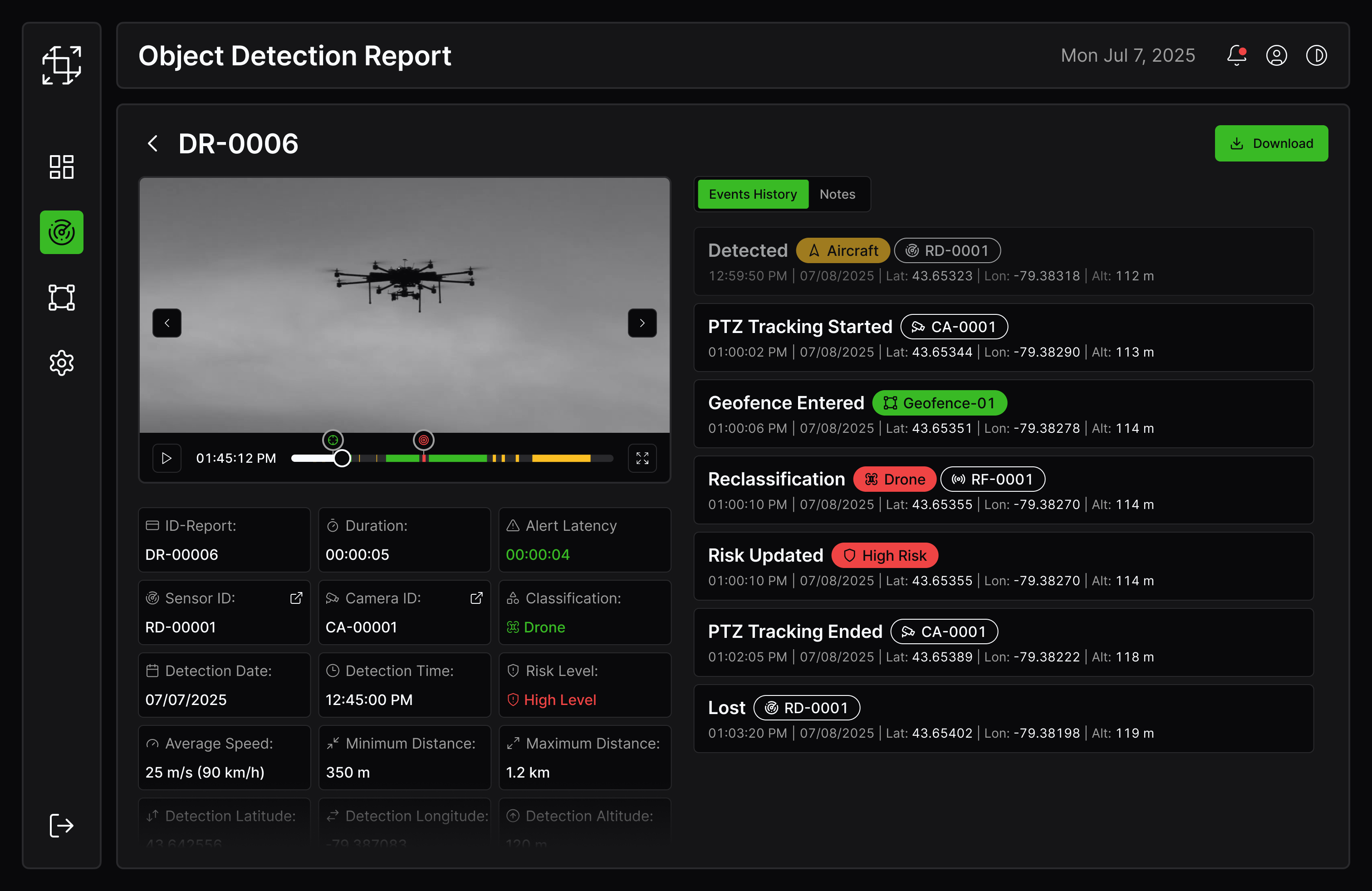
AirMatrix, founded in Toronto in 2016, is building Libra, the operating system for sovereign airspace. The hardware-agnostic command-and-control platform combines data from radar, radio-frequency sensors and cameras into a single intelligence layer, helping governments track and assess aerial activity in real time and coordinate mitigation.
AirMatrix is one of the few companies authorized to grant drone operators access to controlled US airspace. It is the only Canadian company able to provide this service, which around 40 different government agencies now use.
These customers then came to AirMatrix with a bigger problem: identifying non-compliant aircraft. Its Canadian customers now include the Department of National Defence and the Province of Ontario.
“Our job is to innovate on technology. We’re not going to innovate on procurement.”
The strategy has been to specialize in a difficult domain, build alongside users, and grow from deployments and revenue. With fewer than 20 people, AirMatrix has raised less than $10M and grown to millions in ARR.
The company is looking to expand its deployments in the United States, the Middle East and Europe while growing its Canadian business. These deployments will help protect defence sites, major events and critical infrastructure, including airports, borders, prisons and data centres.
“We’re at a stage of the industry where a rising tide lifts all boats. I’d rather be part of building a bigger pie than cutting up more slices.”
The ambition is for a Canadian-built sensor fusion layer to become part of the global infrastructure that allies use to understand and protect their airspace. AirMatrix is looking to partner with interceptor companies and integrate solutions to provide one button that can handle it all.

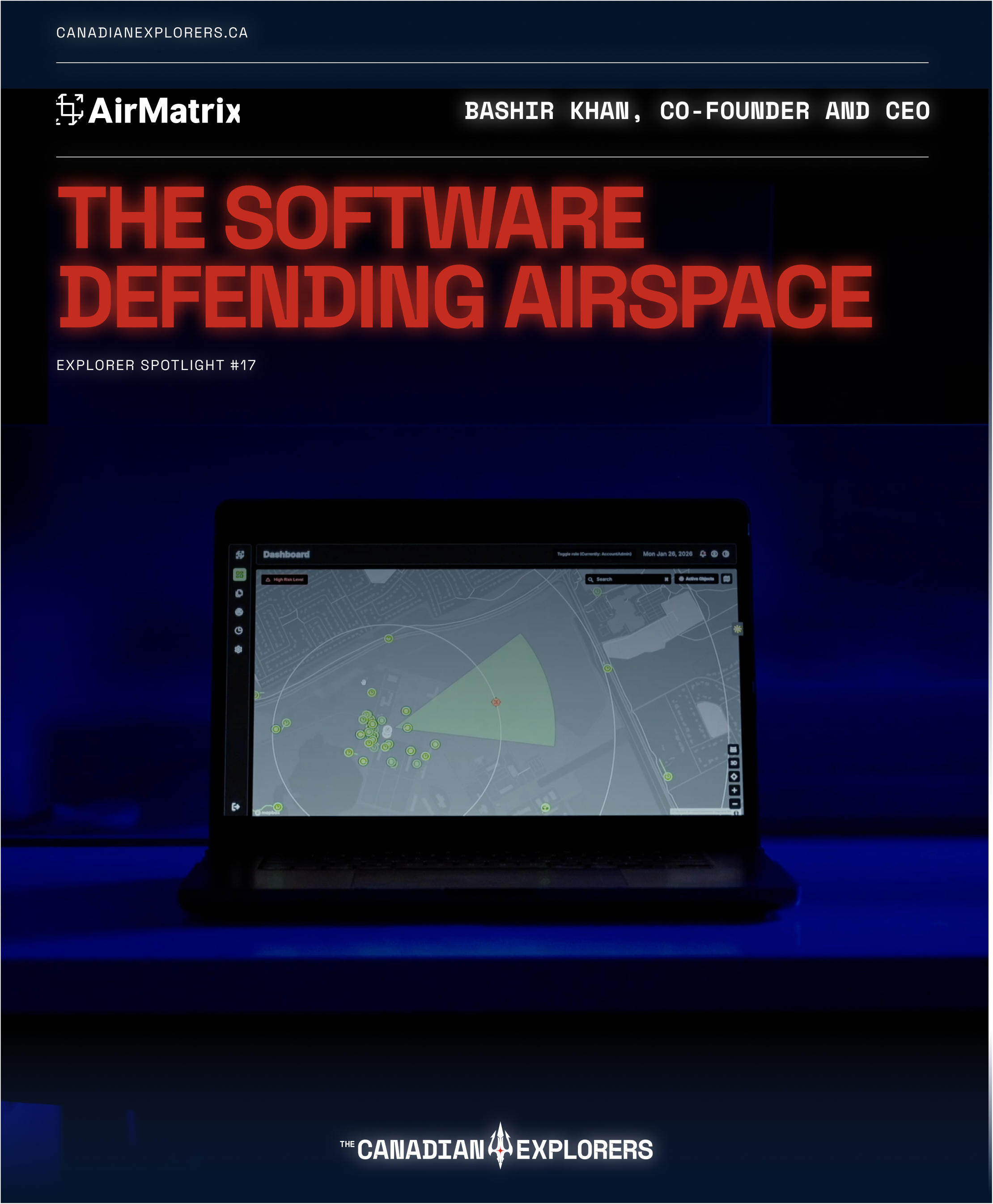
I spoke with Bashir about the move from drone traffic management to defence, building alongside government users, and why Canadian companies should aim to be the best in the world.
“Is it getting easier to build? Yes. Is it easy enough? No.”
What is AirMatrix building?
“AirMatrix is building the operating system for sovereign airspace. Today, what we’ve already built is a world-class command-and-control platform for sensor fusion and persistent airspace awareness.”
Advertisement — Marconi Technologies
The Canadian Explorers is proud to be supported by its Founding Lead Partner, Marconi Technologies.

Can you explain your product lineup and how everything works together?
“Our main product is Libra, which is a command-and-control platform that integrates into various pieces of hardware to give operators an understanding of what’s really happening in their airspace, in critical infrastructure, civil government and the military. It covers identification and classification through to authorized mitigation, while keeping the operator in control, all on one platform.
We’re also one of the few companies allowed to grant access to restricted airspace across the U.S., the only Canadian company allowed to do that.”
Why do government and defence users need integration and a unified picture?
“Customers are always adding more sensors. They’re always adding more hardware. What ends up happening is you get a lot of chaos and a lot of screens yelling at you. You have a radar yelling at you. You have an RF sensor yelling at you. But where do you look first? When? What do you trust more? All of that is chaotic, and that’s a software problem that we’ve solved for.”
Is the hardware off the shelf, or do you build it yourselves?
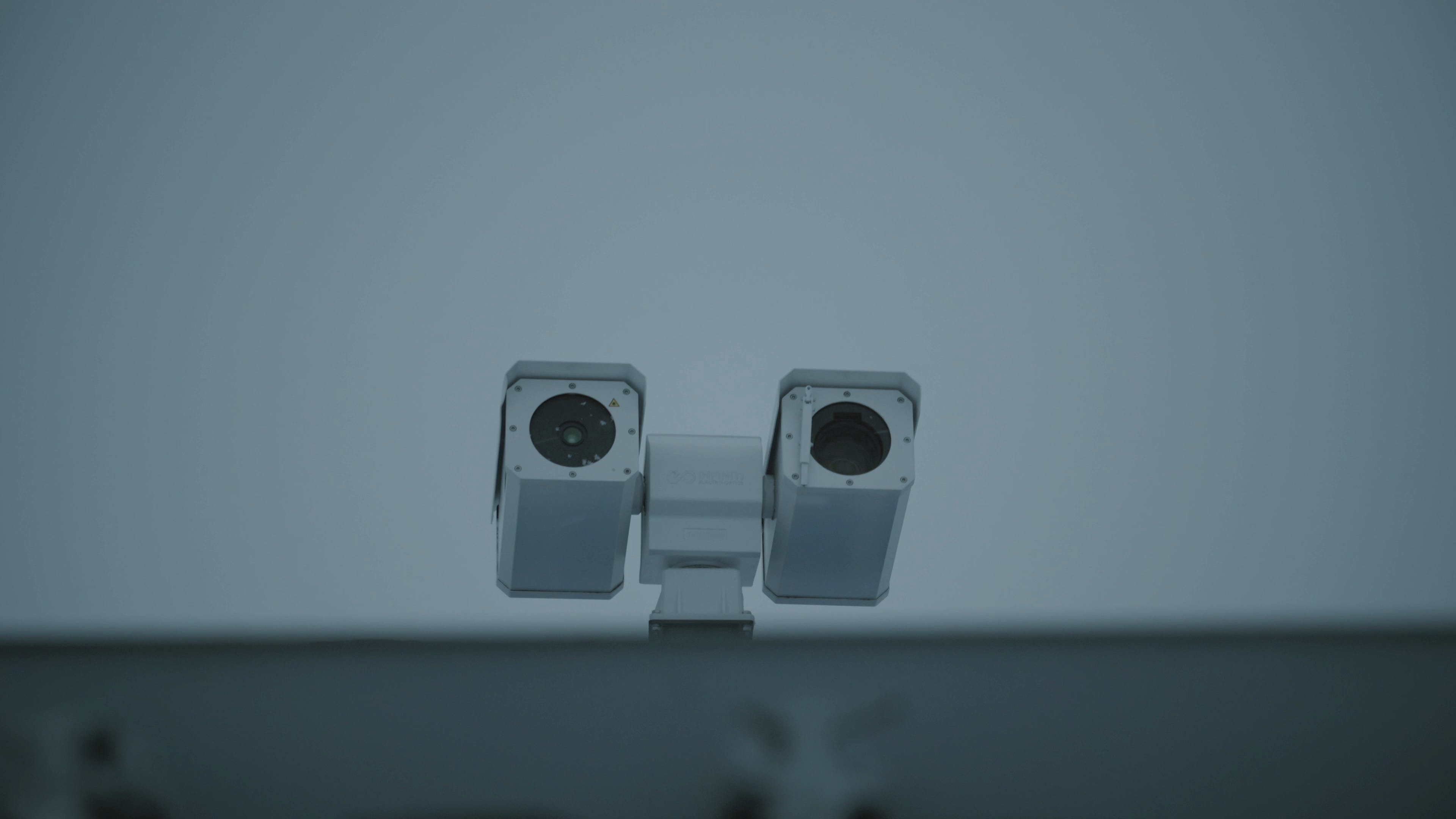
“It’s off the shelf insofar as our customers are concerned. We’re partners with companies like Leonardo and Boeing, larger primes, as well as some lesser-known companies that are up and coming on the mitigation side: the interceptor side, the PTZ (pan, tilt, and zoom) side, cameras, infrared, RF (Radio Frequency) sensing, that type of stuff.
The whole gamut around situational awareness, whether it’s your CCTV cameras all the way to the most expensive radars, we integrate it all.”
AirMatrix began with drone traffic management. What led you toward airspace security and defence?
“When you get the licence from the FAA to grant access to restricted airspace for commercial drone users, you end up getting a lot of government users that need access to that airspace. We had about 40 different government agencies using the software.
A few of them came forward with a much larger problem around non-compliant aircraft in the airspace. We had done so much machine-learning modelling on granting access as quickly as possible that, by connecting our models into their hardware and existing systems, we could give them a much better picture of what’s a friendly drone and what’s a foe drone, and a level of accuracy that gave them the confidence to act when there was an intruder.
It was a very natural progression. We were building hardware back in college for drone deliveries, and we had to start mapping out airspace. We actually built out multi-drone control software in the open-source world that ended up finding applications in Ukraine. We didn’t get paid for that, though. We thought we were just doing it so people could deliver beer a little bit faster to frat houses on campus.
As we’ve packed on the deployments, granted more access to restricted airspace and got more customers, we feel confident saying we’re building the operating system for sovereign airspace. And not just in Canada, but in countries around the world.”
How does the non-kinetic mitigation work?
“The platform is designed to identify and respond to the full spectrum of drone activity. When we talk about integrating mitigation, we’ve already tested and proven the non-kinetic layer. Where we go next is kinetic. We believe the next layer or level of cyber is actually kinetic.
At the endpoint level, we’re pushing the frontier to coordinate the full response chain, from identification and classification through to authorized mitigation, while keeping the operator in control and giving decision-makers the ability to prioritize and allocate assets effectively and efficiently.”
For kinetic mitigation, are you looking to partner with other counter-UAS companies?
“Absolutely. Our sensor-fusion layer is where we specialize, and it's crucial. They need it too. If I’ve got an interceptor plugged into one sensing platform, the drone’s actual latitude and longitude usually differ from where you think it is.
To have proper mitigation (where you’re not missing the target, not hitting something you’re not supposed to, and not wasting resources), they need Libra.
We’ve found a lot of cool companies in the early stages, as well as later stages, that really want to see their customers not get sucked into vendor lock-in, because they know the next product they bring to market is going to be better. We believe it will be too. Whether it’s interceptor systems or something even more kinetic than that, we’ve got the button that can handle it all.
I think we’re at a stage of the industry where a rising tide lifts all boats. I’d rather be part of building a bigger pie than cutting up more slices.
If we look at where the counter-UAS industry is headed, it’s going to continue to grow at a rapid rate. That goes from the federal level through provincial, state and municipal guidance on enforcement and mitigation tools, and where governments want their own data sources and their own source of truth.”
Which government users have you operated with? How has this changed what AirMatrix is building?
“We’ve got more than 40 different government agencies that use our software to get access to restricted airspace across the United States. We have more than five public-safety agencies that use our software for counter-UAS as well, as a single source of truth and a data feed that’s necessary for them.
In Canada, DND is a customer of ours, as is the Province of Ontario. We’ve got a few municipalities that are customers as well. It’s continuing to grow, and I’m happy to see that procurement is starting to speed up, not at the pace of innovation, per se, but at least coming up to par with where the problem really needs focus.
The learning for me has been that our job is to innovate on technology. We’re not going to innovate on procurement, per se. It’s really important to have multiple irons in the fire and to be diversified in terms of who your customers are: to have enough going on internationally to bring you more credibility in Canada, while at the same time proving out wins in Canada that you can export abroad.”
What have you learned about turning testing into procurement?
“It’ll always take longer than you think. That’s the number one learning, honestly. It’ll always take longer than you think.
You really have to have a thick stomach lining for government procurement. It’s built for large primes that can dump a lot of money into R&D for years just to show the government a product, which they will then test. After sufficient testing, they put it into procurement for a real program and build around that. It’s important to be honest and focused when you build a product to sell to the government. Find a niche you can really focus on and be the best at.”
Where are you seeing the most demand?
“The most demand we’ve seen is from public safety, as well as military and defence, with critical infrastructure third.
Civilian use cases will continue to grow because critical infrastructure is being looked at as a soft target in a military context today, where data centres are getting blown up in the Middle East. That’s another area of big interest for us. We’re partnered with Saudi Arabian Military Industries (SAMI), the PIF-owned national defence company. We’re also plugged in with a few different defence primes in the Middle East. We’re expanding deployments there.
There’s a lot that needs to continue to happen. The civilian side will continue to grow immensely, but we’re at the early stage of people realizing how big a problem this really is. They know they have a problem. Even with platforms like Dedrone and others, which are all great, it’s like playing whack-a-mole. You need a unified picture, specifically as it pertains to low-level airspace, to give you the efficiency and confidence to perform at a mission level.”
How have you financed AirMatrix, and are you planning to raise more?
“We’re quite selective about the investors we want on our cap table who can bring value, specifically through partners and customers in that ecosystem.
We’ve raised less than $10 million to date and grown to millions in ARR, with a significant near-term pipeline. We’re going to raise some more money, but we’re very, very focused on what we’re going to do with that money and where it will take us.
We’ll also continue doing what we do: getting our co-founding team and top engineers on planes, demoing the platform, showing customers their airspace environment in a way they’ve never seen before, giving them the product and then moving into procurement.”

How do you view Canada’s position globally?
“Canada has a halo effect by virtue of its standing with our allies and in the world today. Is it getting easier to build? Yes. Is it easy enough? No.
There’s still a lot of work to be done, right? I think that’s really about mentality. There’s this whole thing right now about differentiating ourselves from the U.S., and I don't think that’s the best way to look at it. We just need to be the best in the world.
To do that, we need this sort of maniacal focus and energy toward building the best companies we can, and helping other Canadian companies do that as well, to give Canada the best shot. Governments come and go. Parties come and go. Prime ministers come and go. The programs of record and the companies supporting those programs will stay.”
Can you envision Canada becoming a global innovation hub?
“I think it already is from an R&D perspective. Look at the schools my co-founding team and I came out of: the University of Toronto and Waterloo. They produce some of the best founders in the world. There’s still a gap in the early stages in really enabling Canadian founders to think big. I think we’re changing that by virtue of doing what I’ve done. I’ve had to go to the U.S. in many instances, and our first customers who really got Canada excited were American.
I still view us as a joint market, and that’s okay. There’s nothing wrong with that.”
What advice would you give a Canadian defence or deep-tech founder starting now?
“Focus on the customer and the end user of your platform, or whatever technology you’re building. Then focus on the people who can actually make a yes-or-no decision about the budget around that product. Just make them happy continuously and be relentless in that effort.”
What are AirMatrix’s plans for the next 12 months? What would you want it to be in 20 years if everything goes right?
“Over the next 12 months, we want to secure more sovereign deployments outside Canada while continuing to grow the Canadian business, specifically looking at the U.S., the Middle East and Europe, and continuing to grow our profitability. We’ve fallen in love with that.
I think it’s important because, as Prime Minister Carney said a couple of weeks ago when he was talking about Canada in general, we’re at a place fiscally and financially where the moves we’re making now are very important. When everyone starts looking at who’s got their house in order, and Canada’s got its house in order, it’s going to be really important. You don’t get to do it again afterward. You don’t get to do take-backsies. I view the market we’re in similarly.
In 20 years, I want us to be the platform, the company that actually built out that operating system for sovereign airspace in a safe, efficient and economical manner around the world.”
What is one other Canadian national-interest startup worth watching?
“I’d probably say Dominion Dynamics.”

Anything else?
“AirMatrix is deploying sovereignty as a service. I encourage all your readers to check out our website. If you, your customers or your partners are interested in working with us, we’re happy to do that.
If anyone wants advice, you can always shoot me an email: bashir@airmatrix.ai. I respond pretty quickly.”

If you’re building something in Canada, I want to hear about it. contact@ethanmarcoux.com
Partners of The Canadian Explorers

The Canadian Explorers works with a limited group of sponsors that support the founders and startups solving Canada’s most difficult problems across defence, deep-tech and other critical industries.


