


Welcome to the 902 Canadian Explorers who have joined! If you aren’t subscribed, follow the Canadian founders who are building in Canada’s most critical industries by subscribing here:
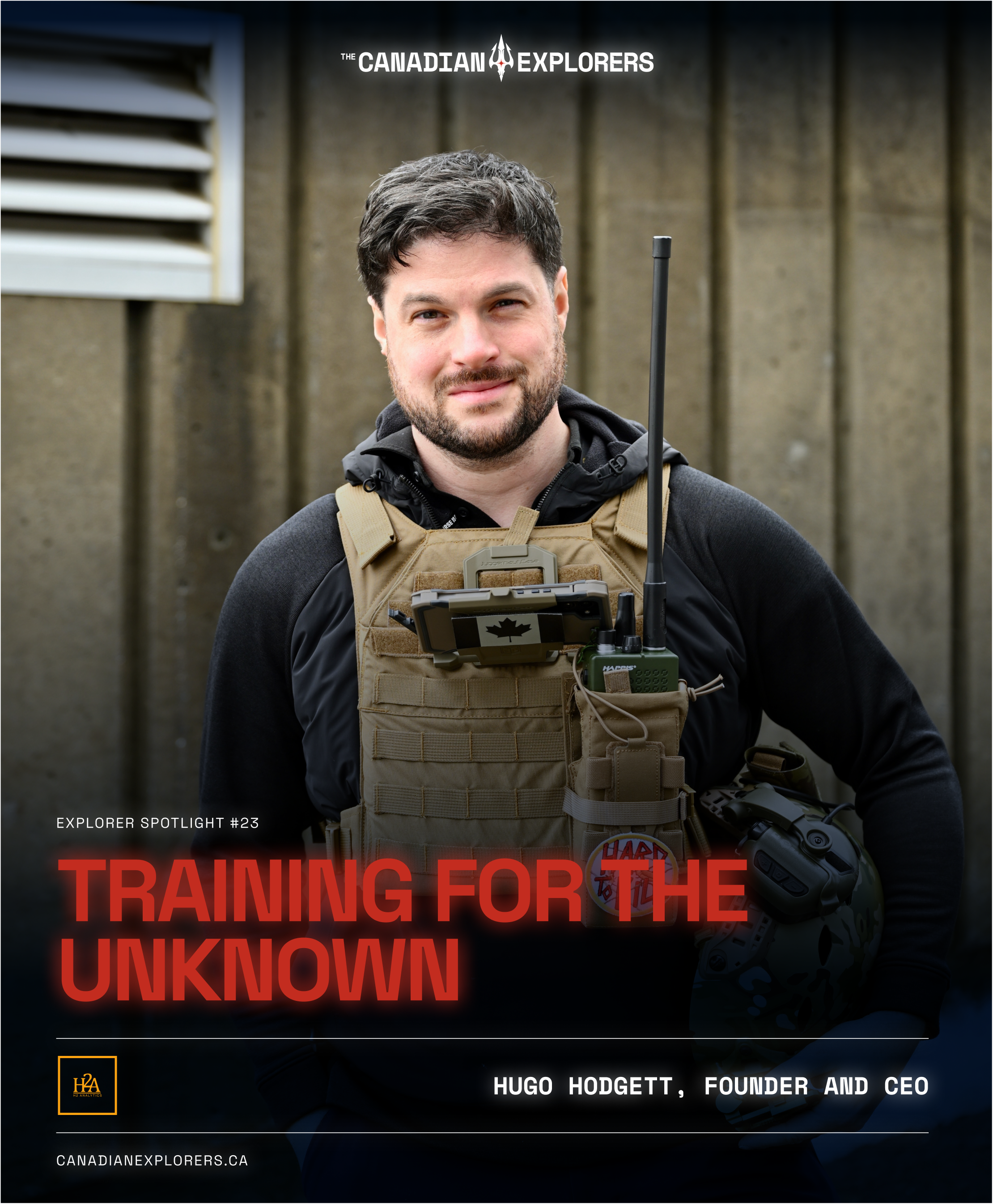
In 2015, Hugo Hodgett came under attack by a large ISIS group in Iraq. This was unlike any situation he had trained for. Training for scenarios like these can be costly and time-consuming, which often leaves operators learning in simplified environments that don’t match real-world threats. For defence, security and law enforcement, closing that gap can be life-saving.
H2 Analytics is an Ottawa-based startup founded in 2017 by Canadian veteran Hugo Hodgett. As technology advances and warfare changes, H2 saw an opportunity to make training more cost-effective and realistic with scenario-driven training software.
Its flagship product, EASE, helps instructors create realistic exercises that reflect modern threat profiles like drone warfare without building each exercise from scratch.
H2 Analytics started when defence was still considered a dirty word and financing a Canadian defence startup was nearly impossible. The company is bootstrapped and takes pride in being hard to kill, as a member of the cockroach club with ANVIL and TACTIQL. Alongside Hugo, two-thirds of its team are veterans.
H2 Analytics is now one of Canada’s fastest-growing technology companies, reporting 552% revenue growth from 2022 to 2025.
I spoke with Hugo about the technology, customer focus, selling internationally and why he is determined to keep building in Canada.
What is H2 Analytics building, and why does it matter for Canada?
“H2 Analytics builds synthetic data engines that allow us to train in real-world conditions before you go overseas.
Why it matters for Canada: the training systems that operate in Canada, but also internationally, are not designed to support the new type of warfare that we are experiencing, whether that’s drones, large-scale combat or the emergence of fifth-gen. From Canada’s perspective, having that capability in-house massively increases their ability to operate more effectively.”
Advertisement — Marconi Technologies
The Canadian Explorers is proud to be supported by its Founding Lead Partner, Marconi Technologies.

What does EASE actually do?
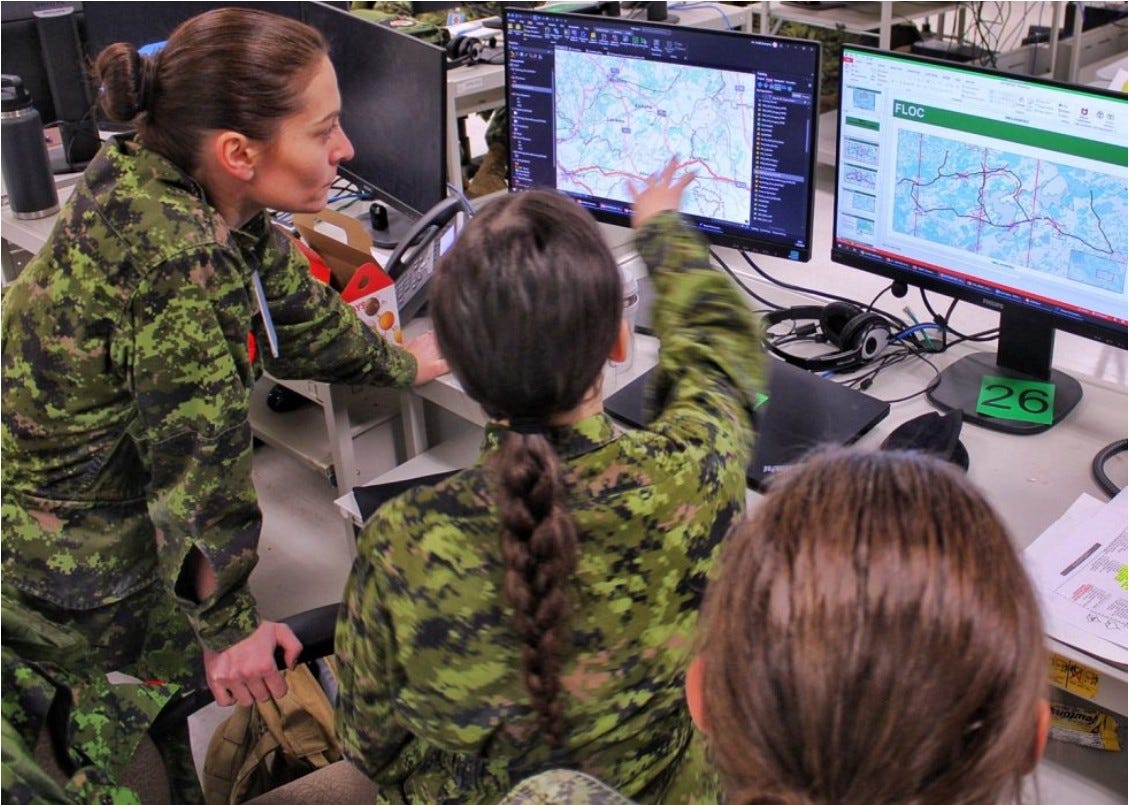
“Our main platform is the Exercise Architect Suite, also known as EASE. You can imagine any war movie you’ve ever seen where there’s the commander standing in the back of the room. There are all the screens up on the wall, and you see satellite images and drone feeds and chat windows and bleeps and bloops of radars on the screen.
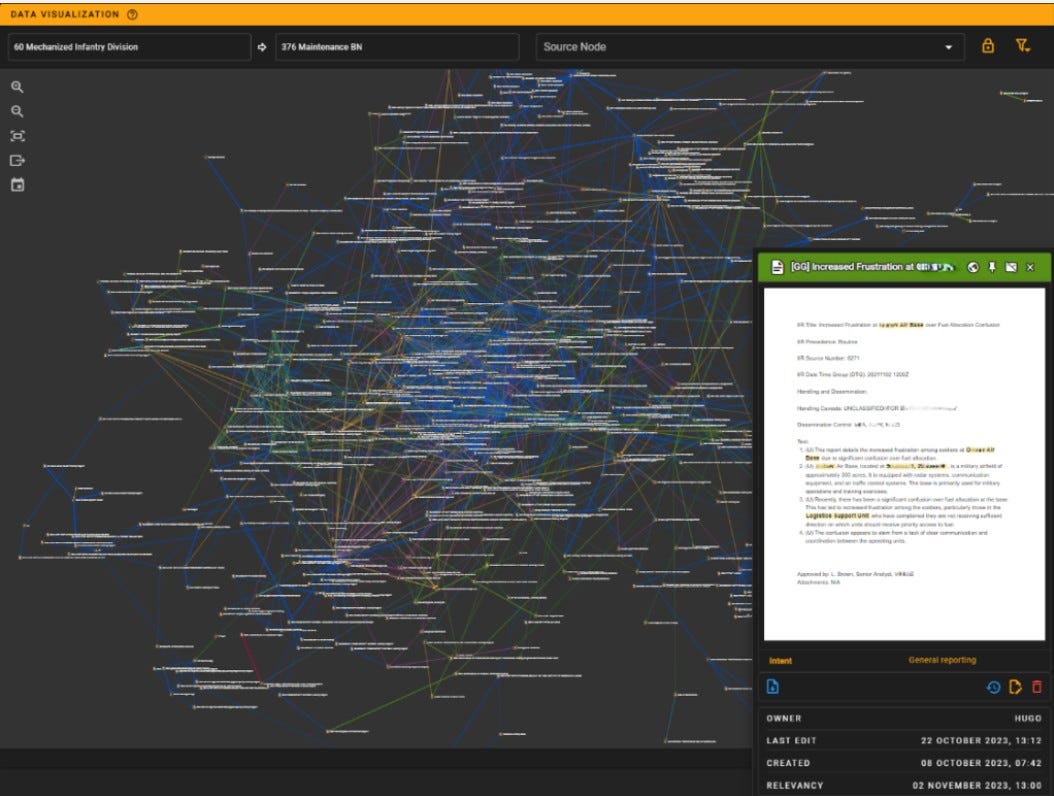
All of that is incredibly easy to generate in real life, but it’s incredibly manual and time-consuming to generate it in a training environment. What we do is use AI and data integration to generate all of those synthetic inputs into the training environment with orders of magnitude fewer people than the traditional methods.”
What does a trainee see during an exercise?
“The trainee experiencing all of this will see, as close to real life as possible, all of the inputs they would expect to get in real life.
What that would look like is there’s a cellphone ping, and that cellphone ping leads you to a specific tank. That tank is showing up on satellite imagery. That satellite imagery is tied to the drone feed that is currently active, and that drone feed is being sent back to the people on the ground who are going to go in and fight against those tanks.
All of those things are happening in the back end, in different simulations, in different platforms, in different mediums. We are tying all of that together to broadcast to that trainee so that it all makes sense in time and space and is orchestrated effectively.”
What does that process normally look like without H2 Analytics?
“It generally looks like Excel sheets with Word documents and PowerPoints, and about 30 to 40 people sitting in the back of a room typing on keyboards.
What it looks like with us is you generally have two or three people sitting there. What they are doing is changing the dials and fine-tuning things to make sure that all of the outputs are in line with what’s expected.”
How did your military service shape what you built at H2?
“The formative moment—I wouldn’t say this was the moment I realized I needed to start the company, but it was certainly something that stayed with me and has motivated the growth over the years.
In 2015, I was in Iraq, and we were attacked by a large ISIS group. There were probably between one and two thousand fighters that attacked us, and the front lines were broken. Over the course of a day, we fought them back and were able to re-establish the front lines. That set conditions for the eventual fall of Mosul.
But I had never been trained for that kind of scenario. What’s more, the amount of time and effort and money and expertise that would have been required back then to train somebody in that kind of scenario would have been astronomical.
By bringing the technology to bear on those problems, it really allows us to much more effectively target a broader set of problems for people to face, which means they go out the door much more prepared than they were before.”
From 2022 to 2025, you had 552% revenue growth. What’s your core business model?
“The core business model is SaaS. We sell a software platform that is primarily EASE, and then we sell the service component that goes along with that. That allows us to help either with training and adoption, or to offset people’s resource requirements in terms of building these training exercises. We’re doing that everywhere from Wainwright (Canadian Armed Forces training base) to Latvia to the Middle East.
EASE is by far our biggest revenue generator. It is the flagship platform we have.
There are lots of people building simulators out there in terms of what tanks drive like and how forces move in a simulated environment, and that’s all great. What we’re much more interested in is tying everything together from an information perspective.
As we look forward, we’re building extensions to EASE that support a broader range of use cases such as cyber, social media, and space. Having this increasingly governed by AI is the innovation space we are investing in.”
Staying away from dual-use.
“We’re a pretty small company that likes to maintain our focus in the defence space: defence, national security, intelligence. We don’t go hunting outside of our space, from a pure capacity standpoint.
What’s more, I actually recommend that early-stage to scale-up-stage companies, if you’re in defence, stay away from the dual-use banner. That banner is likely to draw your resources extremely thin. It’s going to take your eye off the ball, and it means you’re trying to do a lot more with the resources you have. There are very few technologies that have a true dual-use function, despite what people like to say. There’s a word of caution to anybody willing to listen.
When you’ve got five million in EBITDA, go play in another space and see how it goes for you. But don’t risk that kind of diversification too early. Investors will call that customer concentration, but the rest of us would just call it good business.”
How have you financed H2 Analytics so far, and is raising capital something you’re ever looking to do?
“We are bootstrapped. We have financed it almost exclusively off our own revenue. We have no angel investors. We have no institutional capital.
Initially, we were a services shop. We did a lot of professional services, and over time we funnelled the profits from the professional services into the software side of the business. That allowed us to grow the software side and start generating revenue there as well.
Now we’re in the position where we’re a profitable software company that is growing, basically doubling year over year. From that perspective, there’s really a question about whether or not we need to raise capital.
We would certainly consider it. But I’ll be honest: the venture capital landscape in Canada right now has some extremely disjointed expectations within that system, and there is a lack of sophistication in many cases that leads to a pretty significant risk on both the side of the investor and the investee.
That’s a very long way of saying, not right now.”
Have a friend or colleague interested in the startups and technologies shaping Canada’s most critical industries? Share this interview with them or your team.
How has ecosystem support changed over the last few years?
“There’s certainly more opportunity to get involved in the innovation space on the defence side for government. The private support remains very limited. The banks haven’t fundamentally changed their criteria in terms of what they’re willing to support. Even the Crowns, while they have their investment funds, still have a mandate they need to execute on.
On the public side, you probably see them: IDEaS and ISC. Those kinds of innovation funding are on the up. But we see that at a time when the operational budgets for defence are actually being slashed significantly. There is no innovation funding post, say, one of those ISC or IDEaS trials.
What we’re seeing across the board right now is that it is primarily the innovation and experimentation functions that are being cut from military organizations. You need to have a sophisticated approach in terms of revenue generation to make sure that when you’re going down these paths, there is a long-term business model there, and you’re not just being supported by grants and contributions.”
How would you explain this to someone outside the defence sector?
“The government came down and basically said, ‘Great news. We’re going to buy a new car so that we can get you to hockey practice more comfortably.’ That’s the capital expenditure budget: the tanks and the submarines and the airplanes, going up and up and up.
But then they say, ‘Unfortunately, what that means is you’ve got to use last year’s skates, and we’re actually taking away your pads and your helmet. We might actually have to get rid of your helmet, but we’ll let you know later in the year.’ We need to take that out to pay for the new car.”
When you’re looking at sales to the Canadian government, what are you seeing from your perspective?
“We’re on the other side of that. We are a bit more mature, a bit more established. We have existing revenue. We have long-term contracts, so it’s less impactful for us.
But what we are seeing is a wave of companies right now that are riding high on some of these promises. The wall is coming up quickly, but they don’t necessarily see it, which is a shame.
That is not a message of doom. For any founders out there listening or reading this, there be dragons here. It is worth really doing the due diligence to make sure your plan is sound before you jump two feet into this world.”
Is it realistic for founders and investors to expect procurement reform to open the door for early-stage companies?
“That could very well happen. I’m actually very encouraged by the government’s move to turn the DIA into a Crown corp rather than keeping it as part of a government organization. It allows them all kinds of flexibility they wouldn’t have had before and really signals a seriousness about reforming procurement that we haven’t seen in generations, honestly. I am massively in favour of that.
The reality is that none of these things move as fast as you want, and they’re always harder than you think. What that functionally means is, if you’re an investor looking at this, I think the best-case scenario for getting real revenue—not grants and contributions, not one-off innovation funding streams, but real commercial contracts—is 24 months. That is the best-case scenario.
It is not to say don’t do it. It is to say have the right expectations for the market you’re entering. With those expectations understood, there is a ton of opportunity here. But if you think you’re going to be able to measure MRR effectively as a measure of these companies being successful, you’re just not. It’s an industry that doesn’t work that way.”
How is selling internationally different from selling domestically?
“We are expanding internationally. Everything is a new experience. All of these organizations and countries have their own flows and cycles, and what is formal and what is informal.
What I would encourage people to think about as you look at international expansion is: have partners. You need to go there. I just spent two weeks in the Middle East, and a week and a half before that I was in Poland. Not that long before that, I was in Latvia.
There is no substitute for proximity, and there is no substitute for face-to-face engagements on these things.
Start early. If you think sales cycles in Canada are long, in the rest of the world you have to figure out a whole new system. There might be different processes in place. You might have to start up a subsidiary in those places. Those are all things you need to be thinking about long before you start saying, ‘Where do I sign?’”
What do you see as the number-one advantage of being Canadian? Why do you choose to build here?
“The benefit to being Canadian, especially if you’ve come from the system—the defence or intelligence or law enforcement world—is you’ve been starved for so long. You’ve been starved of resources. You’ve been starved of money. That’s meant we had to come up with some really creative and interesting solutions to problems that people never saw as problems before, until you show them.
Our relentless focus on things like reducing resource requirements and using technology to make people’s lives easier is a byproduct of having done these things in the real world, knowing there’s a better way. When you show these capabilities to a smaller country, to the Latvians or to a country that doesn’t have the 50-person contractor team, they immediately understand the value.
Why do we choose to build here? We come from here. I think 65 percent of the team are veterans. We’ve all served in either the military, intelligence, special operations, something like that. This is just home.
I’ll be totally honest: are there easier places to build? Could we have picked up shop and moved to the U.S.? One hundred percent. Would there be more money coming in? I bet there would be. Would the taxes be more favourable? Absolutely.
But we are here. We’re determined to build here. We’ve experienced the pain here. The people we’re supporting and building for are the same people we were working beside not that long ago. We were all wearing the same uniform in the same dusty places.
For us, it’s not just a financial consideration. We want to make a difference at home first, and then take that difference abroad.”
On risk and being bold.
“As Canadians, I think we need to be a little bit more proud and outspoken about what we’ve accomplished and what we’ve done. It is part of our national DNA to be reserved and—I don’t want to say apologetic—but conservative with our pride.
Risk aversion is a curse. I am guilty of it too, maybe less than some others, but I think we are all guilty of it. We all have a duty to self-identify that and be able to correct it.
The risk aversion is generally not the companies’. That’s just what innovators do. Risk is our business. That is my job as a CEO and a founder: to manage and take smart risks.
I can only speak to the defence space, because that’s obviously what I know, but there are three groups that matter in this space. It’s the innovators, it’s the Crown, and it’s the private capital. Right now, the innovators are accepting all the risk.
The system is set up so that the other two—the private capital, super risk-averse, very conservative; and the government system is so over-optimized to reduce risk that it creates more.
This is actually a fundamental cultural problem. We as a country need to be more aggressive in saying, ‘No, I believe what I believe. I’m going to stand up for the things I stand up for. I’m going to accept the risk of taking a big swing and a big miss.’ That’s what it is. That’s the game. It is time to be a serious country again.”
What do you want Canada to look like in 20 years?
“Governments don’t spend billions of dollars on defence because they think it’s fun. The reality, for those who have been inside the system and understand the system, is that there is legitimate fear, and rightfully so, that there will be major conflict in the next five to ten years.
My sincere hope is that when the Russians and the Chinese and the Iranians and the various threats arrayed against us look across the line, they look at a much better-equipped, better-prepared, better-trained group of people and say, ‘Not today. And probably not tomorrow. And probably not the day after that.’”

Building something in Canada? I want to hear about it. contact@ethanmarcoux.com
Partners of The Canadian Explorers

The Canadian Explorers works with a limited group of sponsors that support the founders and startups solving Canada’s most difficult problems across defence, deep-tech and other critical industries.


