


Welcome to the 803 Canadian Explorers who have joined! If you aren’t subscribed, follow the Canadian founders who are building in Canada’s most critical industries by subscribing here:
Explorer Essays are ambitious ideas written by startup founders operating in Canada’s critical industries. If you are a founder building frontier technology for Canada and would like to publish an essay or opinion in The Canadian Explorers, contact me at contact@ethanmarcoux.com.
By Hugh Kolias, CEO & Co-Founder of Canada Rocket Company
Read more about Canada Rocket Company
In August, Reuters reported that at least seven satellite companies had been told SpaceX’s Falcon 9 was fully booked through 2028 or 2029. SpaceX, which carried more than 80% of global mass to orbit in 2025, is increasingly using its rockets to prioritize its own satellites, leaving other operators to compete for whatever capacity is left.
The space industry is learning the hard way that building the technology that goes into space is one thing. Getting there is another.
Canada knows this problem well. We have spent decades building world-class satellites, robotics, and space technologies, but ironically, we are still the only G7 country without sovereign orbital launch capability. Every time we need to put something into orbit, we depend on another country’s rockets and schedules.
Now we are finally doing something about it. But launching a first rocket is not enough. Canada needs to aim much higher. We need to build the industry that the rest of the world can depend on to reach space.
Advertisement — Marconi Technologies
The Canadian Explorers is proud to be supported by its Founding Lead Partner, Marconi Technologies.

The Ambition: Canada as a Launch Provider for the World
Canada could become an international launch provider that competes for commercial missions and gives allied nations another reliable route to orbit.
Canada’s domestic market alone isn’t large enough to support the launch business we are trying to build. We need customers beyond our borders, particularly the world’s middle powers: countries with growing space ambitions and no orbital launch capability of their own.
The economic case goes beyond launch itself. According to the Canadian Space Agency, Canada’s space sector generated $5 billion in revenues and contributed $3.8 billion to GDP in 2024. Reliable domestic launch capability could help Canada move beyond the satellites and space technologies we already produce, into spacecraft manufacturing, propulsion systems, satellite development, testing infrastructure, and other specialized aerospace services.
Canada already has a growing space industry, with companies developing satellite constellations and advanced space technologies. Building domestic launch capability would strengthen that existing ecosystem while positioning Canada as a potential launch partner for allied nations looking to diversify their access to orbit beyond SpaceX’s Falcon 9.
But the benefit that matters most to me personally is talent.
I studied mechanical engineering before my career took me into finance and software. After building and selling my previous company, Yuhu, I returned to the space ambitions that drew me to engineering in the first place.
One of the most rewarding parts of building Canada Rocket Company has been bringing experienced engineers back to Canada. We’ve already repatriated ten people and their families who have come home after years abroad. We have also attracted engineers who have worked at SpaceX, Blue Origin, Rocket Lab, and ArianeGroup who are moving to Canada for the first time.
These people have spent their careers on some of the world’s most ambitious aerospace programs. They’re willing to relocate because they see an opportunity to build something that has never been done here before. Hard problems attract people who want to solve them.
For too long, Canada has produced extraordinary talent without the programs for them to work on. We shouldn’t have to keep exporting our best engineers to help other countries build their space industries. Why can’t Canada be the place where the world’s best rocket engineers meet and want to work? And why should our ambitions end at Earth’s orbit?
There’s no reason we shouldn’t see (or aim for) a Canadian rocket carry a Canadian lander to the Moon and contribute to a long-term human presence there. But getting there starts with building the engineering expertise, infrastructure, and companies needed for reliable orbital launch.
Why Reaching Orbit Once is not Enough
Launching a rocket once is not enough to build an ecosystem. National space ambitions are only possible through repetition.
Most rockets have been built to fly once, and their expensive first-stage boosters are thrown away after each launch. Every mission needs new hardware, making frequent launches costly and difficult to scale.
Instead of building a new first stage for every mission, SpaceX can recover, refurbish, and fly the same Falcon 9 booster several times. By reducing the need to manufacture new hardware for every mission, SpaceX changed spaceflight’s economics. Launches became more affordable and frequent, turning what was once a largely single-use system into a repeatable commercial service.
Satellite operators building constellations don’t need to reach orbit just once. They need repeated launches over weeks, months, and years to deploy satellites, expand their networks, and replace spacecraft as they age or fail. In 2025 alone, 4,434 satellites were launched worldwide, a 65% increase from 2024.
This is where Canada must be more ambitious. The federal government’s Launch the North program is an important step toward establishing light-lift capabilities, particularly for smaller payloads and responsive launches. But light-lift rockets aren’t designed to serve every part of the market.
At Canada Rocket Company, we’ve chosen to focus on the R-2, a reusable, Falcon 9-class medium-lift vehicle targeting over 12,500 kilograms of payload capacity to sun-synchronous orbit. Our goal is to launch a service that can fly reliably and frequently, eventually working toward a weekly cadence.
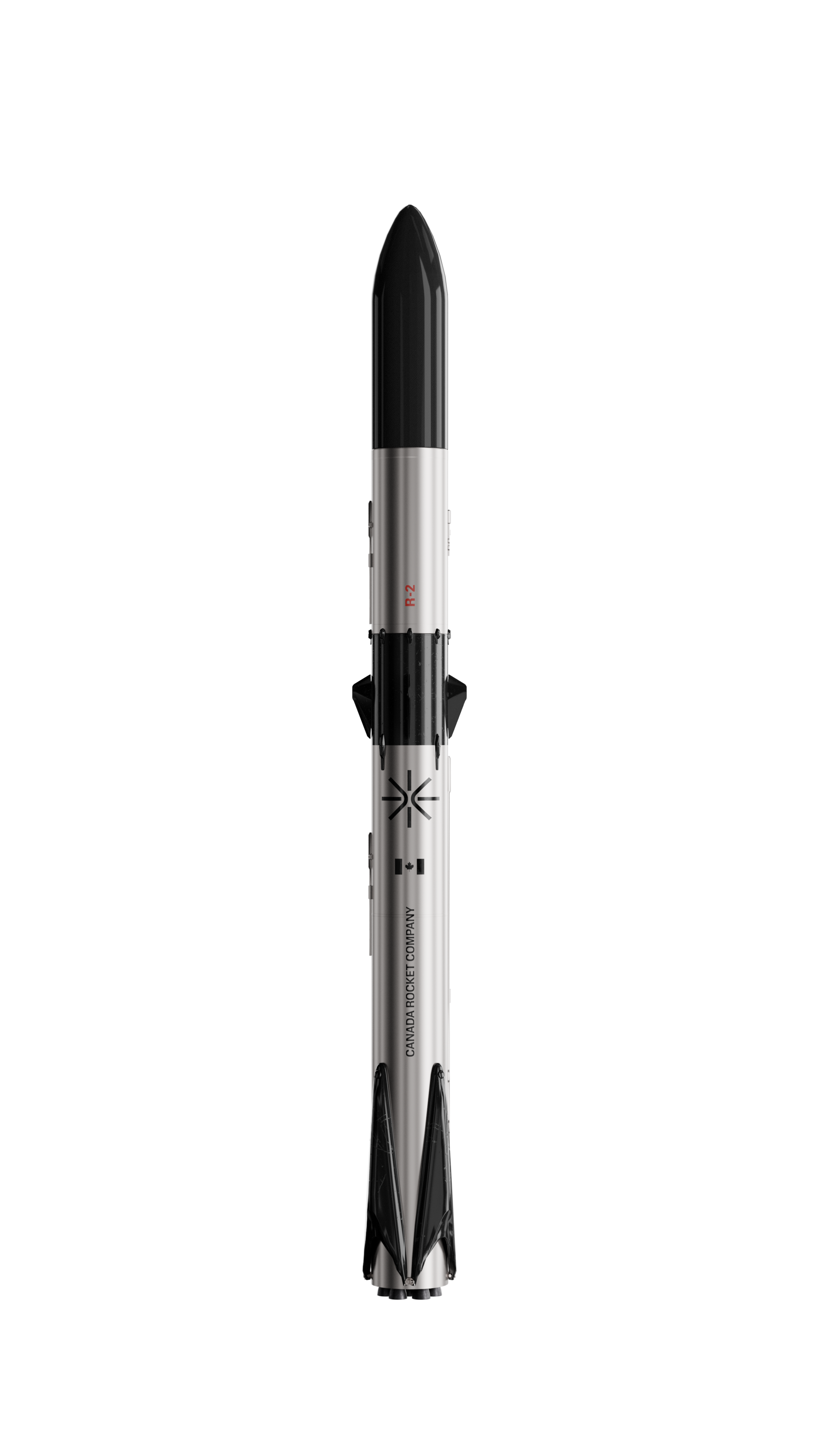
We’re also deliberately avoiding unnecessary technical complexity. I’ve described our approach as trying to be the least innovative launch company, at least initially. That might sound strange coming from someone building rockets. But getting to orbit is already one of the hardest engineering challenges. A competitive product does not need to reinvent every component. We need to build a vehicle that works reliably and economically.
The global market won’t buy Canadian launch services solely to support Canada. We must be globally competitive on price, performance, reliability and availability.
Have a friend or colleague interested in the startups and technologies shaping Canada’s most critical industries? Share this essay with them or your team.
Building the Industry Requires More than Ambition
Reusable rockets require powerful engines, sophisticated flight software, advanced manufacturing, and systems that can survive launch and recovery. Every critical component has to be tested and validated before a vehicle can be trusted with a commercial payload.
Canada also needs infrastructure that hasn’t existed here at this scale. That’s why Canada Rocket Company is developing the Jeremy Hansen Test Facility in London, Ontario. The planned $30-million facility will include test stands that can handle engines producing more than one meganewton of thrust, so that we can test critical rocket technology at home.

It is an important step, but there’s a tremendous amount of work ahead. Our roadmap targets a first orbital launch in 2032. Before that, we have engines to build and test, manufacturing capabilities to establish, and a launch system to develop and qualify.
We’ve estimated that developing a reusable medium-lift capability will require roughly CAD$920 million, which in turn can contribute up to $12b in GDP by 2040.
Government support has already helped get Canada’s sovereign launch industry moving. The next step is connecting that early investment to the infrastructure, technical milestones, and long-term launch demand companies need to attract private capital. Milestone-based funding and government-backed launch contracts can reduce the financial risk of development. The end goal should be Canadian launch companies that win commercial business internationally without depending on public funding indefinitely.
We also need to accept that rocket development is hard. Engines fail during testing. Designs change. Schedules slip. Reusability takes time to prove. There’s no shortcut around that work, and no amount of ambition can substitute for engineering execution.
Canada already has world-class space technologies and engineering talent. By developing our own orbital launch capability, we can build on those strengths and become a country that exports launch services, attracts the best aerospace talent, and attracts companies internationally at the frontier of space technology.
Our first successful orbital launch will be a historic achievement, and it deserves national attention. But I will be far more excited when a Canadian rocket launches for the hundredth time, carrying a payload for a customer who chose Canada because it’s one of the best places in the world to reach orbit.
That’s when we’ll know we’ve built an industry that can carry Canada into the next frontier.
About the Author

Hugh Kolias is the CEO and co-founder of Canada Rocket Company (CRC), a Toronto-based company developing Canada’s sovereign orbital launch capability with a team of alumni from SpaceX, Blue Origin, Rocket Lab, MDA, Tesla, Pangea and ArianeGroup.
CRC closed Canada’s largest space and defence all-Canadian seed round of $6.2m in early 2026, led by the BDC and Garage Capital and was recently awarded an $8.3m grant from the Department of National Defence. CRC has raised over $22.5m to date.
Hugh is a second-time founder on a mission to ensure Canada has assured access to space.
Canada Rocket Company

Founded in 2025, Canada Rocket Company is building a reusable, medium-lift rocket to give the world reliable access to space. CRC is servicing the medium-lift market, with a vehicle capable of carrying over 12,500 KG to Sun-Synchronous Orbit (SSO). Backed by a team with over 150 years of orbital launch experience from the world’s leading launch companies, CRC is developing its vehicle around the E-1, its own methalox engine, to become the launch provider of choice for nations and companies worldwide. To learn more, visit: https://www.canadarocketcompany.com/

Building something in Canada? I want to hear about it. contact@ethanmarcoux.com
Partners of The Canadian Explorers

The Canadian Explorers works with a limited group of sponsors that support the founders and startups solving Canada’s most difficult problems across defence, deep-tech and other critical industries.


ADDITIONAL SOURCES:
SpaceX’s satellite ambitions squeeze out rivals reliant on its rockets
Launch the North: Accelerating Canada’s sovereign access to space