


Welcome to the 861 Canadian Explorers who have joined! If you aren’t subscribed, follow the Canadian founders who are building in Canada’s most critical industries by subscribing here:
When a satellite sees something in orbit that it wants to share with Earth, it must wait for a scheduled pass over a ground station. For critical scenarios, such as a ship in Canada’s Arctic, data could take weeks to reach the person who can act on it. By that time, the ship is already gone.
Galaxia, a Halifax-based company founded in 2020, is building intelligent satellites that, rather than passively collecting data, can make decisions. This can reduce data transfer times to seconds by processing and condensing information in space before transferring it to Earth.
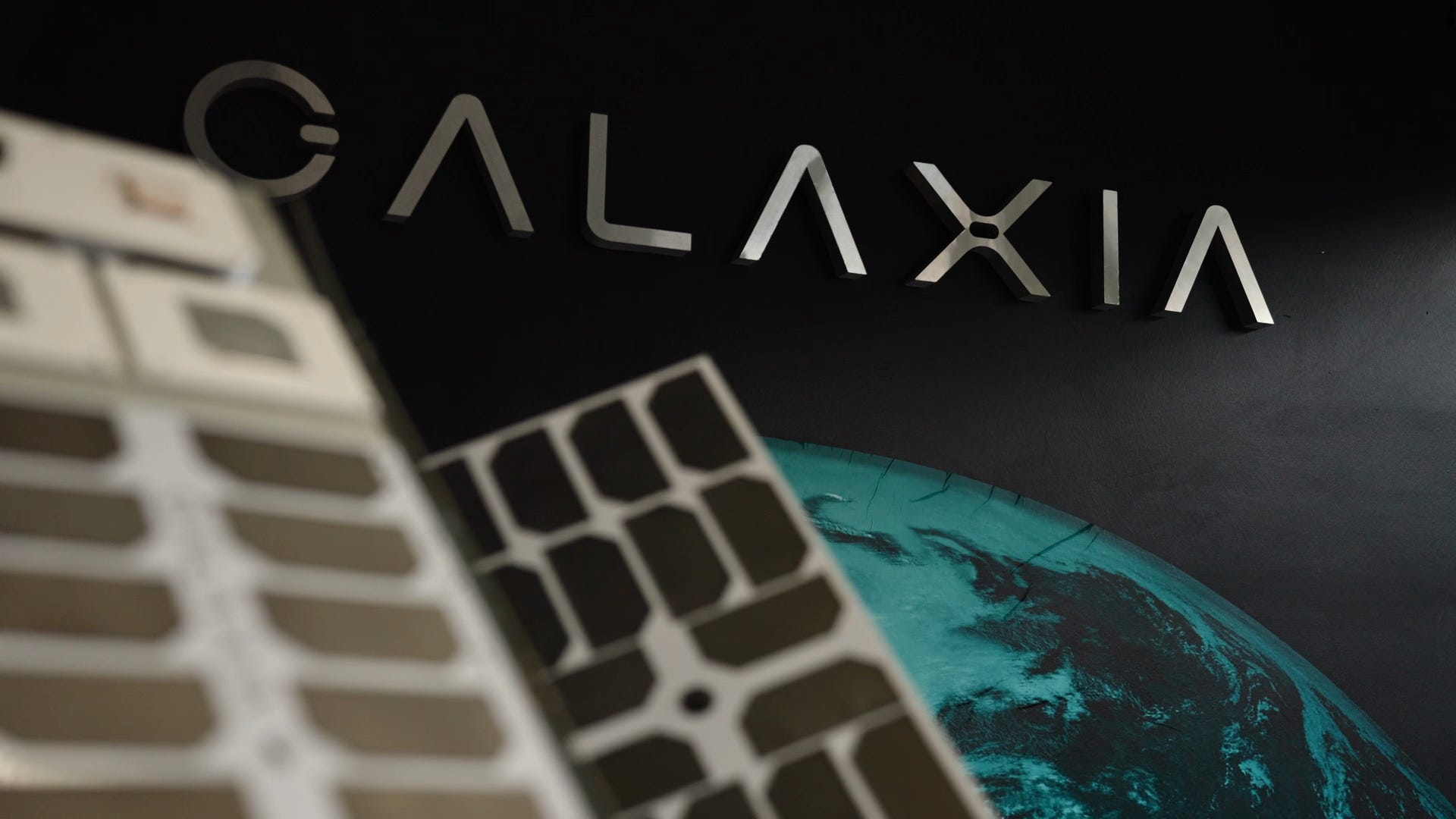
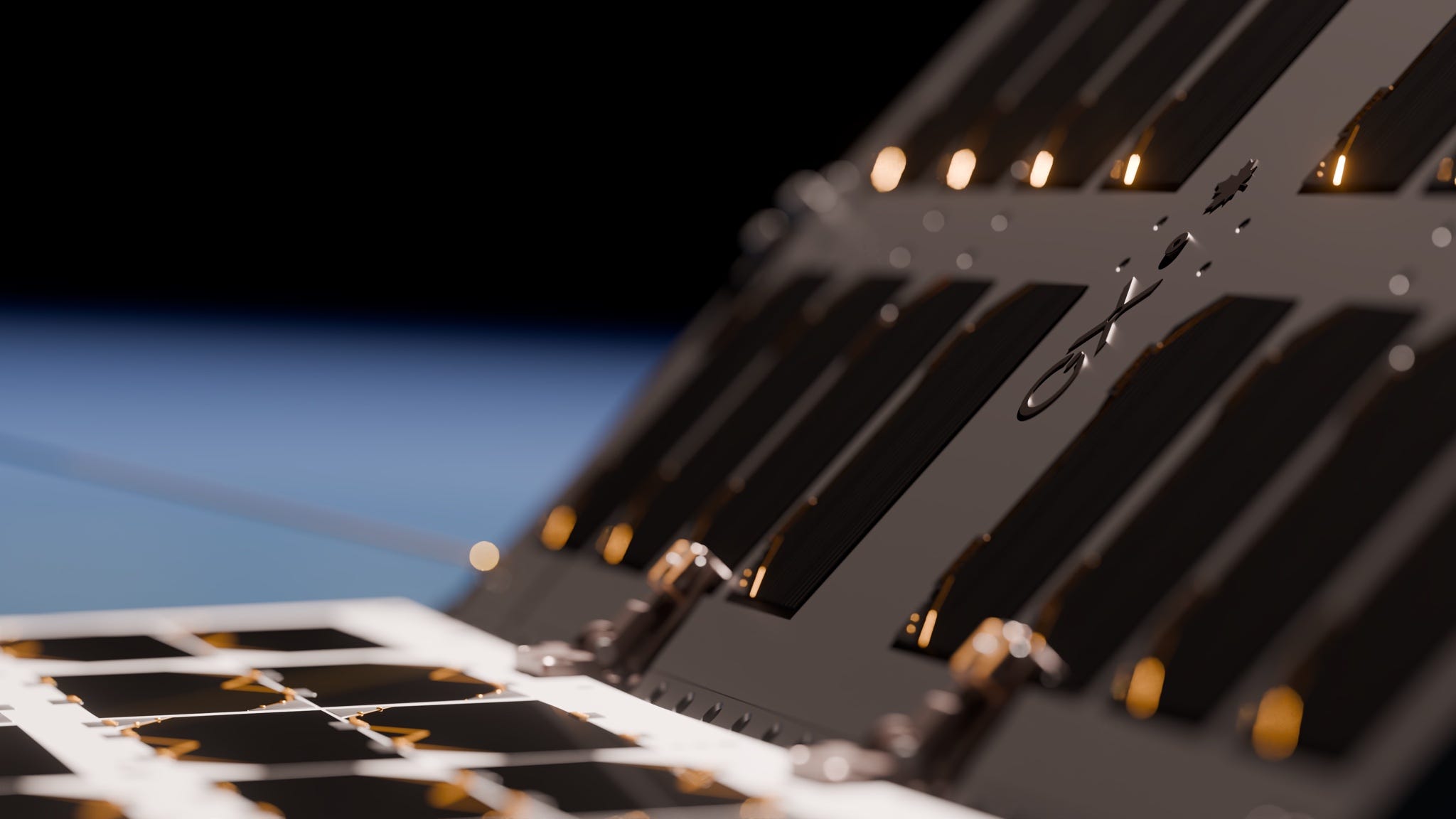
Galaxia’s AI-powered satellites are equipped with onboard edge compute for real-time Earth observation and defence missions. These satellites can be rented on demand as VSaS (Virtual Satellite as a Service). This allows customers to deploy applications and access intelligence without owning or operating the satellite.
The team has already launched two satellites. Galaxia says that in 2025 it became the first Canadian company to launch a satellite carrying edge-computing hardware and software into orbit.
The startup is working with companies such as Maritime Launch Services and Reaction Dynamics, and has received federal support from organizations like the Canadian Space Agency and the Department of National Defence. Its investors include Invest Nova Scotia, Amiral Ventures, Anges Québec and Reaction Dynamics.

Before starting Galaxia, Founder and CEO Arad Gharagozli created the Dalhousie Space Systems Lab where he launched Atlantic Canada’s first satellite. Now, he is building Canada’s sovereign satellite company and the space ecosystem around it.
I spoke with Arad about what orbital compute makes possible, what customers actually buy, the need for Canadian launch capability and building a space company in Halifax.
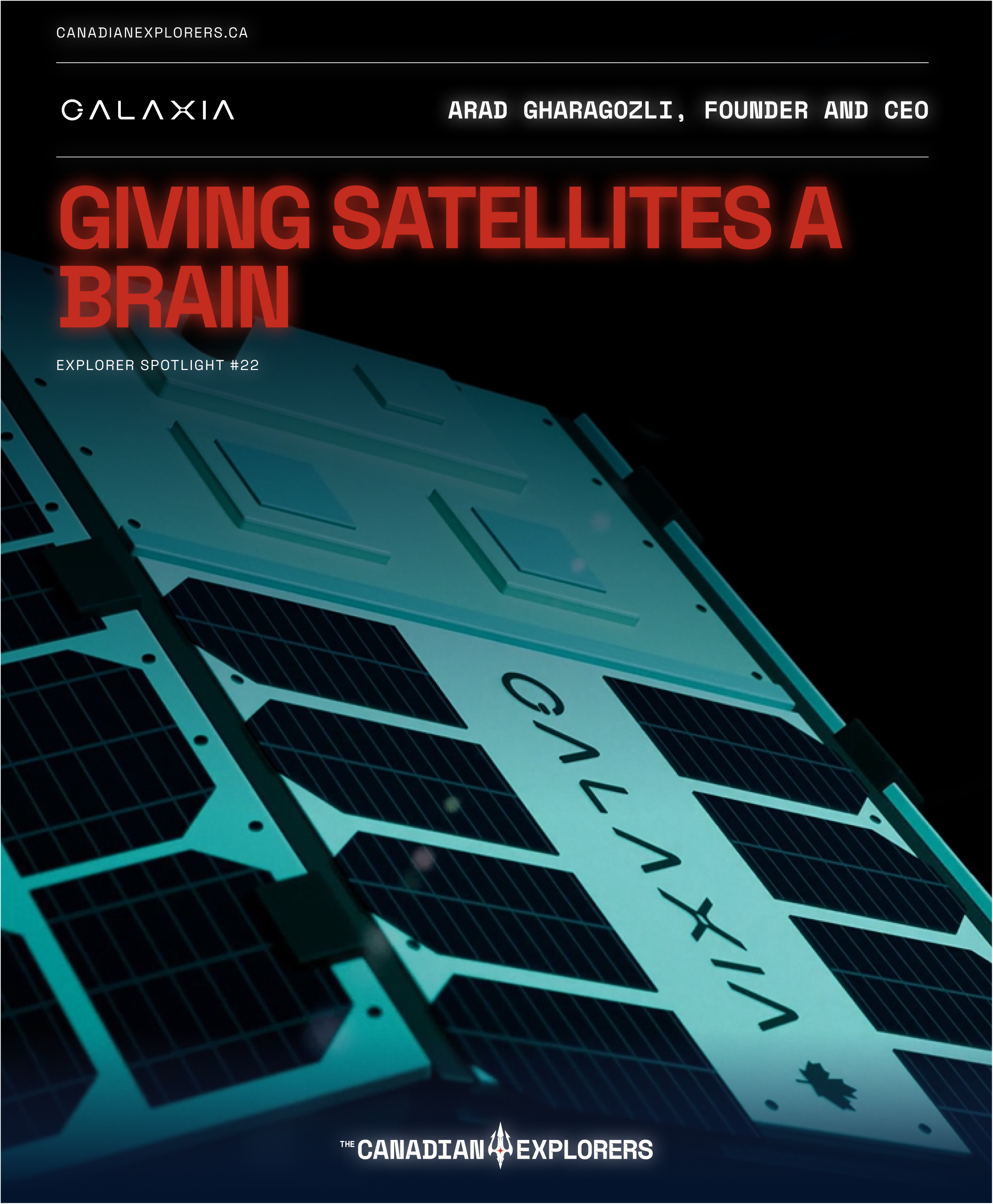
What is Galaxia building, and why does it matter for Canada?
“Galaxia is building sovereign satellite solutions.
As we’re looking at space as an increasingly contested environment with more complex operational limitations, Canada needs to have its own space capabilities in multiple domains.”
Advertisement — Marconi Technologies
The Canadian Explorers is proud to be supported by its Founding Lead Partner, Marconi Technologies.

Why process information on the satellite instead of sending it back to Earth?
“Traditionally, we saw space as a domain that was technically demanding and costly to access. You’d spend close to a billion dollars to build a satellite, with the expectation that it would operate for 20 or 30 years.
I’ll give you an example. Imagine a spacecraft on an intelligence, surveillance and reconnaissance mission. Its job is to detect vessels operating in an Arctic passage. We have sensors that can pick up those vessels. The challenge is that traditional satellites generate so much data onboard that it can take weeks, and in some cases months, to get that information back to Earth.
By the time that information comes back down, you’re saying, ‘There was a ship near Canadian waters about five weeks ago.’ By then, the ship is long gone, and the crew has had five weeks to carry out whatever it set out to do. That delay leaves us with an incomplete picture of what’s happening along our coastlines and in the Arctic passages.
At Galaxia, we’re turning that approach upside down. We’re saying that the data we generate in orbit should be processed in orbit. Only what matters most needs to come back to Earth. In some cases, we fuse data from multiple sensors onboard to build a fuller picture of what the spacecraft is seeing. We then distill that picture into intelligence that operators on the ground can act on.
That intelligence takes a fraction of the data to transmit, so we can send it back to Earth in real time through our orbital relay platforms. In the Arctic example, that could mean alerting operators to a vessel in seconds instead of weeks, while it’s still in the area and they have time to respond. That’s where onboard edge computing makes an operational difference.”
For someone non-technical, what does making space more accessible actually mean?
“At the core of our technology is a simple question. How do we make space accessible to any company, regardless of its budget, its influence or its experience working in space?
Think about what cloud computing did for developers. It let them build and run the applications we use every day without having to buy and operate their own servers. We’re doing the same thing with space. A company can build an application and run it on one of our satellites without having to build or operate a spacecraft of its own.
That opens the door for people to build applications we haven’t even thought of yet. Entire industries could grow out of that. That’s what making space more accessible means to me. More people get to use it to solve difficult problems here on Earth.”
What products are you selling, and what’s the business model?
“We have two lines of business. The first is Virtual Satellite-as-a-Service. Galaxia owns and operates the satellites, and customers share access to them. Some use them for Earth observation. Others need access to space to run an application or solve a particular problem.
The model is similar to cloud computing. We rent out capability in orbit. A customer can lease time on a spacecraft and pay for the sensors or onboard computing they need for their mission. Galaxia takes care of flying the satellite.
The second is MissionOne, our turnkey mission offering. It’s the kind of work we’re doing for the Government of Canada, including the Department of National Defence and the Canadian Space Agency. We can design, build and assemble a satellite, arrange its launch, operate it in orbit and deorbit it at the end of its mission. A client can put that entire mission in our hands.
Clients can also buy a Galaxia-designed satellite bus. That’s the platform that supports their payload, and it comes with power systems, radios and onboard computers built by Galaxia. With that option, the client can take charge of flight operations.”
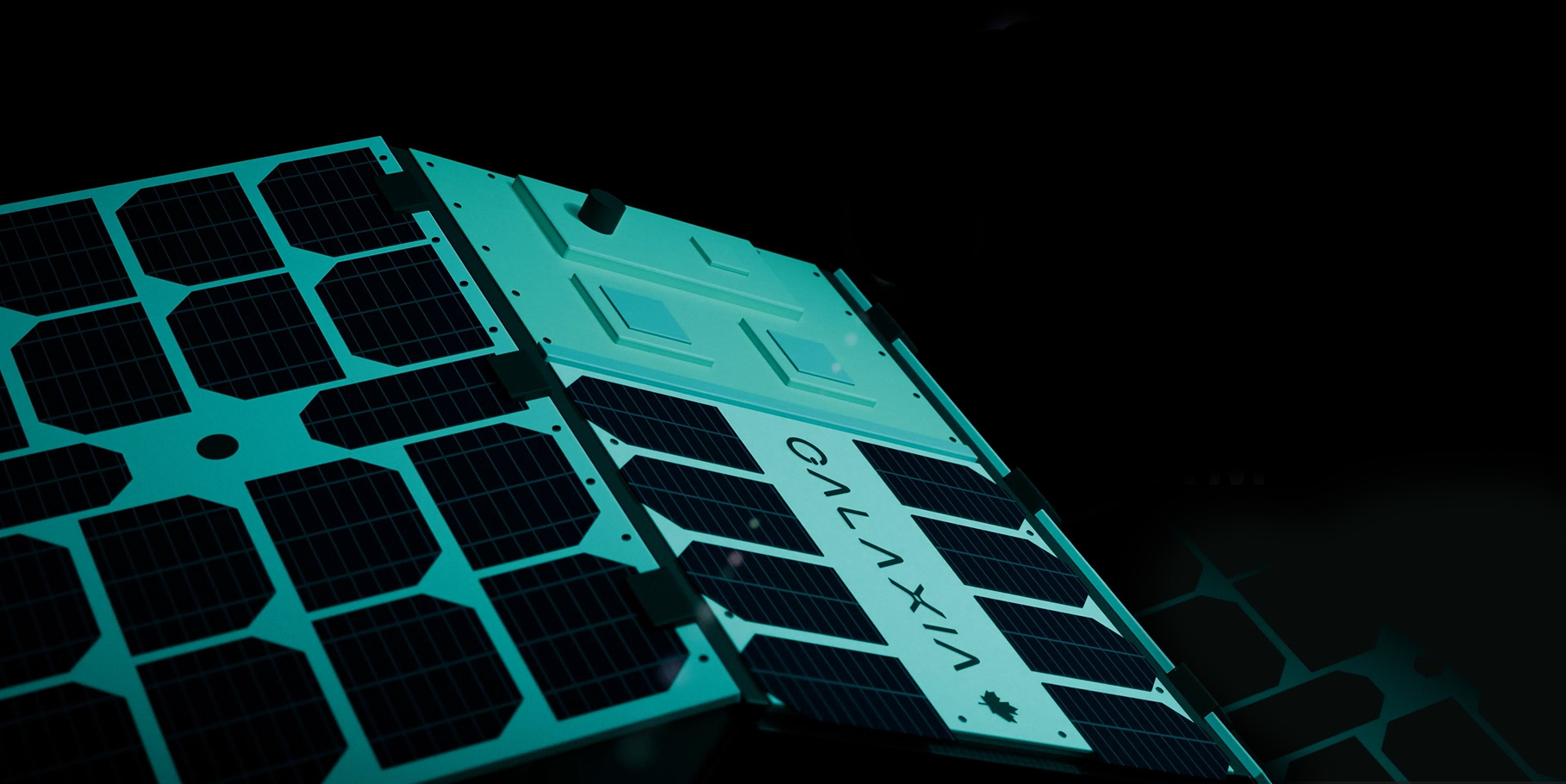
What makes Galaxia different from other satellite companies?
“The answer is almost in our tagline. Galaxia started as a space compute company that built satellites.
From day one, we’ve asked ourselves how we can bring the technologies we already use on Earth into orbit, from neural networks to edge computing. We have self-driving cars here on Earth. Why can’t a spacecraft use that same kind of computing to make decisions in orbit?
That philosophy shaped how we built our satellites. We started from the ground up, designing the computer architecture, building the hardware and developing the operating system. We also developed the neural network that processes the sensor data in orbit. All of those pieces work together to form our software-defined satellite technology.
A satellite image can show you a vessel in the Arctic. Our spacecraft can process that image in orbit and alert an operator while the vessel is still in the area. That’s at the heart of what Galaxia does. We generate intelligence in real time.”
You founded the Dalhousie Space Systems Lab and built Atlantic Canada’s first satellite. What made you start Galaxia?
“The idea of Galaxia definitely came after the lab. I always give a lot of credit to the Canadian Space Agency for creating and funding programs like that.
At the beginning, it was the curiosity of: how do we build for space in an environment where that never existed before? For us in Atlantic Canada, I’m sure a lot of folks would understand that we’re not very much known for a space industry.
The focus of what I was doing with the Dalhousie Space Systems Lab and everybody else who got onboard—close to 300-some students who worked on that project—wasn’t how to revolutionize computation in space or communication in real time. It wasn’t any of that. It was a simple question: how do we build a satellite? How do you put that together? How does it go to space? Just answering these simple questions.
I think it really touched on the curiosity of many other like-minded people. I was very fortunate to bring them together and have their support to launch LORIS into space in 2022.
SpaceX obviously had a big role in reducing the cost of launch, making it accessible for a group of university students to launch a satellite for $200,000. You couldn’t even dream about stuff like this before.
The way I see the future is that we’re going to get to a point where satellites become a commodity. Seeing a company launching a few thousand satellites should not be something that makes headlines anymore. The same way that revolution happened with quadcopters and drones, as we start proliferating that domain in defence, I think satellites will get to that point.
As we see a rise in rocket launches and spaceports across the world, I think the cost of satellite manufacturing will also go down. That’s where it becomes interesting for companies like Galaxia. We’re focusing a lot on miniaturization of sensors and technologies. We can lead that next leap into true proliferation of space using large swarms of satellites.”
Have a friend or colleague interested in the startups and technologies shaping Canada’s most critical industries? Share this interview with them or your team.
Why does Canada need its own satellite capabilities?
“Space is critical infrastructure. We rely on satellites for positioning, navigation and timing, or PNT. GPS is a familiar example. We also rely on satellites to communicate and to see what’s happening across our territory.
Think about the scale of Canada’s North. Imagine trying to patrol that much territory with one aircraft that passes through once in a while. Satellites can complement those patrols and help us see what happens between flights. What we’re missing is the capacity to build these satellites at scale, get them into orbit and operate that infrastructure ourselves.
Look at what SpaceX has done with Starlink. There are communities in Canada that have no LTE or 5G coverage but can get high-speed internet by satellite. That’s a real benefit. The question for Canada is who has the authority to make decisions about a service we depend on.
If push comes to shove, who decides whether that service stays available to us? The debate over Starlink’s use in Ukraine brings that question into focus. When someone else owns and operates the infrastructure, decisions about where and how we can use it can rest outside Canada. That leaves us vulnerable when we need to communicate or monitor our own territory.
Ownership is part of sovereignty, too. If a Canadian defence company has foreign shareholders, whether through a merger with a special purpose acquisition company (SPAC) or through direct investment, how much influence do those shareholders have over operational decisions? Could a foreign buyer later take a majority stake or acquire the company outright? Those are hard questions, but the risk of losing Canadian control is one we need to address when we talk about true sovereignty.
That’s why we need multiple Galaxias across Canada. We need several Canadian companies with the capacity to develop, build and operate these systems at scale. Relying on any one company for a critical capability creates a single point of failure. We should move quickly to eliminate those dependencies wherever they exist, in space and across other defence domains.
Government can help by investing in a broader range of Canadian companies. That strengthens our sovereignty, independence and resilience, and gives us technologies we can export to help our allies build their own capabilities. Ultimately, I’d like to see space disappear into the background because using it has become an ordinary part of our day-to-day lives.”
How concerned are you about Canada’s dependence on other countries to launch its satellites?
“It absolutely does concern me.
Imagine your house has no direct access to the road. Every time you need to get to work or take your kids to school, you have to ask your neighbour to use their driveway. That works as long as they say yes. The day they say no, you’re stuck.
It’s the same with space. We can build a satellite in Canada and have it ready to fly, but if we depend on another country to launch it, we don’t control when it gets to orbit. If that country’s priorities change, a Canadian defence mission could be left waiting.
That’s why we need more than one path to orbit. We need multiple Canadian companies developing launch capability and multiple Canadian companies building satellites, with the two working closely together. That gives us options when one provider can’t meet a mission’s timeline.
To me, the case for sovereign launch is clear. The question Canada should be asking now is how quickly we can get there.”
Reaction Dynamics invested in your recent round. What does that relationship bring to Galaxia?
“We looked at how some of the sophisticated space companies in Europe and the U.S. approached vertical integration. My view is that trying to build both the satellite and the launch vehicle rarely works for a smaller company, especially outside the U.S. A company like SpaceX, with its massive federal commitments, is an exception. Either one can absorb your engineering talent and capital. Taking on both can spread you thin, which means your end product will suffer in quality. Very early on, we started looking at Launch Vehicles and especially Airborne Dropped rockets, but we chose to stay out of launch vehicle research. We want to build a unique product that revolutionizes our customers’ experience in orbit. Something new that no one is offering, both in product and user experience. We’ve found a like-minded company in Reaction Dynamics that’s doing the same for launch. To me, that makes a strategic partnership the better path.
I’ve known Bachar for years. He’s a good friend first and foremost. When I see the energy he and his team put into Reaction Dynamics, I think, ‘Man, this is a great partnership.’
We worked with several other launch providers. However, once we can launch with Reaction Dynamics, we’ll have another route to orbit that could get our satellites there faster and at a lower cost. That gives us more options if a launch schedule changes and keeps Galaxia focused on building sovereign space platforms for Canada.”
Space Launch Built for Speed | Bachar Elzein, Reaction Dynamics — Explorer Spotlight #16

“SpaceX is built for mass; we are built for speed.” — Bachar Elzein, CEO and Founder, Reaction Dynamics
What have you demonstrated so far, and what should people watch for next?
“We started from the ground up, building the onboard computer, the hardware and the electrical power system. Today, we build our satellite platforms, our buses, right here in Halifax. Our Halifax-Class bus can go up to 50 kilograms, and we’ve built, tested and flown that platform.
Our next mission is the Canadian Tactical Operations Satellite, which we’re developing in collaboration with the Department of National Defence. We’re excited to launch it in July. The mission will put our edge-computing platform to the test in a defence application. We’ll use multiple sensors to observe activity and detect anomalies onboard, then relay that information in real time using different assets in orbit.
Over the next two years, we have several confirmed launches and several more in discussion with commercial and defence clients. To meet that demand, we’re rapidly expanding our manufacturing capacity here in Halifax so we can build more satellites and deliver more customer payloads to orbit.
By 2028, our goal is to be able to take an order and have a satellite on the launch pad within six months, with the customer’s payload fully integrated.”
The Canadian Explorers Live: Short video interviews to amplify startup announcements in Canada’s most critical industries. Read more →


What advice would you give to a founder building a hardware or space startup in Canada?
“You’ll see a lot happening in Canada’s defence sector. But you’re still selling to government. The procurement process is long; it’s complicated and, at times, it’s painful.
When we started Galaxia in 2020, my vision was to build an ISR (intelligence, surveillance and reconnaissance) satellite so we could see and hear things from space in real time. When I pitched it back then, there wasn’t much appetite in Canada for investing in defence. Investors would look at the commercial applications and say, ‘We don’t see much of a market here.’ What I was pitching was a defence platform.
My first piece of advice is to stay focused on what you set out to build. It’s easy to chase the money when a sector starts getting attention. If you were already planning to build hardware for the defence market, now’s a good time to do it. The question I’d ask yourself is, ‘Would I still want to build this if the money were going somewhere else in a year?’”

Building something in Canada? I want to hear about it. contact@ethanmarcoux.com
Partners of The Canadian Explorers

The Canadian Explorers works with a limited group of sponsors that support the founders and startups solving Canada’s most difficult problems across defence, deep-tech and other critical industries.


Incredible!