


Welcome to the 495 Canadian Explorers who have joined! If you aren’t subscribed, follow the Canadian founders who are building in Canada’s most critical industries by subscribing here:
“We have a battery that floats, and the user adds what they need.” — Meiz Majdoub Jr., CEO and founder of Mostar Labs
Remote coastal operations often rely on diesel generators or fixed electrical infrastructure that can be slow and expensive to upgrade. Meiz Majdoub Jr. spent 26 years as a naval engineering officer in the Royal Canadian Navy and founded the Navy’s technology management program. He is now building to address the critical gaps that he saw during his service.
Mostar Labs, founded in 2022, is a Victoria, B.C.-based company building the infrastructure to power vehicles, enable operations and provide domain awareness in the ocean.
“We’re the goalie of maritime domain awareness.”
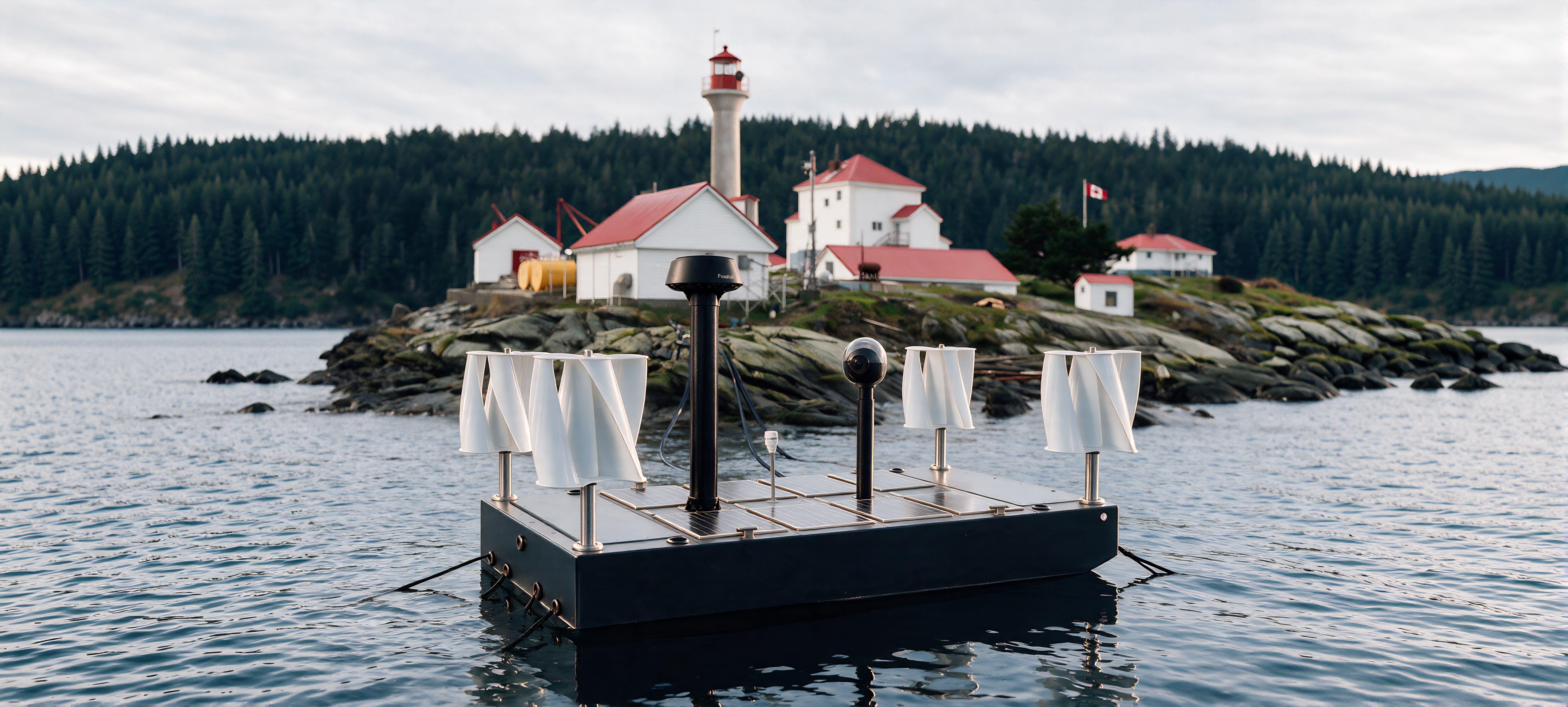
Mostar is building the Lilypad, a floating modular energy platform that can be towed and, depending on its configuration, generate clean energy through solar panels, wave generators and wind turbines. The Lilypad stores and manages this power to charge vessels, support remote operations and carry onboard sensors. It is designed to deploy as a standalone unit, or scale flexibly ‘like LEGO’ depending on demand.
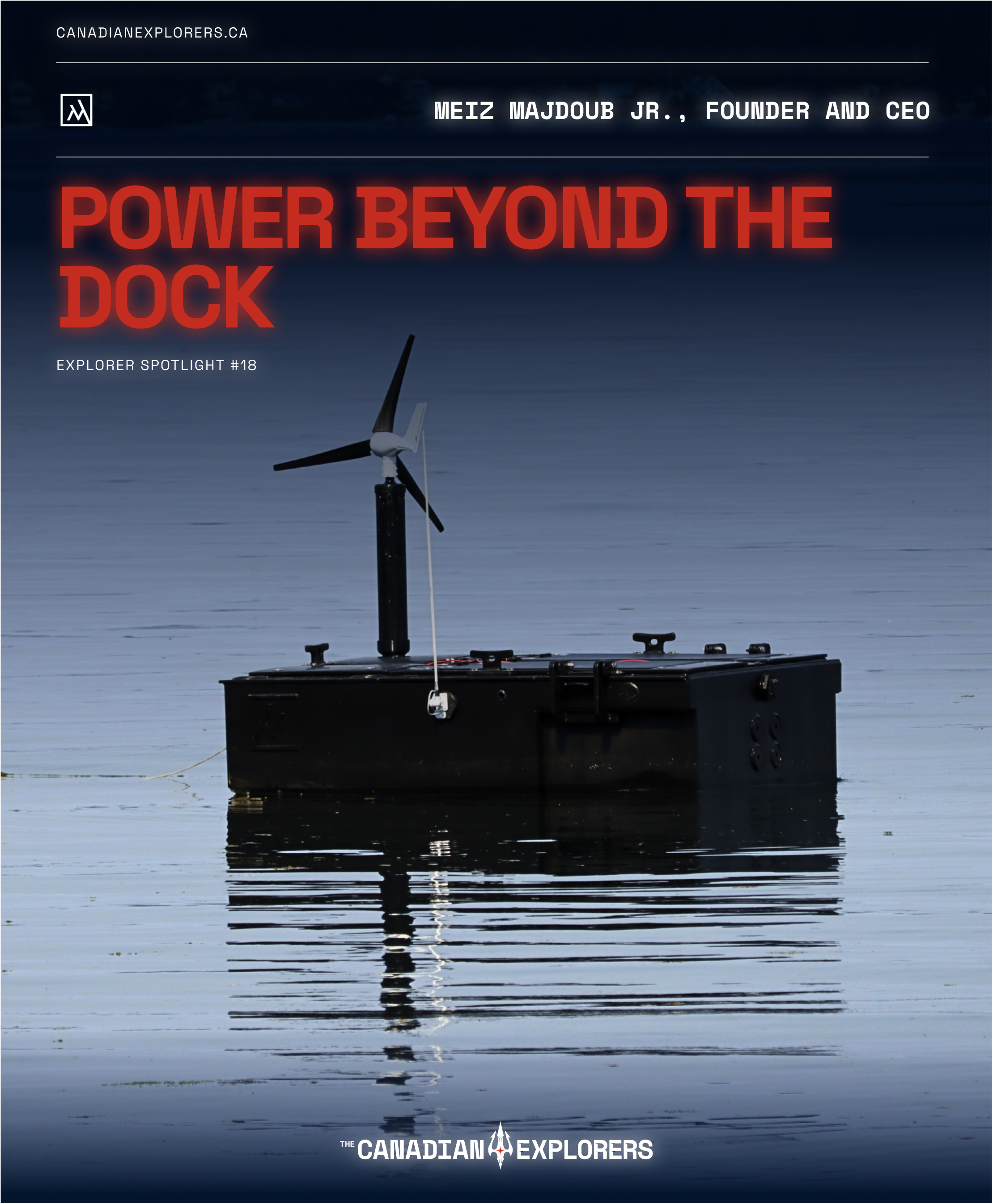
“If you can launch a boat at a boat ramp, that is how fast it is. Your queue at the boat ramp is probably longer than the actual deployment itself.”
The same Lilypad platform that can provide energy can also be fitted as a stationary maritime “picket.” The floating device can be positioned near strategic locations to provide persistent sensing and maritime awareness. Uncrewed platforms such as the Lilypad are necessary for countries like Canada to monitor and protect the world’s longest coastline.
The company already has three platforms in the water, is leading a project supported by Canada’s Ocean Supercluster, and is delivering projects supported by Innovate BC and COAST.
Mostar Labs aims to deploy the Lilypad not just in Canada but worldwide for counter-drug operations and border security.
Mostar has been bootstrapped since its 2022 inception and is looking to raise capital for the first time in mid-October. The team plans to test on the water as much as possible and to scale manufacturing to 50 units per month. I spoke with Meiz about how his Navy experience led to Mostar Labs, manufacturing, financing, maritime surveillance, and what the Lilypad can power.

“I found it difficult as a veteran to watch from the sidelines. I wanted to contribute where I could.”
What is Mostar Labs building, and why does it matter for Canada?
“Mostar Labs is building a floating energy platform. It matters for Canada because of electrification at the edge. New ports are being electrified, and we’re just not ready yet.
We’re almost infrastructure-less: a floating barge. Beyond that, you can add sensors to it. We’re developing floating pickets where we can see and hear. We’re the goalie of maritime domain awareness.”
Advertisement — Marconi Technologies
The Canadian Explorers is proud to be supported by its Founding Lead Partner, Marconi Technologies.

How does the Lilypad work?
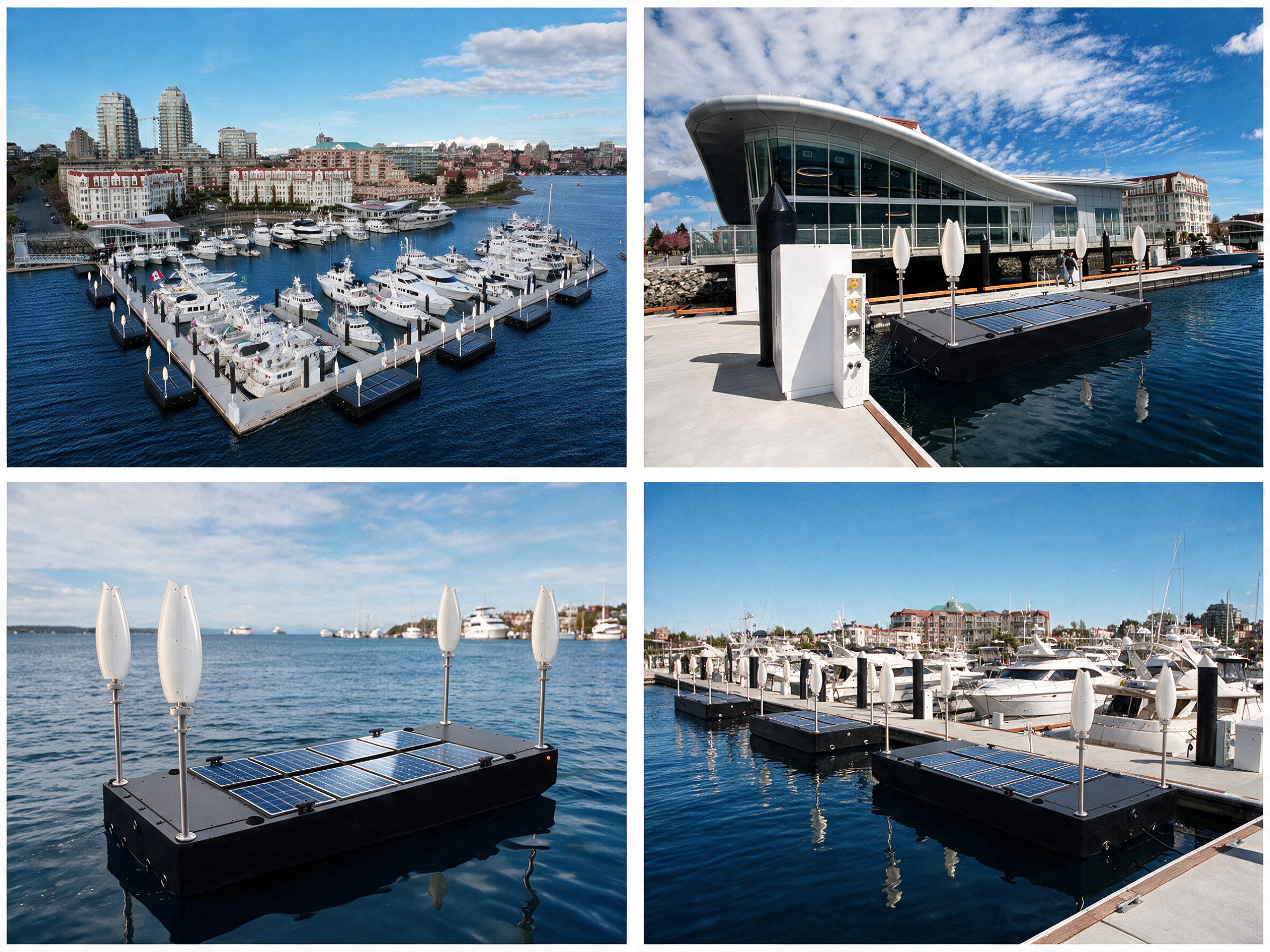
“It depends on the variant. Right now, we have four different variants, sized for different use cases. For a medium-sized marina, we have the Lilypad 200, which is 200 kilowatt-hours. That one does orchestration. We take slow power coming in from the marina, store it and discharge it as fast as we can.
We also have an off-grid power configuration for a project to power a lighthouse. With that, we use vertical-axis wind turbines, solar panels and wave-energy generators. All three combined provide enough power that we can recharge the battery in probably a day and a half to two days, and discharge as appropriate. Every use case is unique, though. Every lighthouse or mountaintop has different power needs.
Then we have a much larger one we’re calling the Whale. It has roughly the footprint of a sea container and is sized in the several-hundred-kilowatt-hour class. We’re still characterizing how much load it can take.
We also have the Lilypad 100, which is half of a 200, so 100 kilowatt-hours, but it breaks apart like Lego. That one is meant for small harbours, and it can be towed.”
What led you to start Mostar?
“I saw a lot of critical gaps during my service, and they kept coming up over and over again. I started off consulting. It became apparent that we had the contacts, we knew how to do procurement, and this was a logical progression. As a naval engineer, I wanted to get back into it. I found it difficult as a veteran to watch from the sidelines. I wanted to contribute where I could.
We had a previous project testing electric vessels, including prototypes and outboard motors, and it was going to take too long to charge them. We went to marinas, but nobody would let us install fast DC chargers. The problem wasn’t at the jetty itself. It was all the electrical infrastructure that would have to be upgraded, and it was becoming cost-prohibitive. With Lilypad, you go to the boat ramp, put it over the side, connect it to the pedestals, and you’re ready to go. To us, it was an immediate need.
Beyond that, I’d spent my career in maritime domain awareness, doing missions in the Arctic and counter-narcotics, so JIATF South. Every time we were out, especially on JIATF South, we wouldn’t see any tracks. The moment we left, intelligence would show us a number of tracks coming. So we knew pickets were necessary. I also knew uncrewed surface vessels were part of the solution, but you’re wasting too much energy moving around when you already know where people are going.”
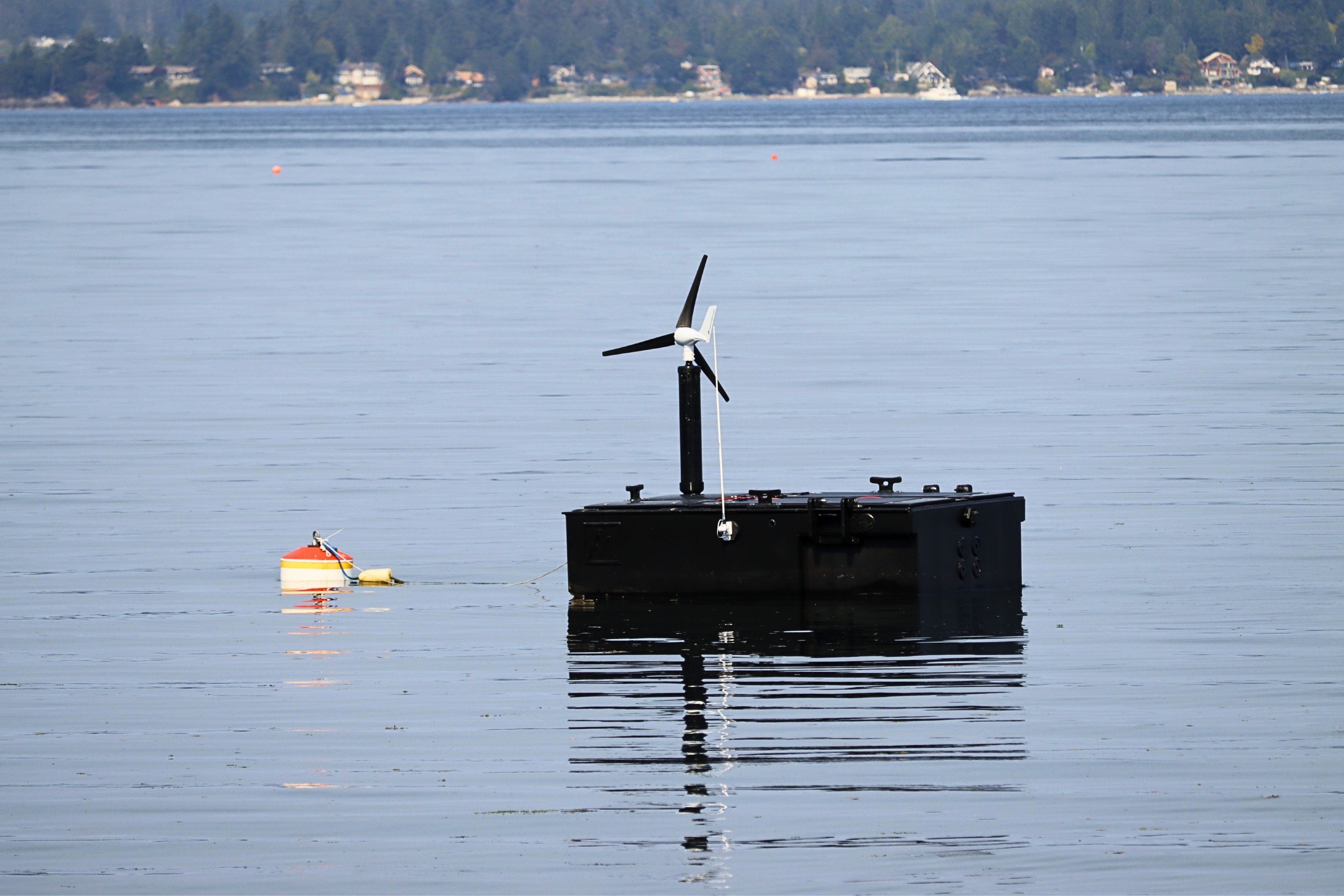
What is a maritime picket?
“A picket is a spot you’re surveilling and guarding. It could be the mouth of a harbour, a strategic choke point, or even the harbour itself where you have limited power. We’re providing additional maritime domain awareness. It’s a spot you claim and hold. The goalie has a box and doesn’t typically leave it. That’s our mantra. Other companies are doing USVs (unmanned surface vessels). That’s not what we’re tackling. We’re safeguarding a particular spot.
When I wrote my second dissertation, it was called Distributed Effects. That was in 2014, and it was about exactly this: pushing the boundaries and going beyond them.”
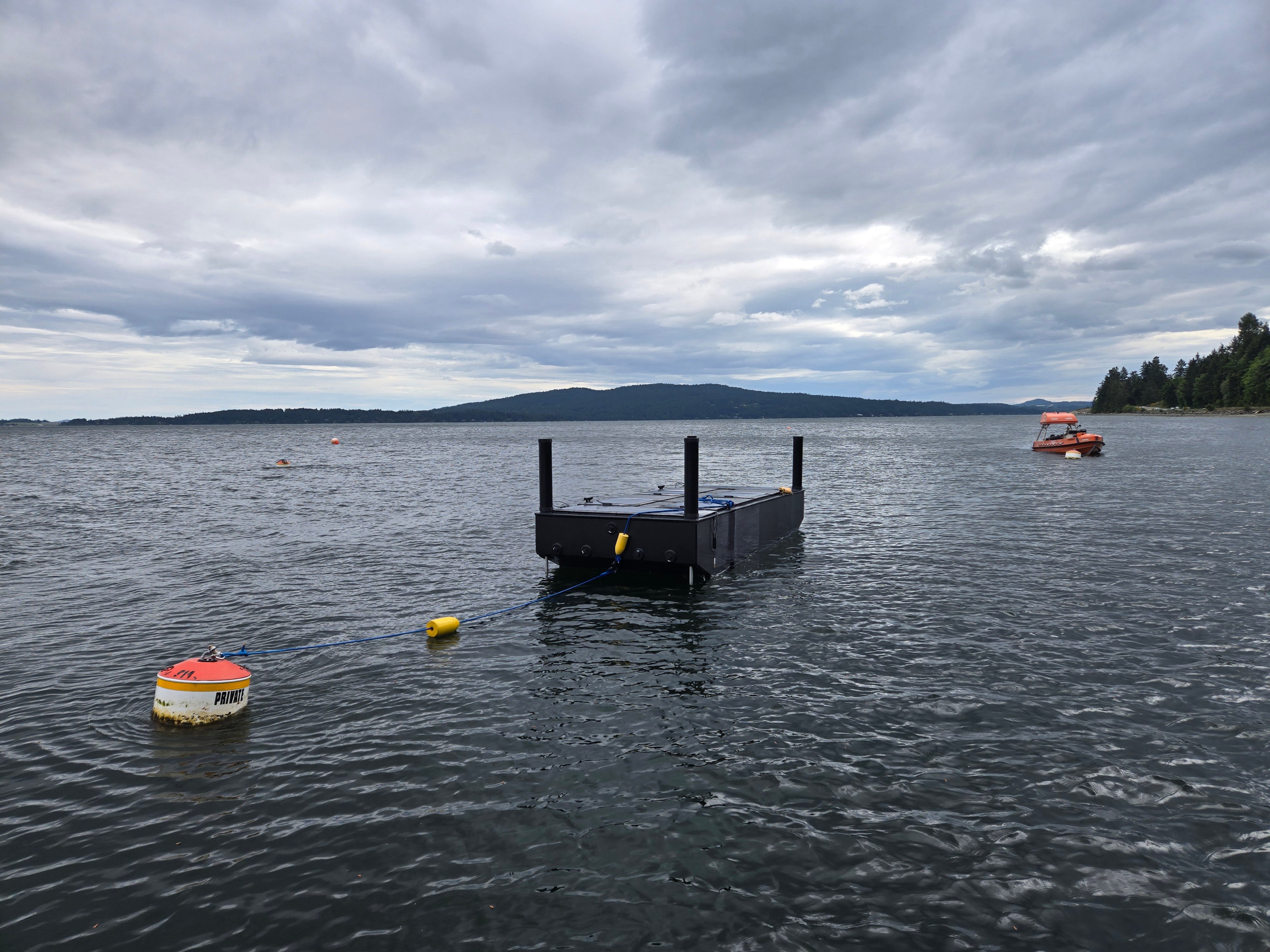
How quickly can the platform be deployed or moved?
“The current design has a towing speed of 10 knots. You tie it to your tow vessel and tow it just like any barge.
We planned for our first deployment to take all morning. We were done within five minutes, and I said, ‘Lunch, everybody?’ We laughed about how fast it was. If you can launch a boat at a boat ramp, that’s how fast it is. Your queue at the boat ramp is probably longer than the actual deployment itself, especially around Vancouver during fishing season.”
Is Lilypad meant to replace diesel?
“It’s very much complementary to diesel. Wherever there is diesel, we can help tremendously. When you orchestrate it, meaning you run the generator at 80 percent load, store the energy in a battery and then discharge it, we save about 33 percent on fuel alone. We don’t see ourselves fully replacing diesel. It depends on the load. For people who already have diesel infrastructure, we can save that money right off the top just by managing the power.
We used to deal with this on warships all the time. Our diesel generators would be running at 20 or 30 percent, and we’d have to decoke them. Carbon residue would build up, and you’d have to run them hard to burn it off. That’s essentially what we’re doing. It’s also scalable. Tell us the energy you need, and we can scale to it. On top of that, the energy coming from renewables is free.
We have another project with a company which uses massive wave-energy generators. In that case, we’re acting as a rectifier and transformer. We’re not always generating power ourselves. Sometimes we’re managing somebody else’s power. They provide dirty DC; we clean it up. It’s a use-case-by-use-case basis. The more people we talk to, the more they ask, ‘Could you solve this problem for us?’”
Have a friend or colleague interested in the startups and technologies shaping Canada’s most critical industries? Share this interview with them or your team.
Where are you seeing the strongest demand?
“We’ve invited operators to come and see what we’re doing, and they give us a laundry list: ‘Could it do this? Could it do that?’ A lot of people are chasing the Arctic, and that’s fantastic, but we’re not an Arctic planet. We’re an ocean planet. We think about archipelagos. If you can prove it in British Columbia and the Pacific Northwest, you’ve pretty much proven it for most of the planet.
Think about Japan, the South China Sea, the Philippines and the Caribbean for counter-drug operations. Wherever there’s a group of islands, we can have these platforms nested together, supporting border security and maritime domain awareness.
In many ways, we’re a lot cheaper than navies. I think back in the day we were looking at about $100,000 a day to deploy a warship, fully up, with the full complement and air detachment. We’re a fraction of that per day, and we’re persistent. That’s our mantra. You’d pay back a Lilypad in days, not years, for that persistence. For the mission sets, what we used to call ‘vignettes’ in the Navy, we’re pursuing easily at least 20 of those.”
What does a Lilypad cost, and what is the business model?
“It depends on who it’s for and what you put into it. It’s like asking how much a laptop costs. How much RAM did you put in? Does it have a 4K screen? All those elements matter.
One of our go-to-market plans is to self-finance, get as many out as possible and charge a subscription, almost treating our assets like Starlink. The subscription model for the maritime domain awareness piece is far more interesting to us than being an OEM. We go out and do repair-by-replacement ourselves.
Power-as-a-service is also very interesting to us. The electric-vessel market is still early, which is why the near-term demand is power orchestration: harbours, light stations and anywhere diesel is running inefficiently. We probably have one of the largest electric vessel fleets on Vancouver Island, if not the Pacific Northwest. We know we’ll be first with our chargers and vessels. Even learning the dos and don’ts of charging electric vessels, we’re going to be one of the most knowledgeable companies doing it. The platform is up and running. We have three nodes deployed, we’re getting rich data, and the system keeps learning.”
How does it operate in poor weather or cold conditions?
“It really depends on how many sensors you have on board. On a full Lilypad 200 with a sensor suite running, you have months of standby even if the sun doesn’t shine and there’s no wind. Right now, on the platforms in the water, harvest is outpacing load, so we sit at 100 percent most of the time. That leaves a lot of margin for heavier sensor suites, and we’re learning from every one of them.
For the Arctic, without giving away too much of our proprietary approach, we have batteries that can withstand −40°C. They’re deployed right now, not in the Arctic, but we’re doing full-draw testing, and the deployment has gone fantastically. Our next goal is an Arctic deployment if we land a project.
We have an eligible Innovative Solutions Canada opportunity meant for the Arctic, and that’s the one we would deploy. It’s ready to go. We also have enough electronics on board to keep everything running and warm. From a cold start, we can go to −40°C.”
What stage is the Lilypad at, and how quickly can you manufacture it?
“Right now, the Lilypad 200 in its marina configuration is at TRL (Technology Readiness Level) 7. Manufacturing-wise, we can produce two per month with our current process. Our additive manufacturing line, which we’ve fully modelled, takes us to about 15 per month, and the target is 50. Getting there takes a capital injection.
The good news about the big banks talking about dual-use is that it creates an opportunity to finance the assets we need to meet demand.”
How has Mostar been financed so far?
“In the beginning, what you could call our pre-seed, I was consulting. That made a good amount of revenue, and every dollar was reinvested into the company. Then we started hiring engineers and said, ‘We’re going to launch our own product.’ SR&ED helped a lot, frankly. Beyond that, I injected some of my own capital, and then we started getting projects.
Canada’s Ocean Supercluster was one, but you have to come with your own investment. I wouldn’t call that a paying customer right now, other than the fact that there were adopters involved. Victoria International Marina, the superyacht marina, was one of them. We also have two Innovate BC projects.
We were sunsetting a number of consulting projects as well. All of that together was bringing in revenue. Then we got NRC (National Research Council of Canada) IRAP (Industrial Research Assistance Program) dual-use support at the same time, which was quite helpful and kept the development going.”

Are you looking to raise more capital?
“We’ve been bootstrapped since the beginning, since 2022, and we’ve decided it’s time to raise capital. Starting in mid-October, we’re going to do a capital raise. That lines up with a trade mission to Los Angeles through Black Tech Express. We were selected for the mission, and it’s part of LA Tech Week.
We’re going to follow the blueprint of a couple of other defence startups here in Canada that, fortunately or unfortunately, had to go beyond our borders to try to secure capital. We’re hoping to close by Q1 2027 and then execute. It might be a blended approach, because the banks seem very favourable to lending against assets.”
What has been the biggest thing holding Mostar back?
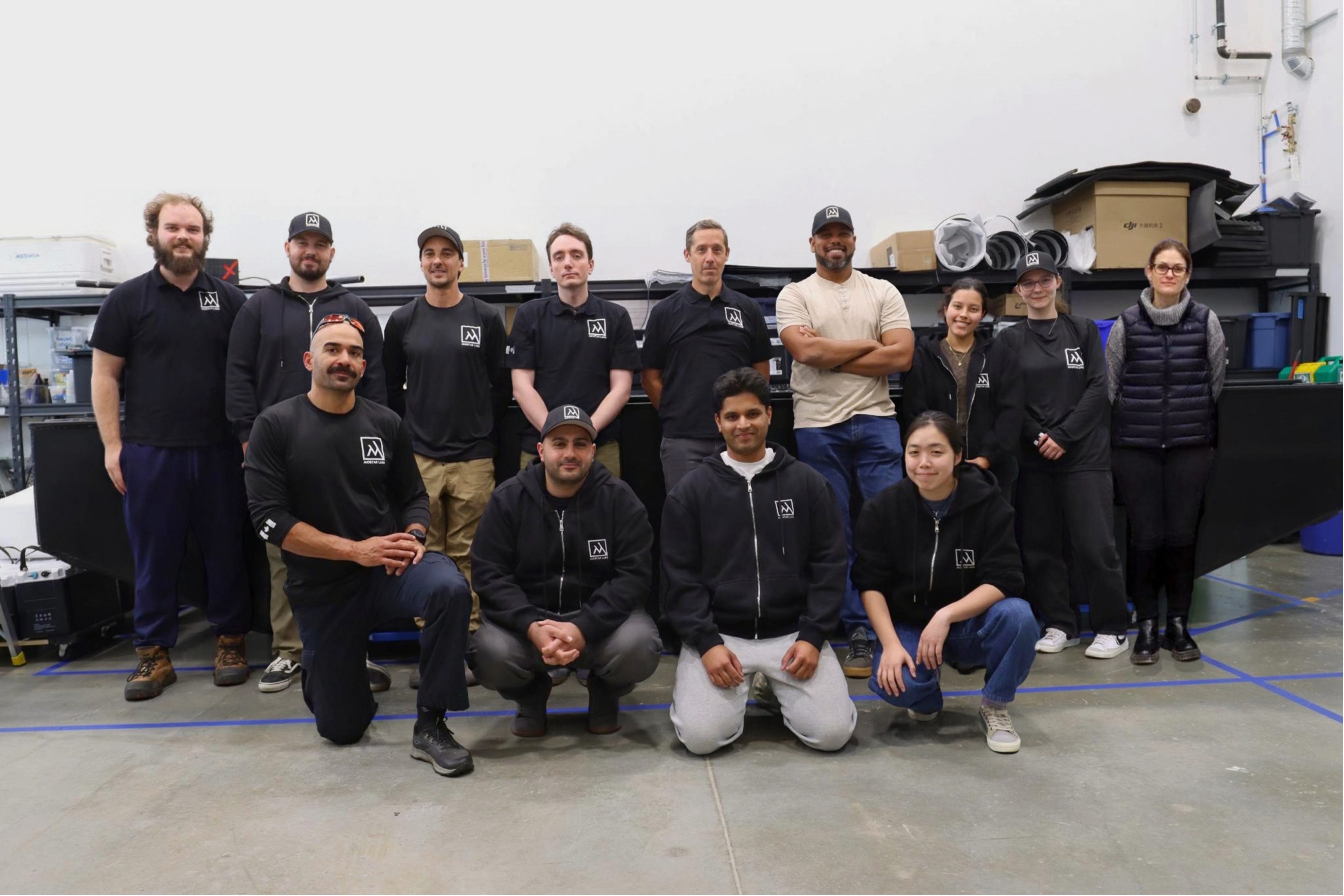
“Until recently, it was focus. I just hired a director of engineering. He started in early September, and he has the depth of experience we needed. You can’t be the visionary and the disciplined integrator at the same time. There are so many things and so many verticals we can chase, so it is about focus.
We’re working on our engineering processes, our documentation, everything. It’s going from a scrappy startup to really cleaning things up and being rigorous in our execution. I am who I am. I can create things, but having somebody by your side who can bring them to market and commercialize them much more cleanly is the key for us right now.”
What do the next 12 months look like?
“The focus is on our pilots. We have three in the water, and we want to learn as much as we can from them and get user feedback. It would be a big step to lock in an Innovative Solutions Canada project. Beyond that, we want to start being in every small harbour. After the federal government’s small craft harbours commitment this spring, we thought, ‘Wouldn’t it be great for us to be there?’ We’ve filed a family of patent applications now, so we feel comfortable that we’ve protected our position on some of this work, specifically how you scale the Lilypads.
We also want to introduce the platform into other markets, such as the Caribbean. We feel we have a very unique solution for JIATF South, because we know where people want to go. We want to keep building our data lake. We’re training our algorithm, which is proprietary to us. We’re sending drones towards Lilypad from every angle and teaching it.
I think our biggest differentiator is that, unlike companies that may be a bit landlocked, we’re on the water. It takes us 10 minutes to reach the water, and we have a maritime operations team. So the next 12 months are about being on the water as much as we can and running these platforms hard.
On the technology side, it’s about honing our manufacturing techniques. Two per month isn’t going to do it for the scale we want. We want to be easily at 50 per month. We know how to do it. It’s about de-risking those elements.”
What does Mostar look like in the long term?
“If we were Dell computers, we’d want to help build the ecosystem of peripherals. Whenever we see a promising new technology, we want to integrate it and go out and acquire it. We’re the platform that can help others as well.
In 20 years, it wouldn’t be so much about a physical moat anymore. We would be an angel company, helping other companies get where we’ve had to get through revenue and partnerships. It’s not a co-op. This is still a business. But we know how hard bootstrapping is, and getting a little bit of revenue is, in my view, the key to getting out there. If somebody comes up with something groundbreaking, say an underwater acoustic modem they’re tinkering with in a lab, we want to provide the platform that lets them keep testing and refining it. That’s where we want to be.
Selfishly, I’d love to see some of our initial employees branch out on their own in five or ten years with technologies we’ve created here. I’d say, ‘Go forth, do it yourself, go run it, and come back to the hive when you’ve got something working.’”
Which other startups or technologies are worth watching?
“I feel a lot of people are preparing for the last war and following the crowd. Perhaps drones are it; I could be wrong, and you can quote me and say, ‘Meiz, you were totally wrong.’ But I feel it’s a known known now, and there’s something else we’re missing.
I’d watch anybody working in quantum. When somebody starts working with it from a radar or sensing perspective, or decrypting things and turning the lights off, we’re going to be in trouble. At that point, it doesn’t matter how many little drones you have flying in the air. I don’t want to jump on that bandwagon prematurely either, but Canada is probably going to have a quantum moment.
One company I would watch is Teleidoscope. It’s American, LA-based, and founded by a Canadian. He’s coming back and establishing a footprint in Vancouver.”
Why build in Canada?
“I’ll speak specifically about Victoria. It’s such a beautiful place that it’s easy for us to attract talent. The talent isn’t prohibitively expensive, and you have highly educated, motivated people with a nice balance in their lives. Everything is close by for us.
The tax incentives have been fantastic lately. This isn’t a political spin, but I think the government is serious now. Now is the time to leverage that, but we have to step up and prove it. SR&ED has been fantastic support.
I think the market may not be here quite yet, which is to our detriment. We almost have to build here and export, which I think is the message we’re getting from the government anyway. That’s okay. When I see what people are raising down south, I think, ‘That’s ridiculous.’ If I had that amount of capital right now, we would move dramatically faster. I don’t think it’s that expensive to build something beautiful.”
If you’re building something in Canada, I want to hear about it. contact@ethanmarcoux.com
Partners of The Canadian Explorers

The Canadian Explorers works with a limited group of sponsors that support the founders and startups solving Canada’s most difficult problems across defence, deep-tech and other critical industries.
The Canadian Explorers Live

Canadian companies are building some of the world’s greatest technologies, yet receive little attention compared to their international peers. Now, the biggest moments in Canadian startups are coming to video.


