


Welcome to the 679 Canadian Explorers who have joined! If you aren’t subscribed, follow the Canadian founders who are building in Canada’s most critical industries by subscribing here:
“Ribbit’s product consists of an autonomy stack that can make any conventional airplane autonomous.” — Jeremy Wang, co-founder and COO of Ribbit
Founded in 2020 and headquartered in Burlington, Ontario, Ribbit is retrofitting existing aircraft with autonomy systems to build pilotless airplanes for remote communities and defence operations. These planes are designed to handle takeoff, flight, landing and emergencies during intelligence, surveillance and reconnaissance (ISR), search and rescue, and cargo delivery missions.
There’s nothing wrong with the way airplanes are inherently designed. We just think there’s an opportunity to make them more efficient by increasing the weight and volume available by removing the cockpit from that aircraft.
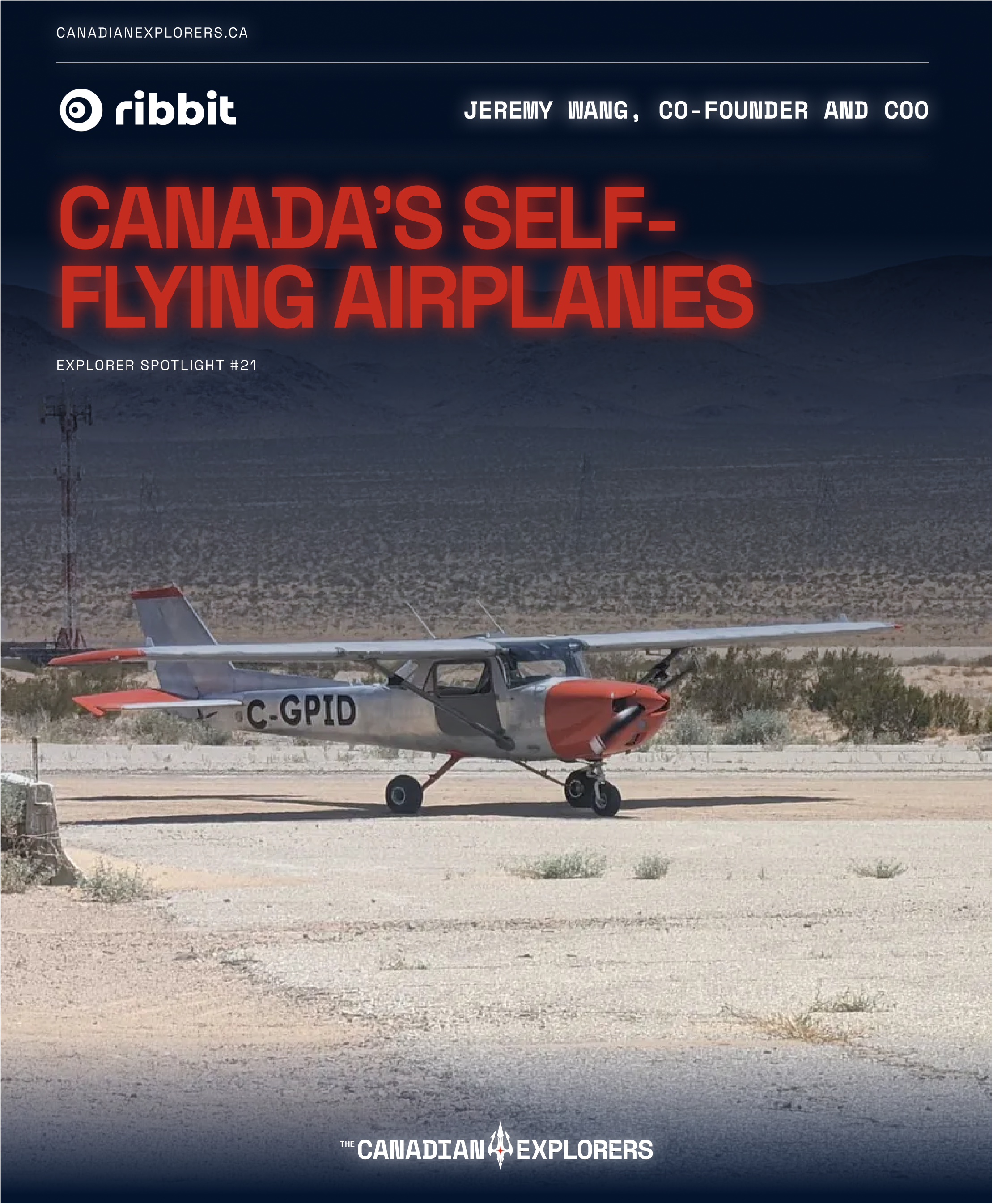
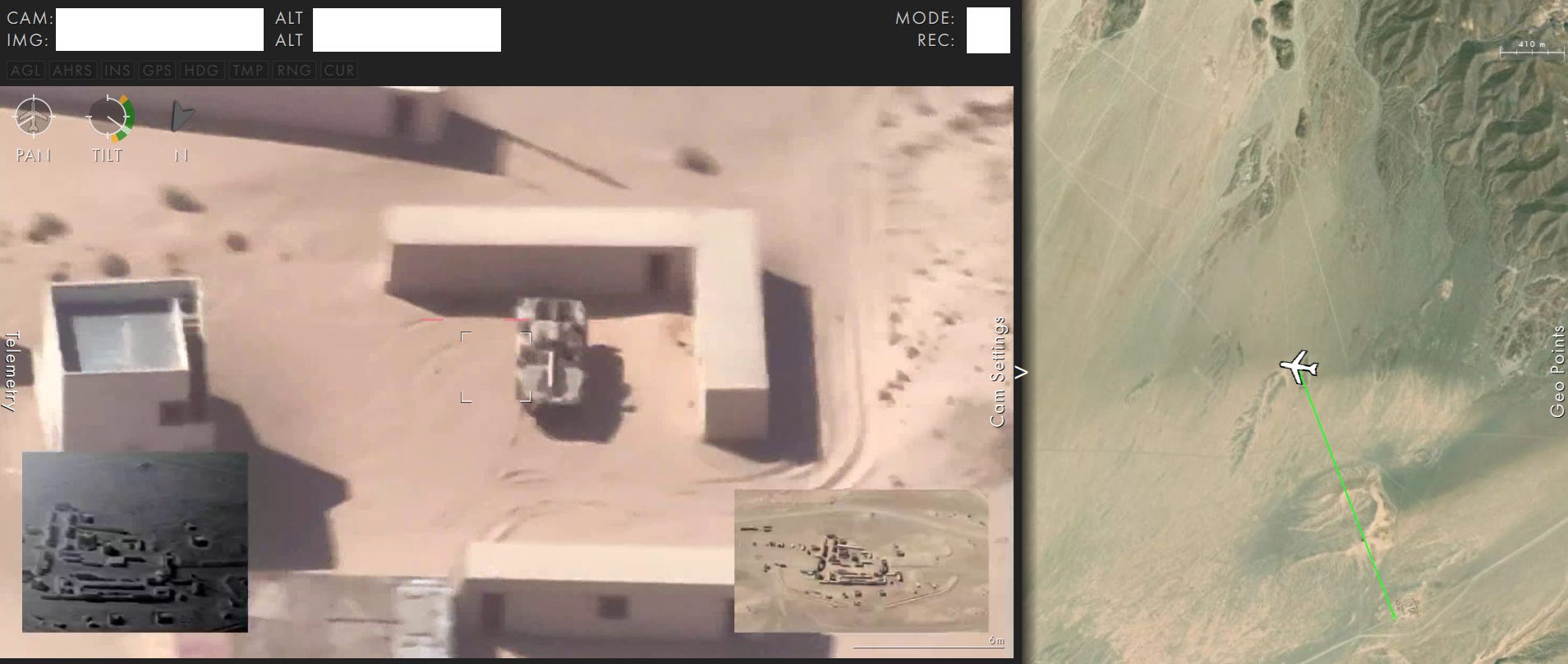
The startup has already completed a flight with an optionally piloted aircraft under a military callsign and contract. During a Five Eyes exercise, Ribbit’s autonomous aircraft provided data for the ground forces of a multinational brigade.
The company’s mission is to make transportation more accessible to the world’s hardest-to-reach places. Canada is particularly well suited, as a sparsely populated, cold country. Across northern Canada, around 200 isolated communities rely on air transportation as their only year-round means of getting supplies in or out.
There’s this prevailing misconception that a drone is inherently simpler or more cost-effective because there’s no pilot on the aircraft. That’s not actually true.

I spoke with Jeremy Wang, co-founder and COO of Ribbit, about what autonomy enables for defence and remote transportation, finding early customers, and building a globally competitive company in Canada.
What is Ribbit building, and why does it matter for Canada?
“Ribbit builds and operates fully autonomous airplanes. We’re not talking about small drones; we’re talking about actual aircraft that would normally carry people or cargo.
It matters for Canada because Canada is a very large country. We have the longest coastline in the world, and we have a very wide Arctic that we need to protect as well as resupply.”
Advertisement — Marconi Technologies
The Canadian Explorers is proud to be supported by its Founding Lead Partner, Marconi Technologies.

Can you describe the product?
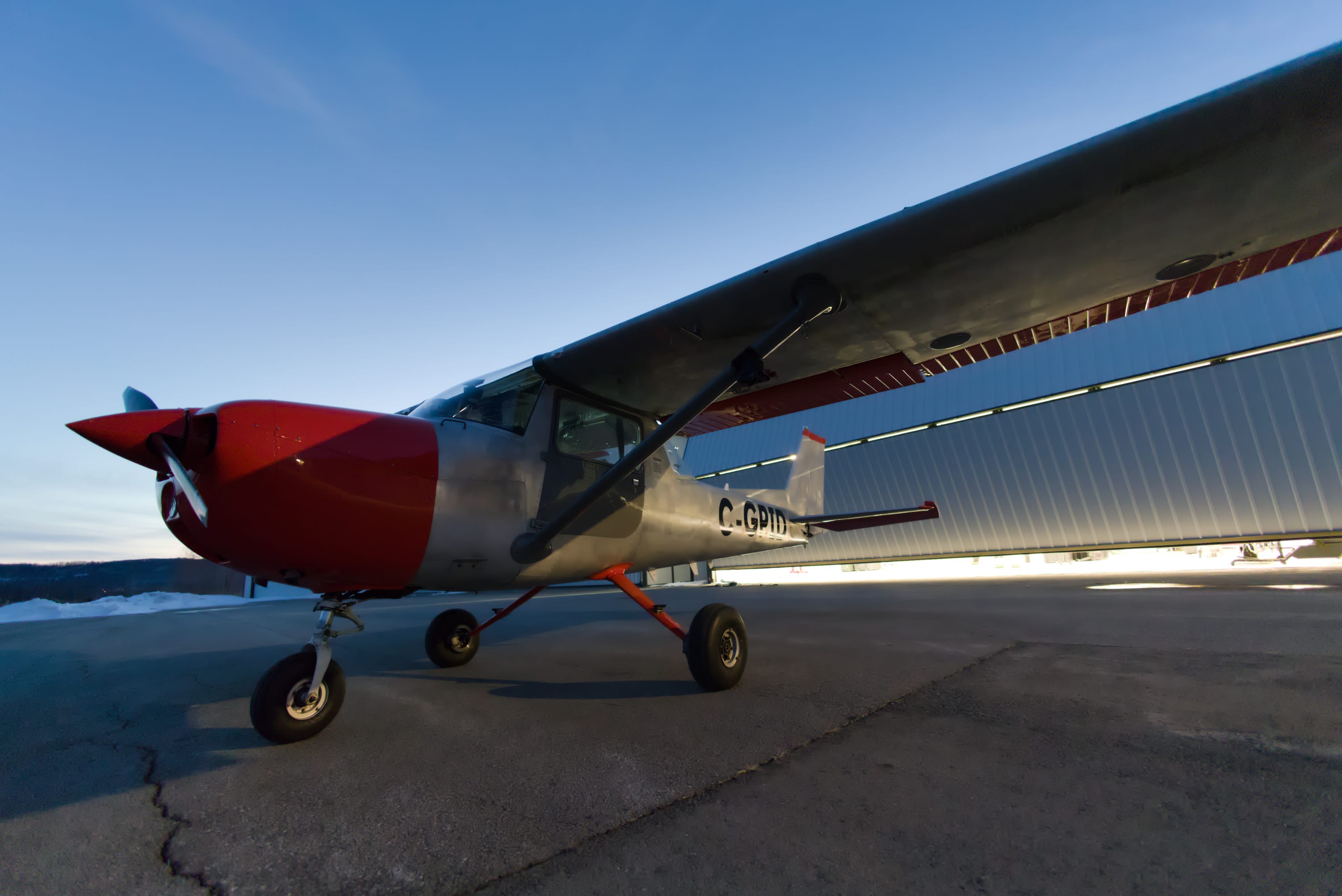
“Ribbit’s product consists of an autonomy stack that can make any conventional airplane autonomous. If you think about your classic plane-looking airplane, our autonomy system is designed to take off, fly that airplane around, land and handle emergency scenarios.
The reason we work with retrofitting specifically is because there’s nothing wrong with the way airplanes are inherently designed. We just think there’s an opportunity to make them more efficient by increasing the weight and volume available by removing the cockpit from that aircraft.
If you think about Cessnas or other small airplanes that would typically operate out of small airports, short runways, sometimes unprepared runways, our autonomy stack is designed to operate under those conditions.”
What does Ribbit do that an ordinary autopilot cannot?
“The fundamental difference between traditional autopilots and an autonomy system is that an autopilot system is largely designed to be assistive. Kind of like cruise control on your car, there’s still an expectation for the driver or operator of that system to be paying very close attention and to be involved in a lot of the operations.
An autonomy stack for an aircraft is designed to do takeoff, cruising flight and landings, and to handle many emergency situations as well, so that your remote supervisor can handle one or possibly two aircraft at the same time.”
Ribbit demonstrates its autonomous flight system. Video: Ribbit.
You were working on drones before. Was there a moment when you decided you had to build Ribbit?
“There are three things that led to the start of Ribbit.
One is that there’s this prevailing misconception that a drone is inherently simpler or more cost-effective because there’s no pilot on the aircraft. That’s not actually true. When you move the pilot to the ground, you’re introducing more complexity with communication systems and everything else needed to have the pilot dislocated from the aircraft. Autonomy addresses some of those issues by making the aircraft more self-sustaining and more reliable.
The second thing was, if you looked at all the good work happening in self-driving cars, it was the right time, from a sensor-hardware availability and skill-set perspective, to start Ribbit.
The last thing is that a lot of typical drones in this small category have very limited payload capacity. If you’re doing things like inspecting buildings, bridges, perhaps surveilling some pipelines, you can get away with a small airplane. But Carl, the co-founder, and I were ultimately passionate about transportation at large. To really affect the entire air transportation system and make a dent in what the military needs, for example, that requires a full-size airplane.”
What has Ribbit demonstrated with the military so far?
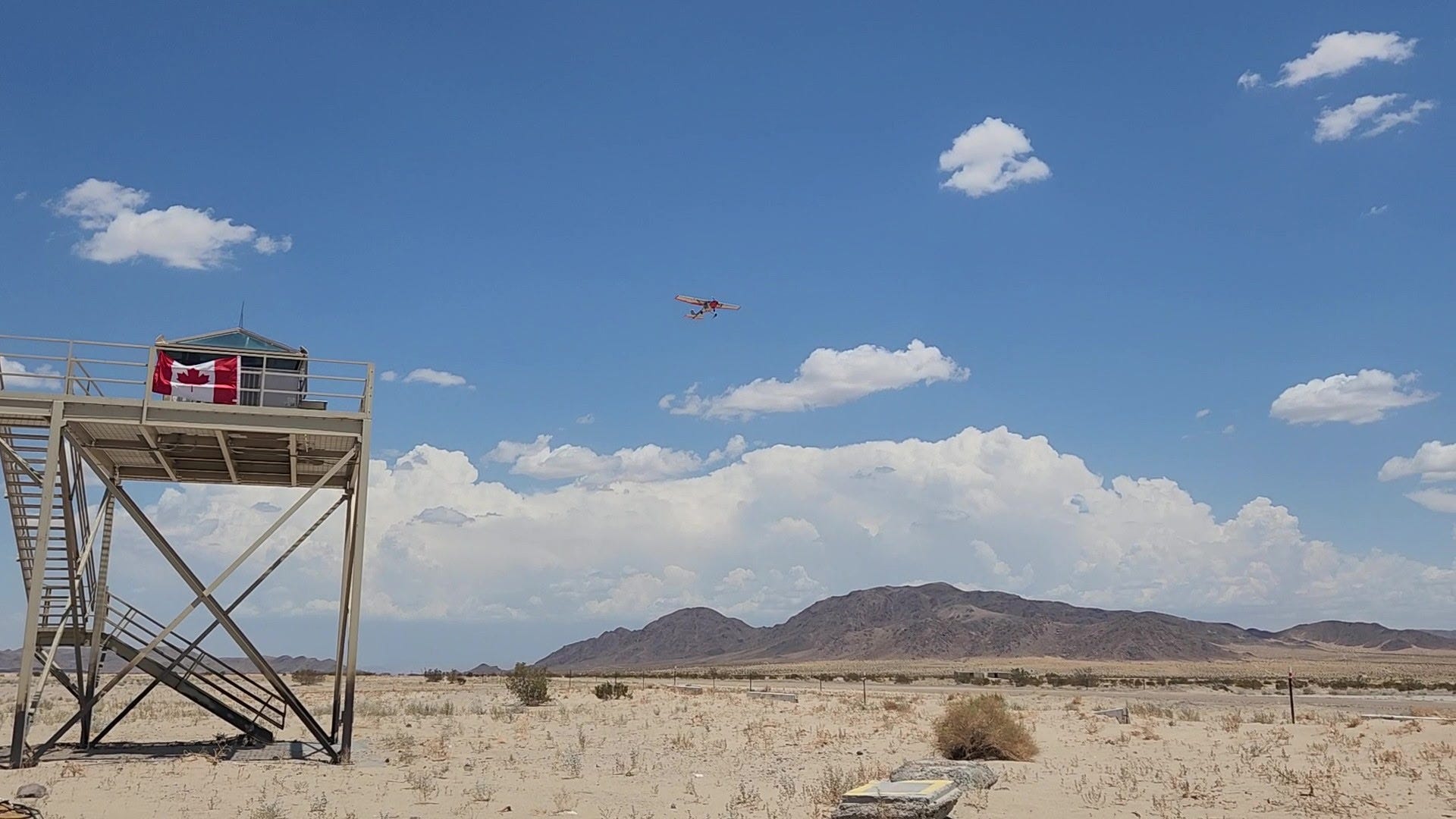
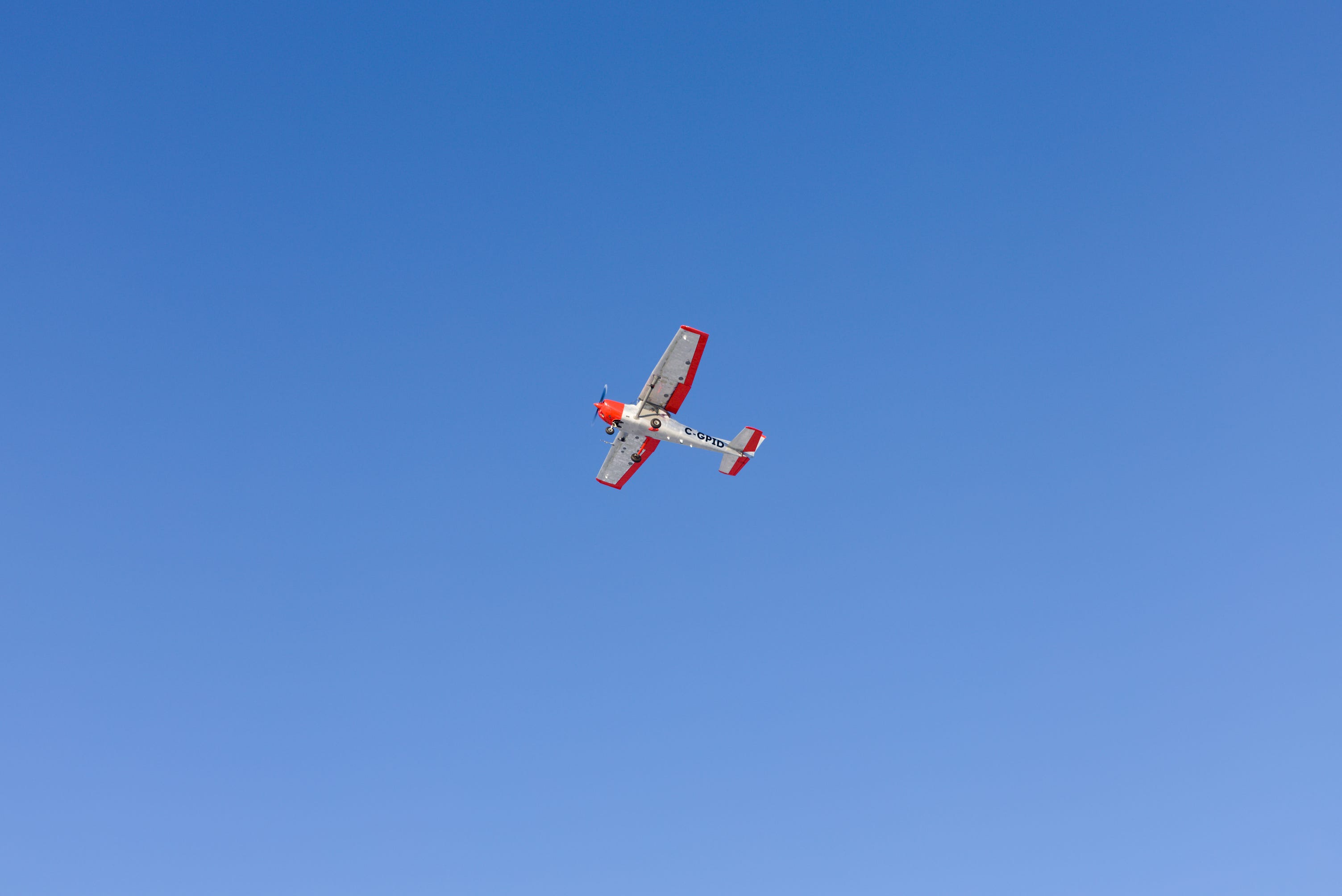
“Just this past July, we completed the very first flight of an optionally piloted aircraft—meaning an airplane that can fly with or without a pilot—under a military callsign, under a military contract. That was a first for Canada.
We were the primary airborne surveillance asset in use by the multinational brigade at a Five Eyes exercise. While there, we were providing data that was critical for the ground force we were supporting to conduct operations.
Particularly in the Canadian context, it’s really important for generating affordable mass. We have a relatively small population compared to the size of our country, and certainly compared to the size of our ambitions as a country.
Having autonomous aircraft that can team with crewed aircraft—and not necessarily fighters; we’ve done teaming with helicopters and other types of aircraft too—is something we believe Canada can be the best at.”
Post-interview update: On October 27, Ribbit announced the world’s first collaboratively teamed flight involving an autonomous helicopter, an autonomous airplane and virtual drones.
Ribbit and NRC’s autonomous aircraft teaming demonstration near Ottawa, May 2026. Video: NRC and Ribbit.
What defence and civilian mission sets are you targeting?
“An example of a defence mission set would be an operation in a highly contested environment. Today, it’s very hard to operate these exquisite aircraft, like traditional high-altitude drones, fighters or even helicopters, in an environment where the battlespace is transparent—meaning your adversary can see a lot of what you’re doing—and where the adversary often has integrated air-defence systems that make it very difficult to operate.
In those environments, it’s very helpful to have what the military terms standoff and mass. Standoff means distance between the crewed airplanes or platforms you’re trying to protect and the autonomous loyal wingmen and smaller drones that provide a layered defence around those more precious people and infrastructure. Mass means you have to be able to concentrate enough capability in one place to exert control over that environment.
If you think about the need for standoff and mass, you can envision future mission sets where an autonomous general-aviation plane—not necessarily a Cessna, but something in the Cessna class—could act as a loyal wingman to a helicopter. The Canadian Armed Forces perhaps needs to drop off troops and supplies close to the forward line of troops, but it’s too contested to send the helicopter in directly. In those cases, it’s useful to have smaller drones and this loyal-wingman class of aircraft provide that escort function.
On the civilian side, I would say the main thing of interest is cargo. Across northern Canada, there are about 200 communities today that are isolated and rely on air transportation as the only year-round means of getting supplies in or out.
For those communities, it’s very useful to have small autonomous airplanes delivering fast, frequent and reliable service, compared to the current form of airline service they receive.”
How much extra cargo can a small plane carry when the pilot and co-pilot are no longer on board?
“It really depends on the plane. If you take something like a Cessna 206, which is normally a six-seater airplane, the pilot and co-pilot seats would occupy two of those six seats. If you’re able to free up that cockpit space, you’re effectively increasing the cargo capacity of the airplane by 50%. The effect is much more pronounced on smaller aircraft.
The other thing that’s relevant is that smaller airplanes tend to do what’s called bulking out before they weigh out. They tend to hit a cabin-space constraint before a weight constraint. Freeing up that space and weight can have pretty significant effects on unit economics for small airplanes.”
Have a friend or colleague interested in the startups and technologies shaping Canada’s most critical industries? Share this interview with them or your team.
What cost savings could Ribbit offer military and civilian customers?
“It really depends on the missions we’re talking about. If we think about the military mission sets, the kind of aircraft we work on are going to be around an order of magnitude cheaper than equivalent collaborative combat aircraft that the United States Air Force and other companies in Canada and elsewhere are pitching.
The reason we’re able to do that is that, A, we have a retrofit approach, and B, as an organization, we’re structured to be leaner and to work very closely with the customer to do that effectively.
If you think about civilian use cases, meaning cargo, you’re probably looking at savings on the order of 15 to 30%, depending on the type of cargo, the route and the level of service we’re delivering.
That’s a reflection of the entire system of systems coming together to make it more efficient. If you’re able to deliver more frequently, have less food and medicine lost in transit, consider the unit economics of the aircraft—all the supply-chain effects and higher-order effects come out to about 15 to 30%.”
What is the expected business model?
“Either you’re leasing the airplane, so it’s an airline in a box, if you will. We can task the aircraft to fly from origin to destination. You can specify what those routes, schedules and frequencies should look like.
Alternatively, if you don’t need the whole airplane, you pay freight rates, just like you would for any traditional airline. Except the difference is, you’re going to end up paying economy rates to receive what today would be considered priority-level service.”
What stage is the product at? What have you tested, and what still needs to occur?
“We’ve completed a few hundred hours of autonomous flying on our aircraft, across two different types of aircraft, backed by more than 10,000 hours in simulation. I would put us at a mid-to-high technology readiness level.
We’re basically at the point now where we’re serving a number of commercial contracts with the federal government, looking to find the best initial application for autonomy to make Canada safer and more secure.
Following that work with public-safety and defence partners is when we’ll be able to transition to the civilian cargo markets as the next step. Maybe 20 years down the road, we can start talking about passengers.”
How have you financed Ribbit, and are you looking to raise more capital?
“We completed one round of venture-capital fundraising in 2021. We were then able to sign our first federal contract in 2023. Since then, we’ve used a mix of revenue and traditional financing.
There’s definitely an inflection point around the corner where we need to scale. We’d be open to talking to anybody about how they could be part of the journey.”

What is the biggest thing holding Ribbit back right now?
“We’re a company that’s trying to grow responsibly. Balancing scale and the capital required to scale with the pace it takes to scale properly, without breaking yourself in the process, is the main focus for us right now as we get bigger.
We’re very driven by the customers and the relationships we have, and we make decisions in their best interests. Sometimes that means growing as fast as we can. Sometimes it means taking a more deliberate approach. The biggest challenge is making sure we grow in a responsible way that balances capacity building with actually delivering a capability at the end of the day.”
The Canadian Explorers Live

Canadian companies are building some of the world’s greatest technologies, yet get little attention compared to their international peers. Now, the biggest moments in Canadian startups are coming to video.
What advice would you give to a founder building a hardware startup in Canada?
“Find an early adopter that cares enough about what you’re doing that they will go through the ups and downs of what it takes to build a hardware startup.
It’s one thing to raise capital. It’s one thing to hypothesize what a problem or market could be. You need to find that one early adopter, or two early adopters, who will stick their necks out for you because they care enough about the same problem you’re trying to solve. They’ll be there when the times are bad, and they’ll be there when the times are good.
I would say we’ve been very privileged to find those partners.”
What do the next 12 months look like for Ribbit?
“There are two things to look out for. One, we’re hiring for many roles right now. There are four that we just released, and probably another six roles that we’ll have released in the coming six months or so. In 2027, we’ll be adding about 15 people to our team.
Besides the growth of our organization, there are several military exercises and other demonstrations we’ll be doing, some of which will be a first for Canada, possibly some a first for the world. Keep an eye out.”

If everything goes right over the next 20 years, what do you want Ribbit and the world around it to look like?
“If you look at all the key indicators of quality of life and standard of living—income, healthcare, life expectancy, education—all those correlate very closely with access to good transportation.
That’s also true for basic human rights, whether it’s the right to food security or the sovereign right to defend. All of those are underpinned in some way by transportation. Air transportation, in particular, has the speed and reach to do things no other form of mobility can.
I think the best outcome for the world and for Ribbit would be one where everybody has the ability to exercise those rights because everybody has the ability to access autonomous transport, whether it’s in the air domain or other domains. Ribbit obviously is focused on the air domain.”
What is Canada’s advantage for a company like yours, and why build here?
“Canada’s two biggest advantages are, one, the unique land and geography we have. For companies that have a focus on the Arctic, natural resources and other things uniquely available in Canada, I think we’re a great beachhead market to get started with.
Canada is a big country physically, but it’s a very small country in terms of population. Once you get to know people, the markets and organizations that are there, you can get moving a lot quicker than in other areas when you’re looking for that beachhead market.
The second advantage Canada has, particularly during this time of reworking global order and changing trade and security relationships, is that Canadian values and Canada’s standing on the international stage remain very strong.
When we think about exporting Canadian technologies, inevitably an element of that is also about exporting Canadian values, and exporting what Canada has to offer in terms of people-to-people relationships and our culture. That’s something I think Canada excels at compared to some of our allies.”
Building something in Canada? I want to hear about it. contact@ethanmarcoux.com
Partners of The Canadian Explorers

The Canadian Explorers works with a limited group of sponsors that support the founders and startups solving Canada’s most difficult problems across defence, deep-tech and other critical industries.


