


The Canadian Explorers is launching Explorer Essays: ambitious ideas written directly by founders operating in Canada’s critical industries. If this is something you would like to see more of, or if there are any particular areas of interest you would like to read, please let me know.
The Author: Nikhil Malhotra, CEO and co-founder of New Frontier Robotics

New Frontier Robotics is a startup located in Guelph, Ontario. We are building Mercury, an adaptive mobile manipulator designed to operate within the harsh environments of mining, manufacturing and defence.
The ultimate multiplier for human reach, aptitude and productivity lies in AI-powered robotics.
Canada lacks sovereign capability in physical AI. Our mission is to make Canada a world leader in physical AI, not only at the research level but also in industrial adoption. With the recent interest in developing our Northern Frontier, it is time to discuss what this could look like.
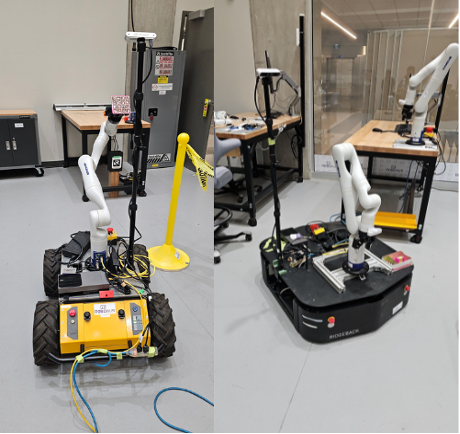
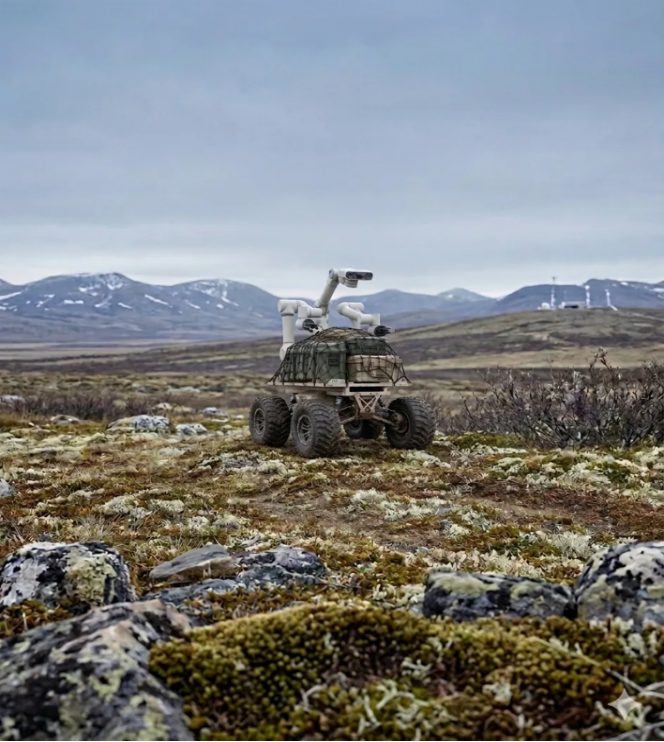
The Canadian Frontier
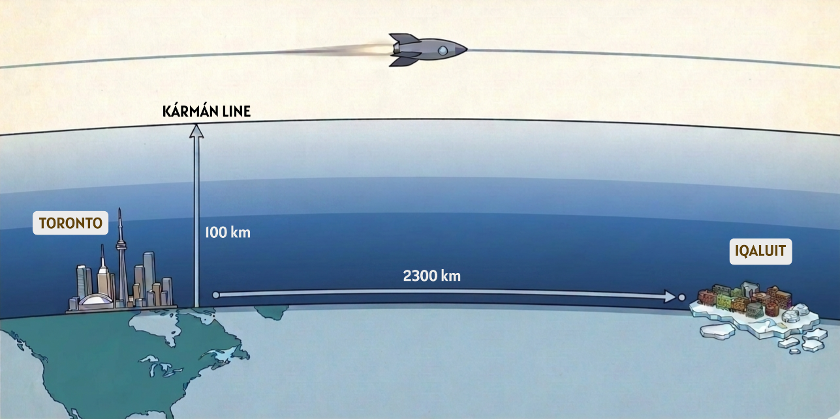
Distant and unforgiving, a fitting description for both space and the Canadian Arctic. Surprisingly, the Kármán line is only 100 km above Toronto, while Iqaluit is 2,300 km away. But you can still reach the people of Iqaluit without a rocket, and a region this important should be taken care of. It is not. In 2007 we announced an Arctic naval facility at Nanisivik, and this spring (after spending C$110 million) we quietly shelved it without ever fully opening it.1 A head of lettuce in a fly-in community costs nine dollars,2 and while the territory’s existing homes remain overcrowded, the average wait for public housing exceeds five years.3 These problems are driven by the harshness of the Arctic, forcing a hard minimum capability for any solution to work. Today, for the first time, that capability exists: portable compute, capable AI and robots that work.
A world-class city in the Arctic is feasible. But do we have the ambition to build it? What does it mean for the people who already call the North home? What would it provide for a country that says it wants to defend the Arctic?
Iqaluit, February 10, 2036
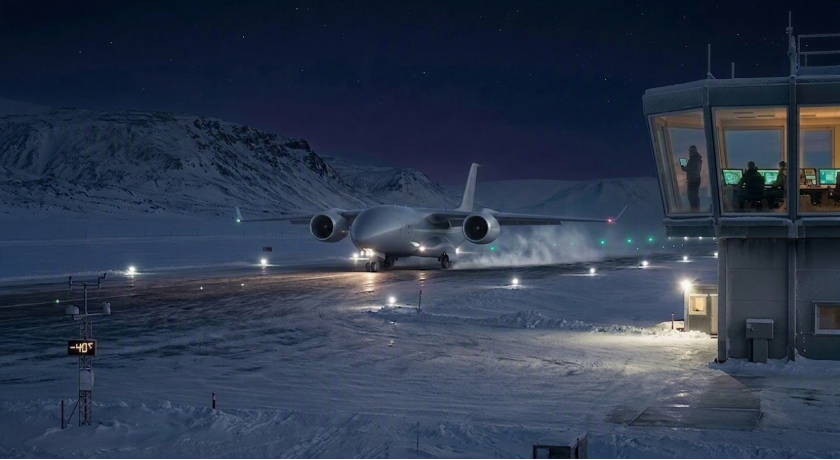
On a windy February morning, alpenglow-lit clouds cover the sky. The snow blows over the desolate icy desert. The engines roar as a windowless cargo plane drops out of the clouds towards a clean runway. In a nearby control tower, an operator watches the plane land and confirms a good landing at her station computer. She looks up at a lone LED panel near the runway, which displays “-42°C”, then walks to the coffee machine while her two colleagues are nearby reviewing the weather forecast. While the hot coffee pours, the hangar opens, and the plane enters. Inside, a dozen robots move out to meet the plane. The airframe is inspected, a fuel line is coupled, and pallets are pulled out of the cargo bay and onto a conveyor. As quickly as the plane was emptied, it is filled with pallets for its return trip. The plane leaves the hangar just as smoothly as it entered, and it is back on the runway, taking to the sky. The only sound outside is the wind and engines.
In the freight hall next door, automated systems break the pallets apart and re-sort them onto small trucks. These routes are programmed using real-time manifests that confirm the contents of the pallets after they have been broken down. The day shift crew watches from a warm mezzanine. Their job is managing the exceptions. Trucks will fill up and leave as they are needed. The crew will finish their shift without lifting a box.
One of the trucks reaches an intersection where the light died overnight. Nothing about it is sudden. The fault was tracked the moment it happened; the intersection has been running as an all-way stop since every vehicle in town was notified; a robot is already out with the replacement. The truck waits its turn behind a pickup and rolls through.
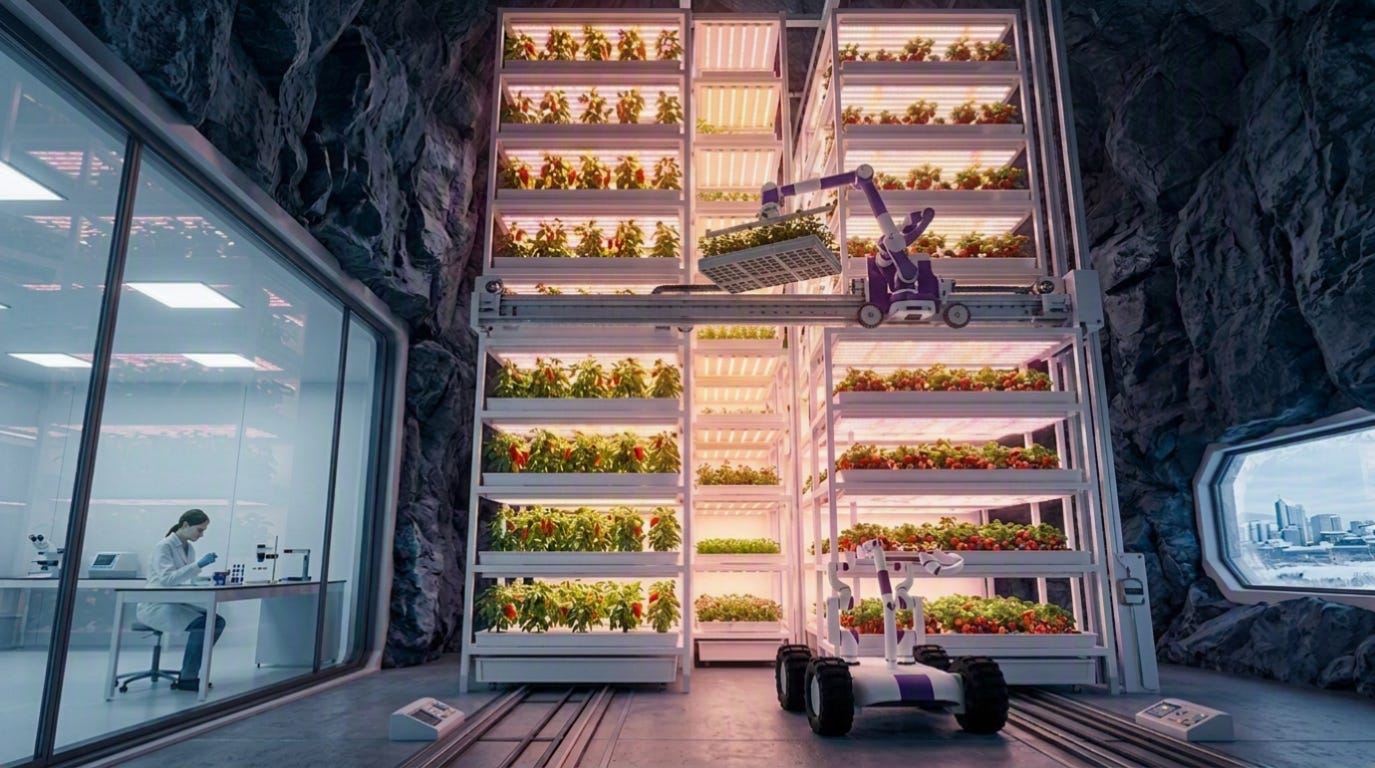
Its first stop is the farm, cut into the rock on the north side; its shell is built for the cold. Inside, it is warm, bright, and busy. Gantry-mounted robot arms move trays up and down the ten vertically stacked shelves of peppers and strawberries. The researcher in a lab space barely looks up. She has spent the last six months working on a new strain of plant that is more flavorful, more nutritious and requires fewer resources. The robots run the harvest so she can focus on her experiments. The farm doesn’t have a storefront, just a terminal to an underground corridor. People in town order online. At the terminal, delivery robots are filled with produce and head out to their destination around town.
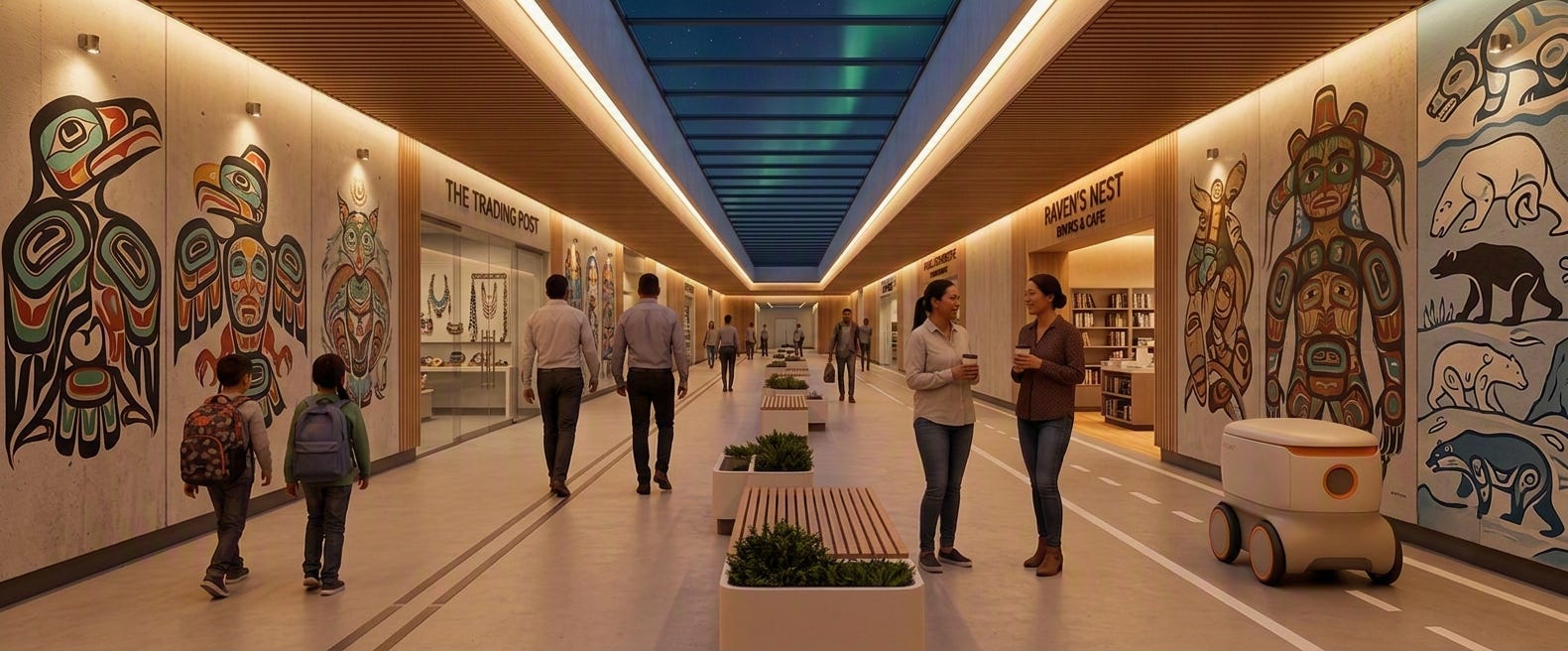
The corridor runs beneath the whole town, wide and lit, warm enough for shirtsleeves. Outside it is -40 degrees Celsius, a temperature so cold that any exposed skin is subject to frostbite in 5 to 10 minutes.4 People walk to work; kids walk to school. Neighbours stop and talk. A pharmacist takes a sealed tote at her service door and hands a prescription across the counter. The cold side and the warm side of the town never meet.

At the edge of town, the truck pulls into a charging bay off the reactor line. The reactor is licensed, staffed, guarded, with a control room crewed around the clock. The on-site robots are on standby with predefined protocols if anything goes wrong. The reactor is what lights the farm, keeps the corridors warm and charges everything. Diesel still arrives for the backup gensets, kept in a few drums, tested, rarely burned.
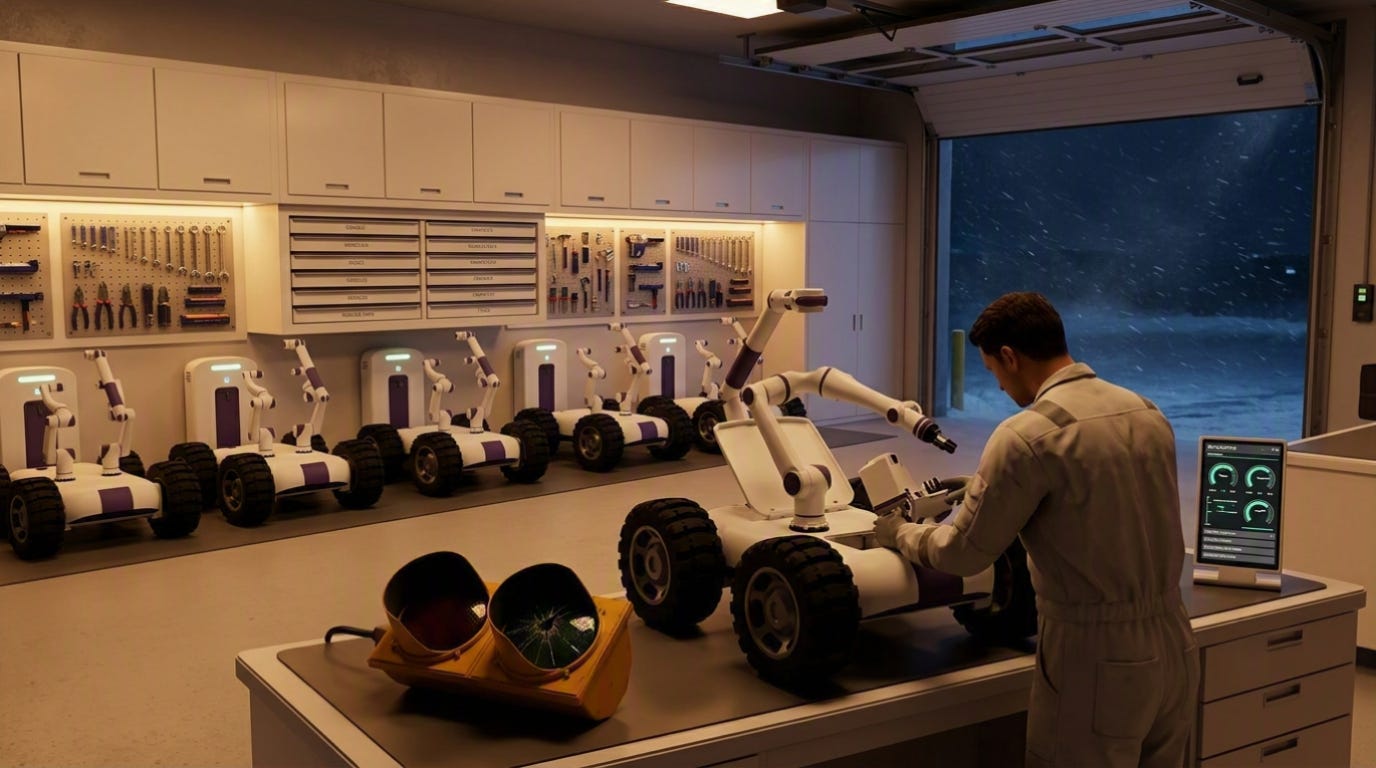
At the depot, a repair robot has taken itself out of rotation. A week ago, it flagged a servo in its arm drawing more current than it should, weeks from failing, but reported early. A technician has it open on the bench. They swap the servo, run the arm through its range twice, and mark the robot fit for duty in the system. Once online, the robot goes back to its charging station on its own. The dead traffic light from the morning sits on the same bench, with a cracked lens and a burnt driver board. In twenty minutes, the light is repaired and placed on the shelf. The maintenance backlogs stopped growing years ago.
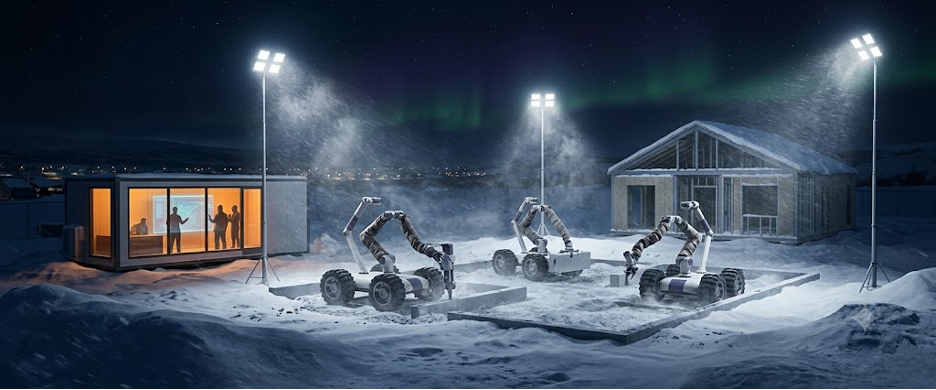
On an empty lot, a new block of houses is being built. Robots cut the foundation, ignoring weather that would end a normal human-operated season. The same crew that could only pour concrete in July can now run the job year-round, from a heated portable at the edge of the lot. The waiting list for a home lasts a season, not half a decade.
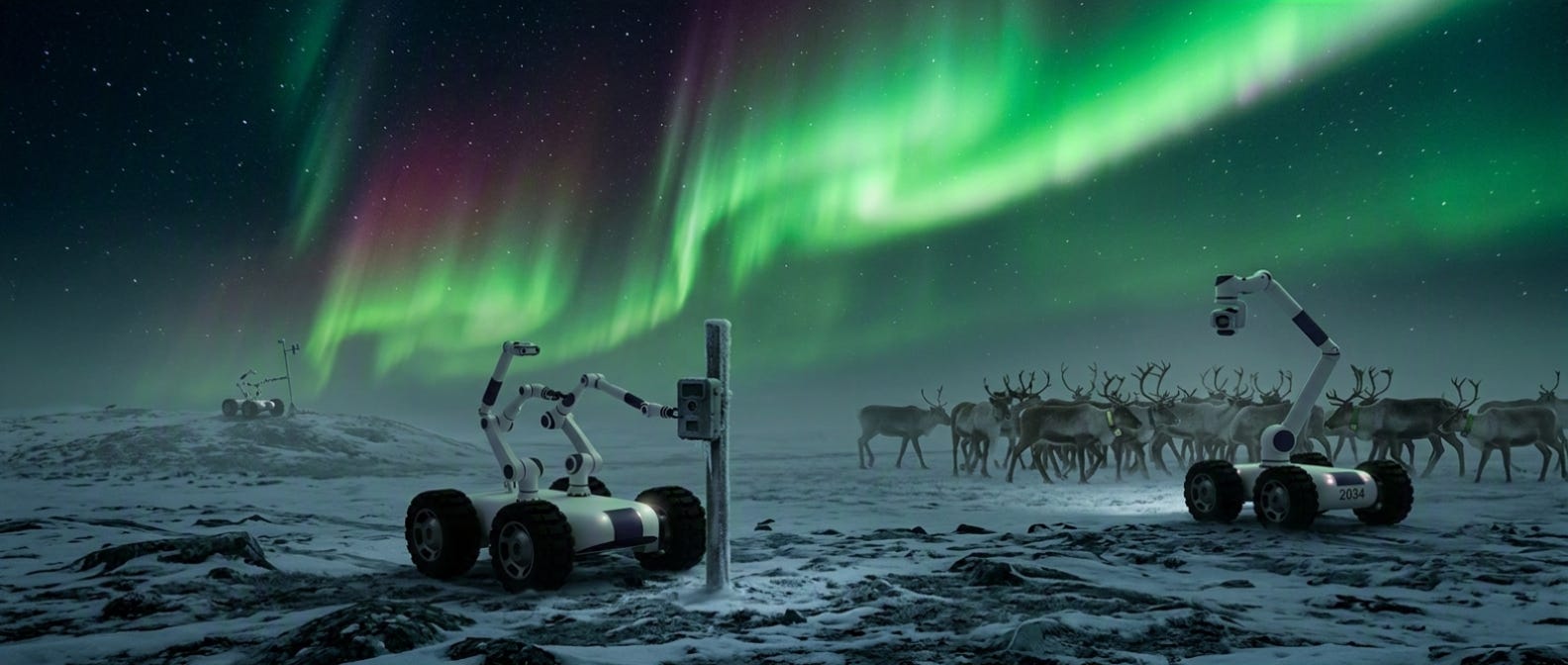
Two hundred kilometres out, a fleet of robots is working on a caribou survey, reading collars, servicing trail cameras, counting and moving on without crowding the herd. The biologists are in town, reviewing the latest observational data sets. Farther out, a robot stands a storm-flattened weather pole back up and swaps its dead sensor. Back at the weather station, an operator sees the sensor pole come online and marks the work completed on their console.
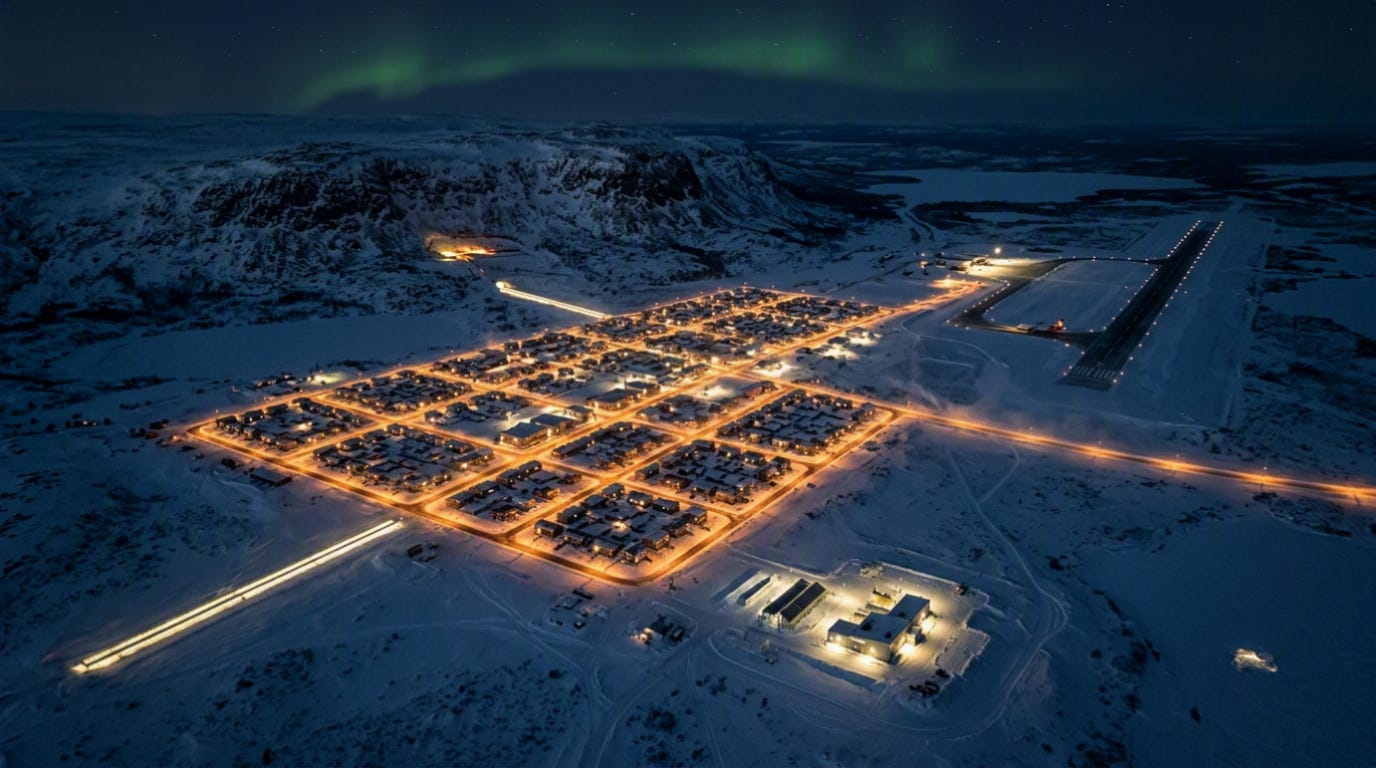
By late afternoon, another cargo plane has arrived and left. The tower counts them: the freight, the mail, the medevac that leaves the moment it is needed. The lights hold steady under the snow. The town eats what it grows and fixes what it owns. It reaches as far as its robots can go. The people carry the judgment. The robots do the rest.
This city is not the Arctic of today, but the gap is smaller than it looks. The pace of technological development has pushed autonomous robotics out of science fiction and into reality. Driverless four hundred-ton trucks already haul ore around the clock through Fort McMurray winters.5 A cargo plane has already flown with nobody aboard, and the first paid uncrewed routes are expected this year.6 Reactors sized for a single town are entering licensing.7 A community in Nunavut has been growing strawberries through the polar night since 2019.8 None of it is finished, but every piece of that city is already running somewhere. We can close the gap, and we are building the robotics to make it happen.
The people in the North are the supply chain, the repair crew, and the fallback system all at once. They are paying for it: infants are hospitalized for lung infections at the highest rates ever recorded in the world, driven by overcrowded housing.9 Meanwhile, children and teenagers in the North die at five times the rate of their southern peers.10
We talk a mean game about defending the North. Land cannot be defended if the people on that land are not thriving. Other nations, like China, are eyeing the Arctic waters. Our path requires a strong population and infrastructure that can support it. The hard places are where technology matters most. Prosperity comes not from doing the easy things, but the hard ones. Canada is already building the robotic arm for the Moon’s Gateway station.11 If we can build for the Moon, we can build a city in our own Arctic.

Nikhil Malhotra
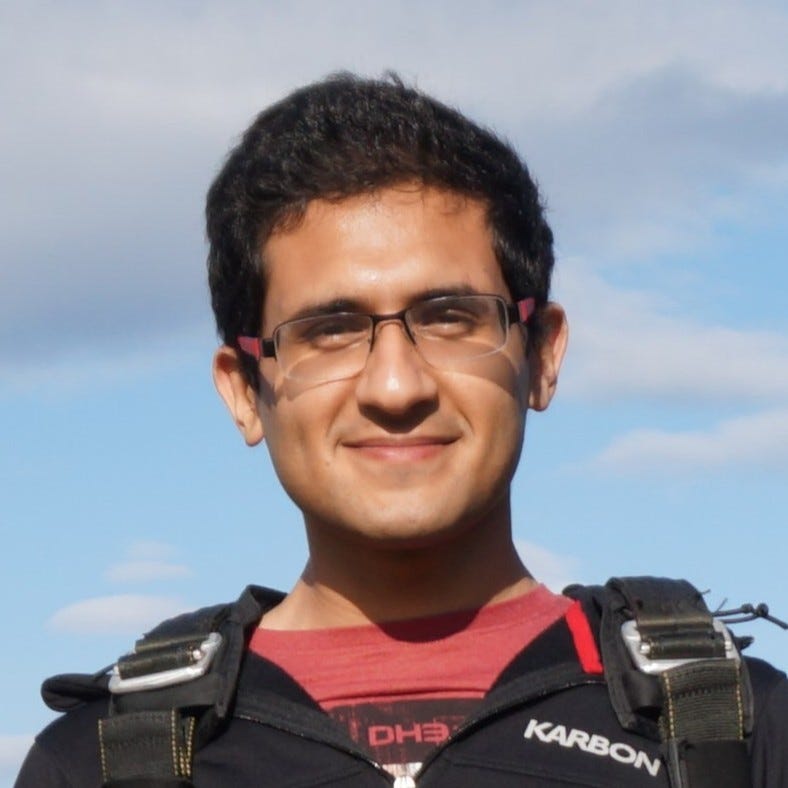
Nikhil Malhotra graduated from the University of Waterloo Mechatronics Engineering program, worked in the automotive industry, helped launch an assembly line for portable respirators during the COVID pandemic, and programmed in Canadian biotech. He cofounded New Frontier Robotics, whose first product is Mercury, an adaptive mobile manipulator designed for autonomous task execution. Mercury is being built in the lab today. The bet is that the technical ecosystem is finally ready to push advanced robotics into industry.
New Frontier Robotics is pre-seed and building toward its first field pilots. If you’re an investor, an operator with a hard, cold job that needs automating, or someone who lives the northern reality this essay describes, Nikhil wants to hear from you: nikhil@nfrobotics.ca
If you are a founder building frontier technology for Canada and would like to publish an essay or opinion in The Canadian Explorers, contact me at contact@ethanmarcoux.com.
Three Months of The Canadian Explorers

Over the past three months, I have published 16 posts. Fourteen were conversations with founders, investors, and operators building in Canada’s national interest. Over that period, The Canadian Explorers’ subscriber base grew by more than 230%. I wanted to take a moment to highlight these Canadians in one post.


Sources
Nanisivik Naval Facility: announced 2007; $110.2 M spent; moved to non-operational caretaker status in May 2026 without reaching full operation. Department of National Defence and BNN Bloomberg.
Northern food prices: CBC News and National Observer.
Nunavut public-housing waitlist, 3,700+ applicants, average wait five-plus years: Nunatsiaq News and CBC News on the Auditor General’s report. Overcrowding and hidden homelessness: CBC News and Gov’t survey highlights hidden homelessness in Nunavut
Exposed skin can freeze in 5 to 10 minutes at wind chill values of minus 40 and below: Environment and Climate Change Canada wind chill index.
Driverless 400-ton haul trucks operating around the clock near Fort McMurray: Suncor and International Mining.
Cargo plane flown with nobody aboard (2023) and paid uncrewed routes expected: Alliance for Aviation Across America and National Defense Magazine.
Town-scale reactors entering licensing: Westinghouse eVinci microreactor targeted for Saskatchewan and Canada’s first grid-scale SMR under construction at Darlington.
Naurvik growing station, Gjoa Haven, Nunavut, producing through the polar night since 2019: Canadian Space Agency and The Globe and Mail.
Inuit infants hospitalized for severe respiratory infection at the highest rates reported in the world; overcrowded housing raises admissions: Dalla Lana School of Public Health, University of Toronto and The Conversation.
Children and teenagers in Inuit Nunangat die at five times the rate of the rest of Canada; injuries are the leading cause: Statistics Canada study and Pediatrics & Child Health.
Canadarm3, Canada’s contribution to the Lunar Gateway outpost at the Moon: Canadarm and Gateway.