


Click here to skip to the full list of capital providers
The financial environment for startups in Canada is not ideal. It is a big reason why Canadian founders have consistently moved south of the border. In 2025, Leaders Fund found that only 32.4% of high-potential Canadian-led startups launched in 2024 were still headquartered in Canada. In Q1 of 2026, Canadian Venture Capital (VC) saw the lowest deal count of any quarter since 2017 (though it is starting to show signs of life). All while American (and global) venture capital is on pace to reach all-time highs. Anduril is reportedly in talks to raise a new round at a valuation of roughly US$100 billion.
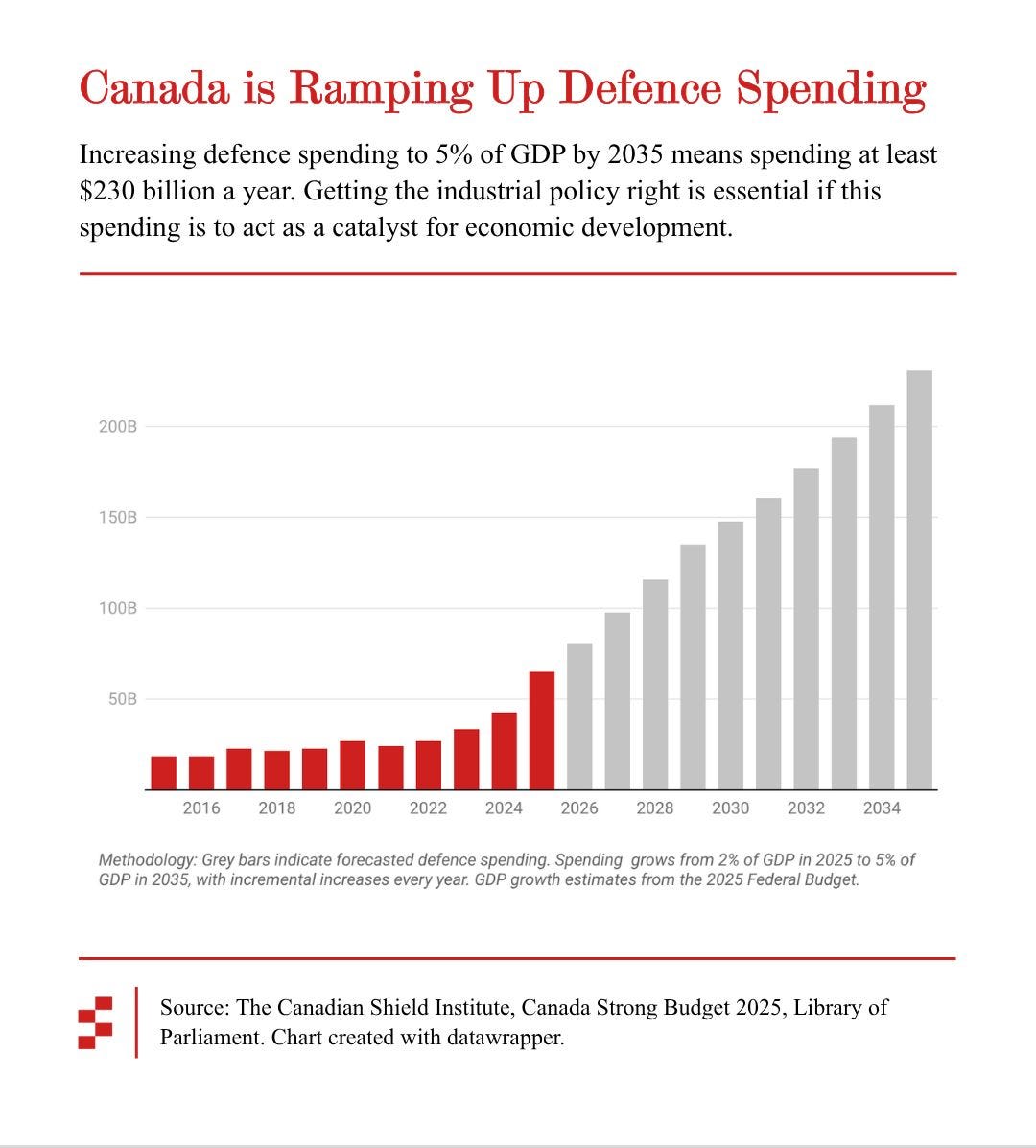
Canada is falling behind in one of the greatest opportunities of this generation. The Canadian economy is being transformed through its largest defence buildup since World War II. Assuming Canada reaches its 5% of GDP commitment by 2035, annual defence spending would reach $230 billion, nearly 13 times its 2015 level. Canada’s Defence Industrial Strategy aims to raise the share of defence acquisitions awarded to Canadian firms to 70% over the next decade.
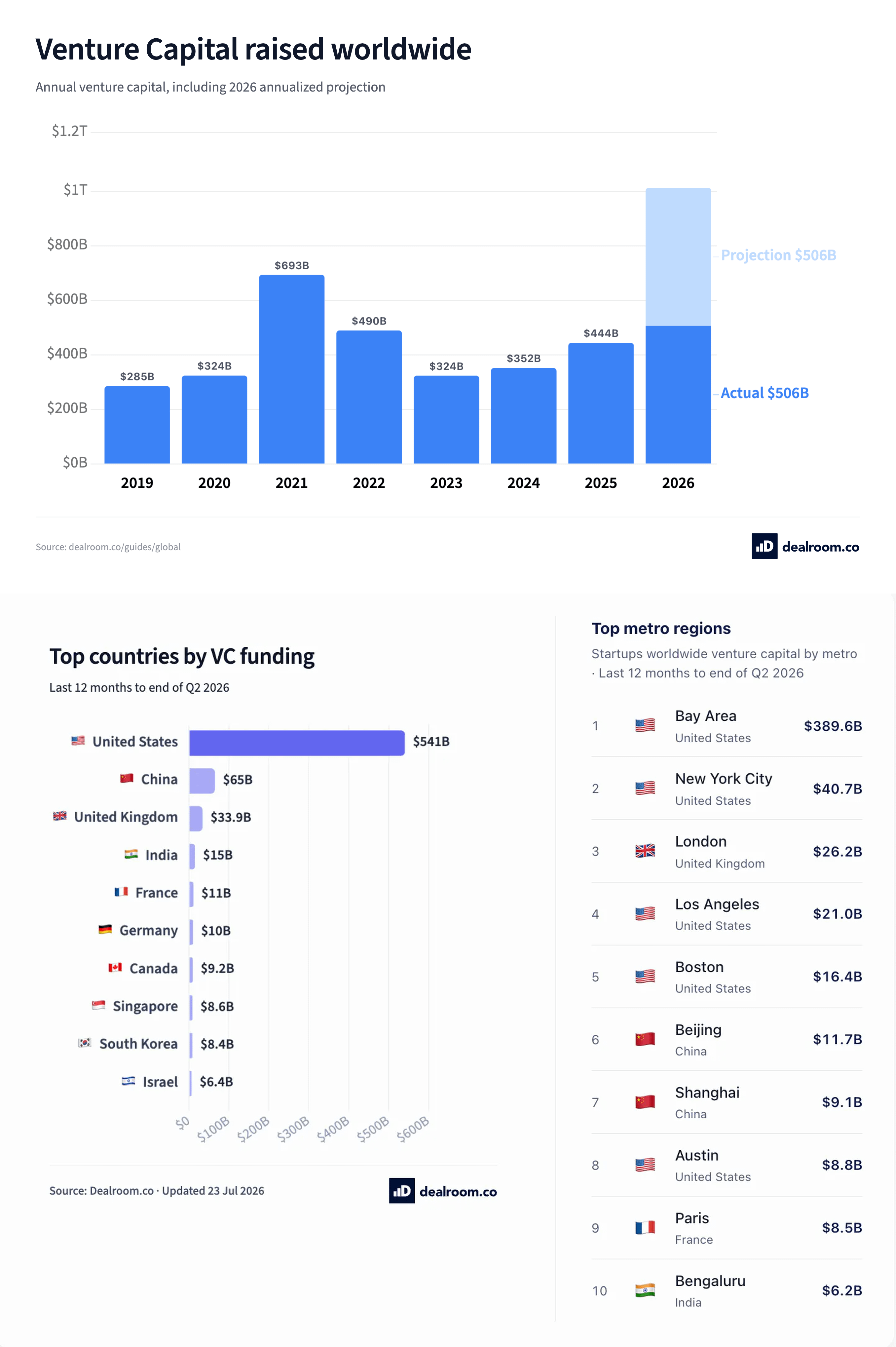
The Canadian defence industry has been hit particularly hard. Until December 2025, the Business Development Bank of Canada (BDC) had restricted some of the VCs it backed from investing in companies that made or sold military-related products. BDC is Canada’s largest venture investor and most active LP. As of the end of 2023, BDC was a limited partner in private independent VC funds representing 62% of the capital actively investing in Canada. Furthermore, defence technology has long been considered taboo and avoided by many firms across the country.
Since Canada's Defence Industrial Strategy was released, BDC has launched a defence platform of up to C$6 billion across financing, venture investment, advisory services and ecosystem support. Yet, Canadian private capital generally remains wary, whether due to risk aversion, SaaS-focused models, procurement cycles or long timelines. The capital gap remains.
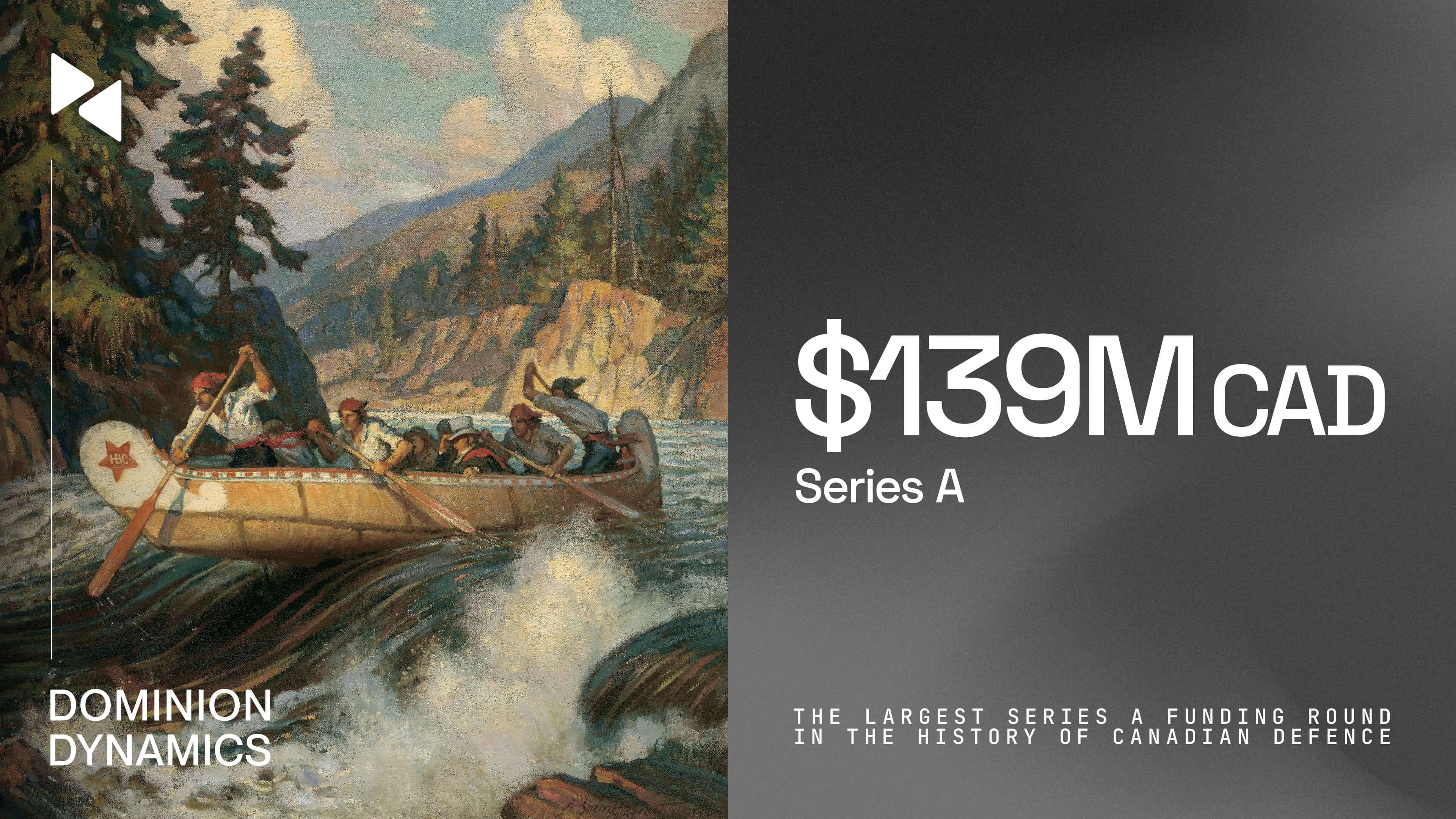
On June 30, Dominion Dynamics raised C$139 million for its Series A, marking the largest-ever Series A round in Canadian defence history (and second-largest in the world). More companies from this new generation of Canadian deep-tech startups are expected to follow.
While Dominion has been focused and intentional about raising Canadian capital, a large chunk of this round still came from foreign investors. When I spoke to Harley Finkelstein, the President of Shopify, Canada's largest technology company, he told Canadian founders to start raising capital internationally. While Canadian ownership is important, sometimes Canadian investment is not possible. In venture, foreign investors took part in 56 percent of later-stage rounds, up from 30 percent a year earlier.
“That is the lens we have to remove from the Canadian ecosystem: ‘I’m here; I must raise from local people.’ If you’re in Oshawa or Trois-Rivieres or Calgary, and the product or business is ready for funding so you can grow it, go and try to raise from anywhere in the world. Every venture capital firm today is geographically agnostic.”

I believe this opportunity for innovation is the greatest Canada has had in a generation, both from a sovereignty perspective and through Canada's brand as an exporter. It would be a missed opportunity for investors not to get involved in this moment. This includes banks, successful Canadian entrepreneurs (who may have left Canada to build), and Canadian pension funds, which were once significant sources of capital for domestic venture funds. CPP Investments invested 74% domestically in 2005; today it is 12%. In a recent conversation, Dominion Dynamics founder and CEO Eliot Pence told me:
“For Canadians, it’s really important that Canadians back Canadians. When people ask me, ‘How do we get foreign investors involved in our company?’ I push them back to Canadian investors and tell them to focus on bringing in the pension funds. One of the things that I think we did really well was make sure that Canadian institutional capital came in early because, ultimately, for us to succeed, we’re going to need to have growth capital. Canada has some of the best institutional investors in the world.”

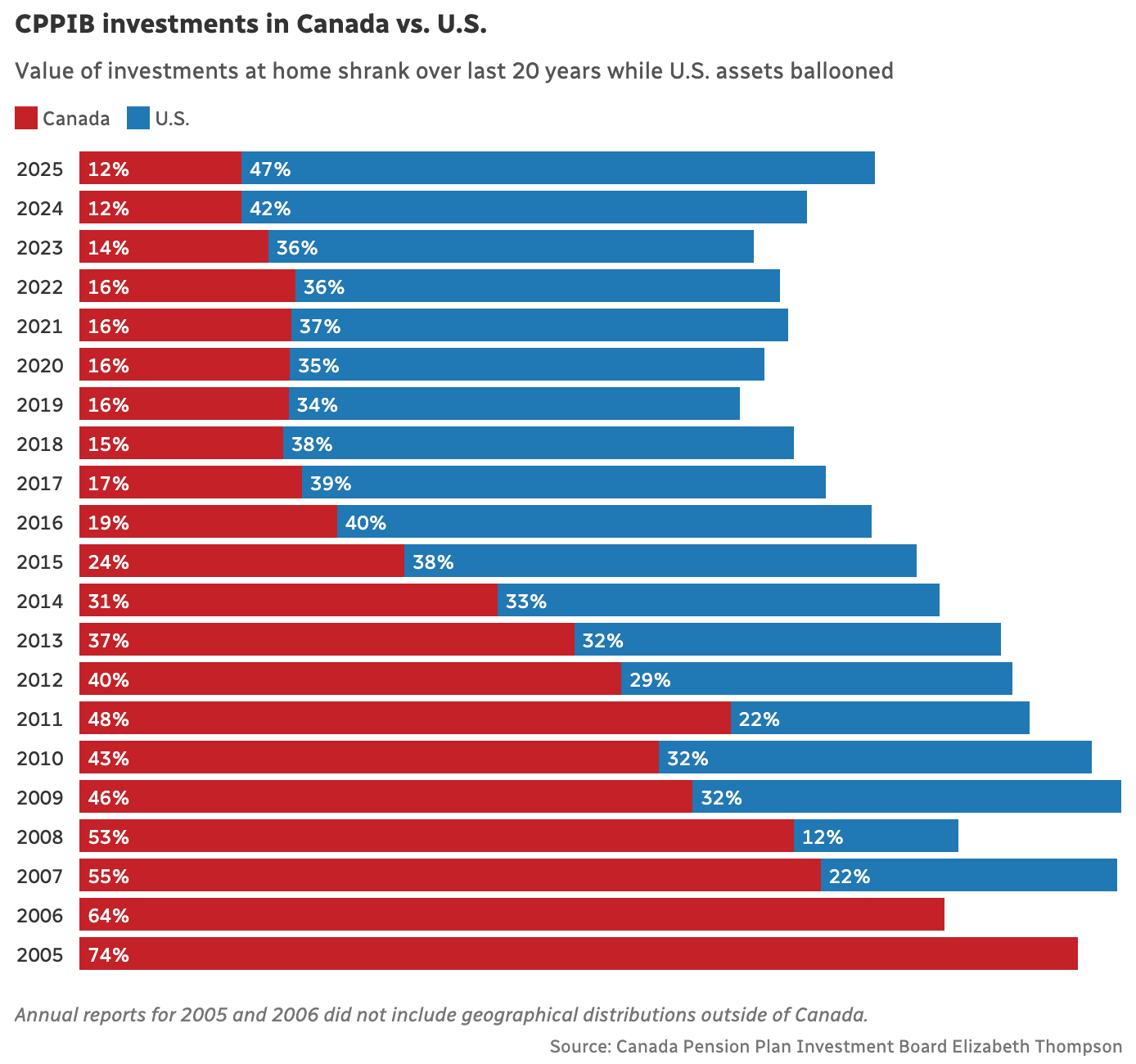
Investment in Canada should not be made simply for political reasons, but because it can be profitable. There is no simpler mantra in investing than "buy low, sell high" or "buy when there's blood in the streets." Yet, Canada tends to be extremely risk-averse. This creates an opportunity for those who are willing to take that risk. First movers have the opportunity to become a dominant force in an industry. If investors wait for the perfect timing, it will be too late. To compete with international companies, we need international cheque sizes and to operate with the speed and boldness that can compete globally with American, Chinese, and European firms.

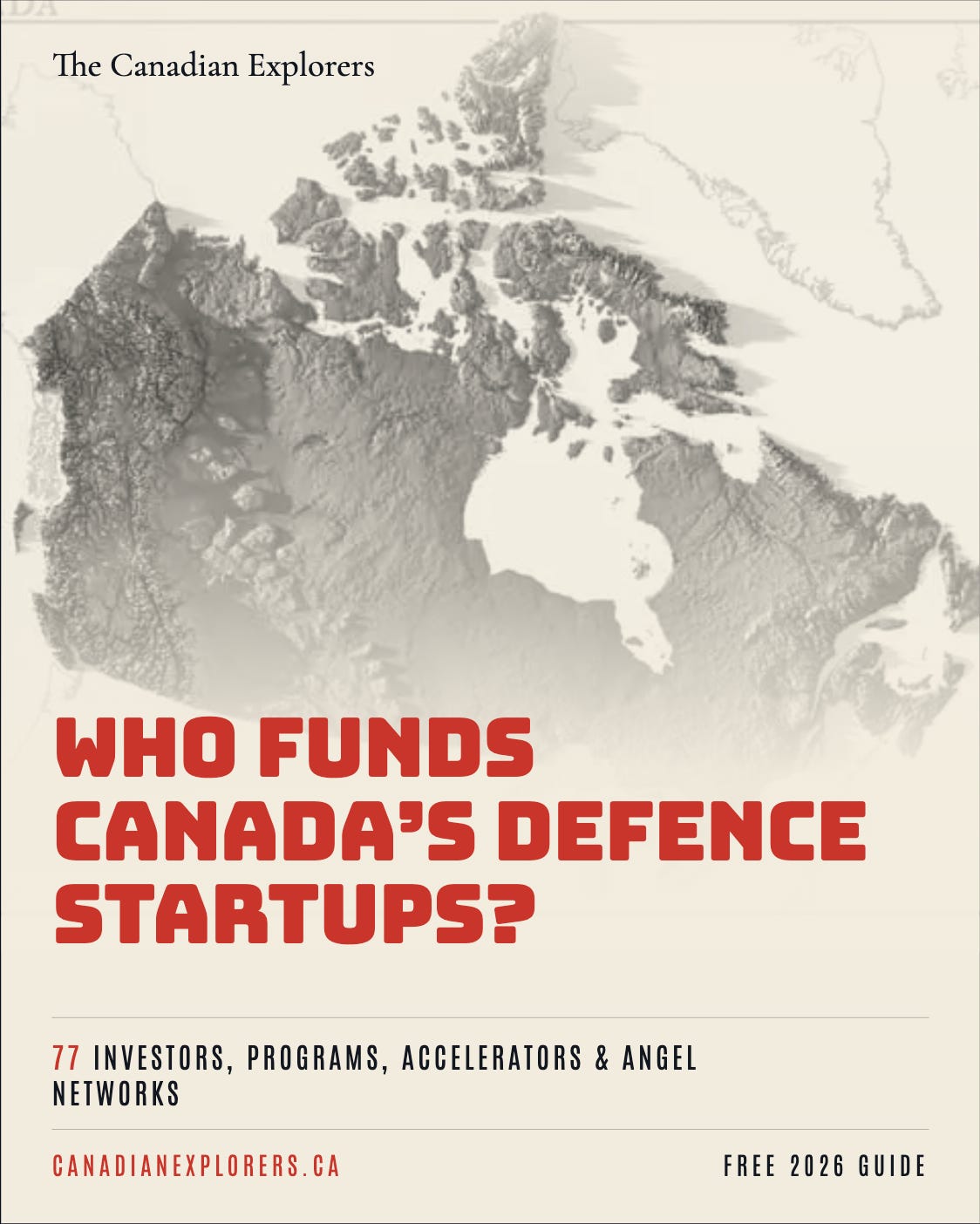
There is very limited defence/deep tech capital in Canada. This is something I want to be more involved with. But if Canadian founders want to create generational companies, they must meet the world where it is. Many of the founders I speak to do not know where to look for capital. So I made a list of the firms actively investing in Canadian defence and frontier technologies.
Deep Checks is a resource suggested by the CEO & Co-founder of North Vector Dynamics, Paul Ziadé. By uploading a pitch deck, it matches deep-tech founders with VCs.
This guide focuses on defence, aerospace, space, autonomy, energy, advanced manufacturing, and other capital-intensive frontier technologies.

View the full list below:
This article includes:
Updated August 2026. Investment mandates, cheque sizes and program requirements can change; founders should verify current terms directly with each organization. Inclusion does not imply endorsement.
Canadian Venture and Strategic Capital
Many Canadian financiers publicly appear positive toward Canadian defence and frontier technology. However, few have acted on the opportunity. The firms below have already made direct investments in companies operating in defence, dual-use technology, space, autonomy, quantum security, or other strategically relevant frontier sectors. Although many of these were unusual investments for the firm, a past investment represents a strong signal.
Business Development Bank of Canada

Headquarters: Montréal, Quebec, Canada
Relevant investments: Dominion Dynamics, Landing Zones Canada, Lastwall, Canada Rocket Company, Irréversible
Stage: Seed to Growth
Lead: Yes
Focus: Canadian defence, dual-use technology, deep tech, security, sovereign capability and seed-stage technology
Typical initial cheque: StrongNorth: C$1 million to C$20 million; other BDC vehicles vary
Note: Dominion Dynamics is listed as a general BDC investment. Landing Zones Canada, Photonic and Lastwall were backed through StrongNorth. Canada Rocket Company and Irréversible were backed through other BDC Capital vehicles under the Defence Platform. StrongNorth is a C$300-million fund. BDC’s broader Defence Platform can mobilize up to C$6 billion across financing, investment and advisory services. BDC also maintains other relevant funds, such as the C$100-million Seed Venture Fund.
Carvalho Capital

Headquarters: Toronto, Ontario, Canada
Relevant investments: Mission Control, Wyvern
Stage: Pre-seed
Lead: No
Focus: Dual-use systems: defence tech, autonomy, ISR, and infrastructure security. Core space economy enablers: propulsion, energy, edge compute, robotics. Founders with technical depth, geopolitical literacy, and long time horizons. Companies building critical capabilities for sovereign nations and off-world logistics
Typical initial cheque: C$25,000 to C$250,000
Cold Capital

Headquarters: Calgary, Alberta, Canada
Relevant investments: Canada Rocket Company
Stage: Seed
Lead: No
Focus: Not publicly disclosed
Typical initial cheque: Not publicly disclosed
Deloitte Ventures Canada
Headquarters: Toronto, Ontario, Canada
Relevant investments: Dominion Dynamics
Stage: Seed to Series C
Lead: No
Focus: Emerging technology aligned with Deloitte’s clients and services
Typical initial cheque: C$2 million to C$10 million
Feld Ventures

Headquarters: Toronto, Ontario, Canada
Relevant investments: North Vector Dynamics
Stage: Early-stage
Lead: No
Focus: Early capital for category-defining founders. AI, defence, fintech, and frontier systems
Typical initial cheque: C$750,000 to C$3 million+
Frostbite Capital

Headquarters: Vancouver, British Columbia, Canada
Relevant investments: Dominion Dynamics, Building Bloc Systems, North Vector Dynamics, Lastwall, Irréversible, Palitronica
Stage: Pre-seed to Seed
Lead: No
Focus: Canadian defence, national security, Arctic capability, secure networks, AI and deep technology
Typical initial cheque: Not publicly disclosed
Garage Capital

Headquarters: Waterloo, Ontario, Canada
Relevant investments: Dominion Dynamics, Canada Rocket Company, Canadian Strategic Missions Corporation, Kepler Communications, North Vector Dynamics
Stage: Pre-seed to Seed
Lead: Yes
Focus: Earliest-stage Canadian and Y Combinator companies
Typical initial cheque: C$250,000 to C$1 million
Georgian

Headquarters: Toronto, Ontario, Canada
Relevant investments: Dominion Dynamics
Stage: Series B to Series D
Lead: Yes
Focus: High-growth B2B technology companies across the AI stack
Typical initial cheque: US$25 million to US$50 million
Note: Georgian normally invests from Series B to Series D; Dominion was a Pathfinder exception.
Golden Ventures

Headquarters: Toronto, Ontario, Canada
Relevant investments: Dominion Dynamics, Xanadu
Stage: Pre-seed to Seed
Lead: Yes
Focus: North American technology companies at the earliest stages
Typical initial cheque: US$500,000 to US$2.5 million
NordSpace Ventures

Headquarters: Markham, Ontario, Canada
Relevant investments: Wyvern, North Vector Dynamics, Greypoint Industries
Stage: Not publicly disclosed
Lead: No
Focus: Canadian space, defence and dual-use technology
Typical initial cheque: Not publicly disclosed
Northside Ventures

Headquarters: Toronto, Ontario, Canada
Relevant investments: Canada Rocket Company, North Vector Dynamics
Stage: Pre-seed
Lead: No
Focus: Vertical AI, AI infrastructure, frontier tech
Typical initial cheque: US$500,000
Note: Where is the White Space for Canadian Defence Founders? — Northside Ventures
OMERS Ventures
Headquarters: Toronto, Ontario, Canada
Relevant investments: Dominion Dynamics
Stage: Series A to Series C
Lead: Yes
Focus: Technology companies capable of reaching institutional scale
Typical initial cheque: US$5 million to US$25 million
ONE9

Headquarters: Ottawa, Ontario, Canada
Relevant investments: North Vector Dynamics
Stage: Seed to Growth
Lead: No
Focus: National security, defence, dual-use technology, cyber and critical infrastructure
Typical initial cheque: Not publicly disclosed
Panache Ventures

Headquarters: Montréal, Quebec, Canada
Relevant investments: Canada Rocket Company, Nord Quantique
Stage: Pre-seed to Seed
Lead: Yes
Focus: Broad Canadian early-stage technology
Typical initial cheque: Up to C$1.5 million
Quantacet
Headquarters: Sherbrooke, Quebec, Canada
Relevant investments: Irréversible, Nord Quantique
Stage: Pre-seed to Seed
Lead: Yes
Focus: Quantum technology and enabling technologies across the quantum value chain
Typical initial cheque: C$300,000 to C$1 million
Ripple Ventures
Headquarters: Toronto, Ontario, Canada
Relevant investments: Canada Rocket Company, North Vector Dynamics, Daedal Systems
Stage: Pre-seed
Lead: Yes
Focus: Advanced technologies in critical industries, including aerospace and defence, AI infrastructure, AI and science, energy and natural resources, and software transforming legacy industries. Canadian and US startups selling globally.
Typical initial cheque: US$250,000 to US$1 million
Note: On August 17, 2026, Ripple Ventures announced Fund IV, targeting founders “developing sovereign capabilities with frontier technologies.”
RISC Capital

Headquarters: Toronto, Ontario, Canada
Relevant investments: Skygauge Robotics
Stage: Pre-seed to Seed
Lead: Yes
Focus: Deep tech startups in Canada
Typical initial cheque: C$250,000 to C$400,000
Tidal Venture Partners
Headquarters: Halifax, Nova Scotia, Canada
Relevant investments: Undisclosed
Stage: Pre-seed to Seed
Lead: Yes
Focus: Industry-generalist technology companies in Atlantic Canada. Its planned Sovereign Technologies Fund targets defence, cybersecurity, quantum, AI, autonomous systems and digital governance
Typical initial cheque: C$200,000 to C$400,000
Two Small Fish Ventures

Headquarters: Toronto, Ontario, Canada
Relevant investments: ENVGO
Stage: Pre-seed to Seed
Lead: Yes
Focus: Vertical AI, physical AI, AI infrastructure, advanced computing hardware, and smart energy
Typical initial cheque: US$1 million to US$3 million
Vanedge Capital

Headquarters: Vancouver, British Columbia, Canada
Relevant investments: North Vector Dynamics, AquaEye, Nucleon
Stage: Early-stage
Lead: Yes
Focus: Hard Tech, AI & Analytics
Typical initial cheque: C$1 million to C$15 million
Honourable Mentions (Regional)
Accelerate Fund
Headquarters: Edmonton, Alberta, Canada
Relevant investments: Wyvern
Stage: Pre-seed to Seed
Lead: Yes
Focus: Leading tech startups that are private, incorporated, and have a head office and more than 50% of employees located in Alberta. B2B technology companies with proven product demand
Typical initial cheque: C$250,000
Note: Requires matching dollars from angel or private co-investors.
British Columbia Investment Management Corporation
Headquarters: Victoria, British Columbia, Canada
Relevant investments: Dominion Dynamics
Stage: Series B to Growth
Lead: Yes
Focus: Enterprise software and cloud infrastructure; defence technology; and disruptive technology, including AI, quantum, automation and robotics
Typical initial cheque: Not publicly disclosed
New Brunswick Innovation Foundation
Headquarters: Fredericton, New Brunswick, Canada
Relevant investments: Lastwall, AVSS
Stage: Pre-seed to Seed
Lead: Yes
Focus: New Brunswick-based innovation and technology companies
Typical initial cheque: C$25,000 to C$1 million
Note: NBIF’s C$1.5-million investment in Lastwall was its largest single investment to date
University of Alberta Innovation Fund

Headquarters: Edmonton, Alberta, Canada
Relevant investments: Wyvern
Stage: Pre-seed to Seed
Lead: No
Focus: Companies with a University of Alberta connection. AI, health, energy and agriculture
Typical initial cheque: Not publicly disclosed
Government and Non-Dilutive Capital
Canada is comparatively strong in non-dilutive support. This capital can preserve founder ownership, create relationships with government customers and help technical companies survive long development and procurement cycles. It is not always fast, and many programs reimburse costs after they are incurred.
Canada’s Ocean Supercluster (OSC)
Type: Collaborative ocean-technology project funding
Eligibility: Canadian consortia developing and commercializing an eligible ocean solution; projects must include at least two industry-investing organizations and directly include or benefit at least one Canadian SME
Support: Reimbursement of up to 40% of eligible project costs for projects worth at least C$1 million; minimum OSC contribution of C$400,000
Timing: Continuous intake; projects must end by October 31, 2027
Requirements: At least 75% of the industry match must be cash, no participant may provide more than 80% of the match, participants must initially pay project costs, funded organizations must join the cluster and sign a project agreement, and 12.75% of the reimbursement is redirected to ecosystem-building activities
Canadian Space Agency Space Technology Development Program (STDP)

Type: Space-technology contracts and non-repayable contributions
Eligibility: Canadian organizations developing technologies that fit an active Canadian Space Agency call
Support: Varies by call. One 2026 small-business call offered up to C$350,000 and up to 75% government support
Timing: Call-specific and milestone-based
Requirements: The applicant must fund the remaining project cost and meet the technical readiness, ownership and reporting rules of the call
Note: The earlier AO closed March 13, 2026. AO 10.1, 10.2 and 10.3 are open in the 2026 cycle. This is not standing funding; verify which calls are live before relying on it.
CanExport SMEs

Type: Export-development contribution
Eligibility: Canadian small and medium-sized businesses that generally have C$300,000 to C$100 million in annual revenue and at least three full-time employees
Support: C$10,000 to C$50,000 toward a C$20,000 to C$100,000 export-development project, generally covering 50% of eligible costs for 2026-27
Timing: Annual intake and project period set by the program
Requirements: A defined new international market, eligible sales-development activities and applicant cost sharing
Innovation for Defence Excellence and Security (IDEaS)
Type: Defence R&D contracts, contributions, contests, sandboxes and test programs
Eligibility: Varies by challenge; generally Canadian innovators, companies, researchers and consortia addressing a published Department of National Defence problem
Support: Competitive Projects can provide phased support up to C$6.75 million; other mechanisms and award amounts vary by challenge
Timing: Milestone-based and challenge-specific
Requirements: Must respond to an active challenge and satisfy its technical, security, contracting and reporting requirements
Innovative Solutions Canada (ISED ISC)

Type: Challenge-based R&D funding and pre-commercial procurement
Eligibility: Generally, Canadian for-profit companies with 499 or fewer employees; individual challenges may impose additional Canadian ownership, workforce or R&D requirements
Support: Phase 1 commonly provides up to C$150,000 over six months, with some challenges allowing C$300,000. Phase 2 commonly provides up to C$1 million over two years, with some challenges allowing C$2 million. The Testing stream generally permits contracts up to C$1.1 million, or C$2.3 million for military innovations
Timing: Challenge-specific; the Testing stream begins when a department selects a late pre-commercial technology to buy and test
Requirements: Must respond to an open challenge or Testing stream opportunity; the company normally retains the intellectual property it develops
Mitacs

Type: Industry-academic R&D support
Eligibility: Canadian companies working with an eligible university researcher, student or postdoctoral fellow
Support: A standard four- to six-month Accelerate unit combines a C$7,500 partner contribution with a C$15,000 research award. The Defence and Security call supports projects for up to two years and 30 units; a master’s or PhD unit is C$20,000 with a C$10,000 company contribution, while a postdoctoral unit is C$25,000 with a C$12,500 company contribution
Timing: Four months to two years, depending on project structure. The Defence and Security call closes August 17, 2026, with decisions in late 2026 and projects starting in early 2027
Requirements: Academic partner, research plan, company contribution and eligible research personnel
Next Generation Manufacturing Canada (NGen)
Type: Advanced-manufacturing project funding
Eligibility: Canadian manufacturers and technology companies responding to an active NGen funding opportunity; eligibility varies by program
Support: Program-specific. The currently open Industrial AI Readiness Program reimburses up to C$15,000; larger collaborative funding calls open periodically
Timing: Program-specific; Industrial AI Readiness applications are assessed first-come, first-served until funding is exhausted
Requirements: Current applicants must be incorporated Canadian manufacturers with fewer than 500 employees, be NRC IRAP eligible, obtain an Industrial Technology Advisor reference, select an eligible AI service provider and complete a readiness assessment, implementation plan and final report
NorthX Climate Tech (formerly CICE)
Type: Non-dilutive climate hard-tech project funding
Eligibility: Canadian companies advancing TRL 4-9 greenhouse-gas reduction or removal technology with a clear commercialization path; preference is given to projects with the greatest impact in British Columbia
Support: Average grant of C$600,000, covering up to 50% of eligible project costs through milestone-based reimbursement
Timing: Continuous intake; EOI decisions within 30 days, detailed proposals due within 30 days if invited, and funding decisions targeted within 60-90 days of a detailed proposal
Requirements: Applicants must fund the remaining project costs, begin within six months of signing and finish within the earlier of two years or June 30, 2029; standalone studies, research projects, software and digital solutions are ineligible
NRC Industrial Research Assistance Program (IRAP)
Type: Non-repayable project contribution and technical advisory support
Eligibility: Incorporated, for-profit Canadian companies with up to 500 full-time employees that are developing and commercializing innovative technology with a plausible benefit to Canada
Support: Project-specific; no universal public maximum. Canada’s Defence Industrial Strategy allocated C$244 million to a Defence Industry Assist stream delivered through NRC IRAP
Timing: Project-specific
Requirements: The project and contribution are developed with an Industrial Technology Advisor; applicants must show technical, commercial and management capability
NSERC Alliance Advantage
Type: University-industry research grant
Eligibility: Canadian university researchers working with eligible partner organizations; the academic researcher applies
Support: More than C$20,000 up to C$1 million per year for one to five years; NSERC can provide two dollars for each dollar contributed by recognized partner organizations
Timing: One to five years
Requirements: Academic-led application, partner contribution and a defined research program with economic or societal benefit
Regional Defence Investment Initiative (RDII)
Type: Interest-free repayable contribution delivered through regional development agencies
Eligibility: Canadian businesses undertaking projects that increase defence production, commercialization, supply-chain participation or related industrial capacity; regional rules apply
Support: Businesses can normally request C$125,000 to C$10 million, covering up to 75% of eligible project costs
Timing: Project-based; repayment normally begins one year after project completion. Intake status varies by region
Requirements: Incremental and measurable outcomes, applicant cost sharing and a credible project plan
Note: Intake and minimum amounts vary regionally. Southern Ontario paused intake on April 17, 2026. PacifiCan is accepting commercial project applications between April 1, 2026 and March 31, 2028. Check each agency directly before assuming a region is open.
Regional Development Agencies (RDAs)
Type: Grants, non-repayable contributions and repayable contributions
Eligibility: Companies undertaking eligible regional commercialization, manufacturing, productivity or market-expansion projects
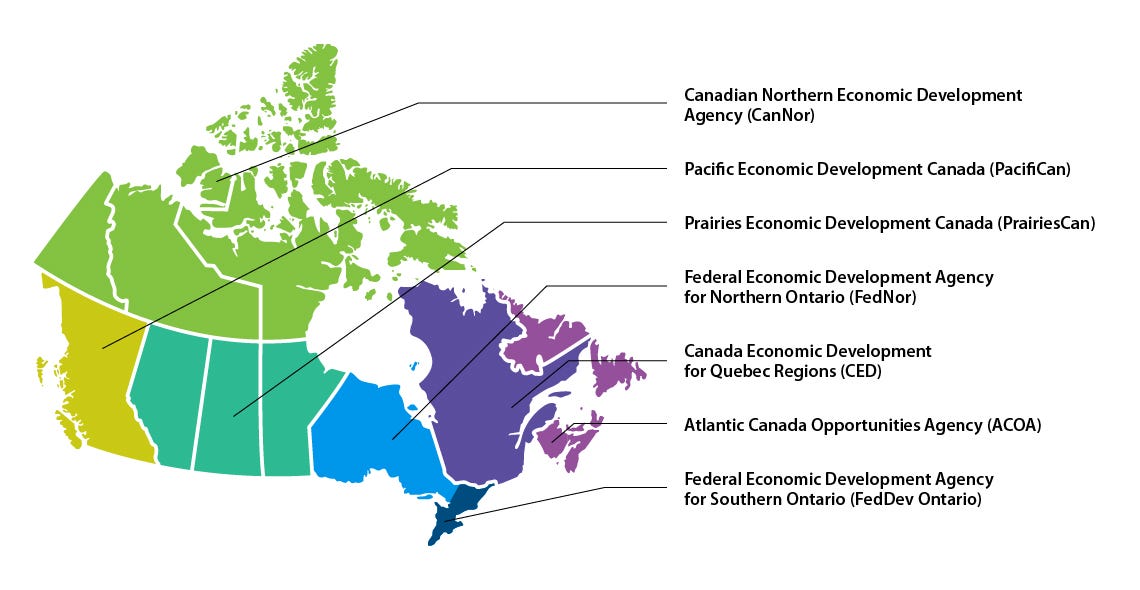
Support: Varies across the seven agencies — FedDev Ontario, FedNor, PacifiCan, PrairiesCan, Atlantic Canada Opportunities Agency, Canada Economic Development for Quebec Regions and CanNor
Timing: Program- and region-specific
Requirements: Regional economic benefit, eligible costs, matching capital and measurable project outcomes
Scientific Research and Experimental Development Tax Incentive Program (SR&ED)

Type: Federal tax credit
Eligibility: Canadian companies conducting eligible experimental development or scientific research
Support: Base federal rate of 15%; most eligible Canadian-controlled private corporations can receive 35% on up to C$6 million of qualified annual expenditure for tax years beginning after December 15, 2024; excess expenditure is generally eligible at 15%
Timing: Claimed after the company’s tax year
Requirements: Evidence of technological uncertainty, systematic investigation and eligible expenditures; refundability and provincial credits vary
Foreign Venture and Strategic Capital
As Canada becomes a stronger international player, it is also becoming a destination for foreign investors. Its geography, allied relationships and demand for sovereign capability create a distinct competitive advantage. Canada is the first non-European country to join SAFE and is in technical negotiations to join the NATO Innovation Fund. European, American and Asian investors have already begun investing in Canadian defence and frontier-technology companies, often more aggressively than Canadian investors.
Afore Capital

Headquarters: San Francisco, California, United States
Relevant investments: Dominion Dynamics
Stage: Pre-seed
Lead: Yes
Focus: Early-stage software companies across industries
Typical initial cheque: US$500,000 to US$2 million+
AIN Ventures
Headquarters: New York, New York, United States
Relevant investments: North Vector Dynamics
Stage: Pre-seed to Seed
Lead: Yes
Focus: The intersection of deep-tech and dual-use; Aerospace, space, life sciences, resiliency, AI/ML, defence, cyber and national security
Typical initial cheque: US$50,000 to US$1 million
Atreides Management, LP

Headquarters: Boston, Massachusetts, US
Relevant investments: Dominion Dynamics
Stage: Not publicly disclosed
Lead: Yes
Focus: Technology and consumer companies across public and private markets
Typical initial cheque: Not publicly disclosed
Bessemer Venture Partners
Headquarters: Redwood City, California, United States
Relevant investments: Dominion Dynamics, Xanadu
Stage: Pre-seed to Growth
Lead: Yes
Focus: AI & ML, Biotech, Cloud, Consumer, Cybersecurity, Crypto, Data, Deep tech & Defence, Developer, Fintech, Healthcare, Marketplaces, Vertical software
Typical initial cheque: US$3 million to US$100 million+
Canaan Partners

Headquarters: Menlo Park, California, United States
Relevant investments: Kepler Communications
Stage: Seed to Series B
Lead: Yes
Focus: Enterprise, consumer, deep-tech, frontier, fintech, and healthcare technology
Typical initial cheque: US$1 million to US$20 million
Class 5 Global
Headquarters: San Francisco, California, United States
Relevant investments: North Vector Dynamics
Stage: Pre-seed to Series A
Lead: Yes
Focus: High-growth technology companies across emerging markets
Typical initial cheque: US$500,000 to US$3 million
Costanoa Ventures
Headquarters: Palo Alto, California, United States
Relevant investments: Kepler Communications
Stage: Seed to Series A
Lead: Yes
Focus: Applied AI, data infrastructure, cybersecurity, fintech and national security
Typical initial cheque: US$2 million to US$5 million
Draper Associates
Headquarters: San Mateo, California, United States
Relevant investments: Reaction Dynamics, Xanadu
Stage: Pre-seed to Series A
Lead: Yes
Focus: Industry-agnostic; Frontier technologies that will define the next century, such as AI, robotics & automation, crypto & blockchain, healthcare & biotech, aerospace & space, unconventional ideas
Typical initial cheque: Flexible; US$500,000 to US$5 million
Drone Fund
Headquarters: Tokyo, Japan
Relevant investments: AVSS, SkyX Systems Corp.
Stage: Seed to Series B
Lead: Yes
Focus: Drones, air mobility, robotics and related infrastructure
Typical initial cheque: US$1 million to US$5 million
Expeditions
Headquarters: Warsaw, Poland
Relevant investments: Dominion Dynamics
Stage: Early-stage
Lead: Yes
Focus: European security, defence, resilience and deep technology. Including cybersecurity, intelligence, autonomy, AI, quantum, privacy, communications solutions and space
Typical initial cheque: €1 million to €25 million
Forum Ventures
Headquarters: New York, New York, United States
Relevant investments: Sentinel R&D
Stage: Pre-seed to Seed
Lead: Yes
Focus: Agentic AI, vertical AI, healthcare, fintech, supply chain and frontier technology
Typical initial cheque: Varies by program; US$250,000 to US$1 million through its pre-seed fund
Industrious Ventures

Headquarters: Denver, Colorado, United States
Relevant investments: Volta Space Technologies
Stage: Seed to Series D, primarily Seed and Series A
Lead: Yes
Focus: Aerospace, national security, autonomy, robotics, manufacturing, supply chains and logistics
Typical initial cheque: US$100,000 to US$5 million, with a reported sweet spot around US$1.5 million
JDY Capital

Headquarters: New York, New York, United States
Relevant investments: Dominion Dynamics
Stage: Early-stage and private investments
Lead: No
Focus: Aerospace, defence, space energy, deep tech and real estate
Typical initial cheque: Not publicly disclosed
Lakestar

Headquarters: Zurich, Switzerland
Relevant investments: Dominion Dynamics
Stage: Seed to Growth
Lead: Yes
Focus: European software, resilience, defence fintech, deep tech and frontier technology
Typical initial cheque: €500,000 to €50 million
MaC Venture Capital

Headquarters: Los Angeles, California, United States
Relevant investments: Wyvern, Volta
Stage: Seed
Lead: Yes
Focus: Frontier technology, financial innovation, enterprise solutions and consumer products
Typical initial cheque: US$1 million to US$4 million
Side Door Ventures

Headquarters: San Francisco, California, United States
Relevant investments: Dominion Dynamics
Stage: Pre-seed to Growth
Lead: No
Focus: Deep tech, space, defence, robotics, climate and unconventional markets
Typical initial cheque: Up to US$500,000 through its Seed Fund; up to US$5 million through its Opportunity Fund
Silent Ventures

Headquarters: Dallas, Texas, United States
Relevant investments: Dominion Dynamics
Stage: Early-stage
Lead: Yes
Focus: Aerospace, defence, national security and deep technology
Typical initial cheque: US$1.5 million to US$3 million
Squadra Ventures

Headquarters: Baltimore, Maryland, United States
Relevant investments: Wyvern
Stage: Pre-seed to Series A
Lead: Yes
Focus: Cyber, defence, national security and dual-use technology
Typical initial cheque: US$1 million to US$4 million
Tech Horizons

Headquarters: Prague, Czechia
Relevant investments: North Vector Dynamics
Stage: Seed to Series A
Lead: Yes
Focus: Across NATO and allied countries—security, defence and resilience. With a focus on dual-use and deep tech. AI, cybersecurity, automation, robotics, logistics, mobility, energy, biotech, medtech, advanced computing, systems for critical infrastructure management and protection – including the application of radars, ground and aerial drones, lasers, and sophisticated sensors. Both software- and hardware-enabled products
Typical initial cheque: €300,000 to €3 million
Tofino Capital
Headquarters: Washington, D.C., United States
Relevant investments: Irréversible
Stage: Pre-seed to Seed
Lead: Yes
Focus: Technology companies serving emerging and frontier markets; Fintech, logistics, digital commerce marketplaces, and frontier technology.
Typical initial cheque: US$50,000 to US$500,000
Note: Tofino Capital was founded by Eliot Pence, the CEO and Co-founder of Dominion Dynamics
Uncork Capital

Headquarters: San Francisco, California, United States
Relevant investments: Wyvern
Stage: Seed
Lead: Yes
Focus: Companies using AI and emerging technologies to create leverage, unlock scale, and push industries forward. B2B applications, developer tooling, infrastructure & security, Consumer & marketplaces, Frontier tech/hardware
Typical initial cheque: US$3 million to US$5 million
Unpopular Ventures

Headquarters: Miami, Florida, United States
Relevant investments: Wyvern, Volta Space Technologies
Stage: Pre-seed to Series A
Lead: Yes
Focus: Sector-agnostic technology companies pursuing non-consensus ideas, overlooked markets, underestimated industries or difficult technical challenges
Typical initial cheque: US$25,000 to US$1 million
Valor Equity Partners
Headquarters: Chicago, Illinois, United States
Relevant investments: Dominion Dynamics
Stage: Seed to Growth
Lead: Yes
Focus: Technology and technology-enabled companies; small early-stage investments used to build relationships before possible growth-stage investment
Typical initial cheque: US$10 million to US$30 million
Accelerators, Testbeds and Strategic Programs
These organizations offer combinations of funding, mentorship, testing infrastructure, strategic partnerships, government access, operational feedback and industry connections. Participation does not guarantee investment or procurement.
Aerospace Accelerator Program
Headquarters: Calgary, Alberta, Canada
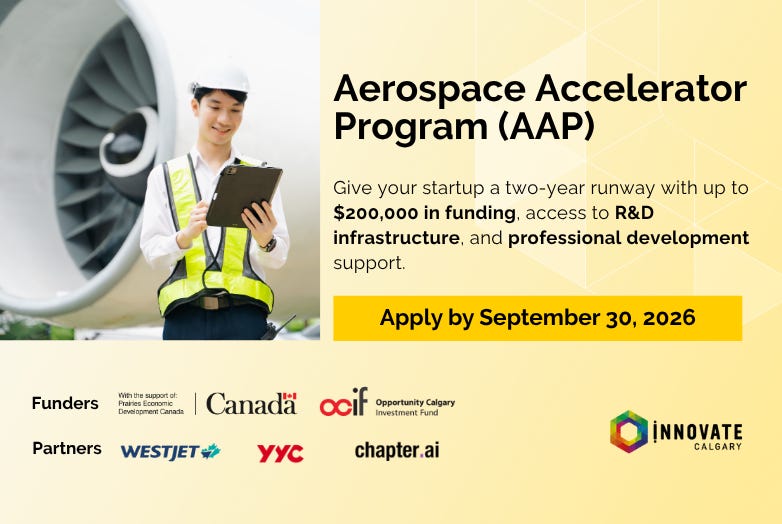
Type: Aerospace accelerator operated through Innovate Calgary’s Aerospace Innovation Hub
For: Early-stage aerospace startups led by a full-time technical founder who can reside in Calgary and maintain a company presence at the Aerospace Innovation Hub. The company must have been incorporated in Alberta or nationally less than two years ago, or have raised no more than C$500,000 in dilutive funding. No University of Calgary affiliation is required
Funding: Up to C$200,000 in non-dilutive funding, including founder salary support
Duration: Two years
Value: Technical infrastructure, expert support, business training, intellectual-property support and access to the Aerospace Innovation Hub
Area X.O

Headquarters: Ottawa, Ontario, Canada
Type: Controlled testbed and commercialization facility operated by Invest Ottawa
For: Companies developing autonomous vehicles, drones, communications, smart mobility and defence systems
Funding: No universal standing cash award
Duration: Project-specific
Value: Controlled testing infrastructure, demonstrations, technical validation and customer engagement
Calian VENTURES
Headquarters: Ottawa, Ontario, Canada
Type: Corporate defence innovation and systems-integration program
For: Mature Canadian small and medium-sized companies with proven technology relevant to defence, public safety, space, cyber or mission-critical systems
Funding: Case-specific; Calian announced a C$100-million strategic initiative, not a ring-fenced third-party venture fund
Duration: Partnership-specific
Value: Co-development, systems integration, validation, customer access and support scaling sovereign capabilities
Centre for Ocean Ventures & Entrepreneurship (COVE)
Headquarters: Dartmouth, Nova Scotia, Canada
Type: Marine technology accelerator, testbed and industry hub
For: Marine and dual-use companies seeking mentorship, infrastructure, demonstrations, customer access and international networks
Funding: No universal standing cash award
Duration: Program-specific
Value: Waterfront infrastructure, marine testing, industry connections and defence-market support; COVE also hosts the pilot Maritime Defence Innovation Secure Hub
Creative Destruction Lab (CDL)
Headquarters: Toronto, Ontario, Canada
Type: Equity-free accelerator and mentorship program
For: Dual-use companies addressing operational needs in defence, national security or critical-infrastructure protection; the Defence stream emphasizes TRL 4–7
Funding: No guaranteed cash investment
Duration: Nine months
Value: Mentorship, objective setting, investor access and commercialization discipline
NATO Defence Innovation Accelerator for the North Atlantic (DIANA)
Headquarters: London, England, United Kingdom
Type: Allied defence accelerator and test-centre network
For: Dual-use companies incorporated in eligible NATO countries and responding to an active challenge
Funding: €100,000 contractual award for the initial six-month accelerator; selected companies can receive up to an additional €300,000 through the Mission Track
Duration: Six months initially, with a possible six-month Mission Track
Value: NATO mentorship, allied market access and access to more than 200 test centres
Vimy Forge
Headquarters: Fredericton, New Brunswick, Canada
Type: National defence and security innovation accelerator
For: Early-stage Canadian small and medium-sized companies developing defence, national-security and dual-use technologies
Funding: No direct cash award publicly specified; no equity taken, and participants receive significant in-kind support. ACOA’s C$997,000 investment funds the accelerator, not participant companies
Duration: 12-week sprints, including a five-day in-person focus week; the current program runs from March 2026 to March 2027
Value: Mentorship, operational feedback, interpretation of defence requirements, validation and deployment pathways, investor connections and engagement with military, government and industry stakeholders
Canadian Angel Networks
Angel investors are high-net-worth individuals who invest their own personal capital in startups. As such, these investors are typically more open to early-stage investments in deep-tech, defence, and frontier technologies. Many Canadian national interest startups have raised rounds where a majority of their capital comes from angels.
Angel One Investor Network

Headquarters: Burlington, Ontario, Canada
Focus: High-growth companies, with particular access to founders in Southern Ontario
Anges Québec
Headquarters: Montréal, Quebec, Canada
Focus: Technology, deep tech, clean tech, medical devices and biotechnology. The company is generally headquartered in Quebec or raises alongside an angel group outside Quebec
Capital Angel Network
Headquarters: Ottawa, Ontario, Canada
Focus: Canadian technology companies across sectors
Golden Triangle Angel Network
Headquarters: Waterloo, Ontario, Canada
Focus: High-growth technology companies connected to the Waterloo Region ecosystem
Keiretsu Forum Canada
Headquarters: Toronto, Ontario, Canada
Focus: Sector-agnostic companies presented to individual accredited investors
VANTEC Angel Network
Headquarters: Vancouver, British Columbia, Canada
Focus: British Columbia-based technology companies
York Angel Investors
Headquarters: Markham, Ontario, Canada
Focus: High-growth technology companies across sectors
Expected Soon
Defence, Security and Resilience Bank (DSRB)
Status: Canada is leading the initiative. On July 7, 2026, the leaders of Canada, Albania, Belgium, Greece, Latvia, Luxembourg, Romania, Türkiye and Ukraine declared their shared intention to establish the bank, with operations targeted as early as 2027
Type: Proposed multilateral defence-finance institution that will be headquartered in Canada, with a European hub in Luxembourg
Focus: Expanding access to capital, reducing financing costs and increasing defence industrial capacity across member countries by leveraging a strong credit foundation
NATO Innovation Fund (NIF)

Status: Canada is in technical negotiations regarding participation; it is not currently an open Canadian founder program.
Type: A standalone venture capital fund backed by 24 NATO allies, deploying €1 billion+ in deep tech
Focus: Defence, security, resilience and enabling deep technologies
If you know a fund, program, accelerator or Canadian angel network that belongs here, leave a comment on this article.
Research Acknowledgements
Thanks to Melaniia Volkodav, Naomi Walch, Lucas Chan, Chris Crowell, Chris Magazzeni, Darren Thomson, Chloé Archambault, Matej Luhový, JJ MacLean, and Samuel Burrell for confirming information about their respective firms.
Thank you as well to Kath Intson (Sentinel R&D), Matthew Lombardi (The Icebreaker and ONE9), Paul Ziadé (North Vector Dynamics), Hugh Kolias (Canada Rocket Company) and Melanie Bitner (FireSwarm Solutions) for their perspectives.
This is excellent! Has a national security lens been applied to identify those with links to states hostile to Canada, such as China, Russia, Iran, etc?