


Welcome to the 600 Canadian Explorers who have joined! If you aren’t subscribed, follow the Canadian founders who are building in Canada’s most critical industries by subscribing here:
“My favourite applications are the things we don’t know a quantum computer is going to be able to do.” — Christian Weedbrook, Founder and CEO of Xanadu
A Canadian quantum computing company, founded by an Australian who failed film school twice, raised over C$800M and is listed on both the TSX and NASDAQ.
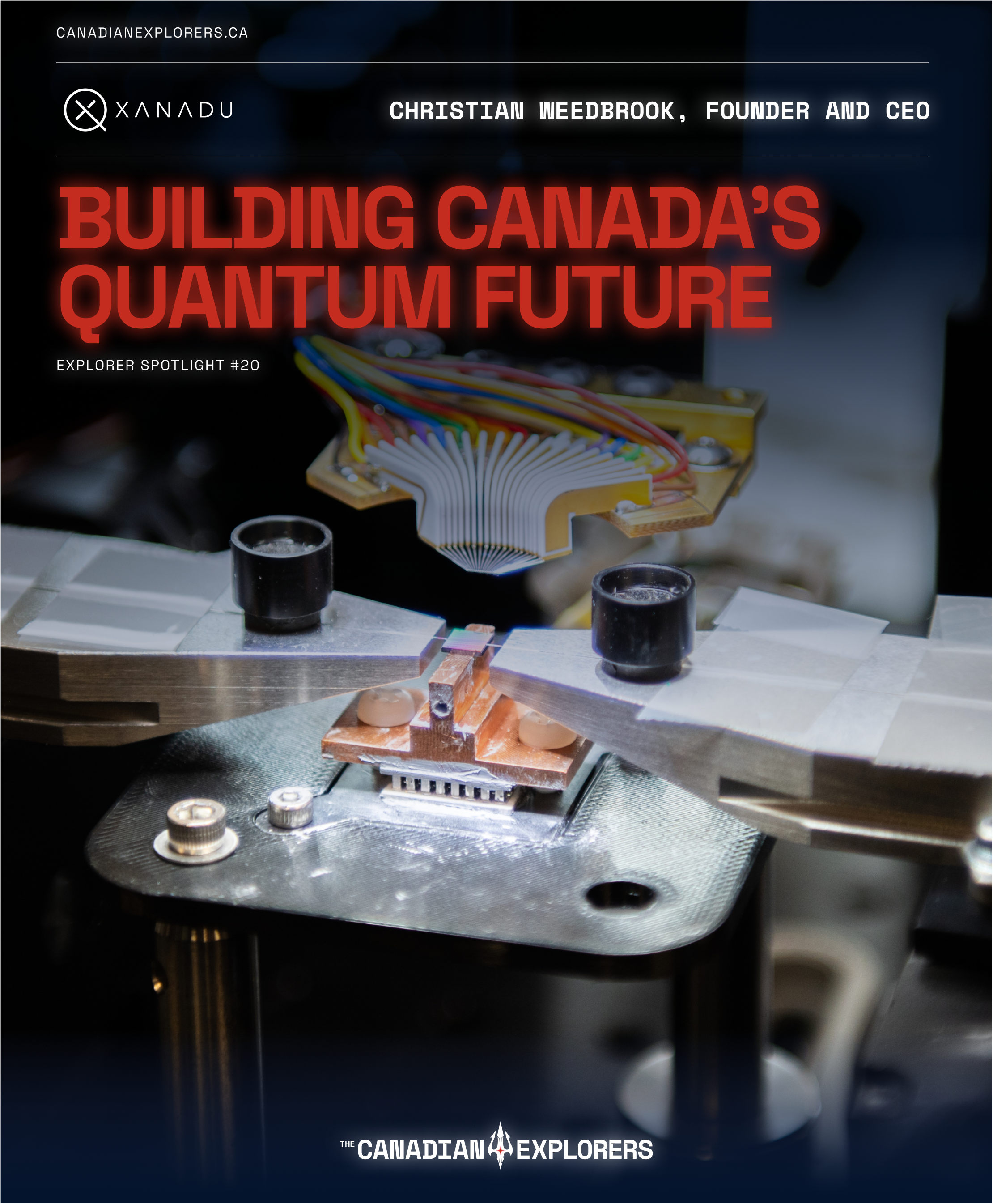
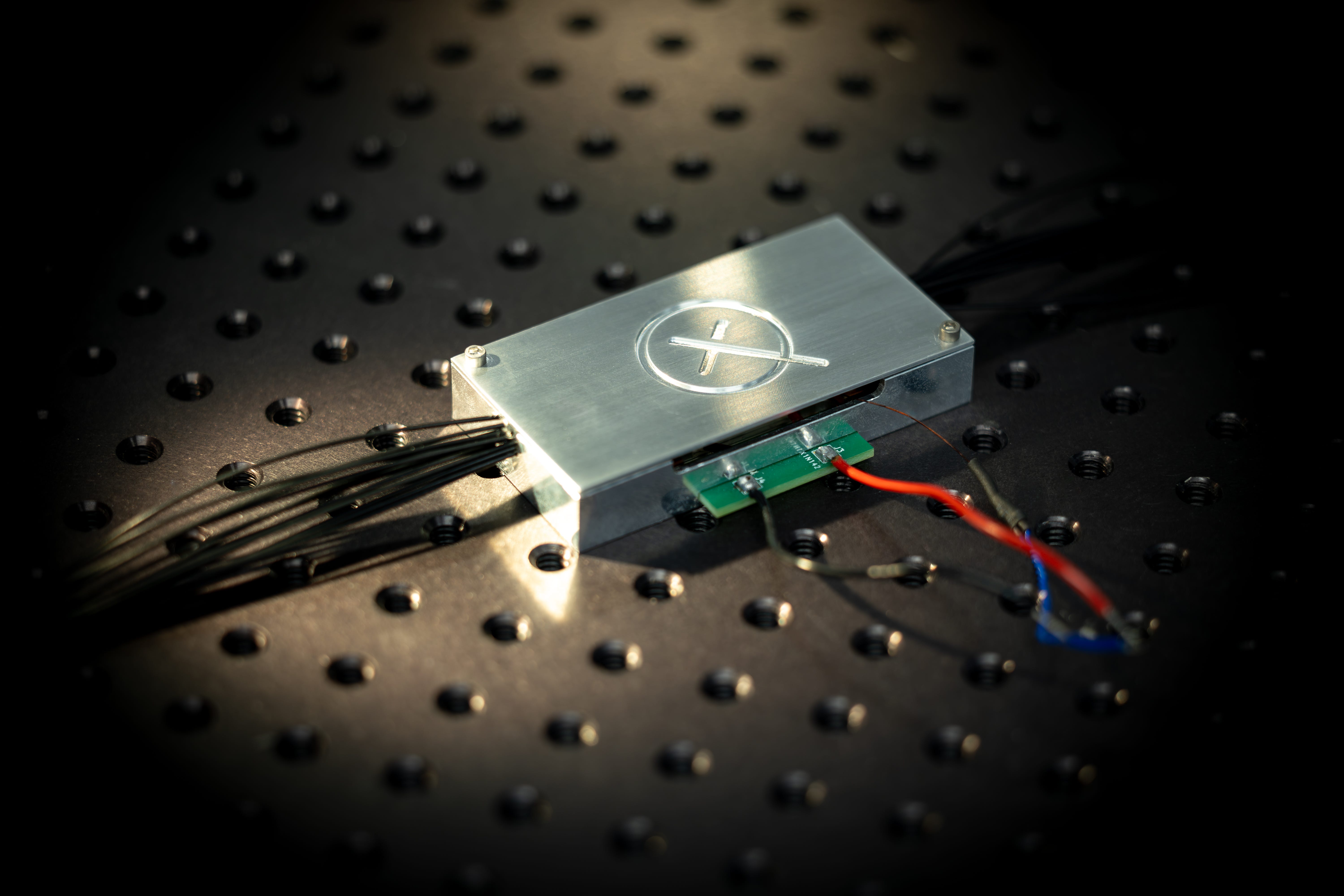
Xanadu, founded in Toronto in 2016 by CEO Christian Weedbrook, is the first pure-play photonic quantum hardware company to go public. The company is building a computer that operates using particles of light instead of electrons.
16 years ago, Christian moved to Canada. Now, the Canadian government is investing $195m through the Strategic Response Fund in Project OPTIMISM, the largest investment in quantum manufacturing in Canadian history.
“Our goal is to be based here in Canada and build something on the global stage.”

Xanadu bets that quantum computing will be a bigger revolution than artificial intelligence. Quantum computers can solve certain problems that would take a conventional computer millions of years, with potential use cases ranging from new life-saving drugs to designing new materials.
Governments are investing significantly to stay ahead of the curve; the U.S. Department of War recently announced $350 million in Quantum Computing Initiatives.
Q-Day (quantum day), the date when quantum computers can hack the internet, could arrive as early as the 2030s.
Christian’s path into the industry was unusual. He pursued film before mathematics and physics, researched quantum computing at MIT and UofT, and eventually brought his scientific work together with his interest in business biographies.
The company is now working toward a large-scale quantum computer which Xanadu expects to be ready by 2029.
“I don’t see any difference between writing and directing a movie and starting a startup.”
I spoke with Christian about what quantum computers can do today, why Xanadu is building with light, the path to commercialization, raising capital, and why he chose to build here.
What is Xanadu building, and why does it matter for Canada?
“Xanadu is building a large-scale quantum computer. Quantum computers are something that will be up there with the early days of the internet and the promise of the internet, along with digital computing.
It’s something that’s really going to revolutionize the world, and it’s really key and important that we’ve been doing all this in Canada.”
Advertisement — Marconi Technologies
The Canadian Explorers is proud to be supported by its Founding Lead Partner, Marconi Technologies.

For someone non-technical, what is quantum computing?
“We get asked a lot what a quantum computer is, and I always like to answer with one of our own quantum computers that we built. It was called Borealis, and Borealis went head-to-head with the world’s fastest supercomputer at the time.
Basically, we gave it a very difficult math problem that would take a long time. We said, let’s go head-to-head. The world’s fastest supercomputer took seven million years—well, would have taken seven million years—for this problem, and Borealis solved it in two minutes.
That’s the sort of breathtaking ability that a quantum computer is capable of: taking things that are pretty much intractable down to a couple of minutes. That’s for a math problem that was very hard.
Over the coming years, our goal is to do that for things in pharmaceuticals, so drug discovery; material design—think next-generation batteries, next-generation solar cells; AI; finance; and logistics.”
Where is quantum computing right now, and what’s holding it back?
“Where we are now, at Xanadu and other places around the world, we all have smaller quantum computers. Things that demonstrate difficult math problems being solved, things that can show scalability, as Xanadu showed with our Aurora quantum computer.
But overall, it’s not providing the ultimate goal, which is this value of incredible speedups in pharmaceuticals, drug discovery and material design—the things I mentioned. That is due around 2029, and that’s what we’re aiming for.
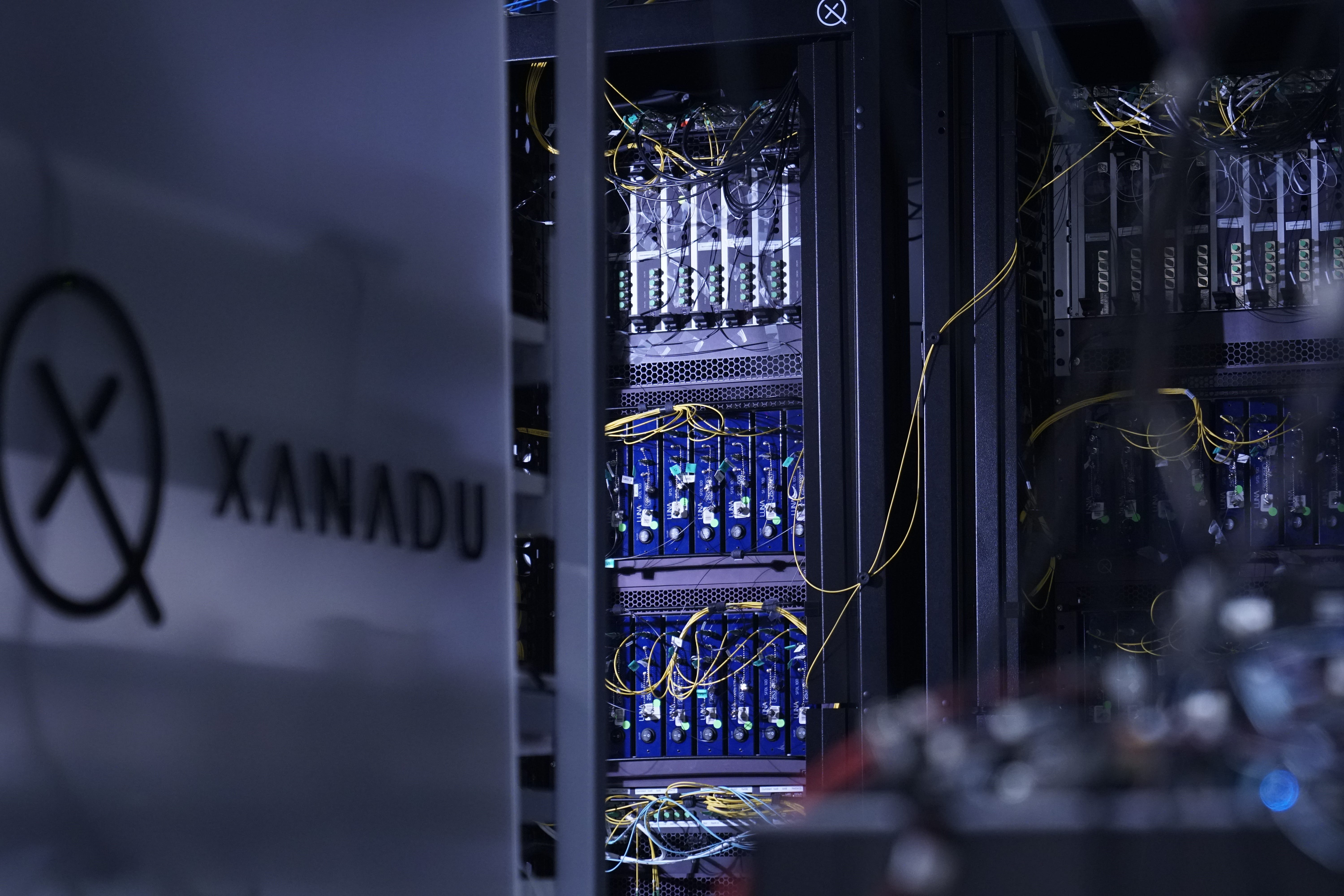
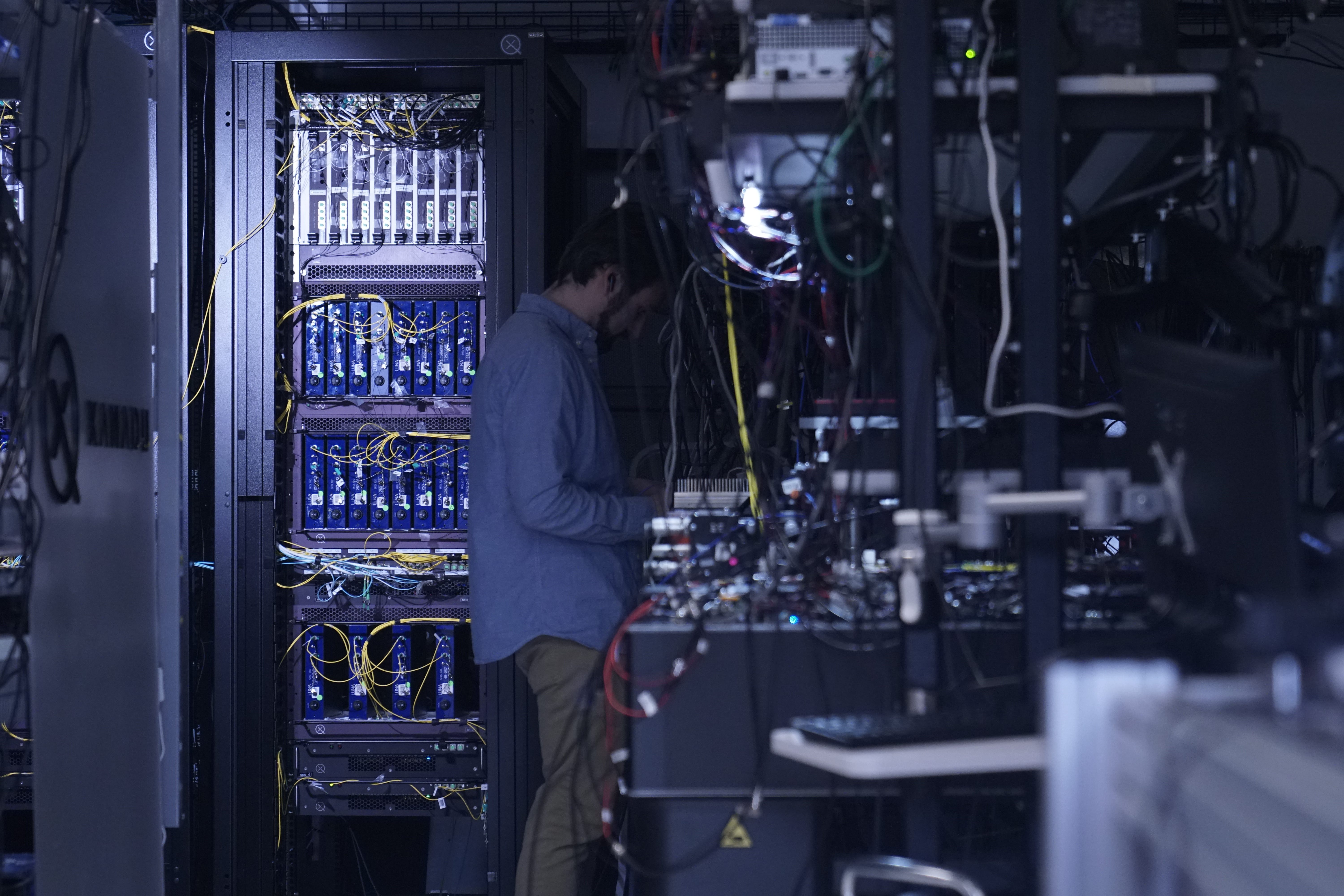
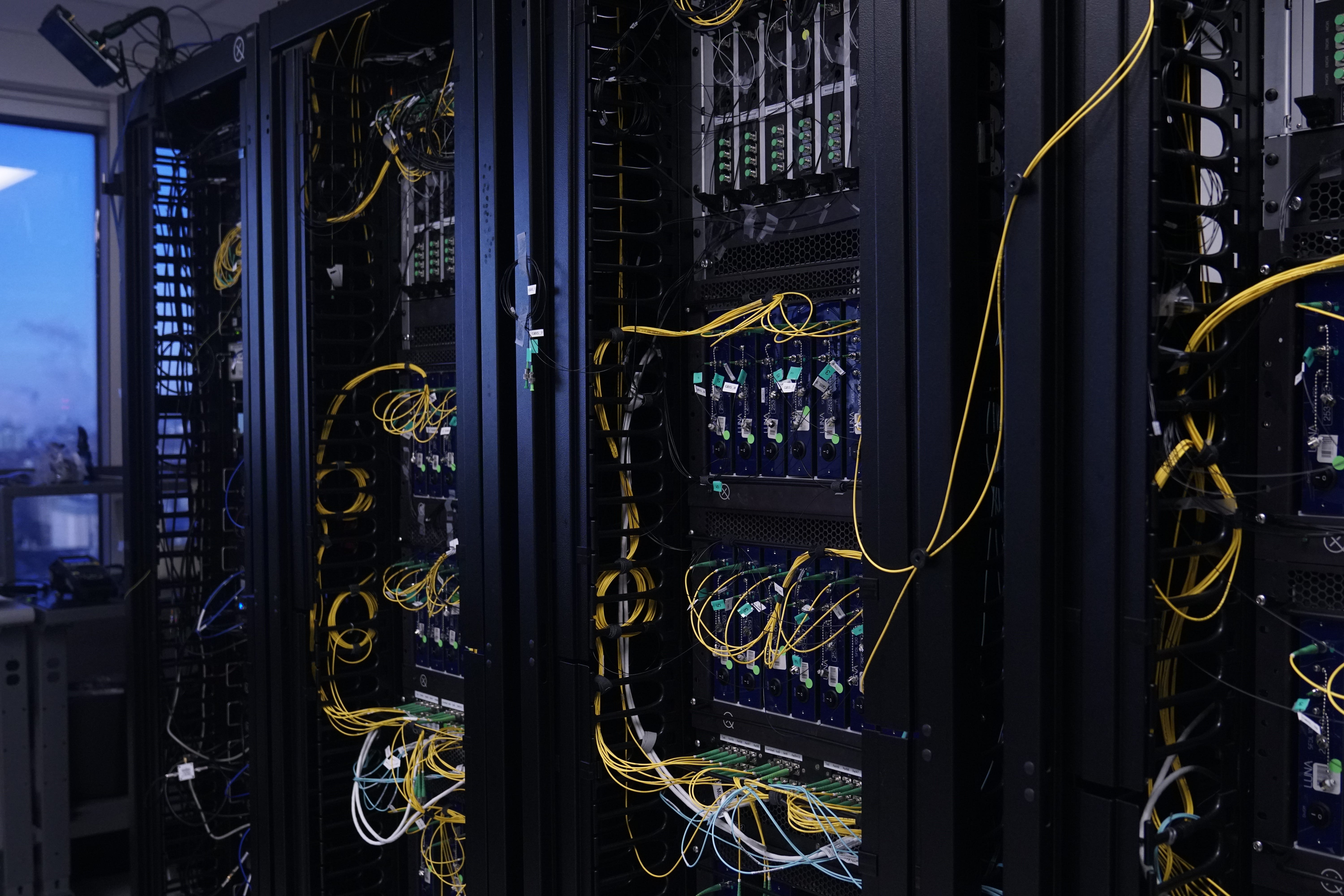
The ultimate vision is to take these smaller quantum computers that we have now, make them even better, more performant, and have many of them, but connect them together using fibre optics. Effectively, you’ve got a large-scale quantum computer or a quantum data centre.”
How does Xanadu differ from competitors?
“You can build a quantum computer out of two things, broadly speaking: either light, so think photons, which is what we’re doing; or matter, so think electrons. A lot of folks are doing the electronic-based approach, and we’re using a photonic one. As long as you can access certain quantum properties of the photon or the electron, you can build a quantum computer.
The pros and cons—we all have them. We like to take our chances with our pros; they’re pretty awesome. Scalability is already being solved and demonstrated through Xanadu’s Aurora computer. You can network together as many quantum computers as you want. No one in the world has shown that apart from us.
The ability to work pretty easily with large-scale manufacturing and large-scale foundries is a big benefit. Also, the ability to use what we believe is far less cooling than anyone else. In fact, our qubits, gates and measurements are all at room temperature, with no cryogenics and no laser cooling. A lot of benefits there.
Our biggest challenge is loss. When photons don’t make it from start to finish, there’s a loss happening, a loss of information. That’s something that error correction, more and more foundry runs, and perfecting that process will help us overcome.”
What are the defence and national-security implications for Canada?
“In terms of the defence aspect, the biggest application is really the hacking of the internet. That’s what a quantum computer can do. That’s obviously not an application we’re going after, but that’s the biggest threat.
That’s why defence and governments are really interested in a quantum computer. They need to get ahead of this technology. They need to understand its strengths and weaknesses. That’s really what’s driven the quantum computing field from the early ‘90s onwards. That’s why countries and nation-states are really desperate to crack the code of building a large-scale quantum computer.”
The Government of Canada recently invested $195 million in Project OPTIMISM. What is it, and why is the government supporting it?
“Great support from the Canadian government. We’re really happy and work well with them. I mentioned the large-scale quantum computer is the ultimate vision, the ultimate goal. To get there, you need to be able to manufacture all the parts and manufacture them at scale.
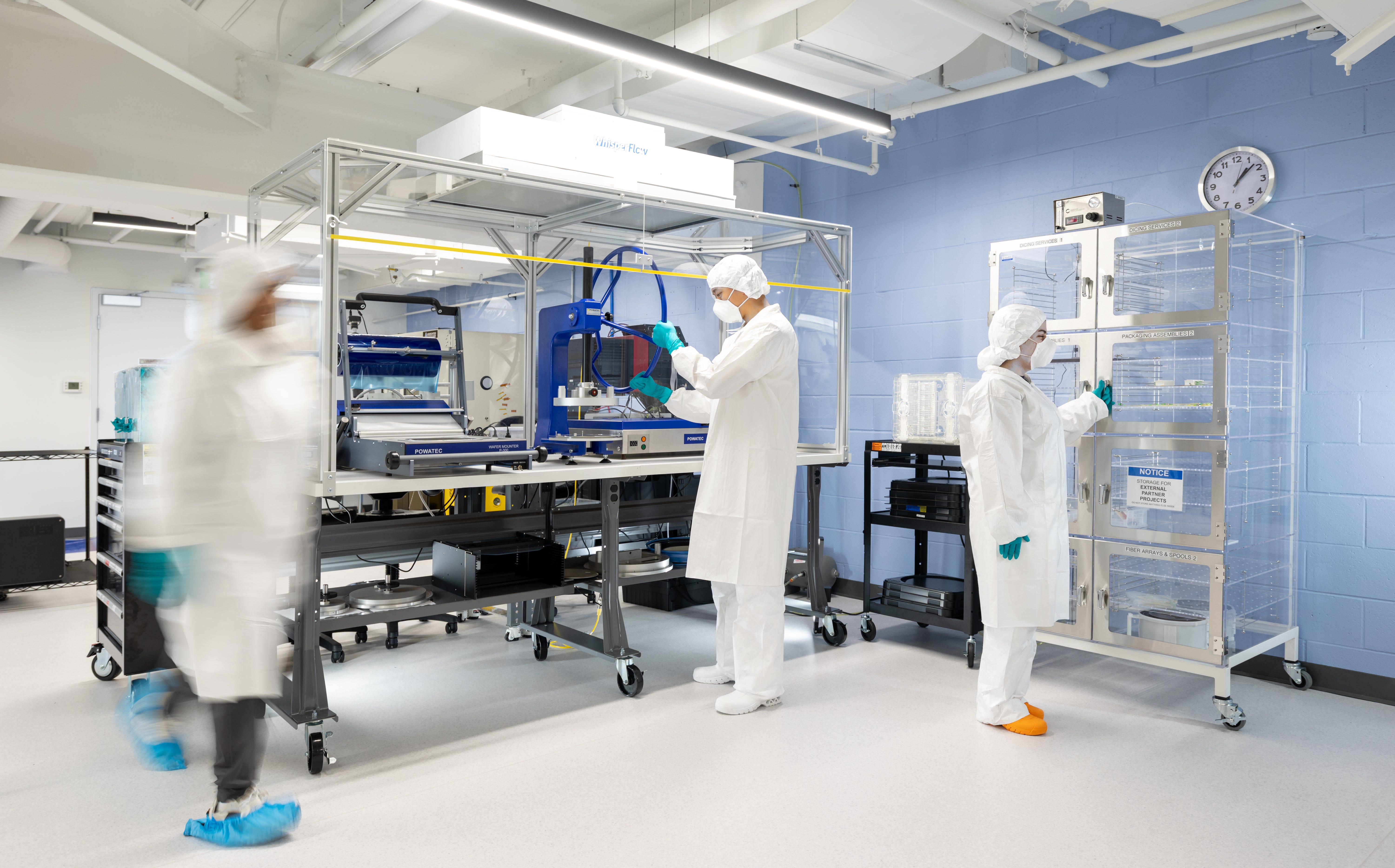
You can think of Inception (the facility) as being that. It’s a 160,000-square-foot facility. It’s beautiful when you go in there. There’s nothing there, but it’s kind of awe-inspiring to see the space and think about what we’re going to do there.
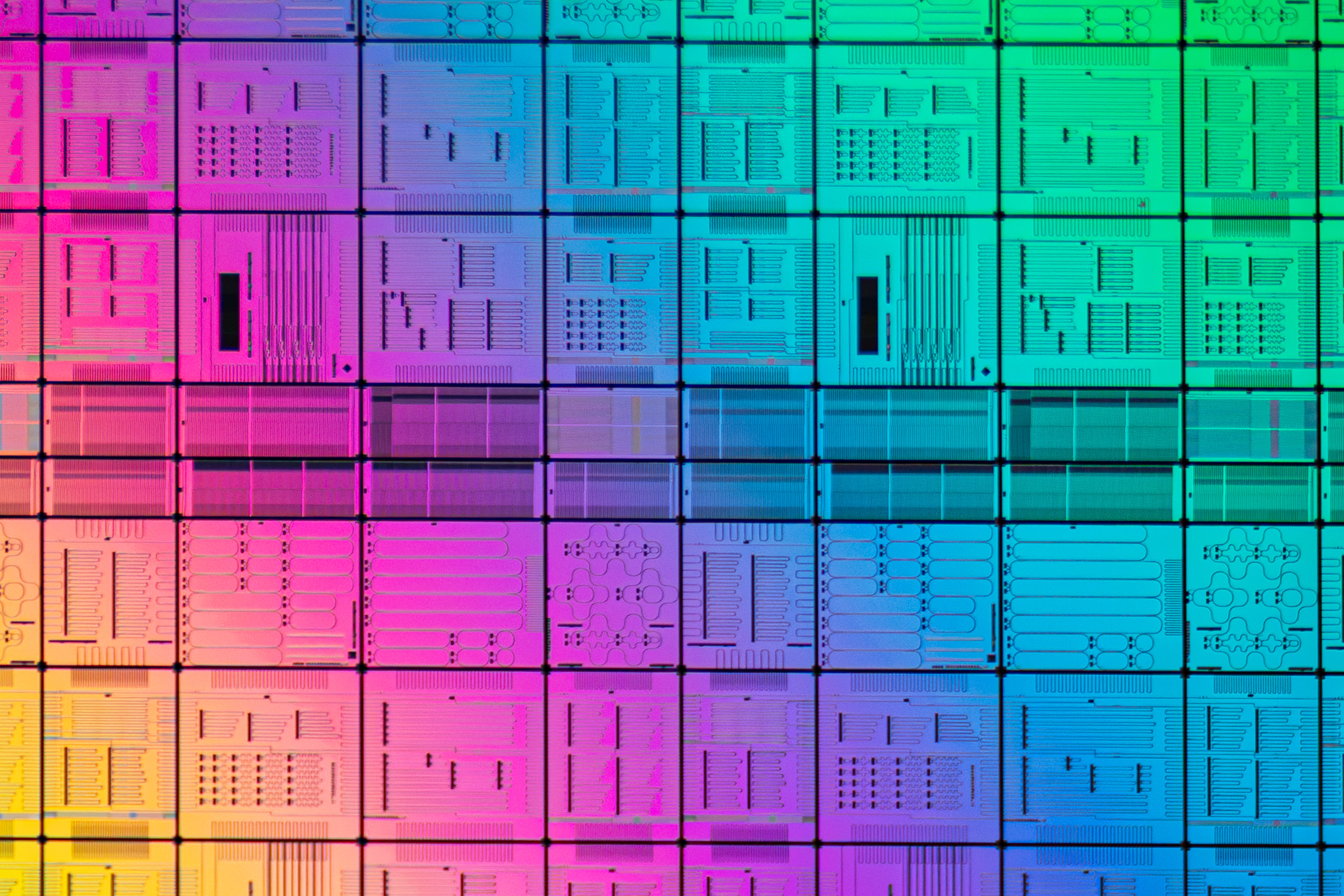
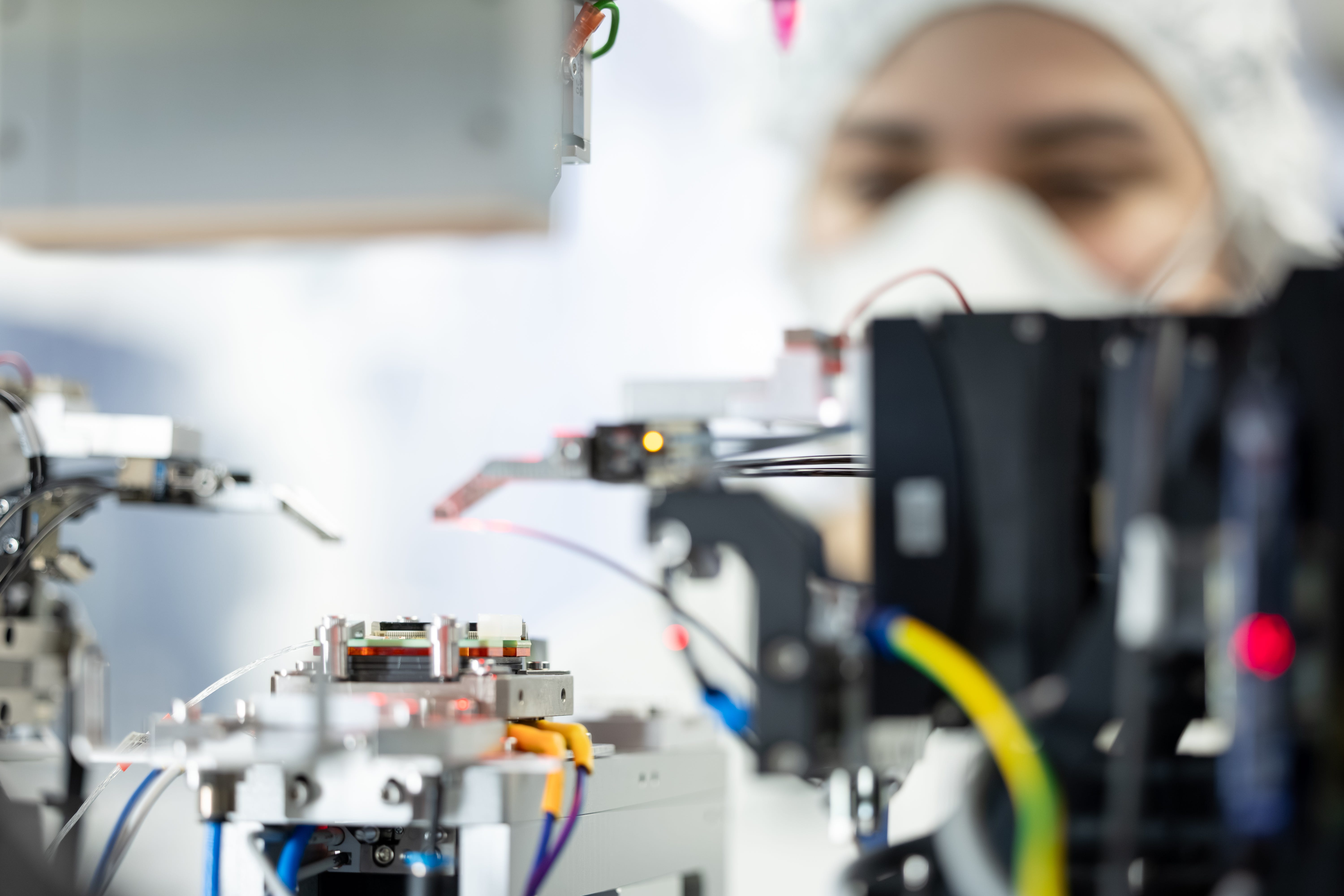
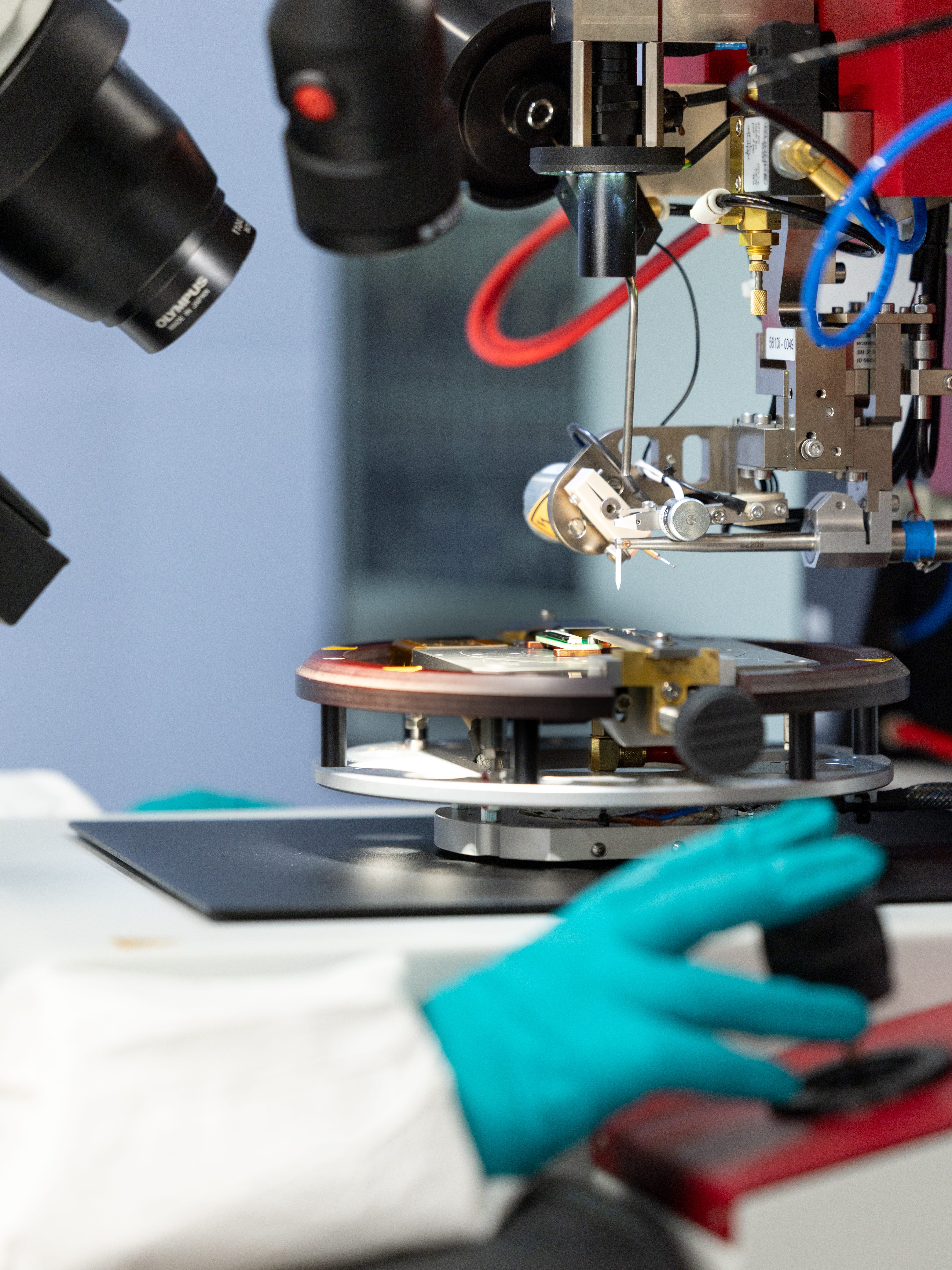
We do all the chip designs here in Toronto. We send them off to different foundries around the world. The foundries send these chips back to us. What Inception will be doing is testing and measuring the chips, packaging the chips, working on some of the cryogenics, and also heterogeneous integration, where essentially you put two different types of chips together.
Inception is a key aspect of achieving our vision of a large-scale quantum computer.”
Why vertically integrate, rather than buy?
“We would love to buy and have less work for ourselves. I think that would make a lot of sense. But a lot of the stuff that we’re doing, no one’s ever done before.
For certain things, like the foundries that we work with, buying off-the-shelf fibre optics and lasers, that’s already been done. The stuff we can buy, we do. But there are other things where we can really speed up the process by doing it ourselves. It is a race, and the faster we can do things through things like Inception, the better it will be for achieving our goals.”
Have a friend or colleague interested in the startups and technologies shaping Canada’s most critical industries? Share this interview with them or your team.
How much have you raised in total, and would you change anything if you started over?
“I wouldn’t change anything. One of the big things I think about is, would we change going public? It’s been six months, and so far it’s been the right decision. The access to capital is far larger on the public markets than the private markets, so that’s really enticing for us.
In terms of how much we’ve raised, privately we raised US$250 million. That doesn’t include around US$40 million from the Canadian and U.S. governments. There’s that side of it. Since we went public, our gross amount of money raised from going public was US$302 million.”

How does Xanadu generate revenue today, and how do you expect the business model to operate once you scale up?
“It’s a good question. We do have revenue today. I think what we say is it’s around single-digit millions. Our main focus is not revenue. It’s really partnerships and advancing our hardware roadmap. They’re the two key things, because if this plays out the way we think, and others think, it will, the real revenue is once you have this large-scale quantum computer.
Our revenue model at that point has four things we’ll be pursuing. Cloud access: kind of like a cloud-compute infrastructure, quantum computing as a service. You can access our advanced compute over the cloud.
Another one is potentially selling individual quantum computers or server racks to customers for data and sovereign needs.
Then licensing. If people create a new drug or a new material or something from using our compute, we’re going to charge a lot for that. That’s great. But we also want to patent things that they may productize afterwards, so we can get some licensing fees as well.
The fourth one we’re always thinking about is the monetization of our PennyLane software, which is one of the most widely used software offerings anywhere in the world. PennyLane is open source. It’s got a great following, but in the future we may think about monetizing that as well.”
Will quantum create a big step up in artificial intelligence?
“TBD on that. The jury’s out. We don’t know. We think that’s going to be the case, but honestly, understandably, everything these days is about AI. Rather than looking at how those go together, we think we’re the next big thing after AI: quantum.
There will surely be a point where people are saying, What’s your quantum strategy? How are you leveraging quantum computers? We see it as separate, as something bigger.
Having said that, AI and, say, LLMs have been incredibly important to us in building a quantum computer so far. It speeds things up, optimizes things, and it’s been an incredibly useful tool for us.”
You’ve spoken about failing film school twice. How did you end up in quantum?
“I’ve always been following my curiosity, what interests me and what I’m okay at, trying to find that overlap.
After failing film school and trying a ton of other things, I went back to school, back to university, majoring in math. I was okay at math at school, so I thought I’d give it a go at university. I was really enjoying the applied version of math, and even more applied physics, because you had the math and also the physical understanding and intuition that was needed to really learn what was happening.
I went further down the applied route. I was interested in applying physics to things like secure code, so quantum cryptography, and then finally quantum computing as well. I did a PhD in quantum computing, all the while not knowing what was coming up next, just following the things I was interested in and enthusiastic about.
After that, I went to MIT as a postdoc, and then the University of Toronto as a postdoc, and continued to study and contribute to the field of photonic quantum computing. That’s how it came about.
I decided in 2016 to put my longstanding love of entrepreneurship and reading business books and biographies together with my knowledge of quantum computing. I thought, I wonder if I could commercialize the research field of photonic quantum computing that I was a part of? It just went from there.”
Does your film background or outside perspective give you an advantage?
“I think so, and I hope so. I don’t see any difference between writing and directing a movie and starting a startup.
The outcome is different. You’ve got a movie, then you’ve got a product of whatever the company is selling—in our case, a quantum computer.
You start with an idea, as both a founder and a film director would. The idea for a film would be that you’ve written a script, for instance. The idea for a company—in my case, I wrote a white paper detailing what I’d like to do if I got money.
The next step for both is to get money, get investors, and get people behind you. Hire people to bring the ideas to fruition. There are so many similarities between the two that it seems like ultimately kind of the same thing for me.”
You were born in Australia but decided to build Xanadu in Canada. Why here?
“The why is quite simple and just personal. I loved Toronto when I first came here. I thought it was a great city, and it’s a great country. There are similarities to Australia, so getting used to this country was much easier.
Thankfully, since I’ve been here and since starting Xanadu, much more funding has become available. There have also been a lot of incubators for startups and founders to help them. The Canadian government, from our side, has been such a champion for quantum and has been helping us a lot.
All of those things come together to make it a great place to live and also build something.”
Over the next 12 months—what should people look out for?
“Everything for us is really about hardware milestones. That’s key. Specifically, loss reduction—that’s really the biggest challenge for us, as I mentioned.
Continually seeing our loss go down. We’re on track for that. That’s the key metric to look out for.”
If everything goes right, what do you want Xanadu and the world to look like?
“What would be fantastic is for large-scale quantum computers to exist. They’re helping people, creating drugs that would have taken many decades to create, but much faster. They’ve sped up the whole drug process cycle significantly. New materials, new batteries, new everything that we hadn’t thought of being created.
When people talk about AGI, I think you really need the digital world plus the analog world. That’s maybe the best way to describe nature and reality. That’s what quantum physics offers: both the analog or continuous nature, along with the discrete or bits nature. That’s fantastical. Maybe AGI is only possible with quantum ultimately, or something like quantum. That’s the future that I hope happens.”
What other Canadian national-interest startups are worth watching?
“In the quantum space, there are two other great ones: Photonic and Nord Quantique. They’re doing some great stuff.
There are many in Canada, and I’m seeing more and more founders reach out to me. If there’s anything I can help with, I’m always happy to do that. I think the future looks bright for entrepreneurship here in Canada.”
Which entrepreneurs or historical figures do you look up to most? Do you have a favourite biography?
“I love two that I continually reread: the Elon Musk one by Walter Isaacson—I think that’s an amazing story—and The Snowball, about Warren Buffett.
There are a lot of books out there that extract the characteristics of successful people. They’ve been around for 100 years or more, probably. They all have the same characteristics. They have a great attitude, a positive attitude. They’re optimistic. They work hard. They work relentlessly. They don’t give up. They’re persistent.
There’s no magic. There’s really no magic. Those characteristics have been around for many, many years now. The hard part is living them every day.
A lot of the folks I read about have achieved what they’ve achieved because they’ve just been at it, one step in front of the other, continuously. It just builds up over time.”

Building something in Canada? I want to hear about it. contact@ethanmarcoux.com
Partners of The Canadian Explorers

The Canadian Explorers works with a limited group of sponsors that support the founders and startups solving Canada’s most difficult problems across defence, deep-tech and other critical industries.


