


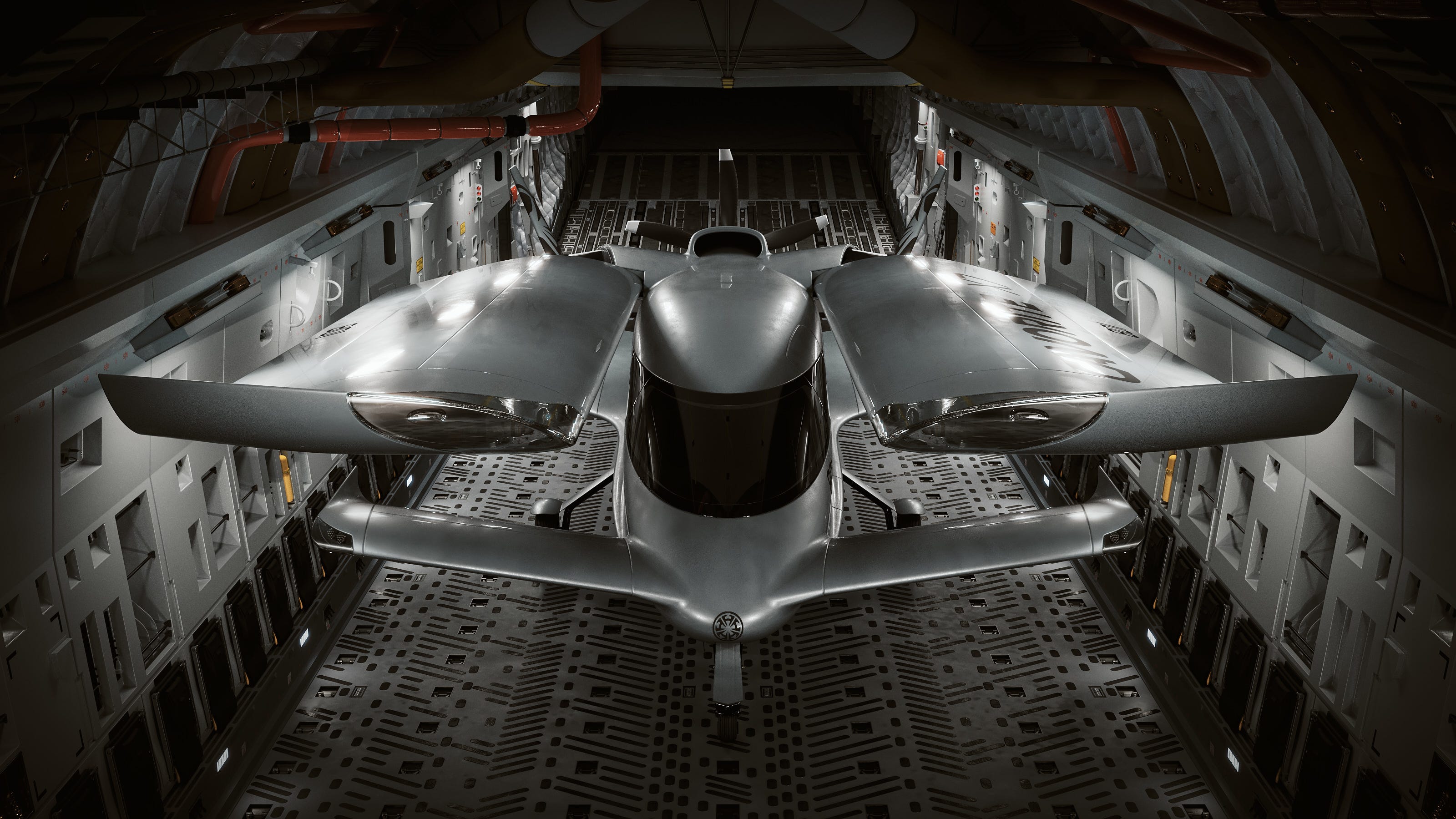
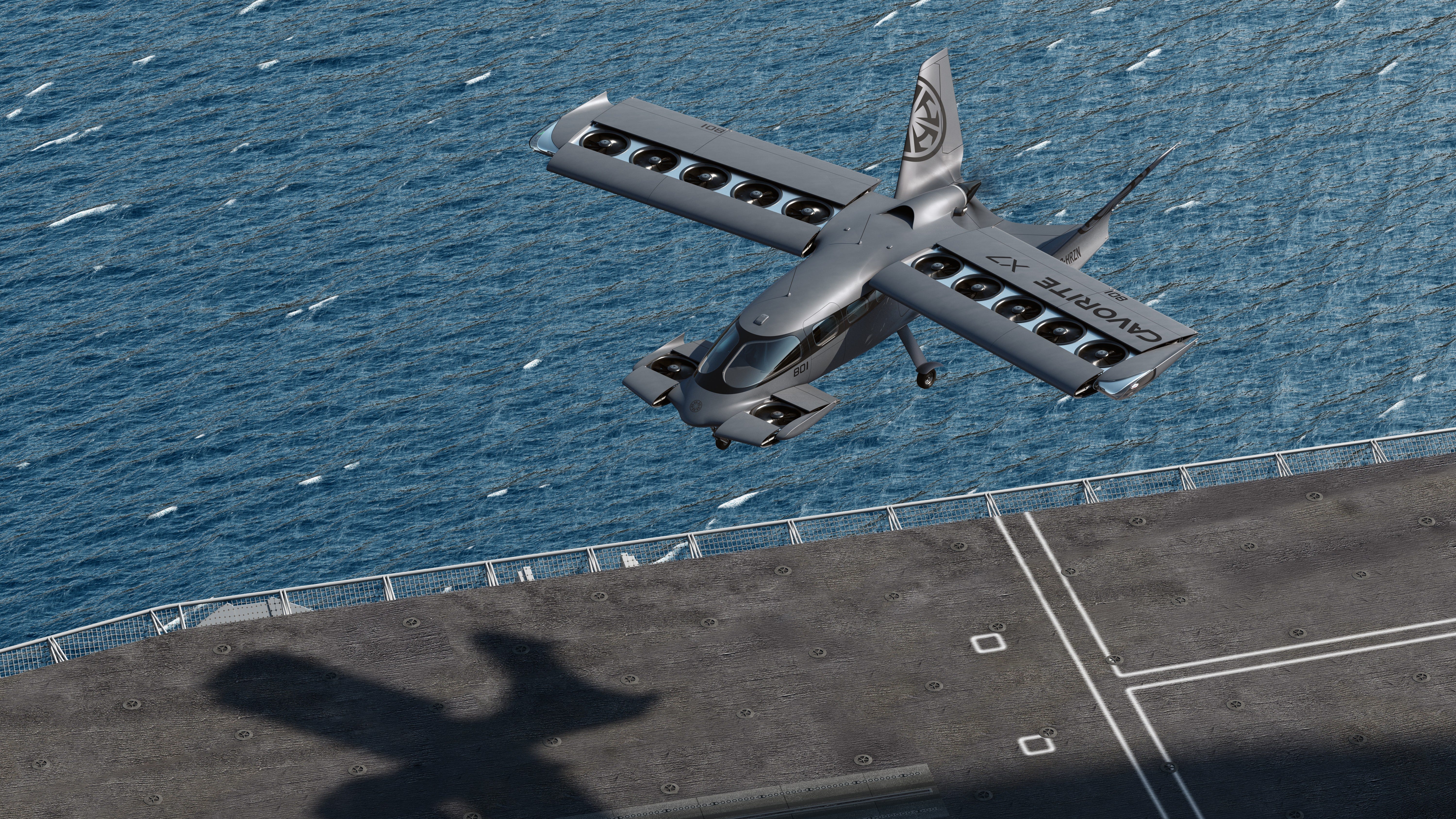
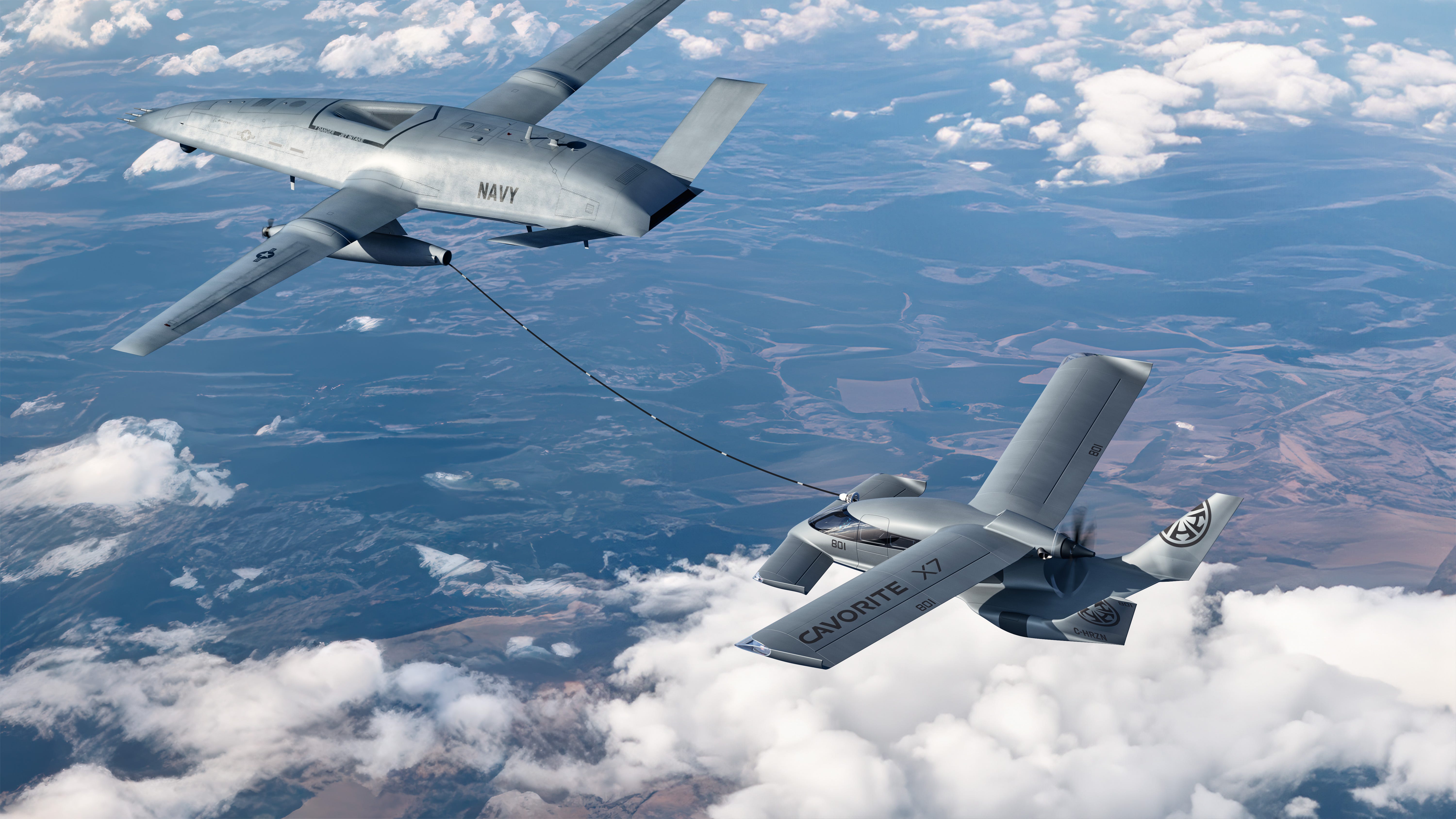
The Cavorite X7 is an aircraft that can take off vertically like a helicopter, fly forward like a plane, and recharge mid-air.

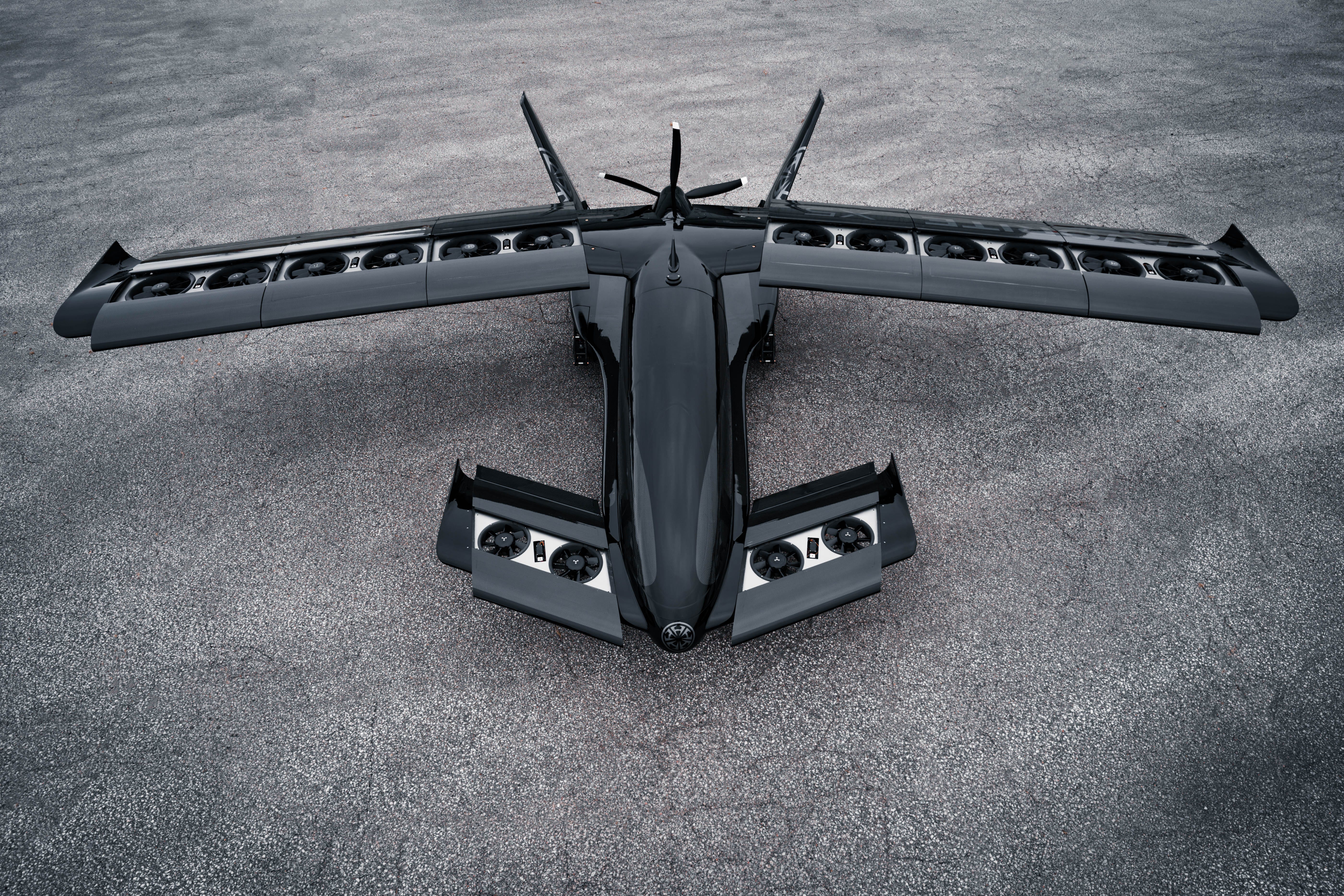
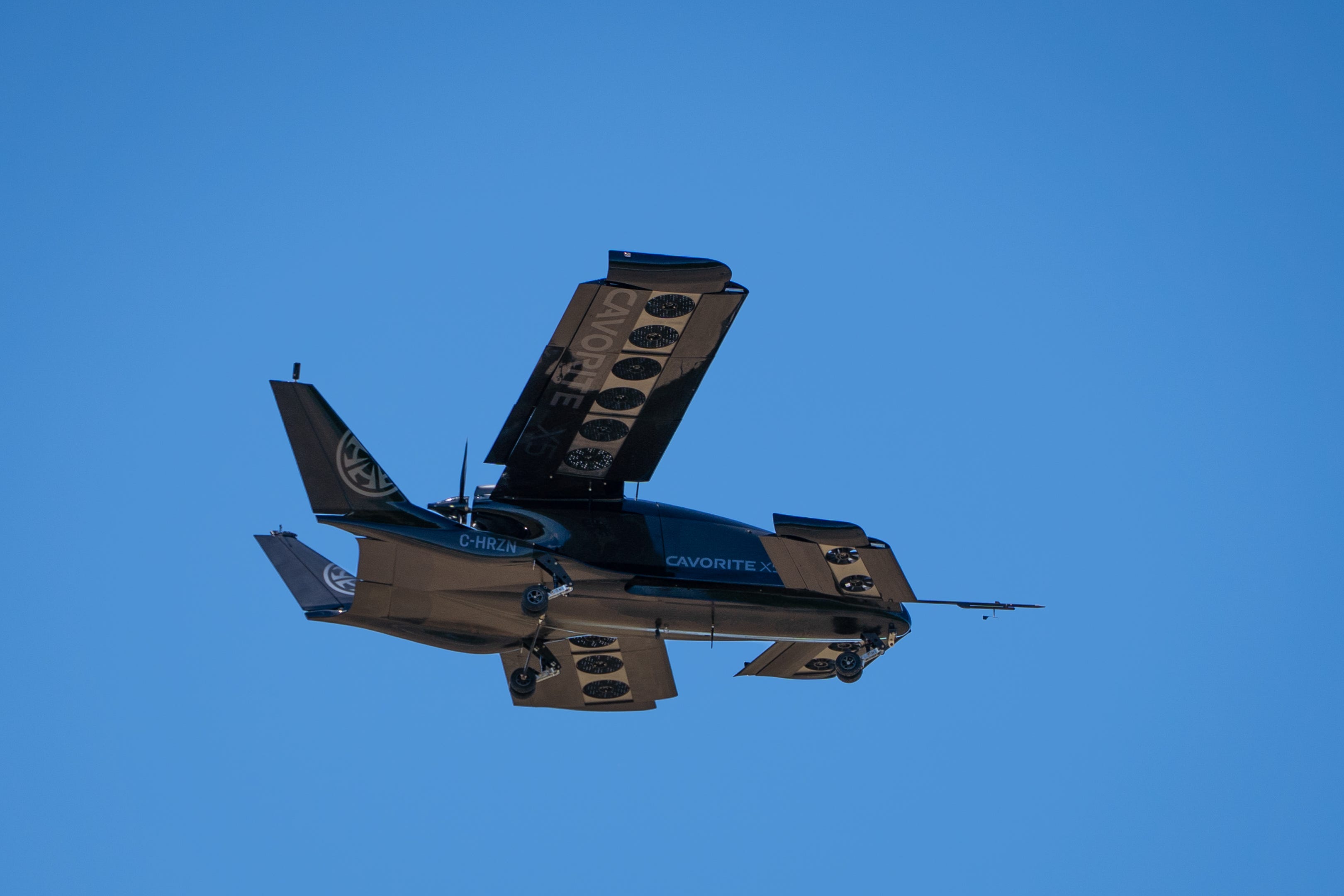
Its patented HOVR Wing design uses 12 lift fans embedded in the wings for electric vertical takeoff. Once the aircraft reaches sufficient altitude and speed, sliding panels cover the fans, reducing drag so the aircraft can fly like a normal gas-powered plane. The aircraft recharges its lift-fan batteries in flight and can then land vertically on a helipad or use a traditional runway.
Horizon Aircraft is a Canadian aerospace company based in Lindsay, Ontario, co-founded by CEO Brandon Robinson and his father, Chief Aircraft Architect Brian Robinson. Brandon served in the Royal Canadian Air Force and has spent over two decades as a fighter pilot, including as a Top Aces Fighter Pilot. Horizon Aircraft (HOVR) began trading on the NASDAQ in 2024 and currently has a market cap of over US$100 million.
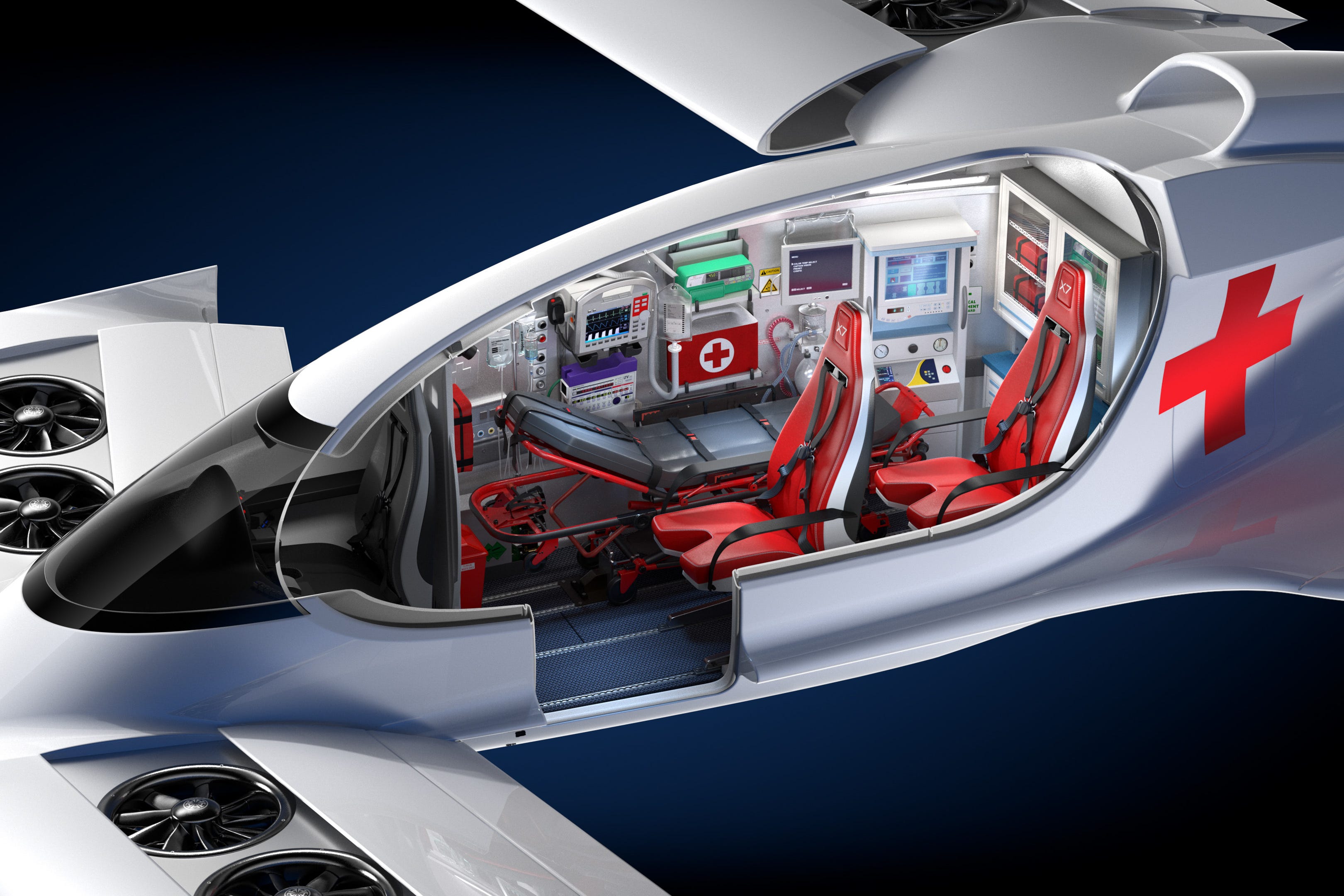
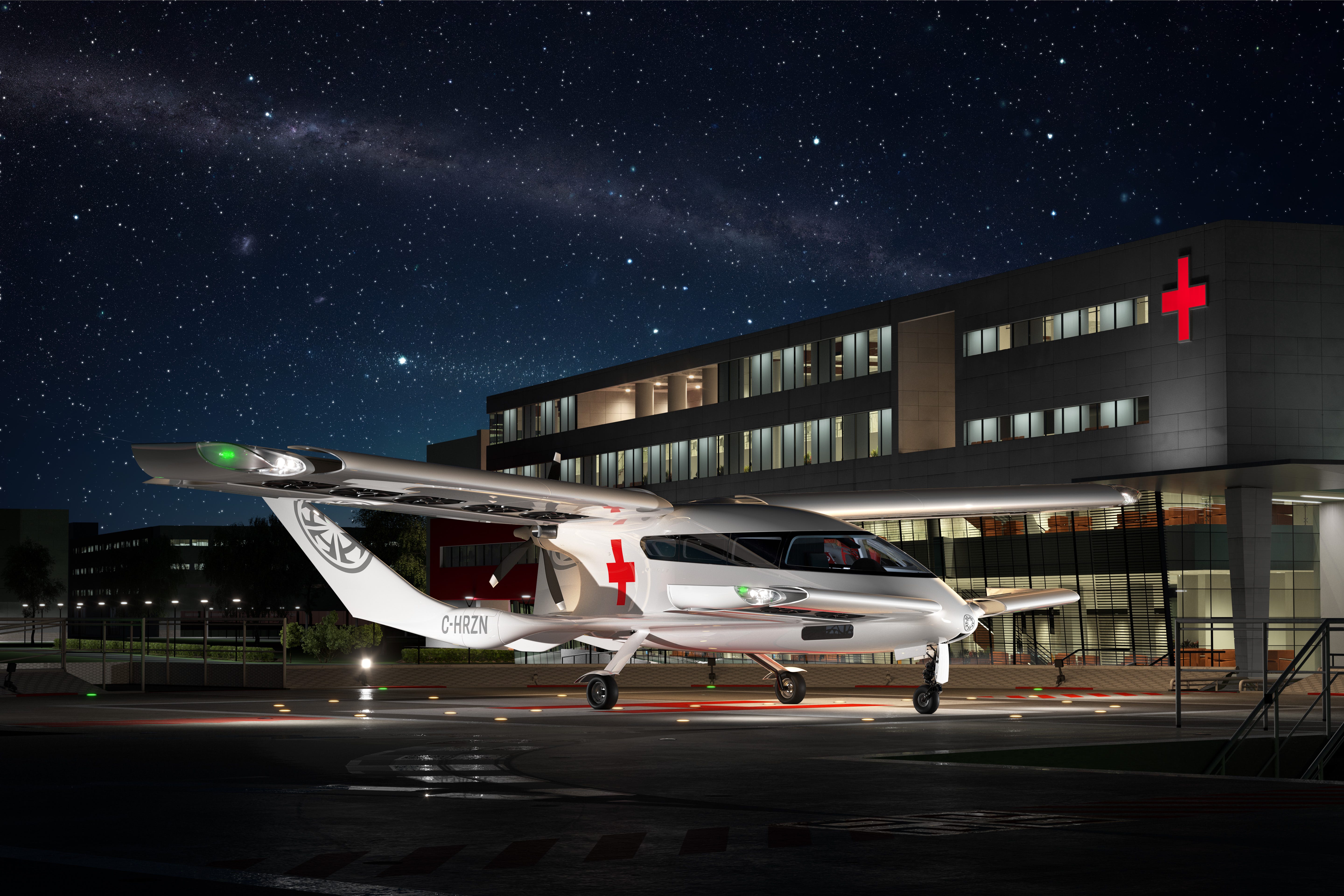
The Cavorite X7 is designed for operations including medical evacuation from isolated areas, organ delivery, time-sensitive cargo in underserved remote regions, ISR (Intelligence, Surveillance, and Reconnaissance), and search and rescue. It burns less fuel than a traditional aircraft conducting similar missions, and as battery technology continues to advance, Horizon expects to transition to fully electric flight.
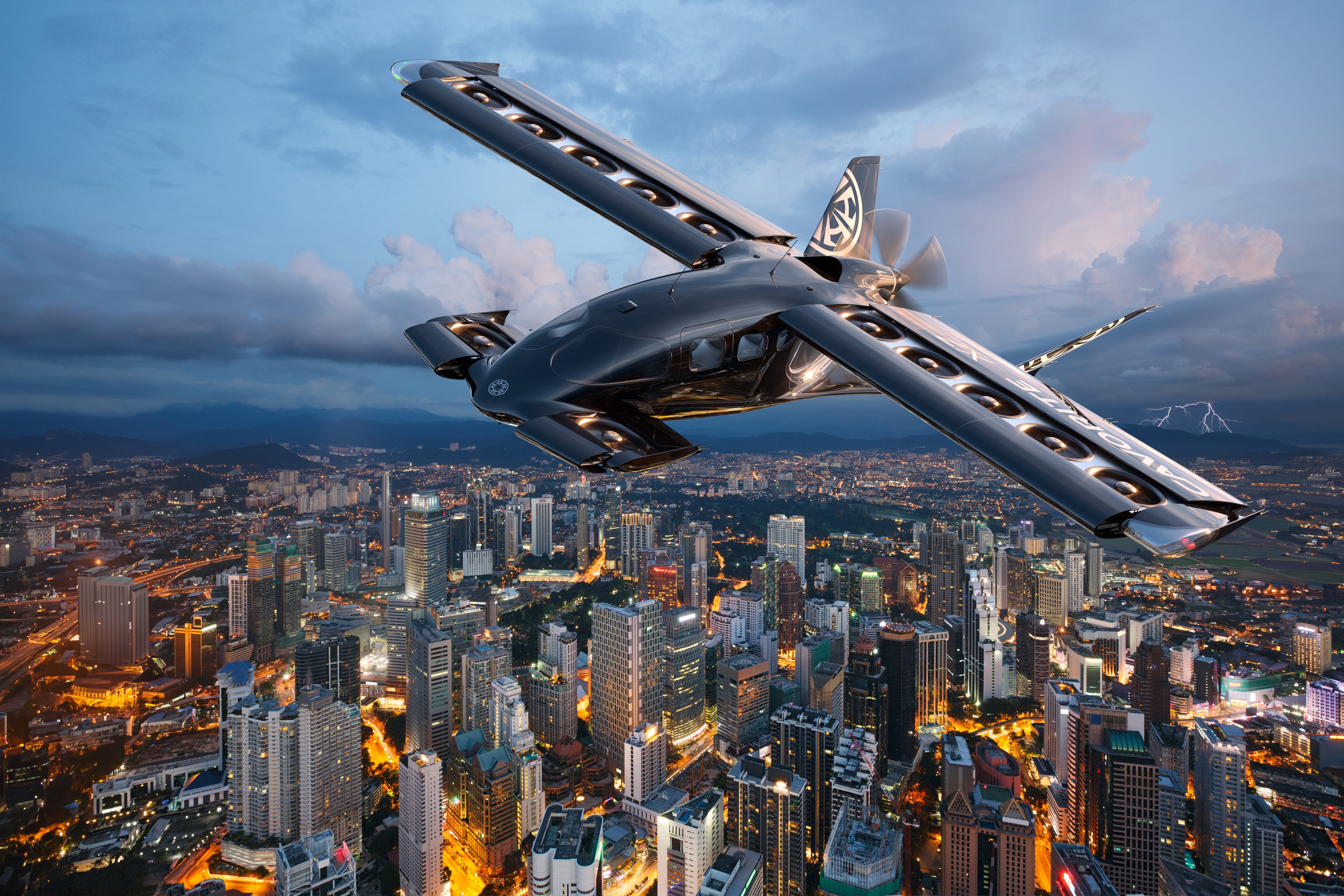
The aircraft is designed for a maximum speed of 450 km/h and an 800 km range, with capacity for six passengers plus a pilot and a 1,500-pound useful load. According to the founder, the aircraft can fly twice as fast and twice as far as a helicopter at up to 75% lower cost per unit mile. The underlying technology is working today, and Horizon will begin assembling its first full-scale aircraft “imminently.”
“We are always limited by the slowest aircraft in the fleet.” — Brandon Robinson

I spoke with Brandon Robinson, CEO and co-founder of Horizon Aircraft, about building a Canadian aerospace company, what capabilities the Cavorite X7 unlocks, private vs public capital, and the advantages of gliding.
“There’s a reason why you don’t see large birds with these tiny little propellers on top.” — Brandon Robinson
What is Horizon Aircraft building, and why does it matter for Canada?
“We are building a hybrid electric vertical takeoff and landing aircraft that can take off and land just like a helicopter, but travel about twice as fast and be up to 75% cheaper to operate per mile and much safer and quieter than a helicopter. So, a pretty unique piece of kit.”
What does hybrid-electric VTOL unlock that traditional aircraft cannot?
“About half of the helicopters simply go from point A to point B in this world. And that’s, you know, a 70,000-helicopter fleet. Half of them simply go from one place to another. We thought building, with some revolutionary new technology, essentially a helicopter capability that was twice as fast, again, up to 50 to 75% cheaper per mile than a helicopter, much safer and faster, was a winning combination.
Initial use cases: imagine getting someone to the hospital from an emergency medical situation. Getting them to the hospital in half the time, or from twice the distance in that golden hour. So emergency medical services are a really exciting sort of initial use case. Alongside any sort of critical cargo you need to go from point A to point B, to a remote location, and/or between two points that don’t necessarily have a runway on either side. But it’s going to be a very compelling machine.”
Where do you see the strongest defence application?
“I flew two decades in the Royal Canadian Air Force as an F-18 fighter pilot. At the peak of my career, I was planning and leading NATO coalition strike missions in training to go and practice taking people out of harm’s way. Maybe it’s a pilot who had to eject beyond enemy lines. We go get them, practice going and getting them, and we’re bringing them back home to safety. Maybe it’s dropping off troops, special forces troops, in difficult locations. Or maybe it’s resupplying forward operating bases.
All of those missions require VTOL aircraft that can land at unprepared locations. We are always limited by the slowest aircraft in the fleet. The X7 is essentially a helicopter with that same capability, but it’s much, much faster. That would have been extremely useful for all of those missions that I mentioned, and is going to be broadly applicable for dual use, unquestionably.”
Are you working with military operators or government customers?
“We are. We won a prestigious United States Air Force AFWERX contract for high-speed vertical takeoff and landing aircraft a few years ago that helped us expedite our large-scale prototype that’s already successfully flown and been through transition, and inform the design that we’re currently working on, for which we’ll have a full-scale aircraft here in the next six to nine months.
We’re hearing that if the aircraft does what you say it can do, or even close, then we’re very interested. As one would be, right? Essentially, a helicopter that’s twice as fast and has a lot of other operational advantages. It’s lower sound, a lower radar cross-section on the military side, is a lot safer than helicopters are, a lot cheaper to operate, which actually does matter to a lot of militaries. We’re hearing interest from the U.S. Department of War, as well as from militaries in Europe and beyond. Our phone is ringing off the hook, essentially.”
What does remote and all-weather operation mean for Canada’s North?
“What I would say is it’s designed as a traditional commercial aircraft, able to operate in any condition. You fly up to 10,000 feet; it’s much colder up there. You fly in any sort of clouds, and it might have some icing. This is not a good-weather machine. We wanted to come from a very practical space. I spent 20 years flying jets in the Air Force. I wanted a machine that was built for the real world. It’s not necessarily specifically designed for remote, icy and bad weather conditions, but it’s just designed to be really, really tough and to operate in any sort of commercial environment. A lot of helicopters can only operate in very good weather conditions. A lot of people don’t realize this. Any sort of clouds, they avoid; any sort of icing conditions, of course, they will avoid.
There are a lot of reasons for that, but that leads to a lot of helicopter accidents where they’re trying to fly low underneath the clouds, or they’re trying to avoid flying into clouds during bad weather operations. So we’ve designed a tougher, more robust commercial aircraft than a traditional helicopter. And our configuration is uniquely designed for that.”

On helicopter safety
“I think helicopters are amazing. They’re incredible machines that defy physics. Well, they don’t defy physics; let’s be honest. They defy common sense from a certain perspective. They’re very, very, very good at taking off and landing vertically, at hovering in one place for a long time. They move a lot of air, sort of very slowly, and that makes them very efficient in hover. But they pay an incredible penalty for that design configuration throughout the majority of their trip from point A to point B. They are incredibly inefficient.
There’s a reason why you don’t see large birds with these tiny little propellers on top. Nature would have figured that out. Natural wing-borne lift is the most efficient way to get from point A to point B for any sort of flying machine at scale. We wanted to design a machine that could take off and land vertically, but primarily, for 98% of the trip, it would be just like a normal commercial aircraft that everybody knows. Again, flying in bad weather, cold weather, in clouds, and leveraging an incredible lift-to-drag ratio: 10 to 1 versus 4 to 1 on a helicopter.
For all of those missions that require long-duration hover, we have not invented anything better than a helicopter. They will continue to do good work in the future. I just want to be clear about that. But for any mission that requires helicopter capability to get in and out of a place that doesn’t have an airport, this is going to be an extremely disruptive machine in this space.”
The advantage of gliding
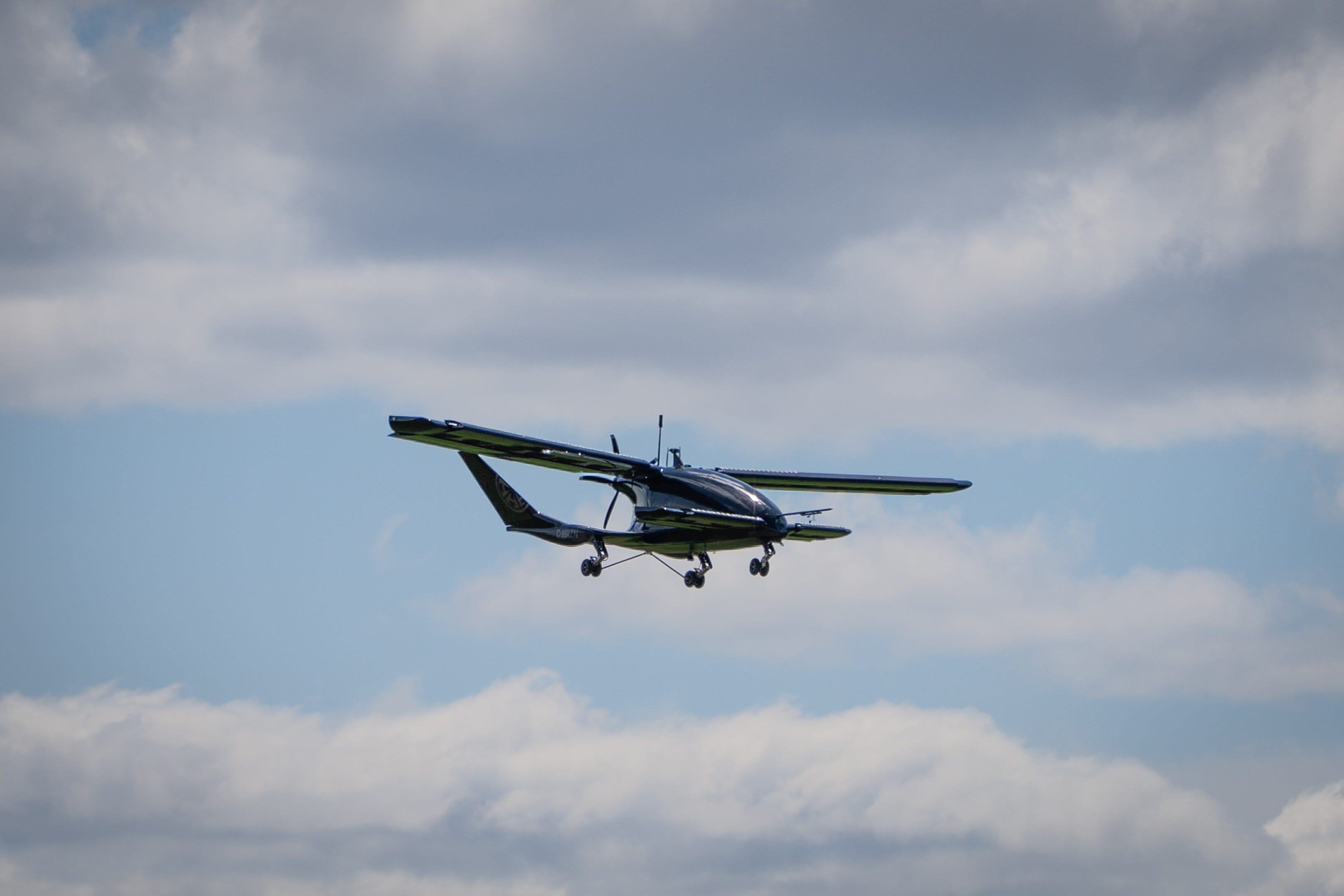
“From a safety perspective, again, a helicopter cannot glide. I’ve been in a helicopter in an engine-out scenario, and it’s called an autorotation. You’re basically falling like a brick. You build up enough energy in the rotor system to then, at the end, sort of do this crazy maneuver and land in sort of a 45-degree cone that’s underneath you. If there’s unfortunately no area to land, you’re going into the trees. If you’re lucky enough to have a flat space, you can land. If not, you can’t glide at all in the helicopter.
With our aircraft, in the worst-case scenario, if the engine fails, you’ll be able to glide just like a normal aircraft. Then you pick any spot. Glide 10 miles over that way, pick any spot, and then be able to open the wings and land using the electric propulsion that’s on board. From a safety perspective, it’s a helicopter with an order of magnitude more safety aspects that are keeping people safe.
From a redundancy perspective, if the one main rotor fails on the helicopter, bad news. A helicopter also has mast bumping. It’s a fancy word for it cuts off its own tail. Every once in a while, that happens; it’s in the news, tragically. The helicopter, if it cuts off its own tail, can’t survive. Our aircraft can actually lose a bunch of the rotors and still be able to land vertically. And by the way, it’s flying around just like a normal aircraft, so it has to actually lose a wing or something to have any sort of big issue. From a safety perspective, a lot of different ways that this aircraft will be a lot safer than a traditional helicopter.”
30 Startups for a Sovereign Canada | Canadian30

Canada is recognizing the need for national sovereignty through hundreds of billions of dollars in generational investments, such as the Defence Industrial Strategy, the Canada Strong Fund, and its new National Artificial Intelligence Strategy. According to The Canadian Shield Institute, Canada's defence spending is projected to increase
Why go public instead of raising private capital?
“You have to really know what you’re doing. If you’re going to go public, you need to have a strong story, and you need to have the right market conditions in order to do that. We knew what we were getting into. It wasn’t my first rodeo when it came to public market experience. And we found the right partners to make it make sense. It is a difficult thing to do. Back in 2024, and even further than that, because it takes quite a long time to prepare it, so call it 2023, post-COVID, there was not a lot of capital in the private markets for investment in deep tech and hard tech companies.
Everyone was trying to figure out what was going to happen post-COVID, and they were keeping all of their money sort of on the sidelines. There was a lot of dry powder, quote-unquote, that was not deployed on the venture capital side, especially in Canada. On the private side, especially for aerospace, deep tech, and hard tech, there was not a lot of capital available. So the public play made a lot more sense than it would now.
Fast forward to a company that has amazing defence tech and amazing commercial potential, and we’ve proven it. If it were right now, like July 2026, I might not make the same decision, but we’re pretty happy where we ended up. We have $78 million in the bank. We have a couple of years of development capital. We’ve managed to avoid major dilution events that a lot of other microcaps have suffered. I’m pretty happy it all worked out, and I’d have to reevaluate if it was right now, whether I would do it in these current market conditions, which are more favourable for support of private companies.”
Where is the technology today?
“The technology is working today, which is amazing. We have main propulsion units. They’re spinning up, producing for us from a vertical lift perspective. Aerodynamics are looking great. Structure is looking great. We will have the main structural elements, the main structure in the hangar, in the next few months, which is pretty cool. And we will start to put together an aircraft that looks like an aircraft. The empennage, the fuselage, the main wings, and the canards will all be finished and rolling in pieces into the main hangar shortly. And we’ll start assembling our first full-scale aircraft imminently, which is pretty exciting.
We could have pre-sold thousands of these aircraft already. We decided to say no until we were a little further along. A lot of the other companies have these massive order books, loosely binding LOIs with no down payments and all sorts of communications that look great from a PR perspective. But we decided not to play that game. Now that we’re further along and we’re going to have a full-scale aircraft that’s coming out of the hangar pretty soon, we’re basically starting to talk to partners that are a little more serious. Maybe putting non-refundable down payments down, maybe booking solid slots in the early production line. More to follow on that.”
How much cheaper, and what is the expected aircraft cost?
“Up to 75% cheaper per unit mile.
This will only apply to the first few customers, but after some early customer discounts, it’ll be in the US$6 million to US$7 million range.”
What is the manufacturing plan?
“Many of these companies are planning on selling 1,000 to 2,000 of these aircraft per year and producing that many. We’re taking a more traditional route. It’ll be 200 to 300 aircraft and a very profitable production line. I think the key to note is that we’re not becoming an operator at the same time. So we are only manufacturing a really awesome airplane. We’re not also trying to build out an operational arm or become like an advanced air mobility airline at the same time. So that allows us to focus and keep things very efficient.”
Was there a specific moment when you knew this needed to exist?
“At the peak of my career, I’d been planning and leading NATO coalition strike missions in training or recovery missions in training where we go and practice taking pilots from beyond enemy lines. We’re always limited by, and doing some other special forces infiltration, exfiltration and some other missions, we’re always limited by the slowest vertical takeoff and landing aircraft in the fleet, which is a typical helicopter, like a Black Hawk or even a Chinook or something like that.
Fast forward to when we got Ospreys, it was amazing because we could essentially get 1.5 times faster with those Ospreys. But they’re $85 million a copy. And if you want four Ospreys to take off, you plan on eight of them trying to take off because they’re so complicated that they break a lot. So this would have been an order of magnitude cheaper, just as fast, and could have provided a lot of operational utility on the military side. There are tons of missions. I’m just scratching the surface of where this thing would have been amazing. The Marines for resupply, ship to ship, all sorts of really, really cool stuff that you could do with it. Anti-submarine warfare, dropping sonobuoys. Again, without any prepared infrastructure, you can take off and land from the ship, and you can go twice as far, twice as fast. That’s just scratching the surface. It’s going to be an exciting military machine.”
Advice to Canadian hardware founders
“I think what I would say is that the times are changing a little bit. Ten years ago, five years ago, you’d take your amazing idea; you’d go south of the border, where it’s much more aggressive, much more competitive, but the winners get disproportionately rewarded. In Canada, the ethos has always been that they’d rather give 10,000 companies $1,000, which is going to do nothing, than give two companies $5 million to actually do something useful and make them much more competitive. In the States, it’s the opposite. It’s much more competitive, but you can get meaningful capital to start your business: deep tech, hard tech.
Canada, I think, is starting to change, which I love. I love being supported by the government. And, of course, with any sort of military angle now, the increased requirement for defence spending is going to help companies with dual-use technology, which is fantastic. But I would say to any other Canadian entrepreneur, hang in there. It’s changing. You don’t necessarily have to go south of the border. As attractive as it is.”
Why build in Canada?
“Selfishly, I’m just a Canadian patriot. I love the country. I think in many ways we’re just a very solid group of people who don’t change our minds from day to day. We’re a pillar of moral character in a time when it seems to be drifting a little bit. I love Canada. I think it’s a great place to build a company. I think it’s a bunch of great folks who have a lot more tenacity than the world realizes. And we’re just a stable place to build some really great tech. I’m a bit of a patriot, having spent a couple of decades in the military. I love the place. I think it’s got a lot of potential. It needs a few tweaks to unlock its full potential from an economic powerhouse perspective. We’ve got the people, we’ve got the technology, we have the natural resources, and we’re afraid to use all of those things. But I think that fear is starting to go away, and I think the mechanisms to enable true Canadian explosive growth are starting to happen.”
“The thing is, helicopters are different from airplanes. An airplane by its nature wants to fly and, if not interfered with too strongly by unusual events or by a deliberately incompetent pilot, it will fly. A helicopter does not want to fly. It is maintained in the air by a variety of forces and controls working in opposition to each other, and if there is any disturbance in the delicate balance, the helicopter stops flying immediately and disastrously. There is no such thing as a gliding helicopter.
This is why a helicopter pilot is so different a being from an airplane pilot, and why, in general, airplane pilots are open, clear-eyed, buoyant extroverts, and helicopter pilots are brooders, introspective anticipators of trouble. They know if anything bad has not happened, it is about to.”
If you’re building something in Canada, I want to hear about it. contact@ethanmarcoux.com
Medical Manufacturing Anywhere | Dr. Harvey Hawes — Explorer Spotlight #6

In war, disasters, and remote conditions, the demand for medical supplies rises when supply chains are most likely to fail. Since Russia’s full-scale invasion of Ukraine, Ukraine’s Ministry of Health estimated that 100,000 war-related amputations had been performed by mid-2024.


Mr. Marcoux, I forgot to commend you on this excellent article.
Brandon and Brian Robinson, and the team behind them must be incredibly proud of this engineering marvel. I am sure Canadians eagerly await full scale aircraft trials.
And I laud Brandon’s commitment to this country and staying here, at home.