


War is a battle of economics. One that the West is losing.
Operation Epic Fury is expected to last until September. Iran has responded by overwhelming the air defences of Gulf nations, attacking civilian targets. Drone interceptor reserves in States such as Saudi Arabia, the UAE, and Qatar are “rapidly depleting.” This could leave civilian and military targets defenceless very soon.
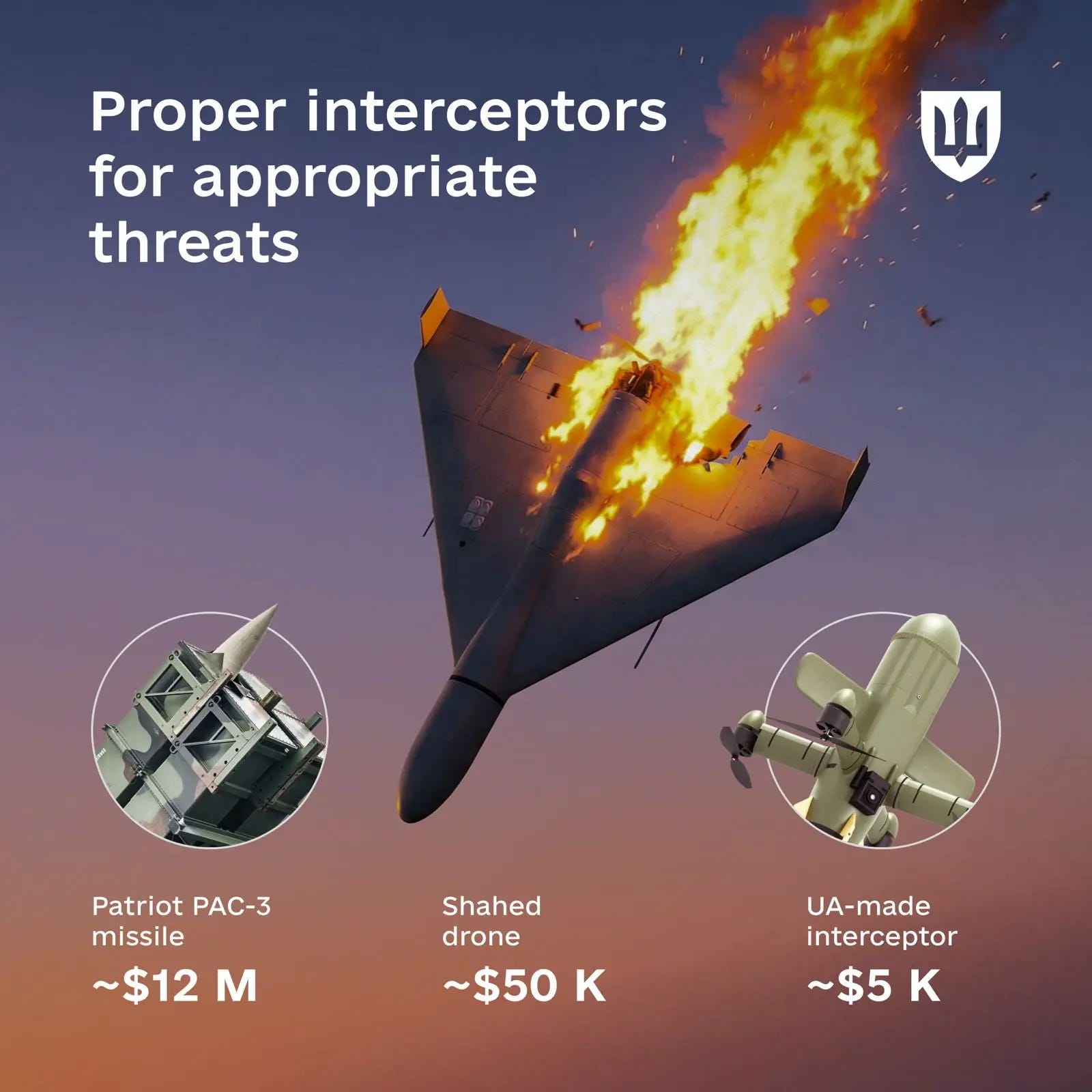
This is economic warfare. Iranian Shahed kamikaze drones cost around $35,000, while the Patriot interceptors needed to shoot them down can cost $3.7m. In this war of attrition, defence systems only last so long, and supplies can only be manufactured so fast. The Pentagon is now exploring purchasing Ukrainian-made (Chinese component) interceptors to fend off attacks by these Iranian drones.
The question is, who will tap out first?


While conflicts such as these may seem distant, Canada is not immune to similar threats. Russia and China are expanding their Arctic drone capabilities, while Canada lacks security measures in critical areas, including shipping ports.
Canada has nearly zero domestic air defence capabilities.
North Vector Dynamics
This is the problem that North Vector Dynamics (NVD) is solving. Born out of the University of Calgary and backed by ONE9, NVD emerged from stealth in May 2025. They are building easy-to-manufacture, low-cost-per-unit, vertically integrated, and scalable counter-drone technologies.
A Team of Technical Talent
All three co-founders have mechanical engineering PhDs from top Canadian universities.
CEO Paul Ziadé is the co-chair of the Alliance of Canadian Defence Companies, with four years in Canada’s nuclear industry, and experience researching hypersonic flows with machine learning. Executive Chairman and CSO Craig Johansen is a former NASA Langley researcher and Schulich Research Chair in Aerospace Engineering, with over 2,000 citations. CTO Colin Hill specializes in autonomous robotics systems, flight vehicle design, and hybrid rocket development.
North Vector Dynamics is supported by an ecosystem of 15 organizations, including ONE9, Nordspace Ventures, Creative Destruction Lab and Vanedge Capital.
The team now has 17 employees and has kicked off a targeted hiring spree, with announcements coming soon.


Unit Economics Wins Wars
The modern defence company runs on scalability. NVD plans to reindustrialize the backbone of Canadian air defence with mass manufacturing to enable low unit costs. If protection can be produced more quickly and cheaply than adversaries can produce threats, the economic battle is won.
NVD faces critical competition from Chinese components, which Ukraine has been using to build interceptors at a fraction of the cost of Western nations. These can cost as low as $2,500 and are currently being requested by the UAE, Qatar, Bahrain, and Saudi Arabia. However, this is paid with sovereignty. If and when Chinese supply chains are disrupted, reliance can become fatal. From January 1, 2027, components containing rare-earth metals or magnets of Chinese origin cannot be used in weapon systems ordered by the Pentagon. Any allies that wish to operate in the U.S. market will also need to meet that standard.
Defending the Airspace
For decades, the Canadian defence industrial base has been neglected. Supply chains are virtually nonexistent, and there are no major defence primes, unlike comparable nations. Canada has launched its largest defence commitment since WW2. Defence spending is quadrupling over the next decade to a projected total of $1.2T, with a target to procure 70% of defence contracts through Canadian firms. This leaves a unique opportunity for companies like NVD to build an industry from the ground up, without the threat of real incumbents. Sovereignty is the competitive advantage.
“A lot of things we built in-house, our own flight controllers for the missile, our own circuit boards, our own power source. Increasingly we’re going to look to vertically integrate everything.” — Paul Ziadé, North Vector Dynamics
NVD is building sovereign autonomous systems that use laser guidance and smart targeting, which are impervious to jamming and spoofing and operable without Global Navigation Satellite System (GNSS). They are designed to be inexpensive, portable, easy to manufacture, and compatible with pre-existing radar systems and ecosystems.


The CM-70 is NVD’s primary focus and can be used to target Group I-III drone threats. It is one of the smallest missiles on the market (2.5kg, 72cm), and an order of magnitude cheaper than legacy systems. The target price is less than $10,000 per unit, a far cry from the (312kg, 5m) $3.7m Patriot missiles currently in use in Iran. This introduces new concepts of operations, such as placement on small drones. North Vector is already speaking with partners who wish to place these missiles on surface and ground vehicles such as pickup trucks.
“We’ve actually successfully done our first missile launch from a UAV. We’re not sharing that video yet, but it is there. We’re going to be able to share it soon. That’s a big, unique win for us.” — Paul Ziadé, North Vector Dynamics
The CI-60 is a 225 km/h drone built for training or counter-UAS and can be launched from ground, air, and sea. It can engage Group I drones with kinetic intercepts or enable forces to practise realistic air defence scenarios. These are designed to enable extremely high volume at a low cost and can be assembled in minutes.
Finally, Shield is a vertical takeoff and landing (VTOL) platform for counter-UAS. It can cruise for 5+ hours at 90 km/h, and provides situational awareness, launch capabilities, and interceptors.


As the DIS seeks to increase defence exports by 50% in the next decade, NVD is already in the field. They have active relationships in Germany, the Czech Republic, and Southeast Asia, and are in “very advanced diligence conversations” with the UAE, which is impacted directly by the Iran conflict.
NVD is looking to deploy the CM-70 missiles in Ukraine this year. All products at North Vector are designed to be ITAR-free, meaning allies can procure them without U.S. export controls. All the while, Canada recently became the first non-EU country admitted to the EU’s €150B SAFE defence procurement program.
“Increasingly, what you’re going to see, and we know this because we’re talking to American investors, they’re looking to invest in non-American defence technology companies in Canada, in Five Eyes countries. They see now that it’s going to become much harder for American defence tech companies to export their products to the EU, to Canada, to Asia. So there’s definitely a play there.” — Paul Ziadé, North Vector Dynamics
The Demand for Arctic Infrastructure
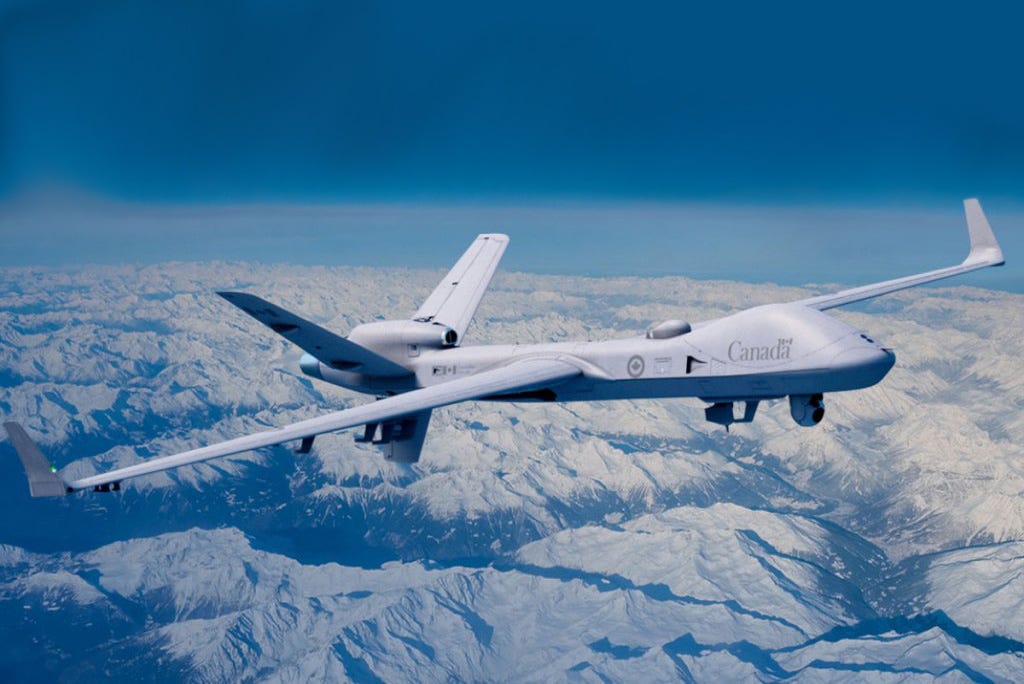
Demand for Arctic UAS capability is emerging across the DND. Decentralized UAV platforms are an opportunity to provide persistent detection capabilities to engage threats. Yet these opportunities have been followed at a Canadian pace. In 2023, Canada purchased a fleet of 11 SkyGuardian drones from the American prime, General Atomics, to patrol the Arctic for $2.49B. These will not have full operational capability until 2033. However, while Canada is waiting, Arctic threats from nations such as China and Russia do not disappear.
North Vector Dynamics designs its drones and missiles to be operable down to -40°C, and does not rely on the Arctic’s poor GNSS signals.
“We’ve been approached by several companies to do work on the ruggedization of fielded systems that have not been designed for the Arctic. That is something we can lean into very well.” — Paul Ziadé
The Future of North Vector Dynamics
Counter-UAS is an entry point and near-term revenue driver for North Vector. The long-term vision is to leverage that foundation into hypersonics. They are already researching these systems for the Canadian government.
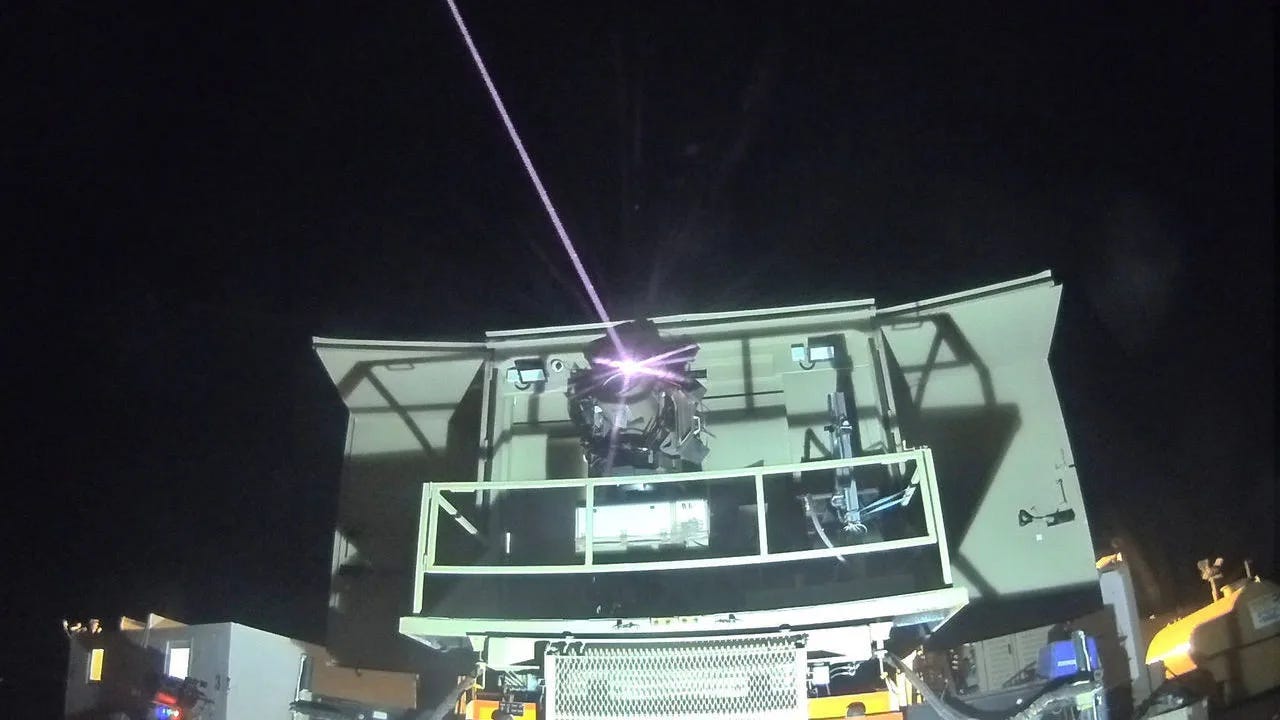
Air defence will require rapid innovation with a diverse layered approach. New technologies such as Israel’s “Iron Beam,” a cost-effective directed energy system, have already demonstrated use in the Iran conflict. Paul hopes that technologies such as these can bring the attack-protection cost differential closer to parity in the near term. NVD is currently tracking the $40B+ NORAD modernization plans, which include hypersonics and air defence capabilities, and is in talks with Golden Dome pre-qualified companies.
The $175B Golden Dome is an American planned integrated air and missile defence system, engaging in ongoing discussions for Canada’s involvement. If Canada participates, it will need sovereign systems such as what NVD is building.
Can They Win?
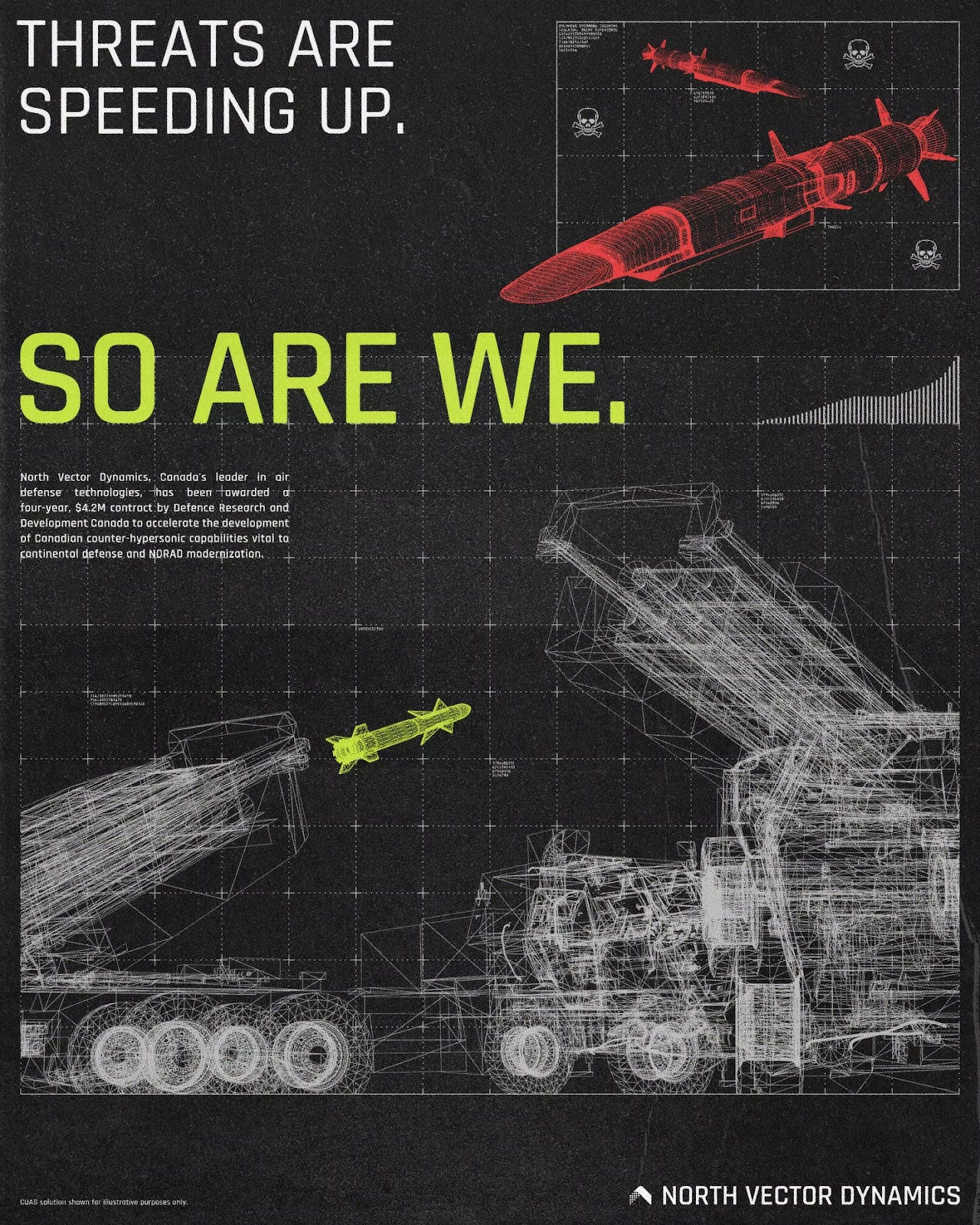
North Vector Dynamics just recently closed an oversubscribed seed round, received $2.5m in government grants, and $4.2m in a DRDC contract for hypersonic propulsion research.
They plan to raise their next round by the end of 2026, which is “going to be a big one.”
While Gulf nations procure cheap Ukrainian interceptors with Chinese components, NVD will need to navigate procurement and regulatory hurdles to bring its Canadian alternative to market.
With Iranian, Ukrainian, and Arctic battlefields exposing Canada’s vulnerabilities, Canada’s economic strategy over the next decade is contingent on building sovereign defence systems. Attritable, cheap, and scalable interceptors have never been more valuable. The Canadian demand for sovereignty represents a generational opportunity for companies to build. Relying on $3.7m interceptors instead of $2,500 Ukrainian interceptors due to Chinese supply chain risks is unsustainable. NVD represents a sub-$10k, Canadian alternative at scale and cost that can bypass export restrictions.
What to watch: Canadian procurement (Defence Investment Agency), The Alliance of Canadian Defence Companies, Iran & Ukrainian conflicts, The Golden Dome, Hypersonic commercialization, Future financing round this year and upcoming hires.
To read more on the Canadian Defence Tech industry, I have posted articles on Dominion Dynamics, along with what Canada can do to make it happen, below.

