


The Arctic, mostly unmonitored, makes up 75% of Canada’s coastline. Before Canada can defend the Arctic, it needs to see it. Dominion Dynamics went to the North to fix that. But can Canadian bureaucracy support its ambition?

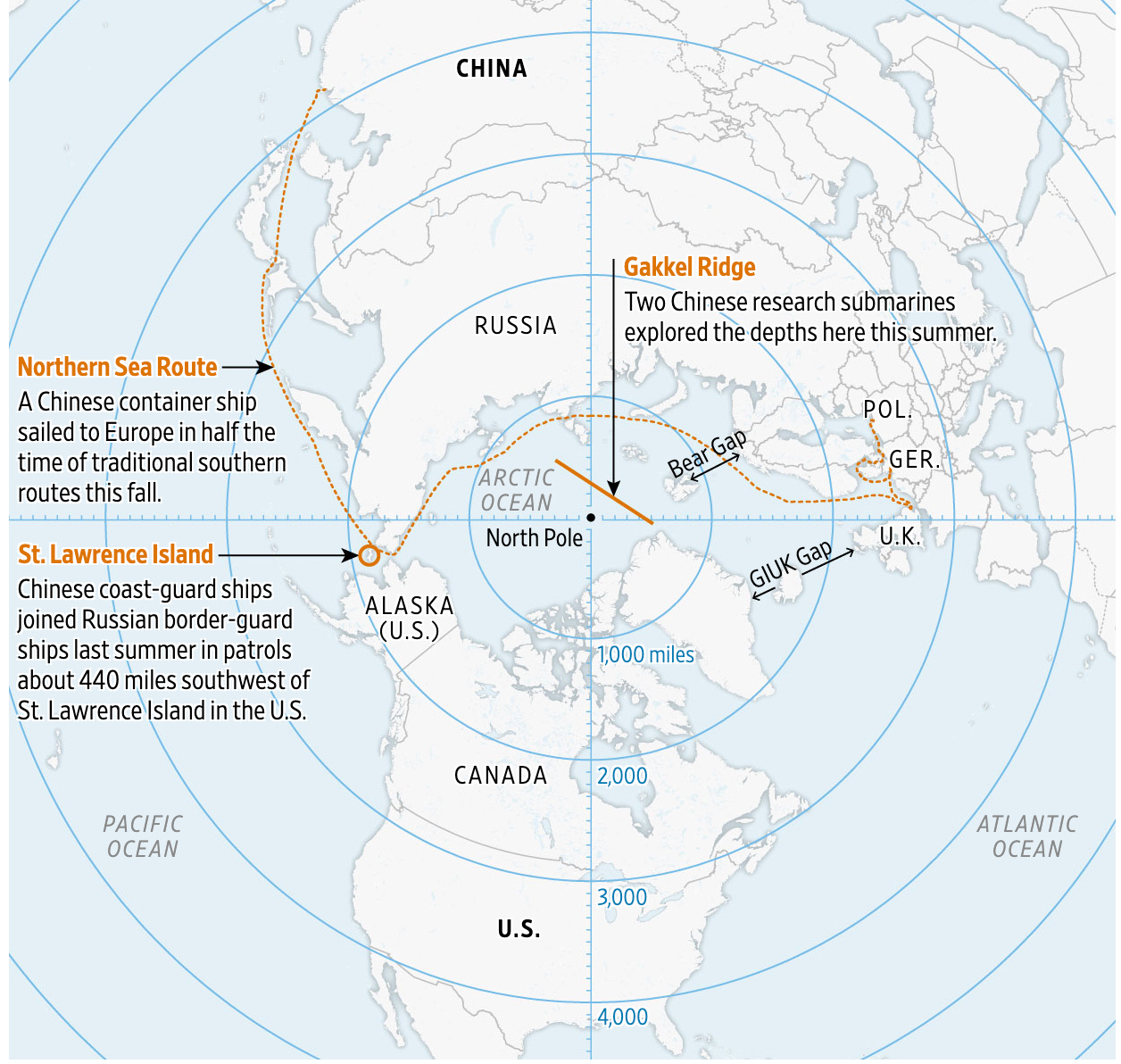
Rangers patrol with decades-old equipment, and Chinese vessels are operating in Arctic waters at unprecedented levels. After decades of underfunding, the Canadian defence industry is underdeveloped. That is changing. Canada has released its largest defence commitment since the Second World War, quadrupling defence spending over the next decade, injecting $4B into the innovation ecosystem, and aiming to award 70% of all defence acquisitions to Canadian firms. But without a significant pre-existing industry, these investments create a gap that companies like Dominion Dynamics need to fill.
Building Dominion
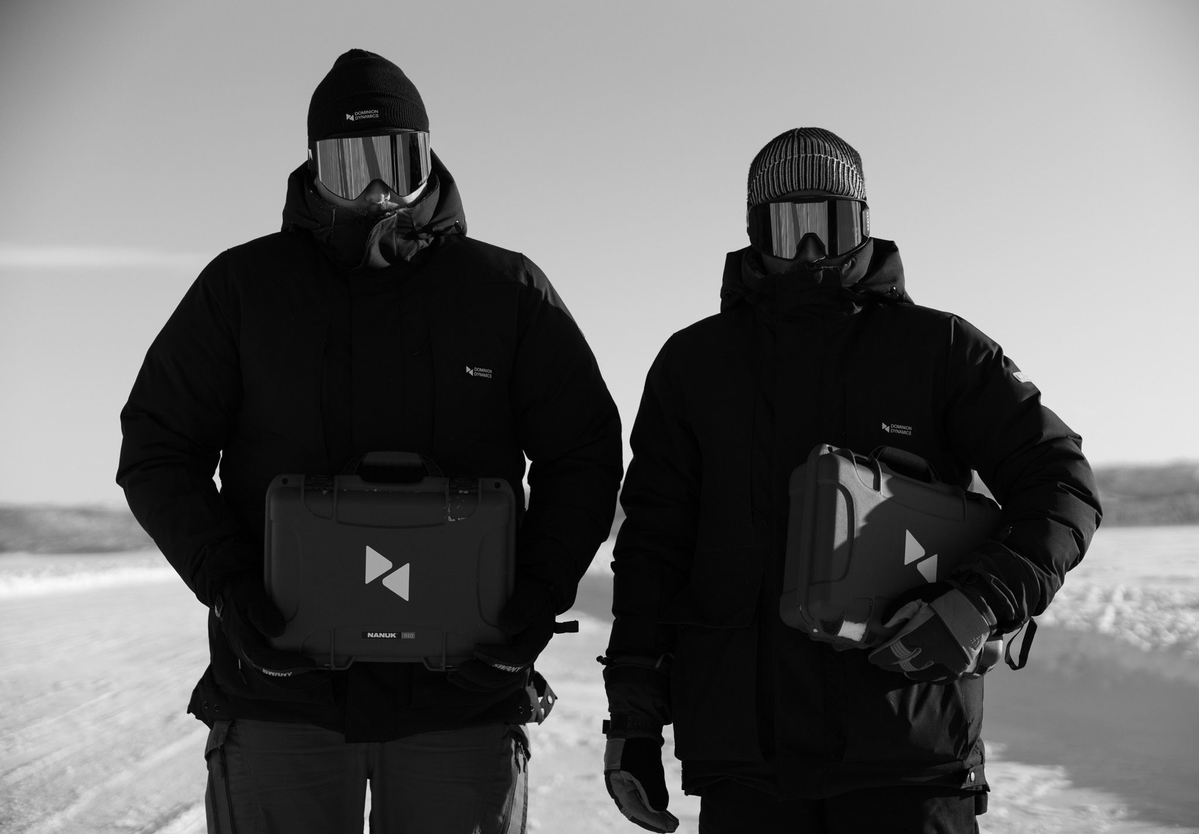
Dominion Dynamics was founded last June by CEO Eliot Pence, who led Anduril’s international team. Operations are led by COO Mitch Carkner, formerly CEO of Decisive Group and senior executive advisor at AWS. Dominion is positioning itself as the first Canadian neo-prime. This means they fund their own R&D and deploy with the military before pursuing contracts. Build first, sell second.
The advisory board includes political, military and operational talent: Erin O’Toole (former Conservative Party leader), General Wayne Eyre (former Chief of Defence), Neil Cunningham (former CEO of PSP Investments), and Lieutenant-General Mike Rouleau (former Vice Chief of the Defence Staff).
Why The Arctic?
The recently released Defence Industrial Strategy (DIS) has three fundamental objectives, the first of which is to “protect Canada’s sovereignty, particularly in the Arctic.”
With temperatures rising, access to Arctic resources and Canada’s disputed trade routes are opening up fast, and allies such as the U.S. view Canada’s lack of Arctic capabilities as an unacceptable vulnerability given today’s threats.
If Canada seeks to maintain sovereignty over its Arctic territory, it needs to be ready to defend it.
Eyes in The Arctic
Canada has no unified system for generating, capturing, or drawing insights from data across the Arctic. Satellite coverage is intermittent, ground-based infrastructure is sparse, and the systems that do exist don't talk to each other.
Before Canada can even think of defending the Arctic, it needs to see it.
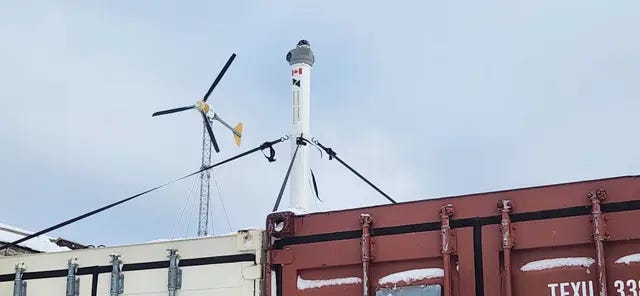
Dominion is building software for a sensing network made to integrate into existing infrastructure. These systems are built using commercial hardware, keeping unit costs low enough to deploy at scale and afford risk. These include small devices that can attach to cellphones and cameras, which capture and transmit data from the field.
The team is currently deploying AuraNet, which turns distributed ground sensors into real-time 3D maps of Arctic territory. They plan to extend this across the sea and air. IceSpike is an ice-penetrating sensor that connects autonomous systems beneath the surface with AuraNet nodes and will be trialled with the Canadian Navy later this year. Scout is an autonomous aircraft designed to operate in swarms alongside fighter jets, extending AuraNet into the air, with a prototype targeted for early 2027.
Forward Deployed in the Arctic
“Where our soldiers go, we go.” — Mitch Carkner
Dominion is currently deployed in Inuvik for a two-month exercise with the Canadian Rangers. Inuvik is one of three designated Northern Operational Support Hubs, alongside Yellowknife and Iqaluit, built to support Canadian Armed Forces operations in the Arctic. This deployment includes participation in Operation NANOOK, the CAF's signature annual Arctic sovereignty exercise.
The Department of National Defence just announced enhanced Arctic operations throughout 2026, prioritizing sensing and domain awareness across the Northern Operational Support Hubs. That aligns directly with what Dominion is building.


Canadian defence innovation has been bottlenecked by processes that can take up to 16 years. With the launch of the Defence Investment Agency (DIA), the Canadian government is committing to procurement reforms that can increase deployment speeds. But meaningful change in the government will take time. Dominion is not waiting for permission. They are self-funding their own trials, planning to complete 10 to 12 deployments with the Canadian Armed Forces before pursuing a contract, betting that the Canadian procurement system can keep up.
“Don’t try to sell right away. Don’t try to get a contract right away. Build things that matter, that we know the CAF needs. Deploy them as soon as possible, get their feedback, then re-engineer the products to fit that feedback.” — Eliot Pence
This team is not only building for Canada. They are targeting allies. This aligns with Canada’s goal to increase defence exports by 50% over the next decade. Exercises like Operation NANOOK put Dominion's technology in front of allied forces.
The Scaling Bet
Dominion is not building in isolation. They launched their procurement tracking tool, Aurion, to the public and are part of the Alliance of Canadian Defence Companies, a coalition working to strengthen domestic defence collaboration. The Canadian defence industry is expanding with new entrants. MDA Space just recently launched 49North to bring prime contractor experience into land, air, and maritime defence. North Vector Dynamics is building counter-drone and hypersonic systems out of Calgary. And Juno Industries exited stealth in January, building autonomous systems for contested environments.
Dominion has been building through VC funding, recently raising $21M CAD in a seed round led by Georgian Partners, alongside Bessemer Venture Partners and BCI, bringing total funding to $26M CAD. Dominion was Georgian's first-ever defence investment, setting a precedent for Canadian VC firms to invest in defence.
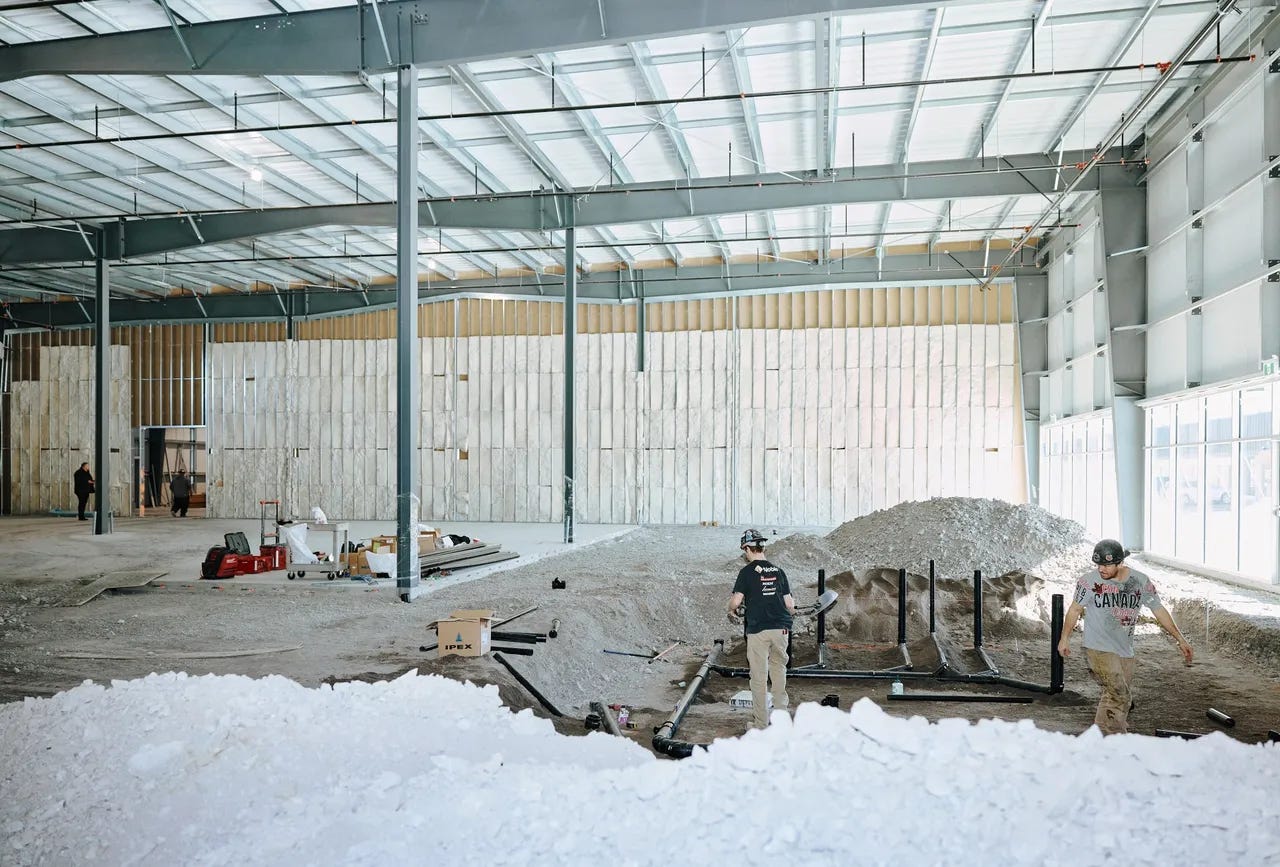
Using these funds, Dominion is looking to triple its headcount by the end of 2026, open a new office in Toronto, expand university programs, and launch a 25,000 sqft factory in Kanata this March.
That is an ambitious plan on $26M with no revenue. The team will need to raise again soon, and its ability to do so depends on what it is proving in the field.
Dominion Dynamics is not waiting for the industry to catch up. They are already in the Arctic, forward-deployed, self-funding, and building in the harshest operating environment on Earth. They have momentum. Now Ottawa must keep up with its promises.
What to watch: Progress on the Defence Investment Agency, updates to Canadian procurement systems, series A financing, and results from upcoming trials with the Canadian Armed Forces
To get a better understanding of the generational opportunity for Canadian innovation, or the newly released DIS, consider reading my other articles:
![Can Investment in Defence Kickstart a New Era of Canadian Innovation? [Industry Spotlight]](https://substackcdn.com/image/fetch/$s_!vhj9!,w_140,h_140,c_fill,f_webp,q_auto:good,fl_progressive:steep,g_auto/https%3A%2F%2Fsubstack-post-media.s3.amazonaws.com%2Fpublic%2Fimages%2F3d9ceef1-f24a-4481-9dba-46cfdfe0548d_1440x1080.png)
