


Canada has the longest coastline on Earth at over 240,000 km, and a Waterloo-based company is building six-foot-long autonomous boats to help defend it.
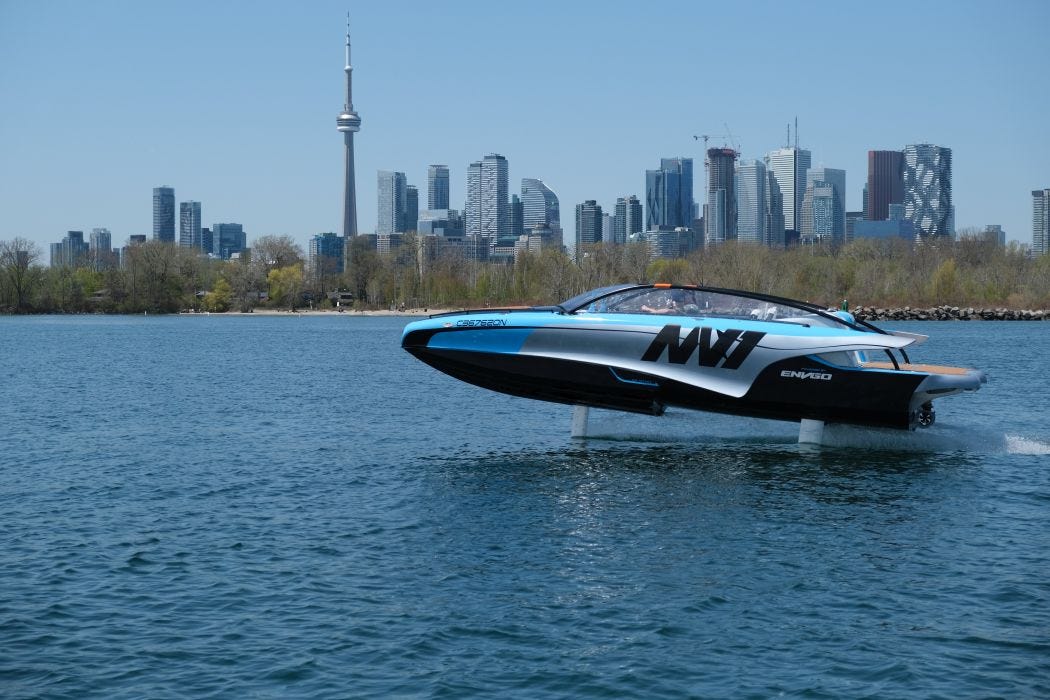
ENVGO is a marine technology startup founded in 2021. Its core team came from Aeryon Labs, an early drone industry innovator acquired by FLIR Systems in 2019. In June 2025, ENVGO raised a C$2.7-million seed round to build the NV1, an electric hydrofoil boat that uses retractable foils to lift the hull out of the water, reducing drag and improving efficiency.
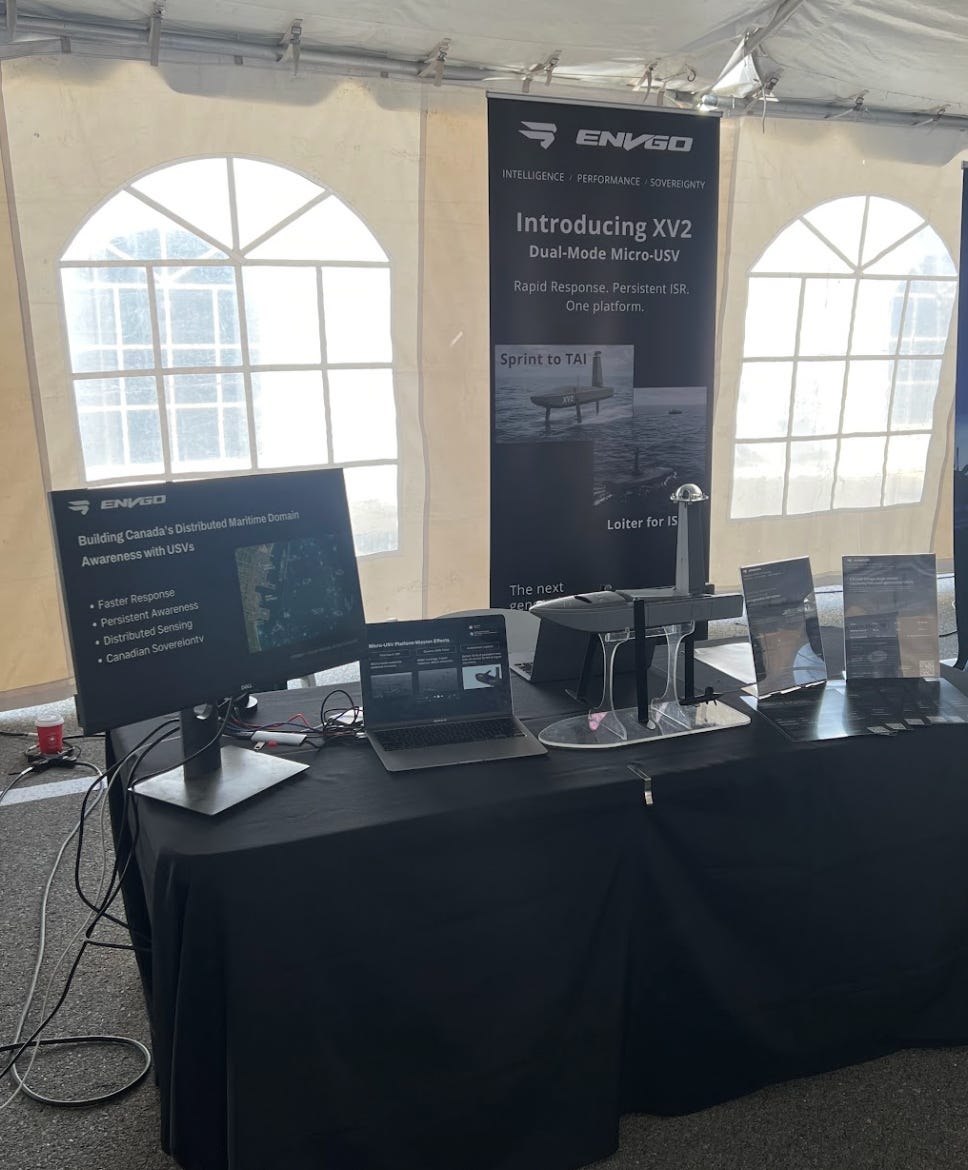
Now, ENVGO is shifting its focus to Canadian defence and public safety, building autonomous, intelligent micro-USVs (Unmanned Surface Vessels) for rapid response, persistent ISR (Intelligence, Surveillance and Reconnaissance), and maritime domain awareness.
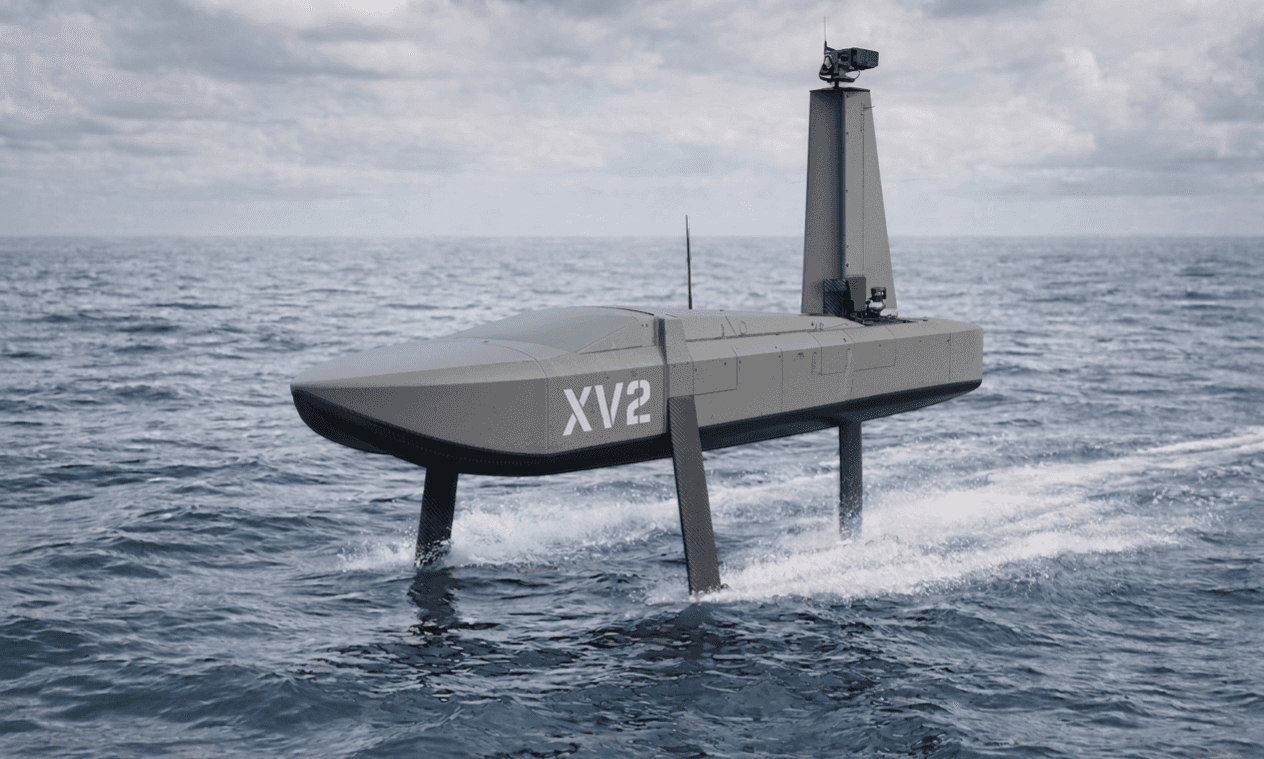
ENVGO’s next platform is the XV2, a six-foot-long, hand-launchable, electric and autonomous boat to keep personnel out of dangerous or contested waters. It is designed to produce a lower wake and reduce visual, thermal, and acoustic signatures. The team is currently engaging with the Canadian Coast Guard and Royal Canadian Navy to discover which new capabilities this technology can unlock, including anti-submarine sensing.
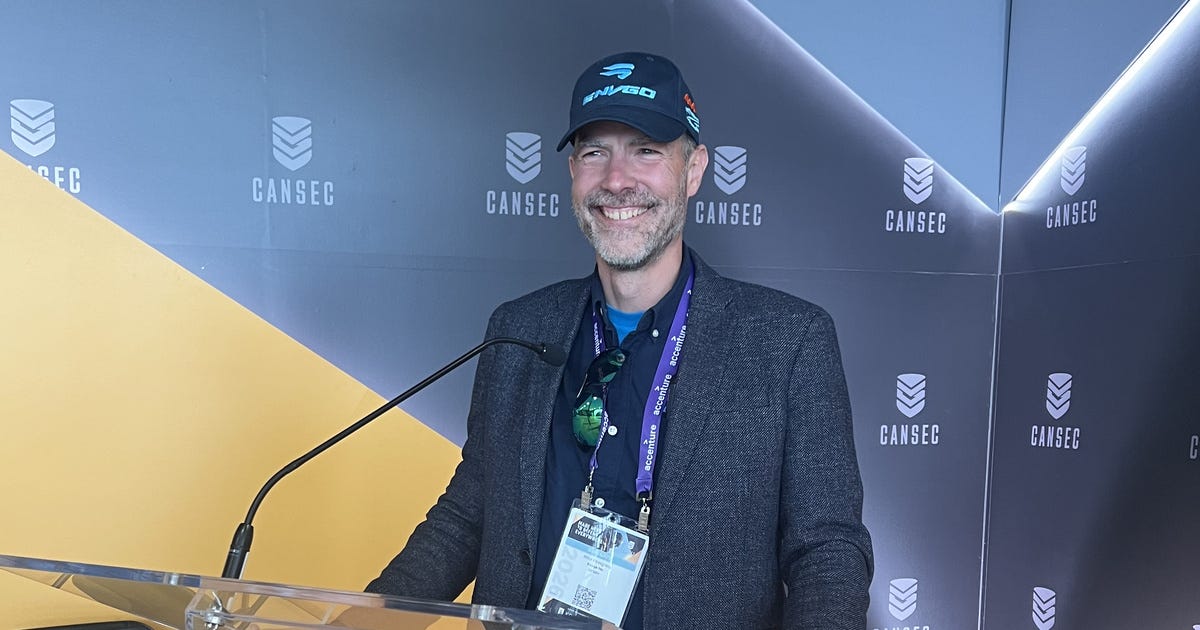
I spoke with Mike Peasgood, ENVGO’s CEO and co-founder, about building a new class of defence vessels, transferring aerial autonomy to the water, and what Canadian founders need to understand before entering defence.
What is ENVGO building, and why does it matter for Canada?
“ENVGO is building a critical piece of a maritime defence shield, which is necessary for Canada because we’ve got the longest coastline of any country in the world. Defending that is becoming a bigger and bigger priority as the world order changes.”
What did you build with NV1, and how did it lead to the XV2?
“What we built with NV1 was a really unique capability in a high-performance, zero-emissions, futuristic and very intelligent boat. It feels more like an airplane than a boat because it flies over the surface of the water on a hydrofoil.
What we realized was that this has a huge value proposition in the defence space for very different reasons, but using the same technology. That high speed gives us a rapid-response capability with a small vessel, which you can’t normally achieve without a much bigger craft. Which means we can apply more of them and build a fleet of small systems that can respond really quickly compared with conventional craft.
The other big piece that we’re taking away from NV1 is autonomy capability: the ability to be aware of its surroundings and respond intelligently. We’ve now built an uncrewed variant of NV1, which can be remotely piloted by somebody who doesn’t have to be on board. We’re packaging that now into the small XV2, which lets us remotely control it and keep the crew out of harm’s way. The fact that we can package all of that into a small platform that can also operate in really big sea states is what sets us apart. It’s using all of that capability that we’ve built in hydrofoiling, clean technology, and electric drivetrains, which now gives us a quiet response. The high-speed autonomy delivers ISR, eyes-on-target capabilities from a really small package.”
What benefit does the hydrofoil deliver for USVs?
“The hydrofoil enables fast and efficient transport over the water, and it provides a smooth platform for EO/IR (Electro-Optical/Infrared) cameras and sensors. The initial motivator was really around the speed of response and capabilities in larger water. We can get about four times the distance and range on an electric, battery-powered craft than we could with a conventional boat. That enables a response out to 100 kilometres of range instead of 25 for an equivalent battery size. That opens up a whole lot more capabilities for our hundreds of thousands of kilometres of coastline that we need to cover. With a rapid response, we can move up to 25 knots, which would burn an immense amount of power on a conventional craft. That’s the enabler. The hydrofoil also lets us surf over really big waves, getting ourselves into big sea states which would swamp a normal craft. We’re bringing that capability to surf up and over and down the other side of those waves to maintain a high-speed response.”
What can small uncrewed vessels do that larger vessels cannot?
“One of the key things we’re able to bring is a distributed capability: many small craft. That is not possible when you’ve got larger vessels, where you need the larger vessel because you’ve got people inside it. By using small unmanned craft, we can create, for example, a distributed array of underwater sensors which can do anti-submarine warfare sensing, which you can’t do with a manned craft. You can’t do it with larger craft because you want to spread a lot of sensors around a large area and have them all listening and collaborating together.
Another one is a meshed, distributed network for resilient communications. That’s just not possible with a single craft. You need a fleet of small vessels which can distribute a communications mesh network across a large area. Supplying that capability is uniquely possible with small unmanned vehicles.”
How is the experience from Aeryon Labs being leveraged?
“I was a co-founder of Aeryon Labs, and we were building small drones back in 2007, before drones were really a thing. We got really, really good at system integration, at flight control especially, and at building lightweight ISR systems which are easy to use.
We’re repackaging all of that for the marine space. The flight-control skills that we built up in that team apply directly to the hydrofoiling capabilities and high-speed transit. Aerodynamics translates directly to hydrodynamics. The ISR capabilities transfer directly in terms of building stabilized platforms for EO/IR cameras.”
30 Startups for a Sovereign Canada | Canadian30

Canada is recognizing the need for national sovereignty through hundreds of billions of dollars in generational investments, such as the Defence Industrial Strategy, the Canada Strong Fund, and its new National Artificial Intelligence Strategy. According to The Canadian Shield Institute, Canada's defence spending is projected to increase
What are the lessons from bridging civilian technology to defence?
“One of the big takeaways is there’s a lot of value, especially in the Canadian market, in building a dual-use company because it lets you leverage those two markets to their different benefits.
The commercial and industrial markets can buy more quickly, while defence has a longer procurement cycle but greater stability once you’re in it. It lets you ride through the ups and downs that you might get in the consumer and industrial markets. Being able to smooth out and balance those different business cycles is really valuable.
On the supply-chain side, there’s a challenge because there are different requirements for defence versus consumer or industrial applications: requirements for building in Canada, for building with a fully sovereign supply chain. The challenge that comes along with that model is that we need to effectively build maybe two different supply chains to fulfill those two different needs. The defence market needs that sovereign capability, which might cost more or have different timelines, but there are different priorities for that customer.”
Navigating procurement
“It’s a process, and it helps to understand the procurement process to be able to work through it. There are definitely efforts and high-level strategies to make it faster and easier, but it’s going to take time for those to roll out. Working with the systems that are there, ISED (Innovation, Science and Economic Development Canada) provides funding for early-stage trials of technology, which is at the prototype stage but not yet commercialized, called ISC (Innovative Solutions Canada).
We work through ISC funding, for example, to collaborate with a partner organization in the government that wants to purchase our technology early on. ISC will help fund that, and that then enables future procurement to happen much faster.
We’re working with DIANA (Defence Innovation Accelerator for the North Atlantic), which is the NATO organization that is supporting development in defence innovation. That also provides some funding, but more importantly, it gets us exposure in the rest of the NATO countries, which would be aiming to leverage our technology in the same space. We need to do that so we can build a bigger base of customers beyond just the Canadian government.
It really depends on an international strategy, starting with Canadian innovation funding, building that through to validation with the end customer, then moving that into a procurement cycle through the Canadian government while, at the same time, building an international market for the same technology.”
Advice to other dual-use founders
“The biggest one is: talk to the end customers as much as you can, as early as possible, through organizations like COVE, DIANA, and ABCDMI (Association of British Columbia Defence and Marine Industries). Really understand what their challenges are in terms of the procurement process they need to go through from their side. What does it take for them to be able to buy what you’re selling? And what are you providing that uniquely targets the requirements they have?”
How directly are you working with operators, and how do you generate product fit?
“It comes down to, like any good business-development project, understanding the needs of your customer really, really well, and then working with them on solving their end-use problem rather than just building one cool piece of technology. What is the rest of their infrastructure that they need to be able to plug this into? What is the rest of their networking infrastructure? What are their CONOPS (Concept of Operations)? In our case, what kind of ships do they need to be able to carry these on and deploy them from? How are they going to get them back onto the ships?
It’s working through all of the actual use cases and their challenges, then including them in the design exercise so those requirements get in early and we don’t show up to the table with what we think is a fully baked product, but have missed some of their key requirements.”
Manufacturing and Interoperability
“[Scalable manufacturing] is just going to be a necessity. Right now, we’re starting to build out that network of Canadian vendors who can help build this. One of the big messages that I’m getting is that it needs to be manufacturable wherever we are and easily repairable. And it’s got to plug into whatever other gear we’ve got. There’s been so much development of new tech in isolation that I hear the end user is really frustrated. It’s like, “I don’t need another widget. I need a widget that can plug into the rest of the infrastructure that I’ve already got.” It’s got to plug into my network system. It’s got to talk to my ATAK (Android Team Awareness Kit) console. It’s got to talk to my existing WAVE radios; otherwise I can’t actually use it. Thinking about all of those end-user requirements as we’re building and designing is critical.”
What are ENVGO’s plans for the next 12 months?
“The real goals are to build that relationship with the end customer and demonstrate capabilities, open up their eyes to what’s actually possible, and start building that integrated solution for the final operational capability they need rather than just the cool piece of technology. It is taking that hydrofoiling platform and starting to build on the sensors, whether they’re IR sensors, communications networks, or underwater acoustic sensors; building on the communications-link network capabilities they need; and tying into their existing infrastructure.”
What is one other Canadian national-interest startup worth watching?
“I would definitely keep an eye on Dominion Dynamics. I think Eliot is doing an awesome job of setting a high bar for the rest of the community to step up to.”
Why build in Canada?
“For me, I was born here. I’m going to stay here, and we need to defend this country. We’ve got some amazing talent to do it, so let’s have at it.”
If you’re building something in Canada, I want to hear about it. contact@ethanmarcoux.com
Countering Drones With Sound | Parth Mahendru — Explorer Spotlight #4

Prandtl Dynamics began in 2023 as a student team building counter-drone technology. It has since placed second at two Department of National Defence Counter-UAS Sandboxes, earning $750,000 in total DND prize money. The company is now deploying its systems at universities and airports and expects to soon reach 600 units across over 150 to 200 deployments.

