


TL;DR
Canada is entering a historic defence budget at a time when its venture ecosystem is struggling. Procurement and financial barriers that have long held defence companies back are beginning to ease, and history suggests that defence-led R&D doesn’t stay contained. This piece analyzes whether Canada’s renewed defence investment could become a meaningful near-term catalyst for deep-tech startups and venture capital.
“Canada has not seen this kind of massive military spending increase since the Second World War or Korean War.” — Dave Perry, Canadian Global Affairs Institute (June 2025)
Eighty years ago, in the aftermath of WWII. George Doriot rode the massive wave of R&D and defence spending to pioneer what is now known as venture capital.
Today, as Canadian startup financing falls to near-decade lows, a new cycle of R&D has arisen in the form of the nation’s largest-ever defence budget.
As Canada navigates threats that necessitate sovereign defence technologies, has it unintentionally discovered the perfect opportunity to innovate?
Can a defence budget once again pioneer a new era of venture capital?
The Canadian Crisis
Venture Capital
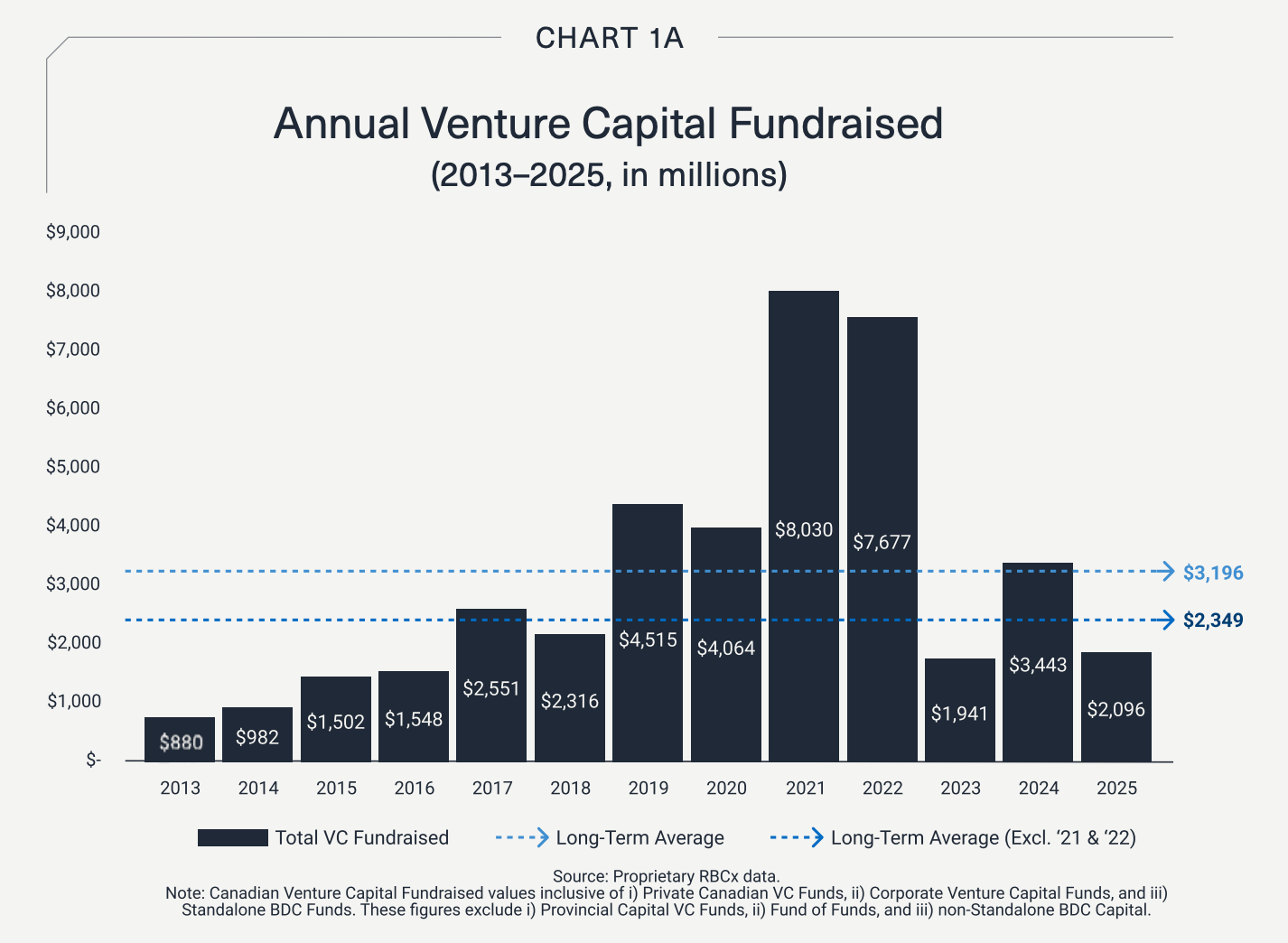
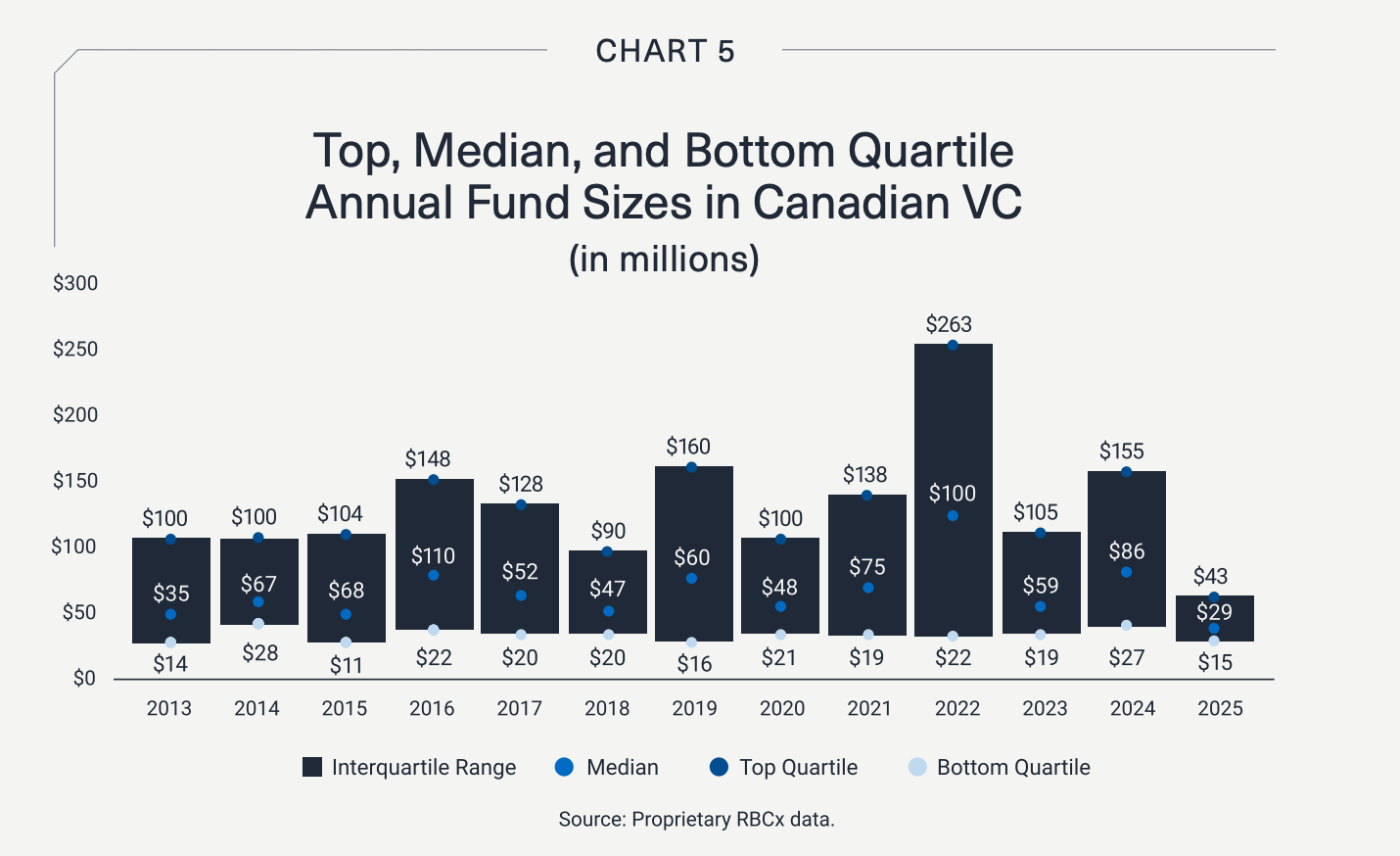
To put it mildly, the Canadian VC industry is underperforming. According to RBCx, Canadian VC firms are at their weakest level since 2016. Meanwhile, “Only one-third of ‘high-potential startups’ created in 2024 are still headquartered in Canada in 2025.”
Defence
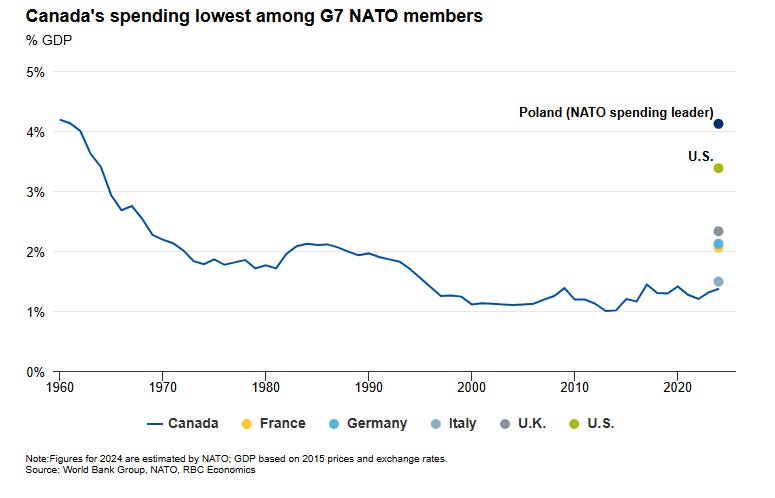
The Canadian defence industry has long been ignored. Canada is the lowest defence spender among the G7 NATO members at 1.37% GDP (CAD $33.9b). This lack of focus has led to two significant barriers plaguing defence companies: Procurement and Financing.
While SMEs (small to medium-sized enterprises) represent 92% of the defence industry, founders have been forced to swim against the current.
“The contracting is so slow that SMEs are unable to get money required to keep the lights on and payroll covered. Further, by the time contracts are awarded, technological advancements may have rendered some solutions outdated and in need of further upgrading.” — Alexander Salt, Canadian Global Affairs Institute (June 2025)
“I was laughed out of the room four and five years ago; investing in defence was literally lumped in with big tobacco, porn, cryptocurrency and cannabis” — Glenn Cowan, Founder, ONE9 (December 17, 2025)
Unsurprisingly, nearly 30% of companies in the industry are seriously considering leaving Canada.
The Contrast
In 2024, the United States spent nearly USD $1 trillion (3.4% GDP) on defence.
In 2025, American venture investment grew by 30% YoY.
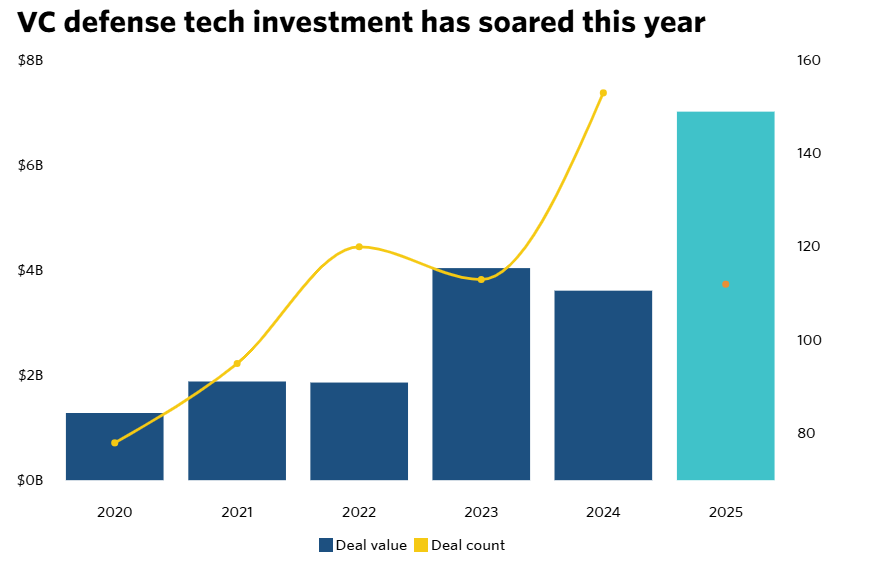
Globally, VC investment in defence has nearly doubled YoY (USD $7B).
Geopolitical Tensions
The Canadian defence industry is quickly becoming critical.
Venezuela, Greenland & The Monroe Doctrine
On December 4th, the White House’s National Security Strategy stated that, “the United States will reassert and enforce the Monroe Doctrine to restore American preeminence in the Western Hemisphere.” Within weeks, the U.S. launched a military operation in Venezuela, resulting in the capture of President Nicolás Maduro.
“Canada can’t count on exclusion from the [Monroe] doctrine’s ambit. [...] nothing in international law protects Canada that shouldn’t have protected Venezuela.” — Thomas Homer-Dixon & Adam Gordan, The Globe and Mail (January 6, 2026)
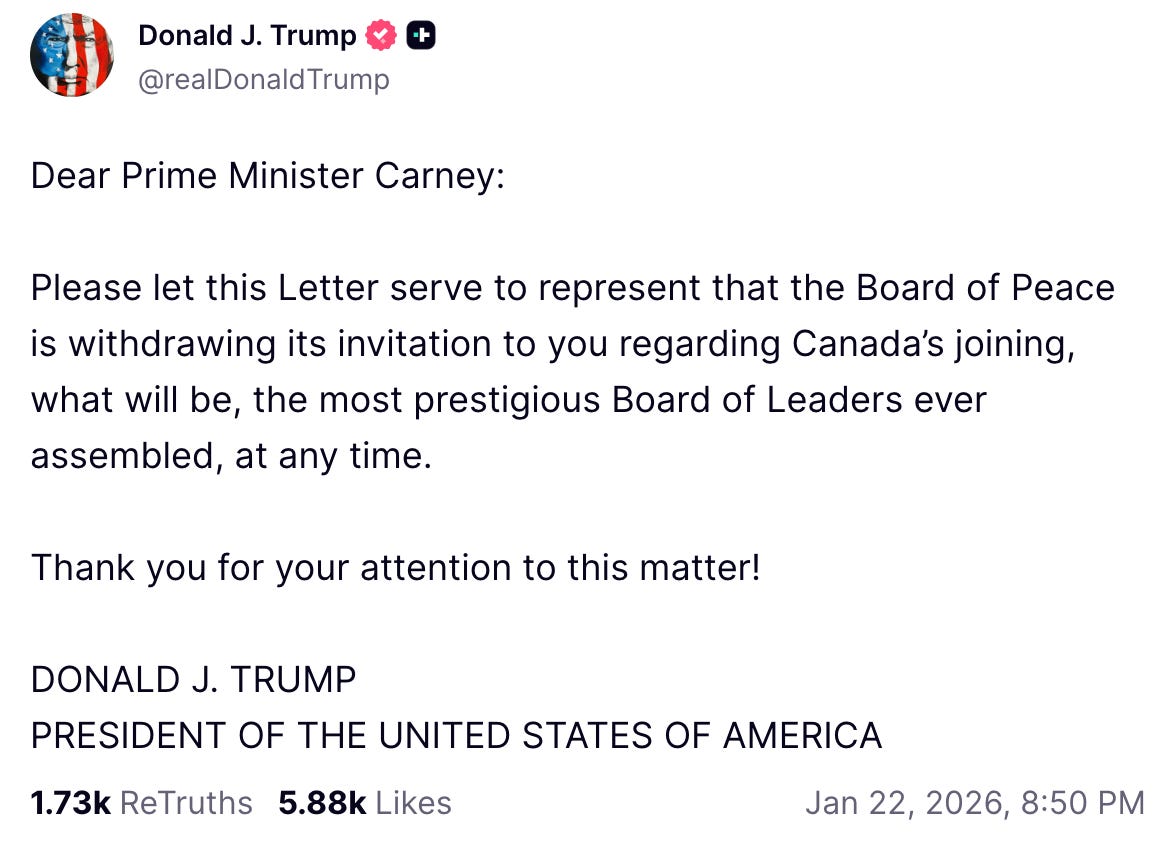
Following tariff threats on countries that had opposed its Greenland plan, Trump announced that he had reached a framework for a deal with NATO on both Greenland and the entire Arctic region.
“It’s a serious situation, and we’re concerned. We’re concerned about this escalation, to be absolutely clear […] We always will support sovereignty and territorial integrity of countries wherever their geographic location is.” — Mark Carney, Prime Minister of Canada (Doha news conference, January 18, 2026)

The Arctic Question
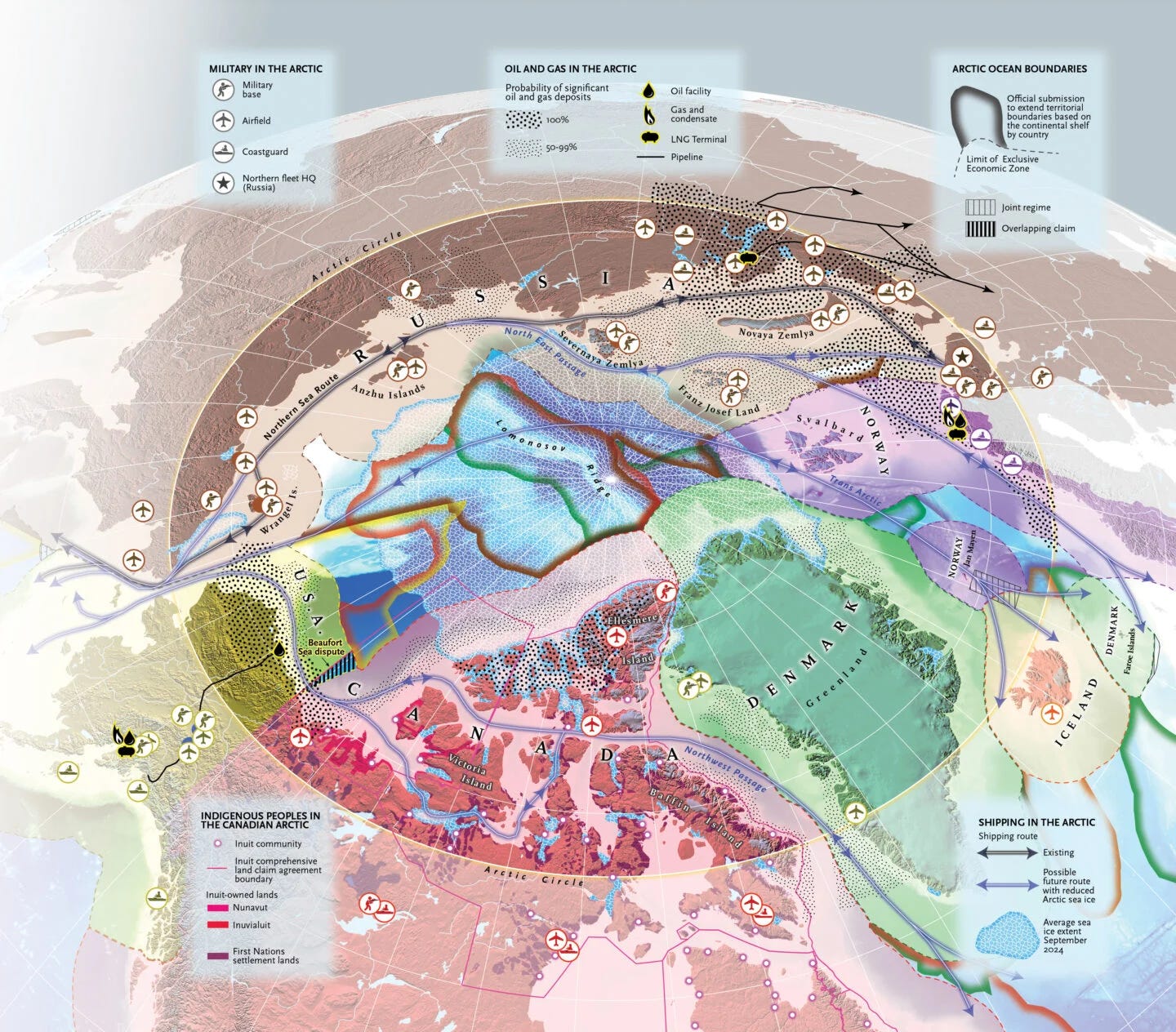
With increasing global warming, emerging maritime routes, and vast natural resources, the Arctic has become a geopolitical centrepiece. According to the Government of Canada, “the Arctic is no longer a low-tension region."
American officials are concerned that Canada is not doing enough to defend the Arctic: “They certainly need to up their game when it comes to Arctic capabilities […] This is not acceptable given today’s threats.”
“If Canada continues to leave a vacuum in the Arctic, it is not just the Americans we must worry about. The Arctic is strategic for our adversaries. China and Russia are already pulling ahead in Arctic drone capability. The Arctic won’t be “invaded.” It’ll be operationally controlled through infrastructure presence.” — The Icebreaker (January 6, 2026)
If Canada does not step up in the Arctic, other nations will.
“President Trump and other leaders are right. We have to do more there. We have to protect the Arctic against Russian and Chinese influence […] We are working on that, making sure that collectively we’ll defend the Arctic region.” — Mark Carney, Prime Minister of Canada (World Economic Forum, Davos, January 20, 2026)
The Changing World
Defence is a need.
After pushing NATO members to increase defence spending to 5% of GDP, Donald Trump declared that he would ask Congress for a USD $1.5 trillion defence budget in 2027 (a 50% increase).
Economic protectionism has returned.
“We’re moving from an age that lasted decades, an age when free trade was a motor of global economic growth to a new age, an age of economic nationalism and mercantilism,” — Mark Carney, Prime Minister of Canada (World Economic Forum, Davos, January 20, 2026)
New alliances are forming.
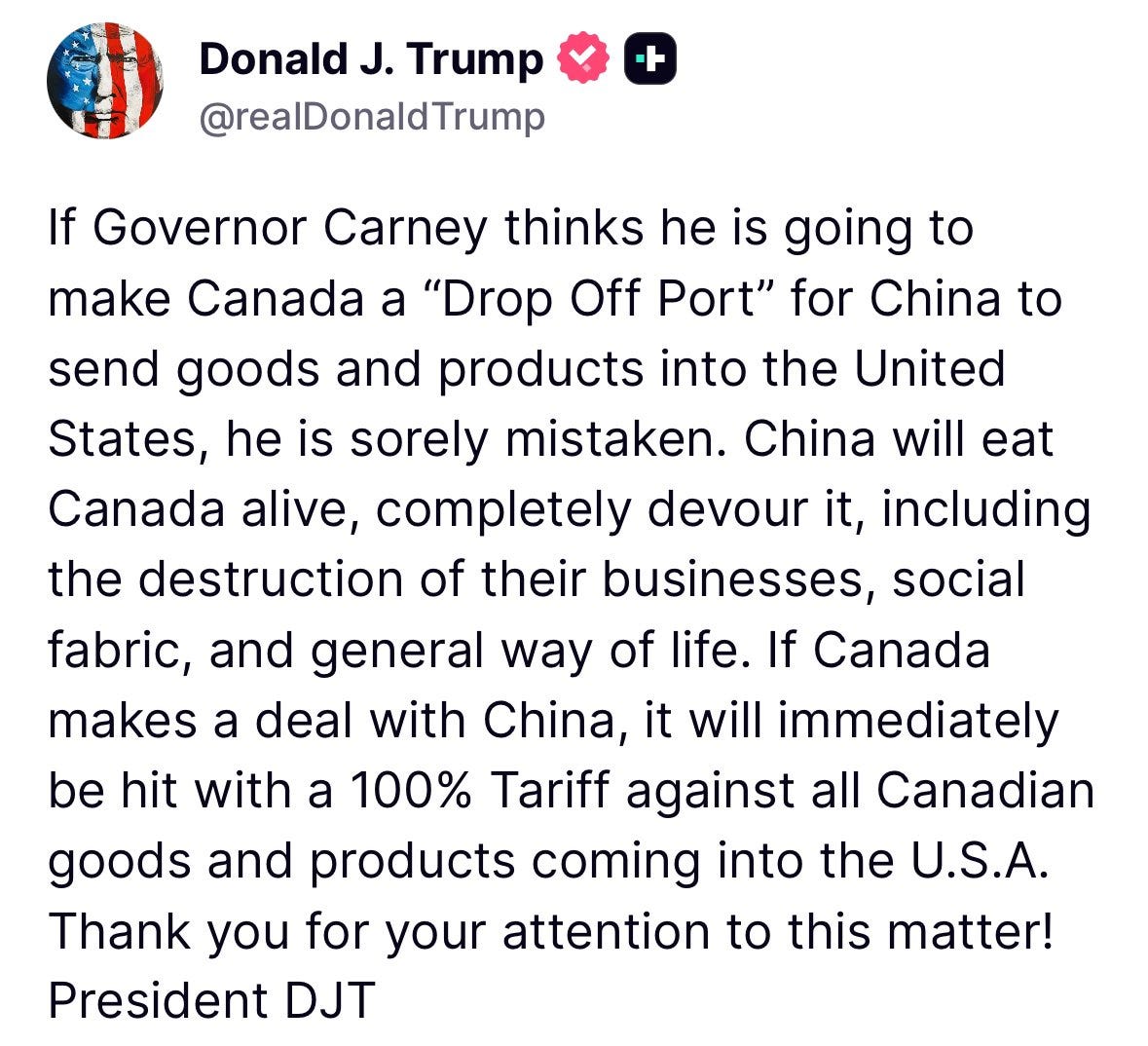
Canada has recently secured new trade deals with both Qatar and China to diversify its economic reliance from the United States.
The clock is ticking.
“If Canada wants to stay independent, we can no longer outsource our security or technology to foreign giants. We need homegrown systems.” — Bryan Danielson, Not Sorry for Winning (January 9, 2026)
The Response
“Every day we are reminded that we live in an era of great power rivalry. That the rules-based order is fading. That the strong do what they can, and the weak suffer what they must.” [...] The old order is not coming back. We should not mourn it. Nostalgia is not a strategy. But from the fracture, we can build something better, stronger, and more just. — Mark Carney, Prime Minister of Canada (World Economic Forum, Davos, January 20, 2026)
Defence Funding: “Rebuild, Rearm & Reinvest”
By committing to NATO’s defence framework of 5% GDP by 2035 (from 1.37%), Canada is injecting significant capital into the defence economy. This begins with a CAD $82 billion allocation towards rebuilding and rearming the Canadian Armed Forces.
Budget 2025: Protecting Canada’s Sovereignty and Security
Innovation & VC Funding
“This is a message to all the entrepreneurs, to startup businesses across the country. Canada will be the most competitive country, and we are making sure we empower you to do that.” — François-Philippe Champagne, Finance Minister of Canada (Budget 2025 announcement, November 4, 2025)
In this budget, the Canadian government has pledged billions of dollars towards R&D, tax incentives, and infrastructure projects across Canada. Notably, this includes the launch of the AIF (Arctic Infrastructure Fund).
Meanwhile, Canada has demonstrated a commitment to building and funding a stronger startup ecosystem. Delivering $1b to launch a new fund-of-funds, the VGCCI (Venture and Growth Capital Catalyst Initiative), which is managed by the BDC (Business Development Bank of Canada). An additional $750m is also included to support startups facing early-stage funding gaps.
Defence Funding
The Defence industry has long battled against two major bottlenecks: Financing and Procurement. Now, the circumstances are changing.
BDC’s CEO, Isabelle Hudon, stated back in September that they were going to support the defence sector in “a more aggressive way,” and that it is a “360 [degree] project at the bank.”
Suddenly, it appears that financing defence companies is no longer discouraged in Canada. Mark Carney is seeking to attract $500b in private capital for nation-building projects. Meanwhile, BDC is offering to help VCs alleviate defence funding restrictions in fund documents.
“What should happen is that it catalyzes an industry where other banks can lend […] However, that some Canadian banks still need to change their policies to allow defence lending.” — Eliot Pence, Founder & CEO, Dominion Dynamics (November 4, 2025)
Defence Procurement
Like financing, the Canadian government is also investing significantly in its defence procurement system. The federal government has launched the DIA (Defence Investment Agency), a centralized body designed to accelerate and modernize defence procurement, beginning with large-scale contracts (>$100M).
While this initially excludes smaller contracts, it is a clear step in the right direction.
BDC’s Defence Platform

“80 per cent of defence purchases made by this country involve the U.S., and that has to change.” — Mark Carney, Prime Minister of Canada (February 6, 2025)
BDC is deploying $4b in capital to boost Canada’s defence and security ecosystem. Including $3.5b in financing and advisory to help Canadian businesses scale and participate in “major defence contracts and national projects focused on sovereignty”.
The remaining $500m is being split across:
StrongNorth Fund: A new venture capital fund focused on deep technologies with dual-use applications
Politics & Mood
“I think this is one of the most compelling symbols from Canada that we’ve seen in a very long time.” — Daniel Eberhard, Founder & CEO, Koho (November 6, 2025)
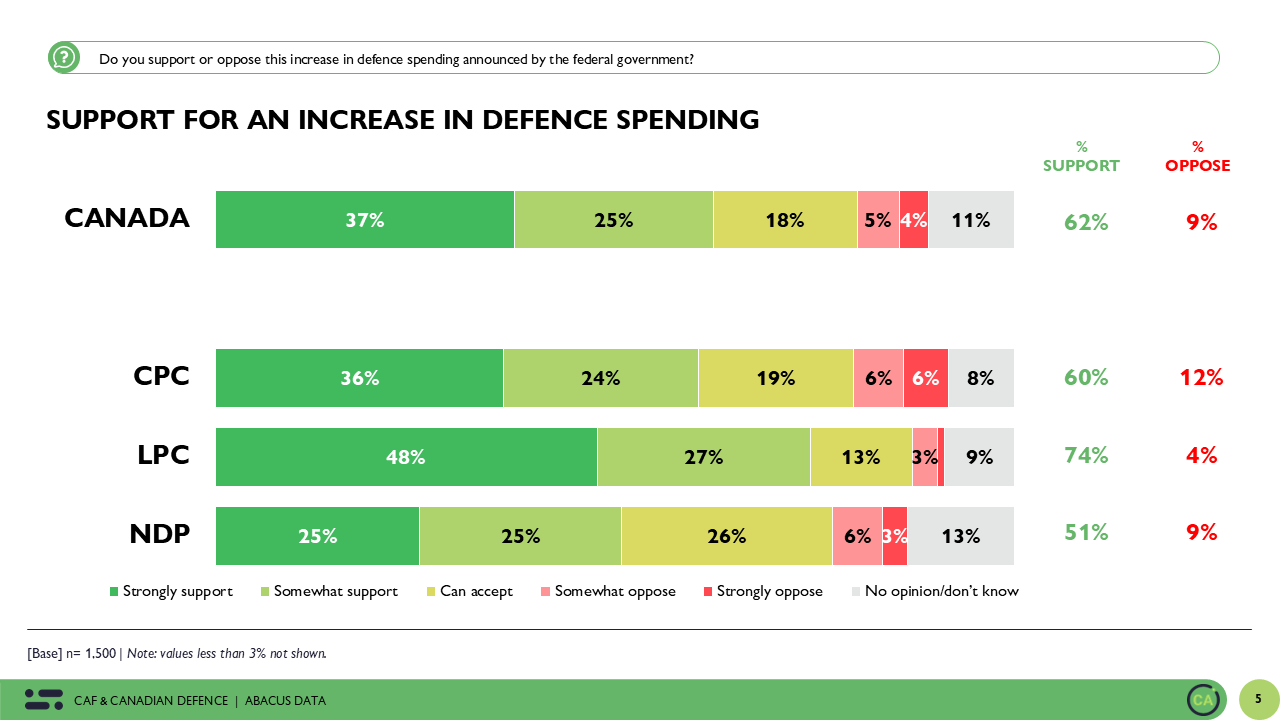
Canadians as a whole are incredibly optimistic about building a national defence industry. Only 9% of Canadians oppose an increase in defence spending, while the majority of Canadians support a plan to stop purchasing defence equipment from the United States.
Challenges & Concerns
Although Canada has provided financial commitments to defence, the plan lacks specificity. There is significant ambiguity and uncertainty about how it will be realized.
There are also concerns about whether these programs will direct resources away from other sectors or whether the government should even be involved in the private sector.
“The government should stop sticking its fingers into venture in Canada.” — Graeme Harrison, Founder & CEO, Augur VC (November 4, 2025)
However, this mission is a work in progress. It can not be expected that these details will be resolved overnight. Meaningful progress will require a sustained effort.
If it were perfect, there would be no opportunity.
Dual-Use Technology
One particular point of contention impacting opportunities for Canadian defence companies is the idea of dual-use technology.
“The government is saying all the right things and has allocated a sufficient amount of capital. However, Crown corporations such as the BDC have limited investing into ‘hard-nosed’ defence, such as weapons and ammunition.” — Eliot Pence, Founder & CEO, Dominion Dynamics (BetaKit, November 4, 2025)
The Canadian defence conversation has placed considerable emphasis on the concept of dual-use. But what does this mean?
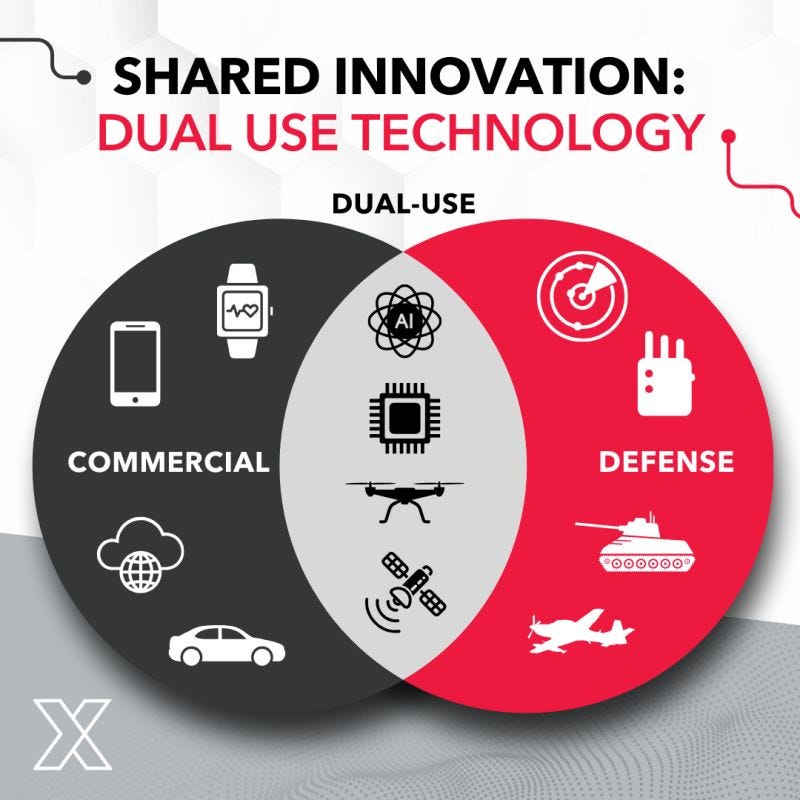
Dual-use technologies are innovations that have both commercial and defence applications, for example, drones, cybersecurity, and the supply chain.
But this raises a question: Where is the line drawn?
Is it sufficient if 5% of a product is targeted towards citizens (or defence)? 1%?0.1%?
Is it sufficient if a product merely plans to target citizens (or defence) in the future?
The concept of dual-use is controversial, and many ask whether it is merely a guise to sugarcoat investments in defence.
Is Dual-Use Feasible?
Start-ups are inherently cash-strapped and rely on a single product-market focus. Meanwhile, targeting two markets simultaneously reduces focus and increases operating expenditures. This seems contradictory.
Furthermore, back to the BDCs’ encouragement. How effectively can a civilian business navigate the regulatory structure of defence contracting?
“The bureaucratic nature of the procurement system created multiple regulatory hurdles for SMEs, especially dual-use ones unfamiliar with the sector’s existing regulatory and compliance requirements.” — Alexander Salt, Canadian Global Affairs Institute (June 2025)
Can dual-use succeed as: Civilian -> Defence, Defence -> Civilian, or (Civilian <-> Defence)?
These goals must be made clear.
“We’re not sorry for being a pure defence company. “Dual-use” is real, but it’s too often a euphemism used to soften or sanitize what is ultimately a serious responsibility. As nations take sovereignty more seriously, we must be unapologetic about the most fundamental enabler of that sovereignty: a strong, capable, and innovative domestic defence industry – and we’re proud to build it.” — Paul Ziadé, CEO, North Vector Dynamics (January 9, 2026)
Dual-use as a forward-looking concept makes sense. When innovative technologies are developed and companies have resources to scale, alternative use cases can be applied to new markets later in the product cycle. This is not a foreign concept; it has occurred before with the GPS and the internet.
As firms continue to pass on pure defence companies, there is an opportunity for investors to fill in this gap.
Economic Spillover
A technology does not need to be developed as dual-use to have a positive impact on civilians. Defence R&D falls into civilian hands regardless. Think microwaves, sticky notes, or penicillin. Studies have found that in the United States, a doubling in the OSRD (Office of Scientific Research and Development) during WW2 led to a 30% increase in patents by 1970 and a more than doubling of high-tech employment and new manufacturing businesses.
“The initial research and development (R&D) initiatives […] amounting to $2.3 billion over five years […] Could add as much as $6.1 billion to Canada's national income over the long term.” — Government of Canada (Budget 2025, November 4, 2025)
Investment in defence will have a significant spillover into the general economy. Studies show that $1 in Canadian government investment typically leads to $1.48 in economic value. Meanwhile, $1 in Canadian defence investment can create $2-2.17 in value.
The Opportunity
There is no backing away from defence spending. Whether it is to match Trump’s demands for an ally, or to develop sovereign defence capabilities for defending territories like the Arctic. Suddenly, the Canadian defence industry is transitioning from a political backwater to a national necessity. After years of being restrained, in an environment where both people and politicians stand united in a common interest. Financial commitments are now in place, and deregulation is underway. The floodgates are now open.
The impacts of a revolution in an industry that hinges upon technology are not isolated. There is a national recognition that Canadian innovation is essential and that venture capital is now a national priority. Canada has invested billions into R&D, infrastructure, and financing. With renewed national interest, Canadian innovation can reach unprecedented levels. When these opportunities arise, involvement becomes not a choice but a necessity. This is a new era.
Company Spotlight
Dominion Dynamics
“A startup has no data, no history, no brand. All it has is a story.” — Naval Ravikant, entrepreneur and investor
Eliot Pence (Founder & CEO of Dominion Dynamics) is the great storyteller of the Canadian defence tech industry. More than just the company, he understands the industry, its history and why it exists.
“We are ultimately planning on building a sovereign defence prime [contractor] for Canada [that] can compete with the American primes and European primes.” — Mitch Carkner, Co-Founder & CTO, Dominion Dynamics (November 16, 2025)
Dominion Dynamics, an Ottawa-based defence tech firm founded last June, is looking to adopt a similar strategy to Anduril: Anticipating and building tools that they predict will be required in the future.
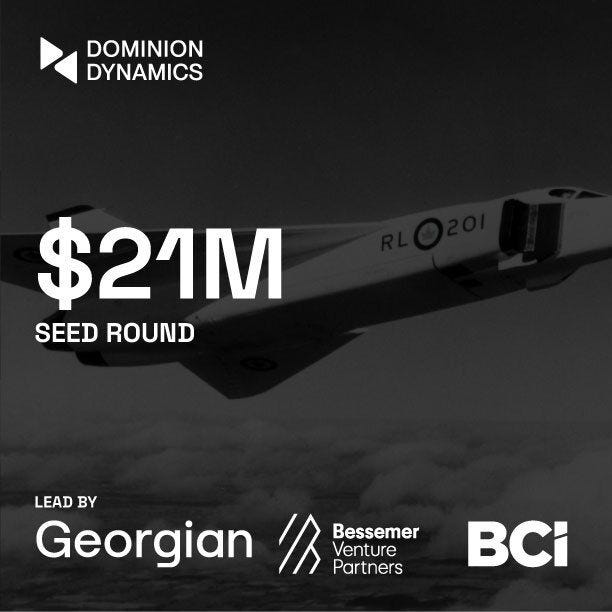
Recently, on January 19th, Dominion Dynamics secured CAD $21m in seed funding ($26m total). That will be used to accelerate ‘Auranet’, a network designed to monitor Canada’s Arctic, as well as a collaborative platform for autonomous drones.
“Canada’s defence future cannot be outsourced […] We have the talent, the government’s commitment, and the stakes, but we haven’t had a company built from the ground up to deliver modern capability at the speed of relevance.” — Eliot Pence, Founder & CEO, Dominion Dynamics (BetaKit, October 15, 2025)
This is a company worth keeping an eye on.
Notable Companies (Misc.)
Canadian Defence Venture Capital
Kensington Capital Partners: ONE9, now integrated into Kensington Capital Partners, operates a defence and national security venture platform focused on investing in defence and dual-use technologies in Canada and allied markets.
Calian Ventures: The strategic investment arm of Calian Group, backing defence and dual-use technology companies while providing operational expertise and access to defence customers.
Amiral Ventures: Amiral Ventures is an early-stage venture capital firm investing in real challenges, from enterprise modernization to energy optimization, cybersecurity, defence and supply chain resilience.
Canadian Defence Accelerators
Vimy Forge Accelerator (Fredericton, NB): A national defence and security accelerator supporting startups working on technologies aligned with Department of National Defence priorities and military adoption.
NATO DIANA Accelerator Programme (Halifax, NS & Ottawa, ON): A transatlantic defence innovation accelerator network that selects dual-use companies across NATO, including a significant Canadian cohort and Canadian accelerator/test centre participation.
Maritime Defence Innovation Secure Hub (DISH) (Halifax / Dartmouth, NS): A secure innovation hub backed by the Government of Canada and NATO DIANA with a specific focus on maritime, ocean, and Arctic technologies; it acts as a defence innovation “hub” with programming support for startups.
Calgary Aerospace Innovation Hub (Calgary, AB): An aerospace-focused innovation hub that supports aerospace and defence-adjacent companies on growth and technology validation.
Blue Action Canada Accelerator (Victoria, BC): An ocean technology accelerator that includes defence or dual-use ocean innovation in its focus areas, such as coastal infrastructure and maritime systems.
Canadian Defence Startups
North Vector Dynamics (Calgary, AB): Emerged from stealth in 2025, North Vector Dynamics develops high-speed aerospace, counter-UAS, and AI-enabled training and strike technologies. The company holds a multi-year $4.2M CAD defence contract and backing from ONE9.
Canada Rocket Company (Toronto, ON): Emerged from stealth in 2026, Canada Rocket Company develops sovereign Canadian launch vehicles for space and defence missions and has raised ~$6.2M CAD in an all-Canadian seed round led by BDC Capital and Garage Capital.
Reaction Dynamics (Longueuil, QC): Founded in 2017 by Bachar Elzein, Reaction Dynamics develops hybrid rocket propulsion and responsive launch systems and has reported ~$38M CAD raised across venture and non-dilutive funding, including a $14M Series A.
Volta Space Technologies (Montreal, QC): Emerging from stealth in 2024, Volta Space Technologies is building a lunar orbital power network that beams energy from satellites to surface assets, enabling continuous operations through the lunar night.
Quantropi (Ottawa, ON): Founded in 2018 by James Nguyen and Randy Kuang, Quantropi builds post-quantum and quantum-secure encryption for defence and critical infrastructure and has reported >$11M USD in seed funding.
H2 Analytics (Ottawa, ON): Founded in 2017 by Hugo Hodgett, H2 Analytics provides analytics and decision-support software to defence and security organizations. Deloitte has named H2 Analytics one of Canada’s Companies-to-Watch in the 2025 Technology Fast 50™ program.
NordSpace (Markham, ON): Founded in 2022 by Rahul Goel, NordSpace builds vertically integrated launch vehicles and dual-use satellites for Arctic, maritime, and national security monitoring.
Authors Note
I hope this article was of value to you. A lot is happening right now in the Canadian defence industry, so I tried my best to condense it all into a single piece. Feel free to send a message or a comment if you have any thoughts to share. Going forward, I have deep dives planned on some cool local companies, if that sounds interesting please subscribe.
I appreciate you taking the time to read,
Ethan Marcoux
Great write-up, Ethan. This is a holistic analysis of a critical window for Canada’s startup ecosystem. Under the shadow of current urgencies, we must commit "Openly and Confidently" — that is Canada's path forward.
I’d also argue that we need to view this through the lens of the complete value chain. Integrating rare earth minerals, energy security, and strategic warfare into a broader dual-use innovation strategy is essential for true resilience.